The unsanctioned supply paradox – what could lie ahead for crude markets
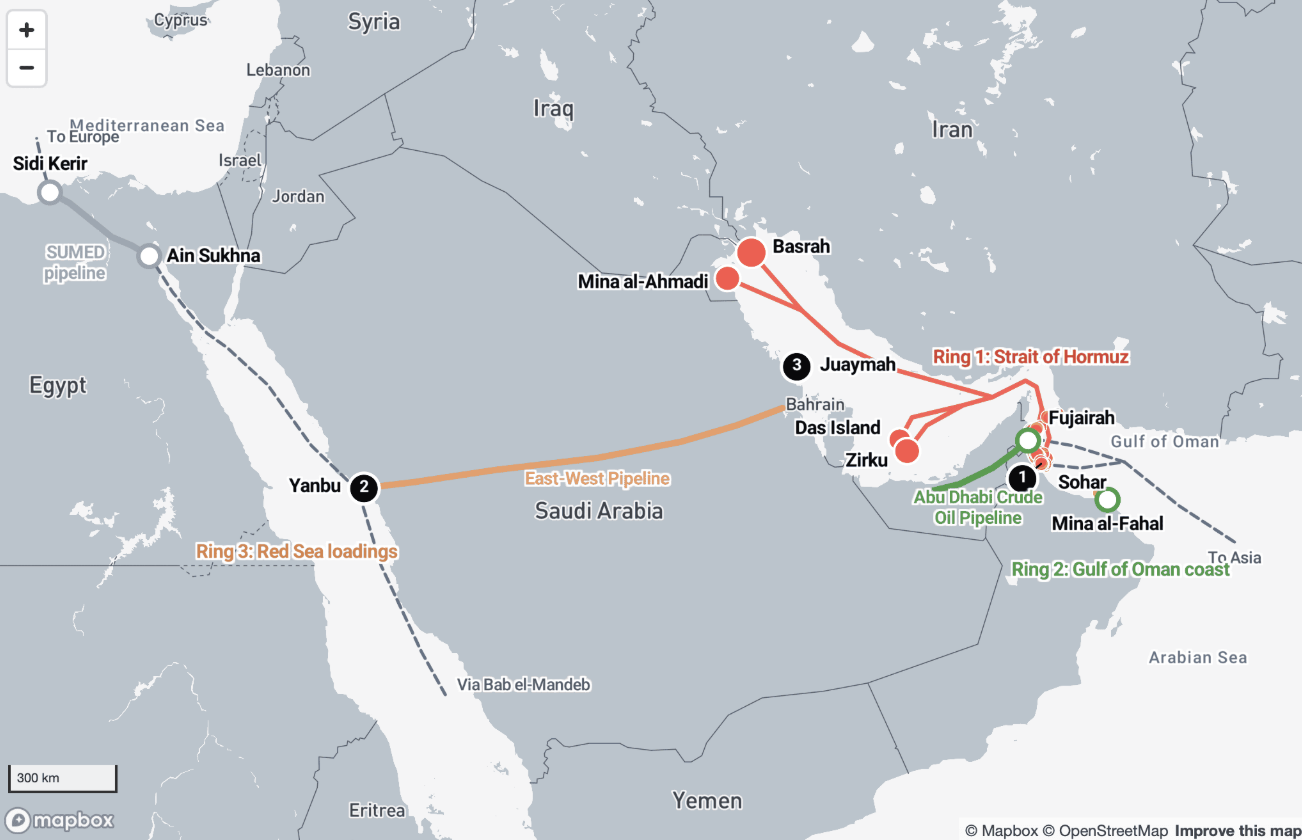
The global crude oil market is currently fixated on the acute supply shock driven by the US-Israeli military campaign against Iran and the de facto closure of the Strait of Hormuz, which pushed Brent prices consistently above $100/bbl. However, this crisis is also increasing the likelihood of a curious shift. The world could end 2026 with Venezuelan, Iranian and Russian oil all either unsanctioned (or subject to loose enforcement), a prospect that seemed unthinkable at the start of this year.
Key Takeaways
- Geopolitical normalization could trigger a synchronized release of Venezuelan, Iranian, and Russian crude into an already structurally oversupplied market by 2027.
- Venezuelan output is aggressively recovering, targeting near 600kbd growth on the year to 1.3 Mbd
- An estimated 55 Mbbls of Iranian oil currently in floating storage could flood the physical market immediately upon sanctions relief
- Repeated US waivers have permanently eroded secondary sanctions barriers, expanding the Asian buyer base for discounted Russian crude.
- Trade Recommendation: Building a shorter position into H1 2027 (or buying put options) to plan for a retrace towards pre-war structural price around $60/bbl
Before the Iranian conflict, the market was forecast to face a surplus of near 2 Mbd, the largest since the Covid-19 pandemic. The geopolitical realities from January (Maduro capture) and the prospect of a Memorandum of Understanding between the US and Iran could lay the path materially lower again for price. This piece examines the three ‘sanctioned’ entities.
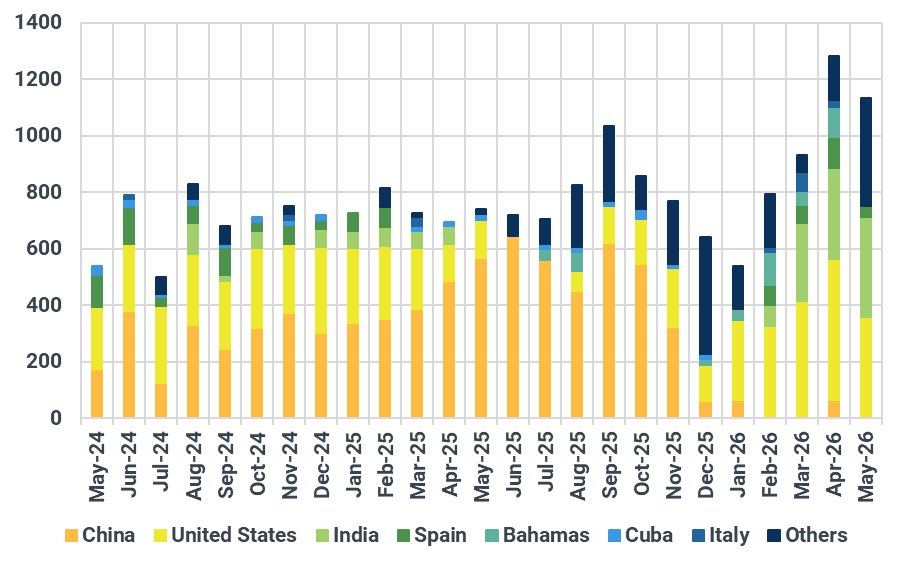
Venezuela: Venezuela’s crude output recovery is no longer speculative. Production recovered swiftly after the capture of President Maduro and the US naval blocked, and reached roughly 1.25 Mbd this month. Following political shifts in Washington and the issuance of new operating licenses, output has responded quickly, especially in the face of the war, and is trending toward 1.5 Mbd by 2027. Crucially, this extra-heavy, high-sulphur crude competes directly with Iranian and Russian barrels for Asian and US Gulf Coast refinery demand, applying severe downward pressure on heavy-sour differentials.
Venezuela crude exports by destination country, kbd
Source: Kpler

See why the most successful traders and shipping experts use Kpler