


Aramco goes full circle: why rising Saudi exports are bearish diffs but not bearish risk
Three weeks after the attack on the East-West Petroline, Saudi oil exports have surged to their highest level since the COVID-19 pandemic. This is bearish for crude differentials and should trigger a sell-off, but Iran's potential reaction makes bearish positioning risky nonetheless.
Market & Trading Calls
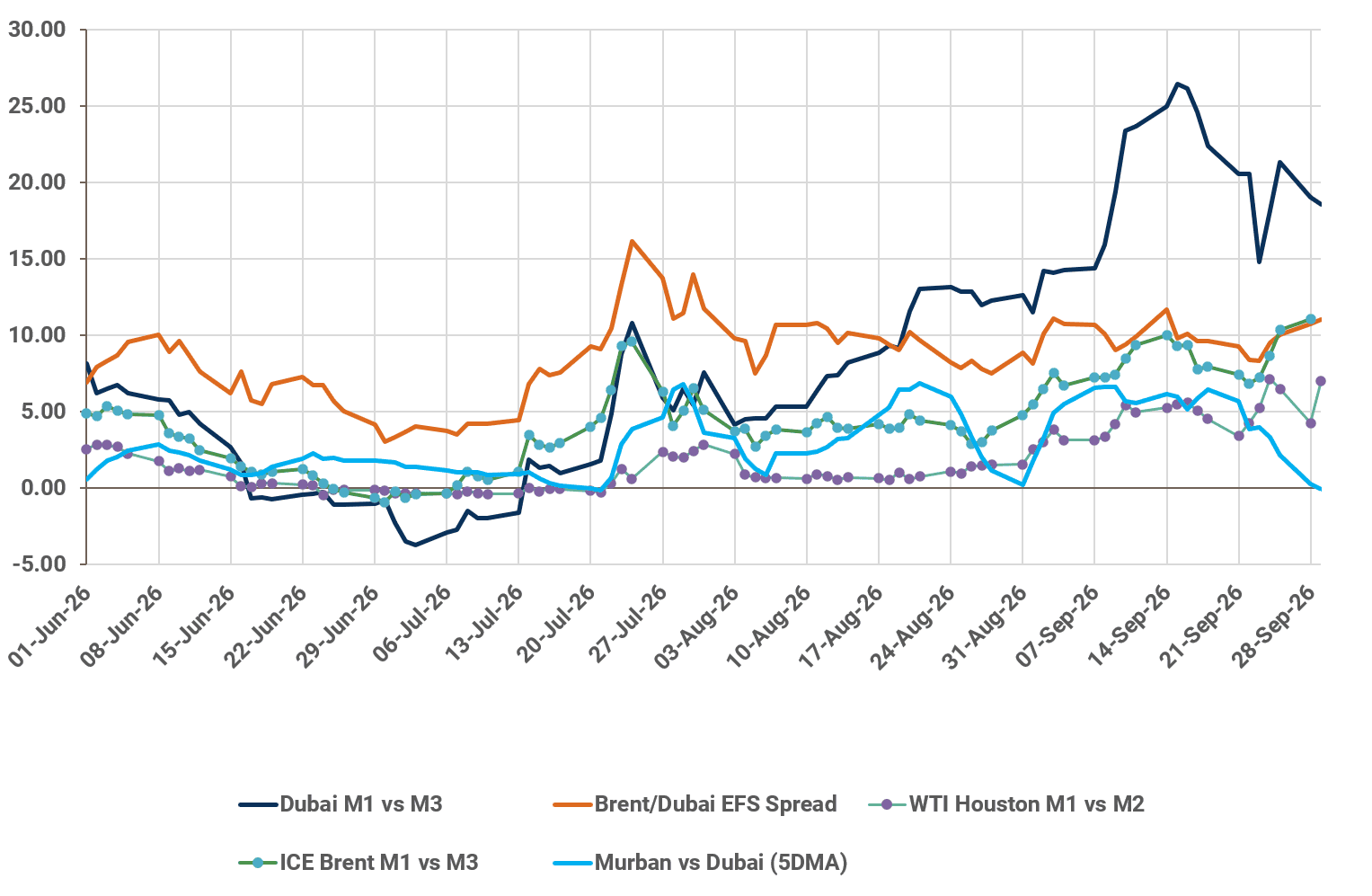
- Bearish Dubai/Oman and Murban time spreads. With Saudi loadings at a six-year high, the physical market is looser than the paper structure suggests. Front-month backwardation should compress over the next few weeks.
- Bearish Dubai-linked differentials as higher Middle Eastern exports keep VLCC freight rates high, requiring diffs to soften to remain competitive.
- Bullish Brent-Dubai EFS considering geopolitical risk will remain high as Iran's incentive to disrupt regional oil infrastructure increases. Hormuz-related shocks this year have consistently widened the EFS rather than narrowed it. A confirmed hit on Abqaiq or an UAE-directed strike would spark a violent move.
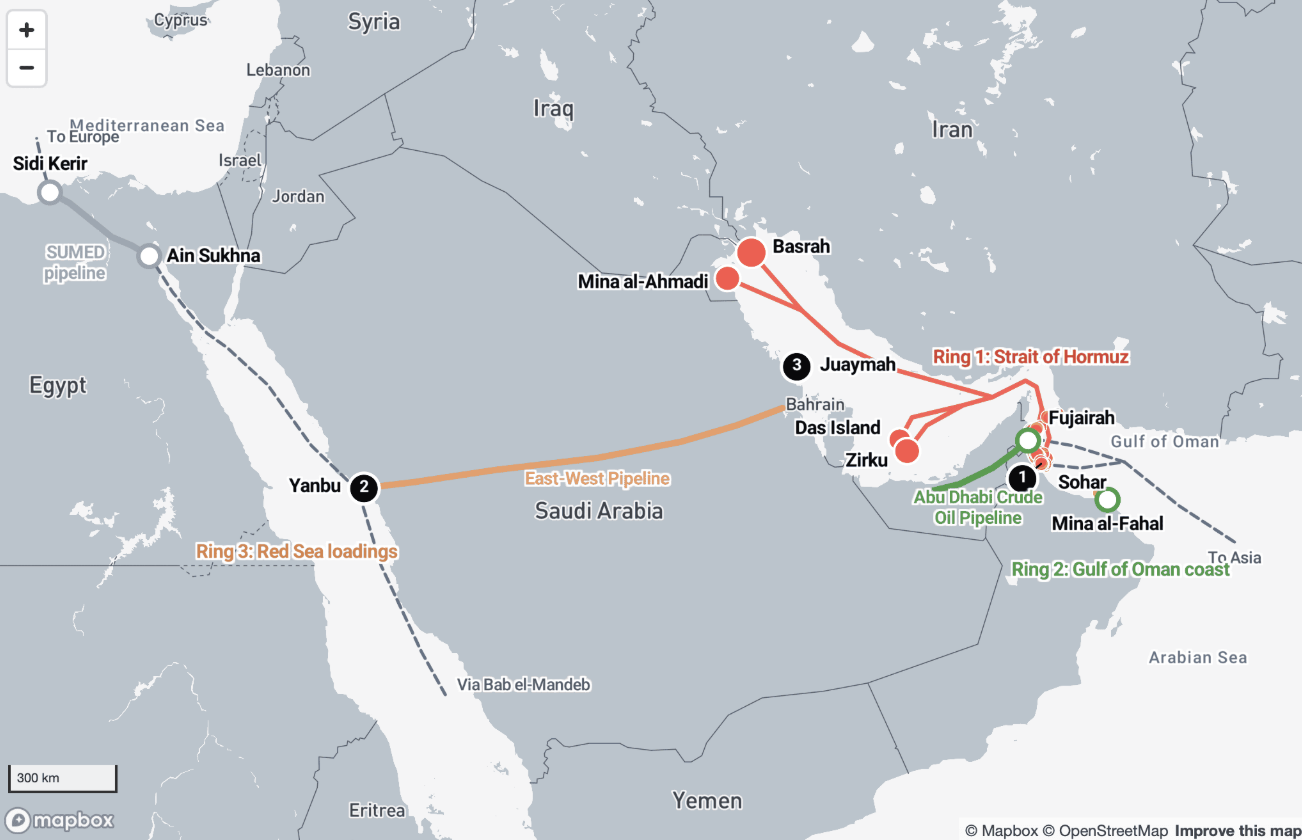
Crude leaving the Persian Gulf region is back at pre-war levels outside Iran, at least 16.5 mb/d between 1 and 28 September. The routes have changed: only 60% crossed Hormuz, mostly via shuttle tankers transferring off Fujairah and Sohar, while 23% loaded on the Gulf of Oman coast and 17% via the Red Sea.
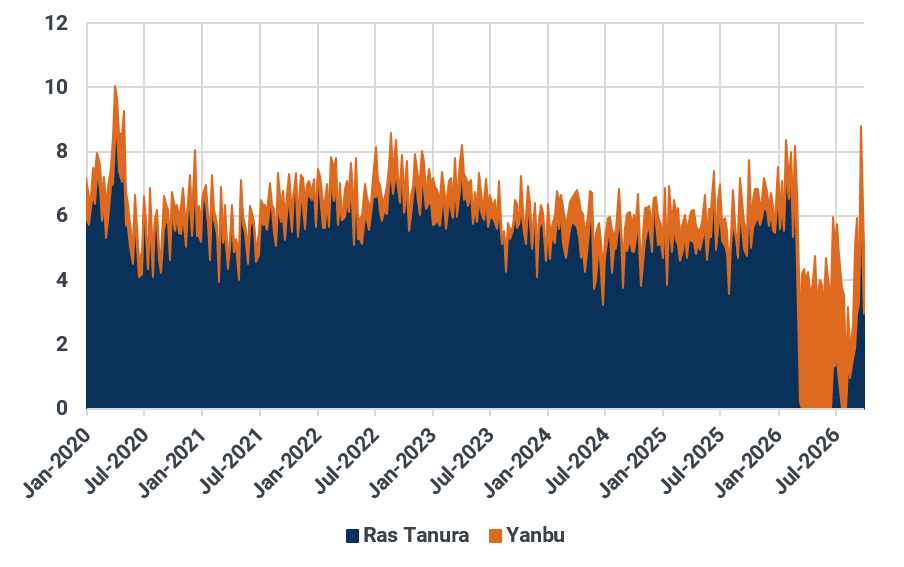
The trend has paradoxically accelerated since the 10 September strike. Saudi crude loadings averaged about 8.8 mb/d in the week to 27 September, the highest weekly level since April 2020, at the peak of the last price war. After the attack halted Yanbu, Aramco pushed volumes east: all six Juaymah moorings were occupied by 20 September, and our confirmed Saudi crude crossing Hormuz rose from 0.7 mb/d in August to 2.9 mb/d in September (6.7 mbd in the w/co 21st Sep), likely higher given unknown-origin STS volumes that may have loaded at Ras Tanura. Yanbu then recovered, with all seven berths full by the 27th and loadings averaging roughly 3.3 mb/d over 26-30 September.
Weekly Saudi oil loadings by origin port (mbd)
Source: Kpler
Upstream is being pushed just as hard. We hear Saudi production reached 11.5 mb/d yesterday and may test 12 mb/d in the coming days, a level last seen in April 2020. Aramco has placed a combined 90 mbbls through two rounds of private offers between 10 and 23 September, then inviting Chinese refiners on 28 September to bid for late-October cargoes on an STS basis near Sohar. Neutral Zone grades are returning too: Aramco has reportedly sold 10 mbbls of Khafji, its first offer of that grade on an STS basis, though we have seen no loadings yet.
Key market structures ($/bbl)
Source: Kpler

See why the most successful traders and shipping experts use Kpler

.jpg)






