
Logistics constrain Gulf smelter run rates
With no end to the US/Israel-Iran war in sight, innovative and expensive workarounds continue to be called upon to keep Gulf alumina refineries and aluminium smelters supplied with raw materials.
The brief détente between the warring parties that followed the signing of the Memorandum of Understanding in mid-June allowed a few more ships to bring alumina into the Gulf, easing supply pressures.
However, a tightening of transit restrictions in the Strait of Hormuz has closed off this route to almost all shipping. Daily dry bulk carrier transits have dropped close to zero. The capacity of the transhipment and trucking operation bringing raw materials into the Middle East Gulf is now a determining factor of the run rate of Gulf smelters and refineries.
Raw material availability and the run rate of Gulf Smelters
At full capacity, the Gulf's smelters require almost 800kt of alumina imports per month. 600kt is typically delivered as alumina directly, with a further 200kt refined from seaborne bauxite at Emirates Global Aluminium's (EGA) Al Taweelah smelter.
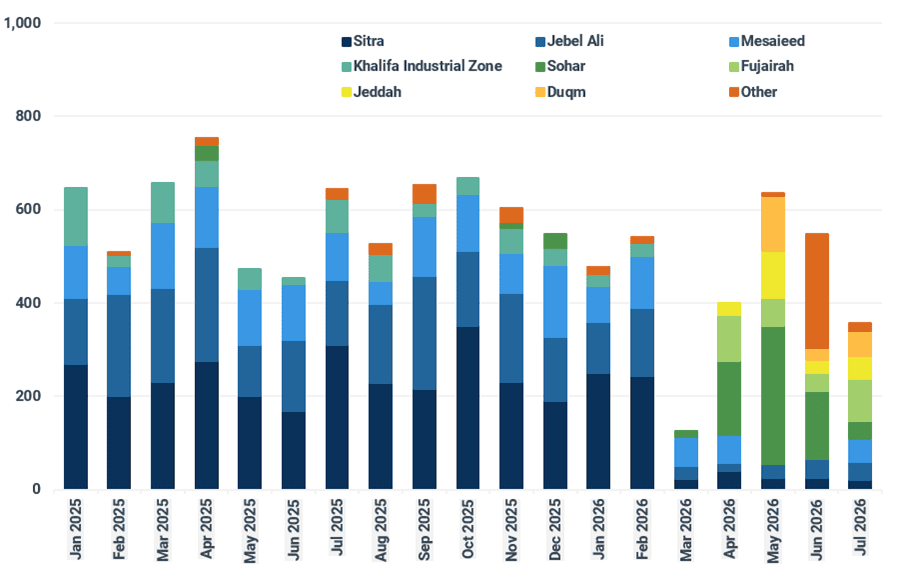
Imports dropped sharply in March following the closure of the Strait of Hormuz, but have proven remarkably resilient since. Smelters have taken receipt of bagged alumina at ports outside the Gulf, such as Fujairah, Jeddah, and Sohar. These deliveries, together with a handful of bulk discharges and direct transits of the Strait, have seen volumes in April, May and June average 517kt.
Middle Eastern alumina imports by port: war drives a redirection of cargoes (kt)
Source: Kpler
At the same time, smelter curtailments have reduced immediate demand from 800kt to nearer 400kt, indicating a regional surplus in the near term. However, as EGA's EMAL ramps up and July’s imports drop to lower levels, the outlook for increased supply is uncertain.
Direct bauxite deliveries have halted since the closure of the Strait, but over 600kt has been delivered to external ports, principally Fujairah, arriving on geared vessels transhipped from Capesizes at anchorage. From there it is understood to have moved overland to Al Taweelah. The refinery is believed to be running at 50% capacity, with EGA targeting full utilisation by year end. Achieving that would require in excess of 500kt of bauxite deliveries per month; volumes that are readily achievable with direct Capesize deliveries into Al Taweelah, but yet to be proven via transhipment and subsequent overland transport.

See why the most successful traders and shipping experts use Kpler