Saudi west coast product exports dip below 1.0 Mbd as Middle East refinery downtime escalates
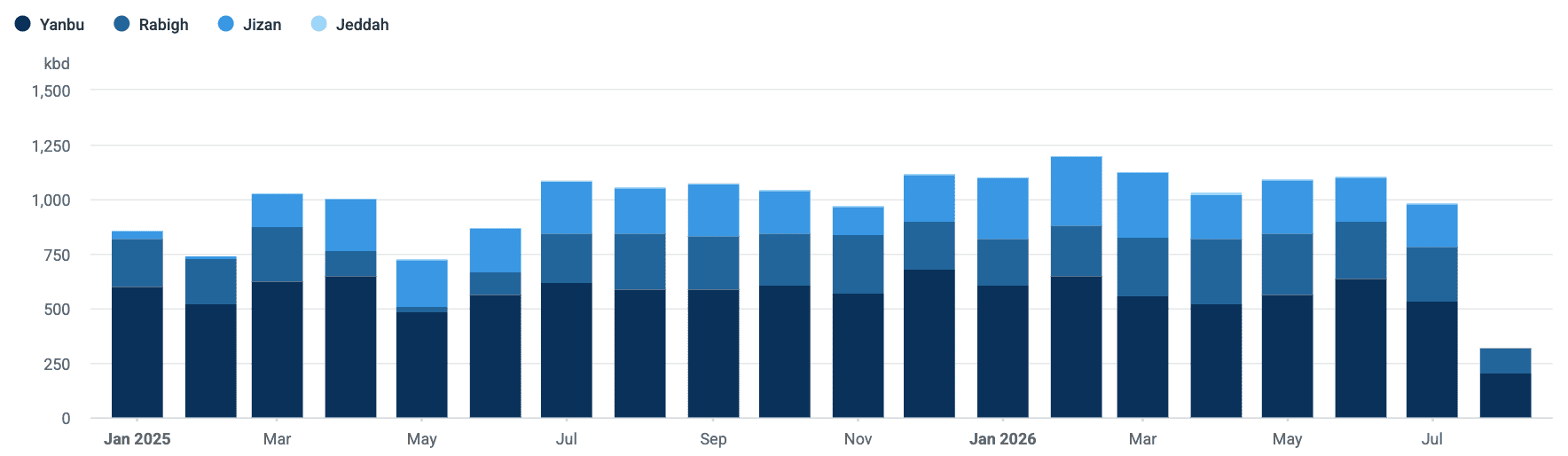
Middle Eastern refined product supply is tightening sharply. Refined product exports from West Coast Saudi Arabia dropped below 1.0 Mbd in July—the lowest mark since November 2025—primarily due to reduced Yanbu output.
Key Takeaways:
- July Export Dip: Refined product exports out of West Coast Saudi Arabia fell below 1.0 Mbd in July for the first time since November 2025, primarily driven by reduced output and loadings from Yanbu.
- Jizan Refinery Offline: Reported attacks on 25 July forced a complete operational shutdown of the 400 kbd Jizan refinery through at least mid-August, with no loadings recorded since two MR tanker cargoes on 24 July.
- Regional Downtime Surge: Middle Eastern refinery downtime is projected to hit ~2.2 Mbd in August, up dramatically from ~400 kbd during the same period last year.
- Activity without AIS: Confirmed August loadings stand at ~300 kbd to date, though increasing AIS transponder shutdowns due to Red Sea security risks may obscure actual export throughput.
Refined product exports from West Coast Saudi Arabia dropped below 1.0 Mbd in July for the first time since November 2025, signaling a sharp supply contraction in the Red Sea basin. This export slump was primarily led by lower operational output and loadings from refining facilities at Yanbu. Meanwhile, July exports from the 400 kbd Jizan refinery held steady at 200 kbd—matching June levels—before reported attacks on 25 July forced the facility into a complete operational shutdown expected to persist through at least mid-August. Kpler tracking recorded two clean product cargoes loading on MR tankers at Jizan on 24 July, with zero waterborne loadings registered since the incident.
West Coast Saudi Arabia monthly refined product exports by origin port
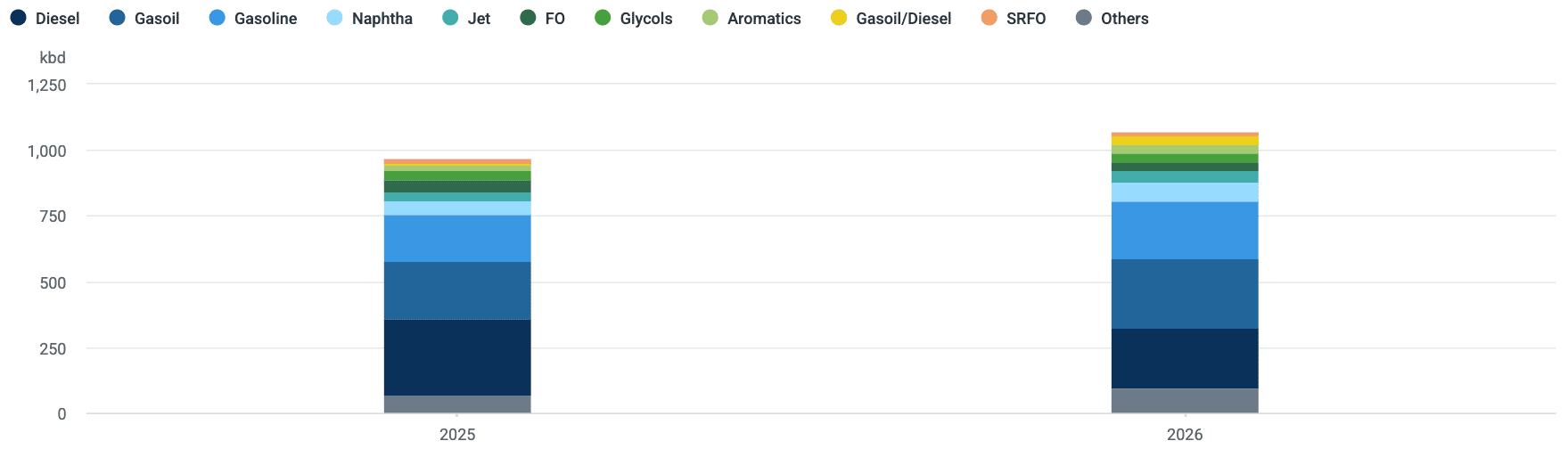
These disruptions have severely constrained Middle Eastern refining availability. Kpler estimates total Middle Eastern refinery downtime will reach ~2.2 Mbd in August, marking a massive surge from the ~400 kbd recorded in August 2025. This reduction in regional processing capacity comes at a critical juncture, as West Coast Saudi Arabia has served as a vital middle distillate supply hub since heightened tensions around the Strait of Hormuz choked refined product exports from the Mideast Gulf. Gasoil and diesel accounted for over half of the region's 970 kbd refined product exports in 2025, with gasoline representing another 20%.
West Coast Saudi Arabia annual refined product exports by product
Escalating security concerns across Red Sea shipping lanes continue to weigh on operational momentum. Confirmed loadings through the first week of August stand at just ~300 kbd. However, an increasing number of vessel operators in the zone are turning off their AIS transponders to navigate security risks. This rising dark transiting activity obscures true loading throughput, meaning physical exports may be higher than currently visible via automated tracking systems.

See why the most successful traders and shipping experts use Kpler