
After the deal: Transits could near 50% of pre-war levels in 30 days
A weekend agreement between Washington and Tehran has, on paper, outlined a re-opening of the Strait of Hormuz on 19 June. This would shift the status from the Restricted/Controlled phase and into the First-Mover phase of our reopening framework. But several core terms of the deal remain ambiguous - whether the Strait has been mined, whether Iran retains de facto operational control, and how transit tolls will be set and collected. Until these are resolved, a rapid return of commercial shipping is far from assured. Below we set out how the vessel backlog within the Mideast Gulf clears, present a fast-return path and our base case for re-entry, and explain why the recovery may be stop-start rather than linear.
Market & Trading Calls
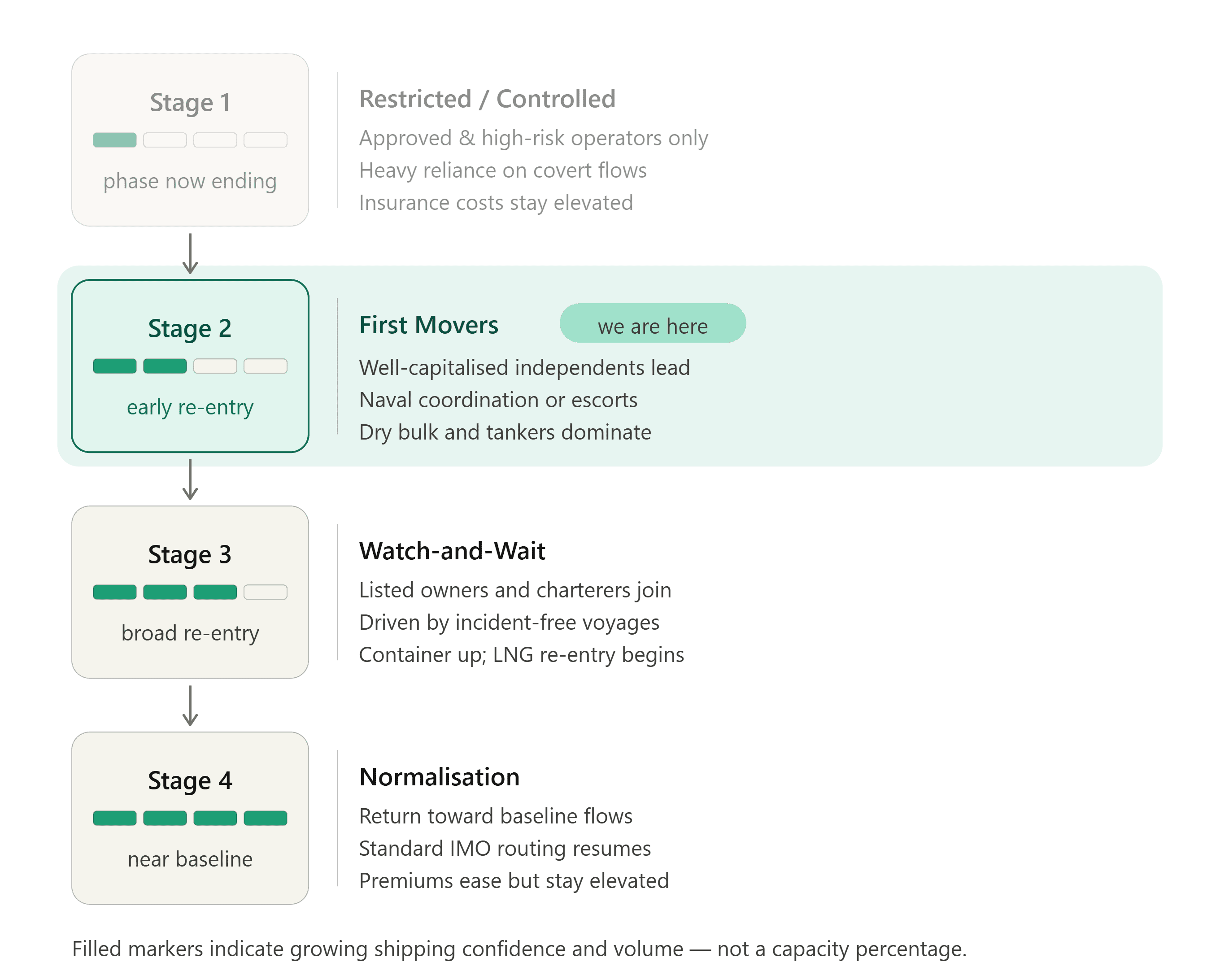
- The agreement nudges Hormuz from Stage 1 (Restricted/Controlled) into Stage 2 (First Movers), but unresolved terms cap how quickly vessels actually re-enter.
- The first visible move is a one-off backlog release - laden vessels exiting - rather than a durable step-up in throughput.
- In a fast-return scenario, we present the maximum shipping capacity available which is only constricted by the number of vessels in range of the Mideast Gulf (MEG).
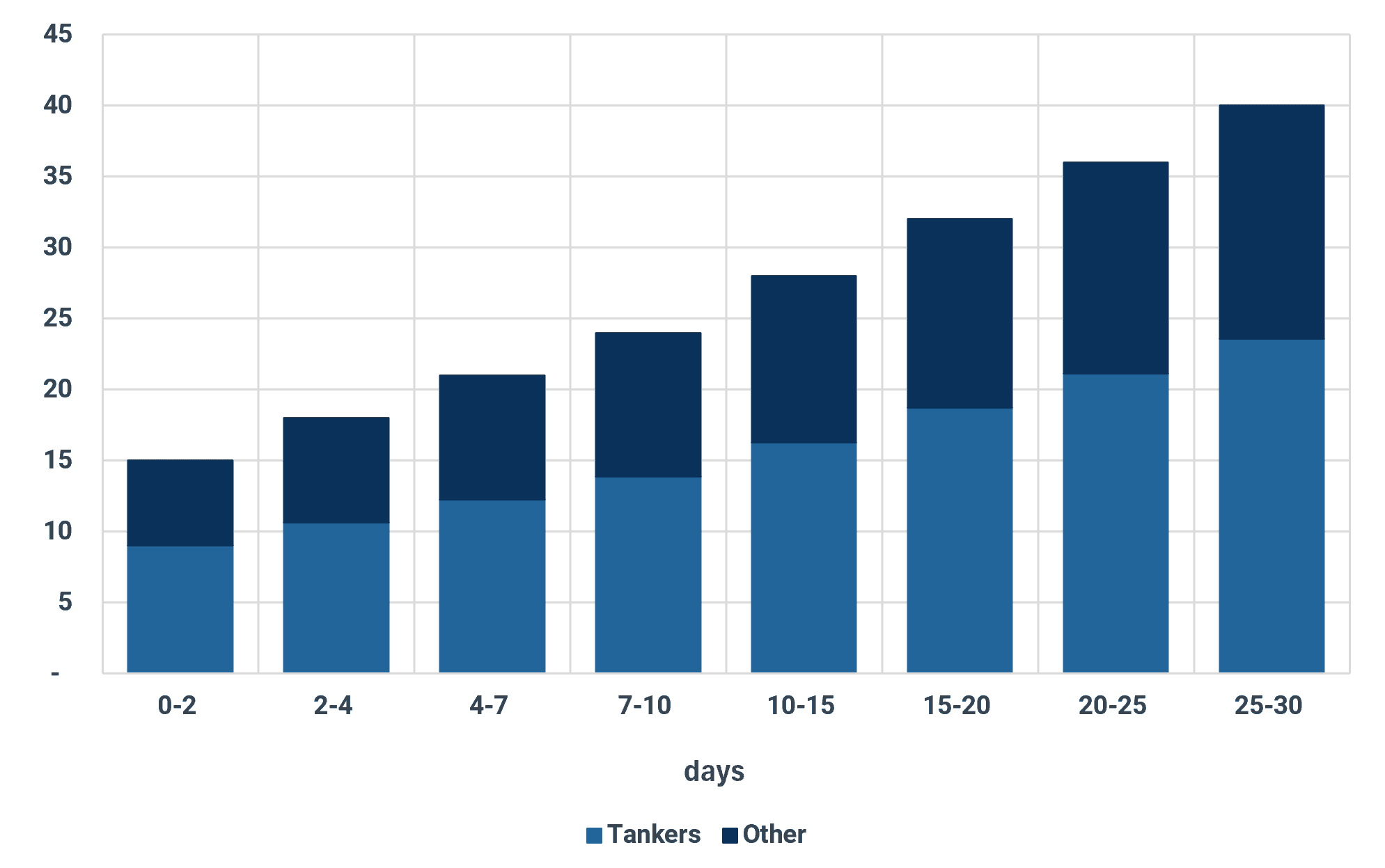
- In our base case, the return of shipping capacity in the MEG is staggered and the climb is gradual from 15 per day to 40 per day over the first month, assuming there are no setbacks. This compared with pre-war levels of 90-100 for bulk commodity carriers.
- Reopening faces disruptions. Incidents, slow-moving insurance and disputes over implementation point to plateaus and occasional reversals.
Strait of Hormuz vessel transits (days from start of peace agreement)
Source: Kpler
The starting point: a backlog, not a clean slate
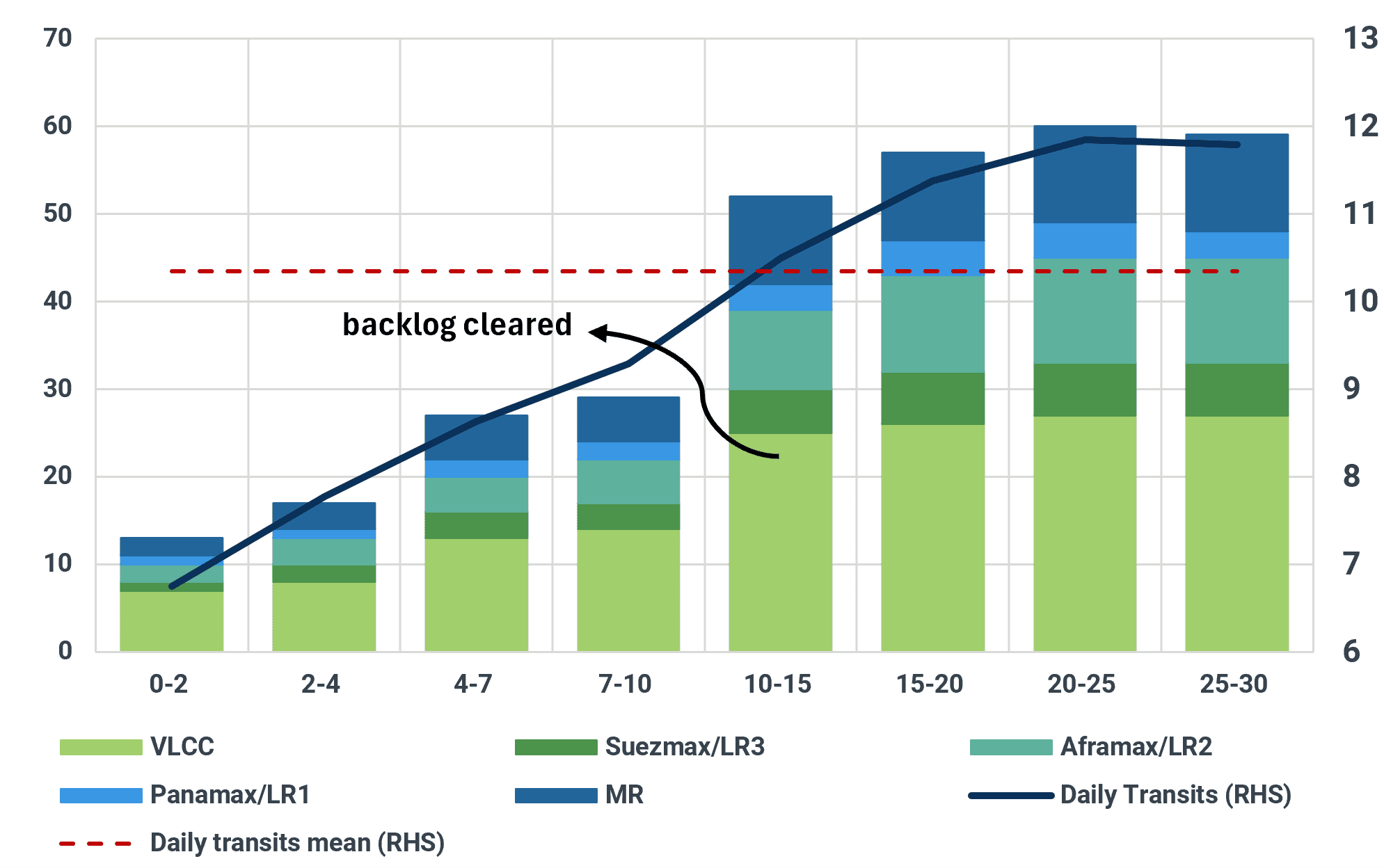
After more than 100 days of disruption, the Strait does not reopen onto normal trade; it reopens onto a backlog. Laden vessels trapped inside the Gulf that were unable to exit will be the first to exit. How quickly these clear, and in what order, will shape the first weeks of the recovery, and is easily mistaken for the underlying pace of normalisation. Laden vessels already inside the Gulf will be the quickest to move: they are loaded, committed, and need only safe passage and acceptable war-risk cover to sail. Their exit produces the first, and largest, visible jump in transits. Our base case assumes the backlog of 118 laden tankers (MR or larger) could be cleared in 10-15 days.
Laden backlog –Count of laden tankers to exit the Mideast Gulf (=>MR)
Source: Kpler
Vessels re-entering: two scenarios
The key analytical point is that the backlog release is a one-off. It can make the first fortnight look like a rapid recovery, but it draws down a stock of delayed vessels and cargo rather than reflecting a sustainable lift in flows. The true pace of re-entry will be the speed at which vessels re-enter the Mideast Gulf, and that is where our two scenarios diverge. However, the large backlog means the number of vessels able to enter will likely be limited in the first few weeks under our base case scenario as exiting vessels take priority.
Stages of a return in Hormuz transits

See why the most successful traders and shipping experts use Kpler