
America’s siren song: Supplier of last resort
The piece argues that the United States has become the world’s “supplier of last resort” after the closure of the Strait of Hormuz, with global markets increasingly relying on American crude and refined product exports to stabilize supply shortages. It warns that as U.S. inventories tighten and gasoline prices climb toward politically sensitive levels, pressure for export controls could grow — but cutting exports after allies and markets have reorganized around U.S. supply risks triggering even greater global shortages and price shocks.
“All of those countries that can’t get jet fuel because of the Strait of Hormuz… I have a suggestion for you: Number 1, buy from the U.S., we have plenty…”
— President Donald J. Trump, March 31, 2026
The Siren’s Song
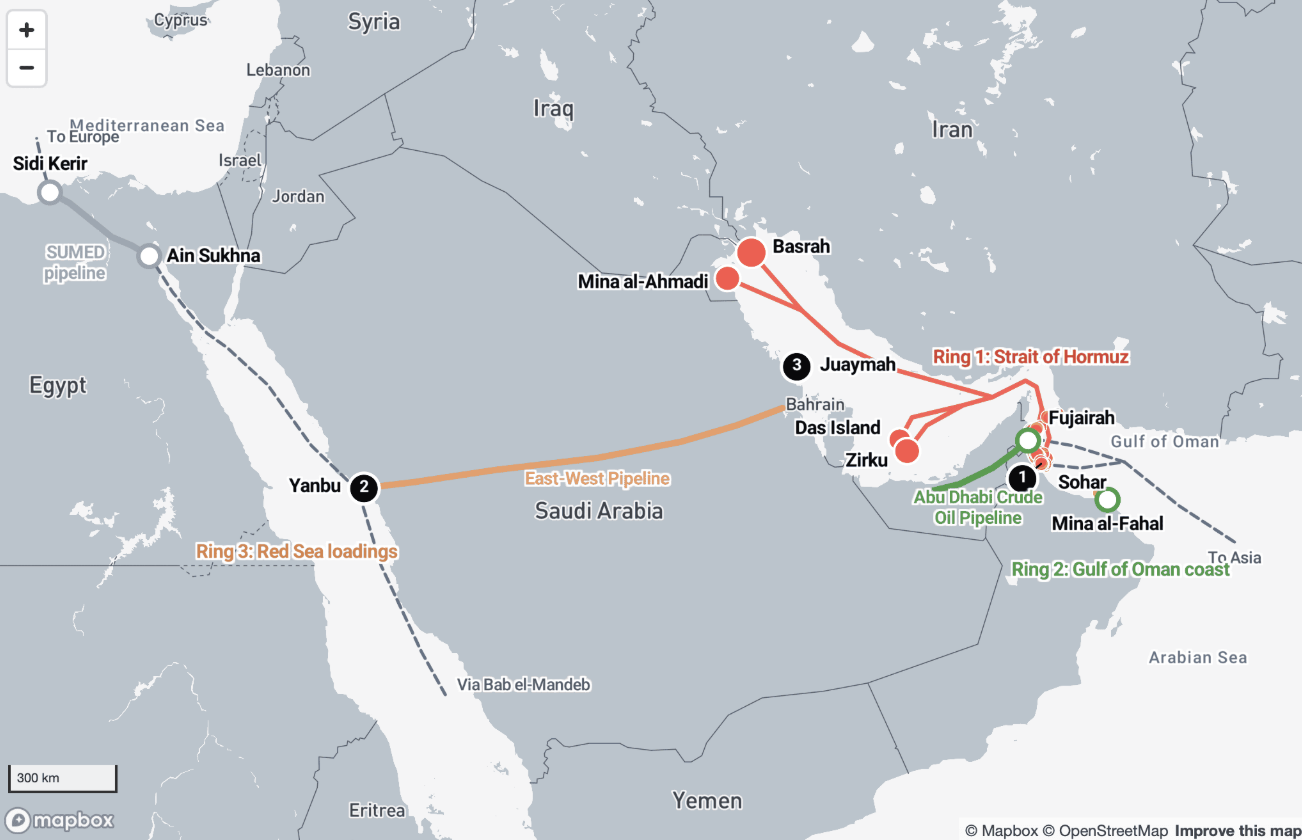
It has been 67 days since the United States and Israel launched their war on Iran, and 67 days since the Strait of Hormuz was effectively shut. As the world grows increasingly anxious about fuel shortages, the President has called on nations to buy from the United States.
And while the United States is an energy powerhouse — if you did not know that before the war, you certainly know it now — it cannot fully replace the energy flows lost through the Strait of Hormuz. And it certainly cannot attempt to do so without imposing enormous costs on the American consumer.
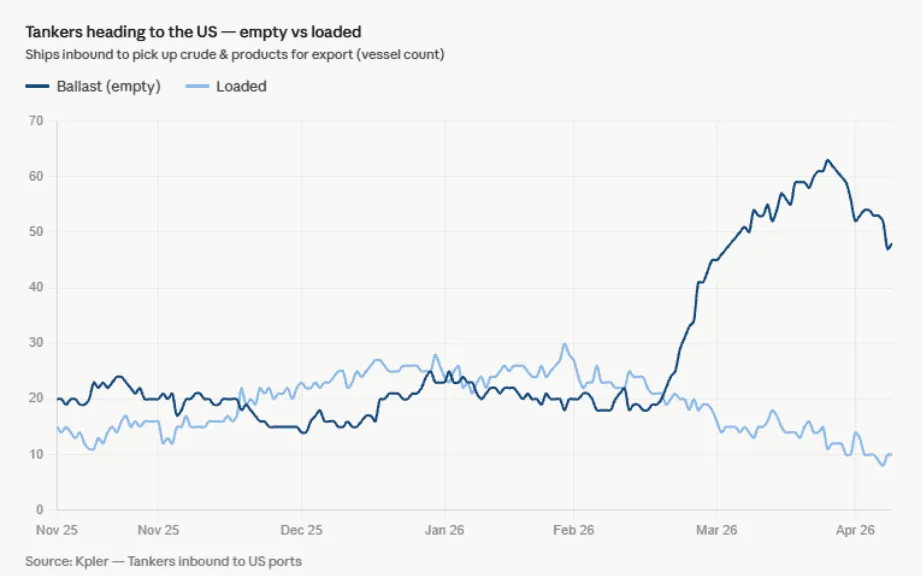
But the President sang the Siren’s song, and the empty ships have turned toward the music.
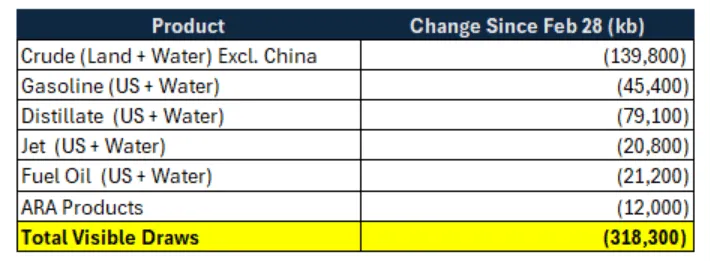
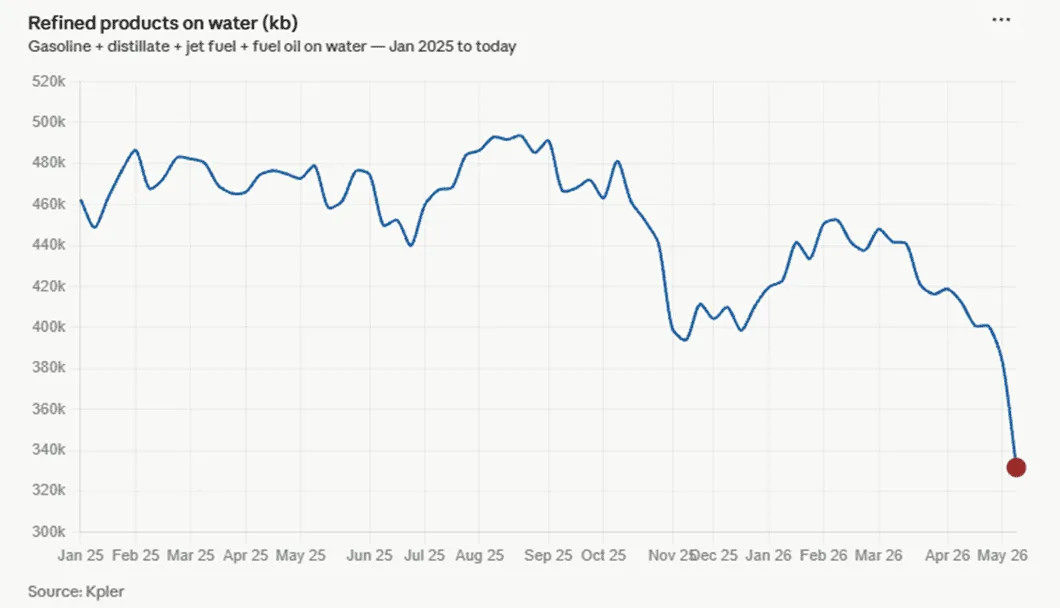
Over the last 67 days, global liquid inventories have drawn at a rate exceeding 6 million barrels per day, amounting to more than 400 million barrels and counting. We can observe much of this drawdown in near real time through declining crude inventories outside China, falling US and ARA stocks, and the steady depletion of oil on water, which together account for more than 300 million barrels already removed from the system. The remaining draws are occurring in countries that report inventory data far more slowly.
Headed toward the Rocks
The fastest inventory drawdowns occurred first on the water before moving onto land, where we are now seeing both US export rates and the drawdown of US inventories accelerate sharply.
The pace of the current drawdown is comparable to what we witnessed in 2020 after the world effectively came to a standstill and inventories had risen so dramatically that oil prices briefly turned negative. By the time inventories began drawing in 2020, OPEC had already implemented deep production cuts, global supply had collapsed under the weight of negative prices, and economies around the world reopened simultaneously, unleashing a powerful recovery in demand.
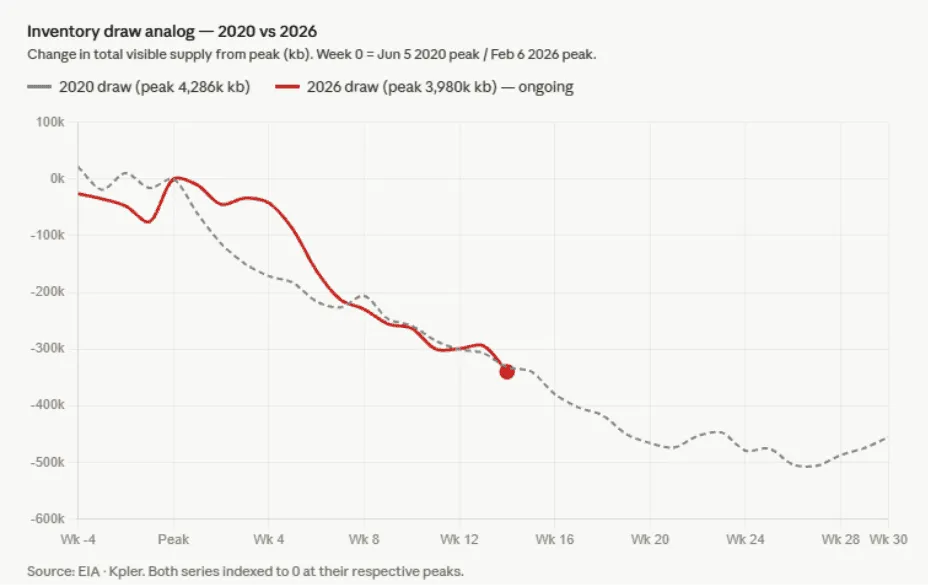
There is one critical difference between then and now. In 2020, the world began drawing inventories from an enormous surplus. Global stocks were nearly 300 million barrels higher than where they stood at the start of this war. The market was working through excess inventories accumulated during the collapse in demand.

See why the most successful traders and shipping experts use Kpler
See why the most successful traders and shipping experts use Kpler