IRGC attacks renew Hormuz transit risks as re-established flows and 70 mb of delayed crude head to Asia
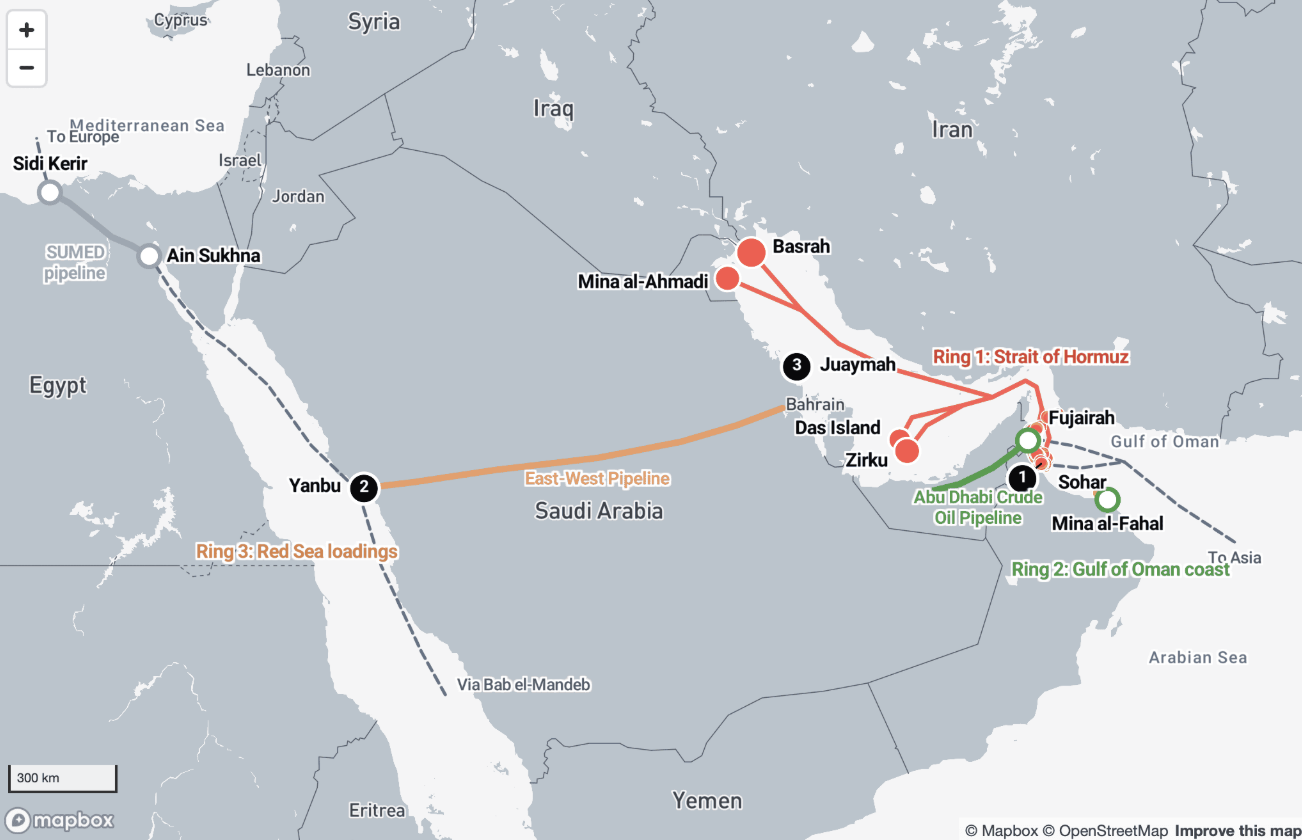
Renewed attacks in the Strait of Hormuz threaten maritime security just as re-established Mideast Gulf flows and a massive wave of delayed Middle East crude head to Asia.
Key Takeaways:
- UKMTO reported an incident occurring Monday night where the IRGC attacked two commercial vessels, threatening the recent surge in strait transits.
- In the first six days of July, 50 mb of crude navigated the strait, driven by re-established Mideast Gulf flows alongside 16 mb of pre-April stranded cargoes.
- Over 13 mb of this stranded volume crossed on Monday alone, contributing to a 70 mb backlog scheduled to saturate Asia by early August.
- Asian buyers are already well-supplied via alternative routes, and renewed attacks may halt further chokepoint transits, leaving 10 mb of pre-April crude still trapped.
According to a recent UKMTO report, the IRGC attacked two commercial vessels transiting the US-backed Southern Omani route in the Strait of Hormuz on Monday night. This incident abruptly threatens the fragile resumption of maritime security that allowed above 55 mb of crude to navigate the chokepoint during the first 6 days of July.
This early July volume highlights a dual-track dynamic in the strait. The 55 mb consists of re-established Mideast Gulf flows running parallel to the clearance of 16 mb of cargoes loaded prior to April that remained trapped throughout the Middle East crisis. On Monday alone, over 13 mb of this specifically stranded, pre-April crude successfully crossed the chokepoint aboard 7 VLCCs heading for Japan and South Korea.
Monday's clearance contributes to a 70 mb wave of backlogged, pre-April crude that cleared Hormuz across June (54 mb) and July (16 mb). This cumulative delayed volume is scheduled to discharge in Asia by early August, heavily oversupplying Japan (18 mb), South Korea (12 mb), India (9 mb), and China (8 mb).

See why the most successful traders and shipping experts use Kpler