

New diplomacy old issues and a pivotal US election
Four months after the collapse of the June Islamabad MOU, Washington and Tehran are revisiting many of the same demands, with little progress and mounting economic and regional costs. With the US midterms approaching, the note examines how the election could reshape Trump's Iran policy, the prospects for renewed military action, and why Iran's response would determine the next phase of the conflict and its impact on energy markets.
New Diplomacy Old Issues and a Pivotal US Election
Four months after the collapse of the June Islamabad MOU, conditions have worsened, with little to show for either side's decision to abandon the agreement. Washington has maintained its blockade and developed alternative routes to keep Gulf crude flowing, while Tehran retains leverage over Hormuz. Neither has achieved its objective: the US has not secured the nuclear concessions it wants, and Iran remains under sanctions without access to promised frozen assets.
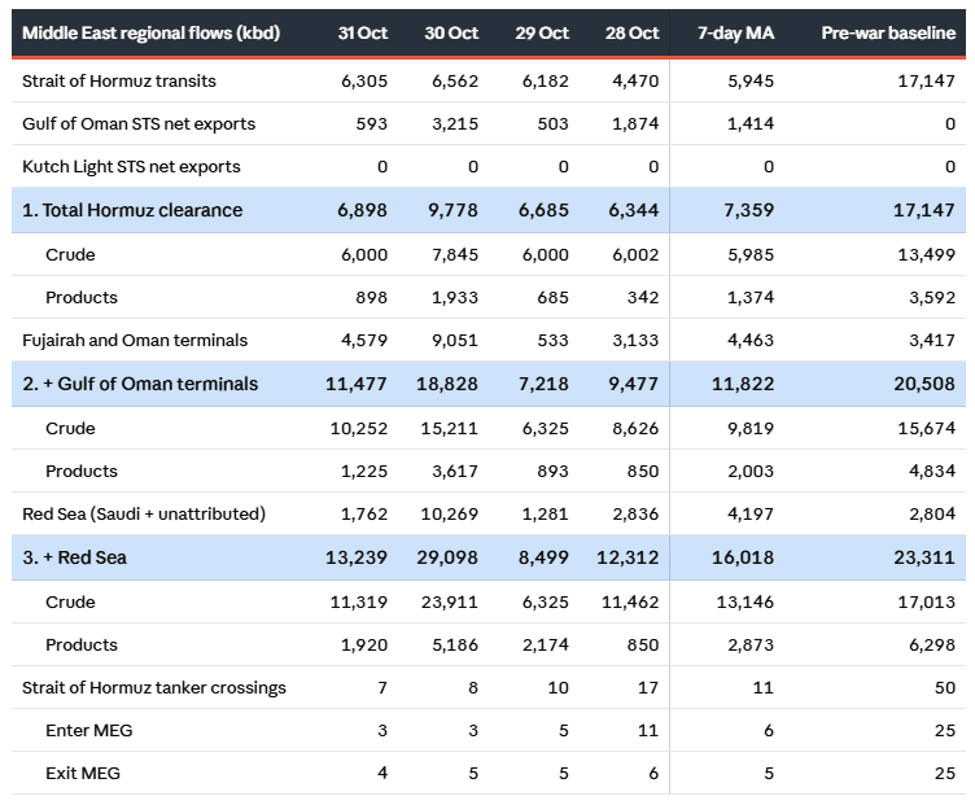
The costs continue to mount. Freight rates have surged, Houthi attacks on Saudi Arabia have widened the conflict, and US diesel prices remain above $6 per gallon. The war has also become an electoral liability for Trump, exposing divisions within his America First coalition. A Financial Times analysis found that 56% of surveyed Americans feel financially worse off under Trump, while gasoline prices have risen more than a third since he returned to office.
A draft proposal is now reportedly circulating following three days of Qatar-mediated talks. Iran has shortened its proposed Hormuz reopening timeline from seven days to two, provided Washington makes concessions first. With tomorrow's midterm elections approaching and renewed US–Israeli strikes under consideration, both sides are revisiting many of the same terms discussed in June. If strikes resume, Iran's retaliation will be central to determining whether the war remains contained or spreads across the region.
Who Blinks First
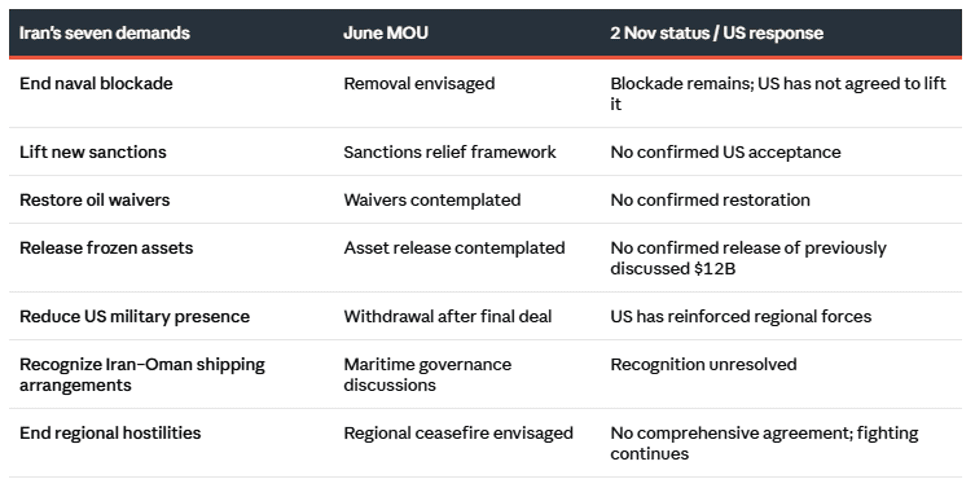
Iran's seven demands largely revisit the June framework. Tehran wants the blockade lifted, oil waivers restored and frozen assets released before reopening Hormuz. Washington wants nuclear concessions first, particularly inspections of damaged facilities and a resolution of Iran's highly enriched uranium stockpile.
Washington has responded to earlier proposals, and Iranian officials acknowledge movement on some conditions. However, the latest draft remains unpublished, and neither side has disclosed what concessions it is prepared to make. The immediate obstacle remains sequencing: Tehran wants economic relief first, while Washington insists on early nuclear commitments.
November 3
More than 53 million Americans have already voted, limiting the electoral impact of any last-minute diplomatic breakthrough. The Financial Times reports that 84% of Americans identify the economy as their most important election issue, while 68% disapprove of Trump's handling of inflation.
If Republicans suffer significant losses, the political calculus surrounding Iran could shift. Once votes are cast, the immediate electoral pressure to avoid another military campaign will diminish. Even a Democratic victory would not immediately constrain Trump's military authority, leaving a window for renewed strikes before the new Congress takes office in January.
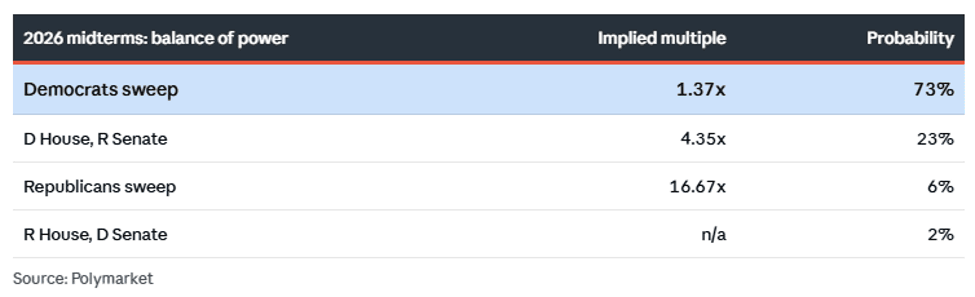
A Democratic sweep — Polymarket: approximately 73%. Democrats would gain oversight and spending leverage, including the ability to block additional Pentagon funding requests. Restricting funds already appropriated would generally require legislation subject to Trump's veto. The new Congress would not take office until January, leaving Trump's immediate military options largely intact.
A Democratic House, Republican Senate — Polymarket: approximately 23%. House Democrats could investigate the war and block new funding, while Senate Republicans could continue confirming nominees and resisting legislation restricting presidential authority. Congressional confrontation would increase without necessarily reducing military pressure on Iran.
A Republican Sweep — Polymarket: approximately 6%. Republican control would leave Trump with fewer legislative obstacles to securing additional military funding or continuing operations. However, divisions over the war's economic costs and its compatibility with America First could still complicate congressional support.
The Bottom Line
Regardless of the election outcome, Trump will retain broad authority over US military operations, and any new congressional constraints will take time to materialize. That leaves a post-election window in which Washington could resume strikes against Iran even as diplomatic negotiations continue.
For energy markets, Iran's response to renewed strikes would shape the next phase of the conflict. Limited retaliation could preserve room for diplomacy, while attacks on Gulf oil production, LNG facilities or commercial shipping could draw other regional powers into the fighting, reignite a full-scale war and trigger another global energy shock. Four months after Islamabad, the same issues remain unresolved, but the consequences of another diplomatic failure could be far greater.

See why the most successful traders and shipping experts use Kpler