Petroline down, exports pivoting east: key scenarios and where the differentials go
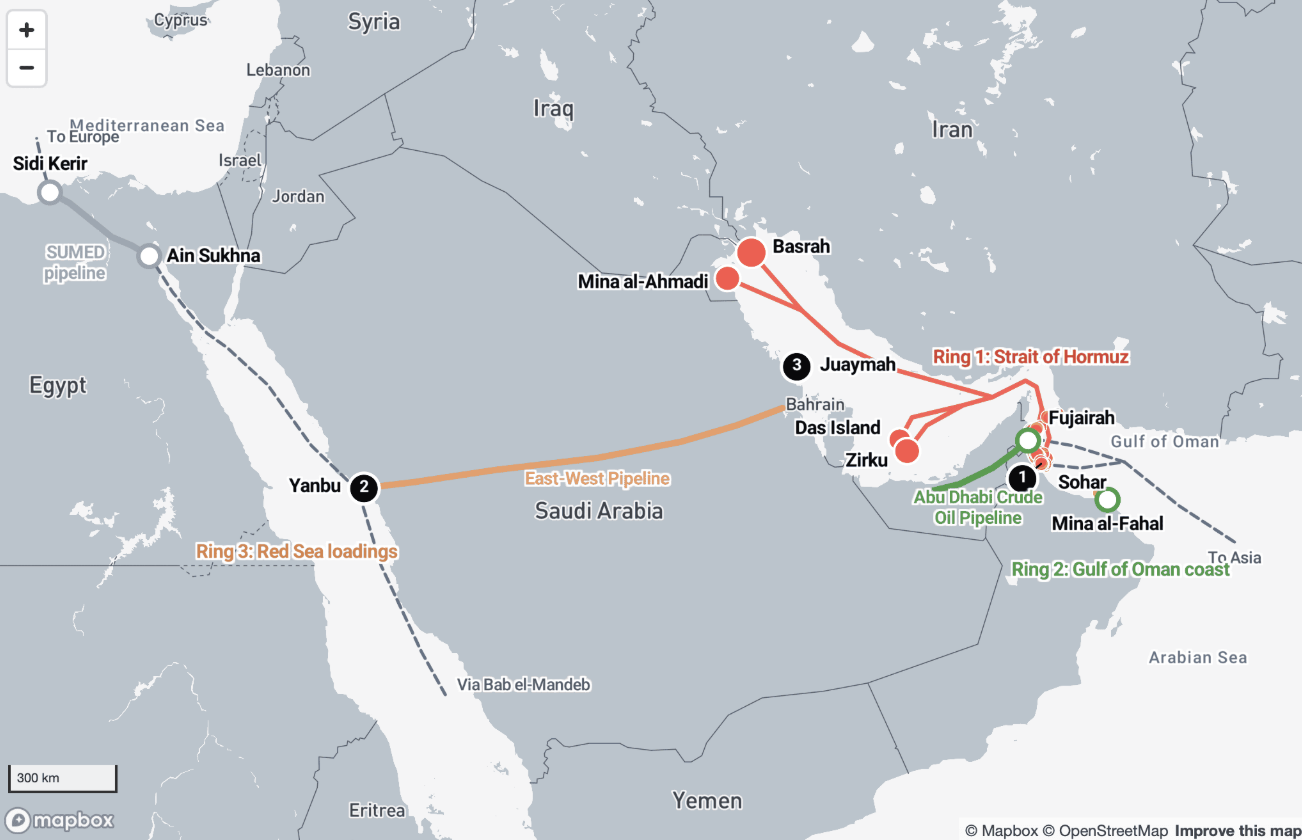
Key takeaways: The pipeline itself is intact, but the damaged pumping station will take four to six weeks to fix, whilst west coast inventories only cover about 3 days of loadings and 9 days of refinery runs. Our base case sees throughput returning at around half of pre-attack rates, cutting Yanbu exports by 2.5 to 2.7 mbd. Dubai structure eases off the extremes but stays bid. Finding ships is not the issue: Bahri and Sinokor can cover the 25 extra shuttle VLCCs per month needed to move 3 mbd through Ras Tanura. The real constraint is how much more Hormuz exposure Saudi Arabia can tolerate.
More details have emerged since Aramco’s East-West Pipeline (Petroline) was damaged last Thursday by attacks reportedly originating from Iraq. As of today, we understand that at least one pumping station has been severely damaged, but the pipeline itself appears to have sustained little damage. Aramco seems to already be laying down a bypass pipeline around the pumping station, but key risks remain.
What's changed since last week
Since our update last week, minor damage to the line itself has reportedly been repaired but the binding constraint is extensive damage to pumping infrastructure, which we expect – as of information received today – to take 4-6 weeks to resolve, given spare-parts availability and impaired supply chains. So far in September, the Petroline sustained around 1.8 mbd of refinery feedstock and 3.6 mbd of oil loadings from the Yanbu terminals.
Two variables drive Saudi export capability, and they are currently moving in opposite directions. Yanbu loadings rebounded by 1.1 mbd to 3.6 mbd in September to date, with a couple of loadings occurring since the attack. However, as Petroline's throughput collapsed last week, the sustainability of Yanbu loadings is now in question. On the other hand, Saudi exports from the Persian Gulf are on the rise: Saudi oil loadings jumped by nearly 2 mbd to 2.46 mbd month-to-date, although volumes passing through Hormuz without STS are stable around 600 kbd. Some Saudi volumes also make part of the STS volumes shipped from the Gulf of Oman, which have risen to 2.5 mbd mtd, up 1.1 mbd m/m. 2.1 mbd of the total is unattributed yet.
East-West pipeline damage
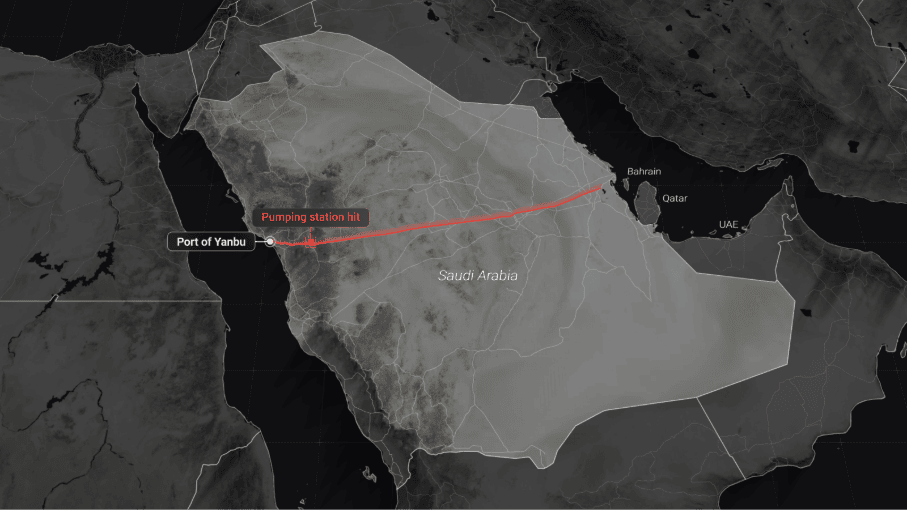
Source: Kpler, based on OSINT reports
From here, we see a few potential scenarios developing:
1. The base case: relatively fast restoration of operations at lower rate and more usage of East Coast terminals (50% probability): Restoring damaged pumping stations and full pipeline operations takes up to six weeks, with a bypass pipeline around the damaged pumping station serving as a temporary fix in the short-term.
In the meantime, Saudi oil infrastructure faces additional attacks. West Coast refineries reduce throughput and increasingly rely on inventories, while Yanbu exports are partially disrupted, including northward flows.
The key issue here is limited crude inventories on the Saudi west coast. We currently assess Yanbu oil terminal inventories at 9 mbbls and other west coast refinery inventories at 16.5 mbbls. Assuming no additional piped throughput, these would be enough to sustain the current pace of loadings and runs for three and nine days, respectively. However, assuming a quick restoration at lower throughput rates of around 50%, Yanbu oil exports could fall by 2.5 to 2.7 mbd if domestic runs are prioritised.

See why the most successful traders and shipping experts use Kpler