
What impact could the Middle East crisis have on the natural gas market?
The escalating conflict in the Middle East is keeping crude oil and natural gas markets on edge, with market participants concerned about potential cuts to regional oil, natural gas and LNG availability should tensions between Israel, Hezbollah and Iran escalate further. These geopolitical tensions come on top of ongoing uncertainty linked to the potential loss of European pipeline gas supply from Russia via Ukraine on 1 January 2025.
In the natural gas market, Middle East concerns are primarily focused on:
- The potential for a shut-in of Israeli gas production, which, if long-lasting, would not only have significant ramifications on Israel itself, but also regional LNG import markets, such as Egypt and Jordan, who are reliant on pipeline gas imports from the country.
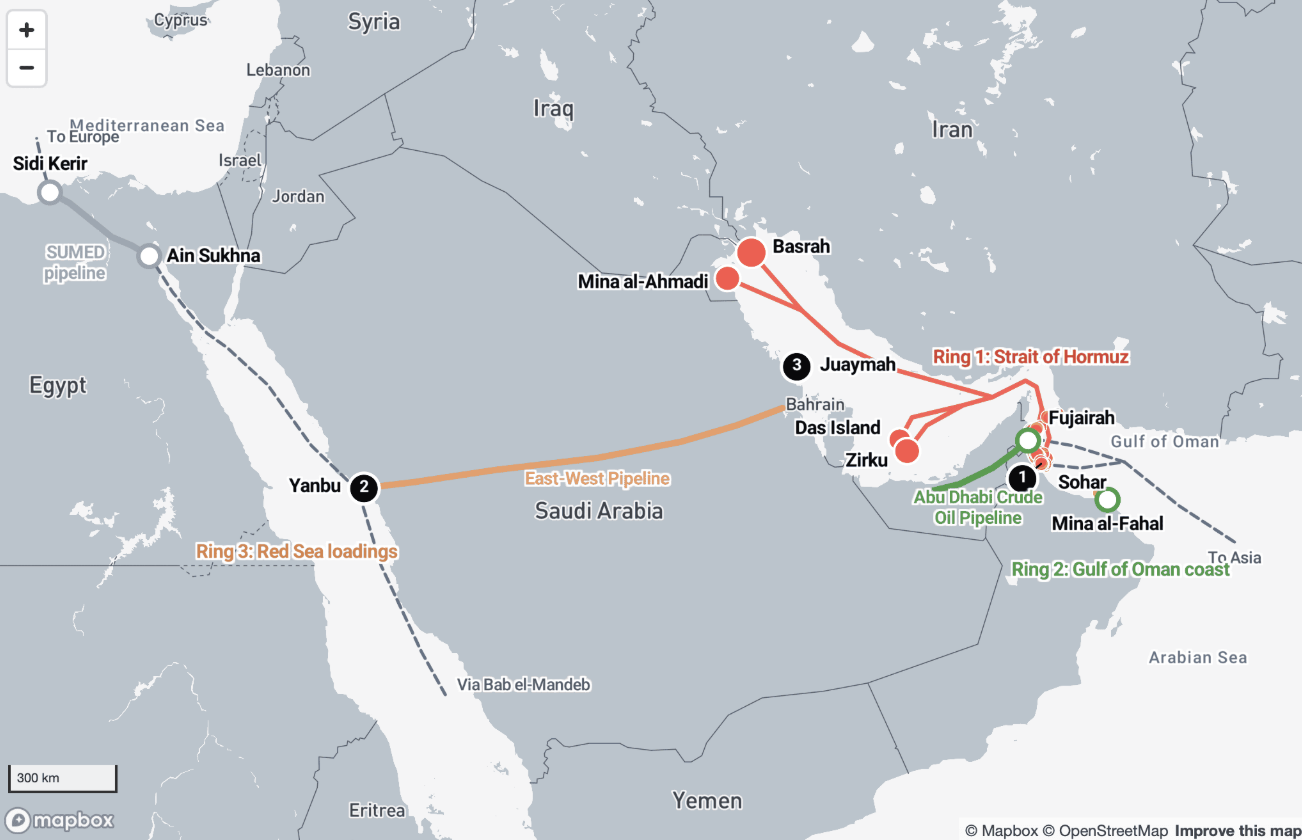
- The disruption to critical supply routes, in particular the Strait of Hormuz, which is a key passage for nearly 20% of the world’s LNG supply. Since January, LNG vessels have been avoiding the Red Sea, so an escalation in shipping attacks around Bab El-Mandeb would have limited effect on LNG trade patterns.
- An Israeli attack on the Tabriz-Ankara pipeline, which ships Iranian natural gas to Turkey could result in the latter switching to alternative sources of gas supply, such as Russian pipeline gas or LNG.
Of these three concerns, a disruption to Israeli gas production is most likely, given the closure of the Tamar field between 7 October-9 November 2023, as well as a brief halt to this field and the Leviathan earlier this month. Should a shutdown take place, we believe Israel would seek to minimise the downtime to avoid ramifications for its domestic economy and export markets in Egypt and Jordan. A more prolonged supply disruption would see Egypt and Jordan pushed into the LNG import market more, however the countries do not have enough spare LNG import capacity to fully displace Israeli pipeline gas for an extended period of time.
Kpler Insight views a long-lasting closure of the Strait of Hormuz as unlikely, given the significant ramifications for global oil and gas markets. Such a scenario would pose a considerable security of gas supply risk, particularly for Asian countries which rely on Qatar and UAE for over one-quarter of all LNG supply. Any action by Iran to close the passage is expected to be temporary as this would result in significant global pressure to re-open the passage in order to avoid a re-routing in trade flows and sustained oil and gas price spike. Closure of the strait could also impact the supply of Iranian crude to China, making it all the more unlikely.
On point three, in alignment with Kpler Insight’s short-term macroeconomic and crude oil outlook, we do not anticipate Iranian oil and gas infrastructure to be the primary target for Israel’s retaliation against Iran following its missile attack on Israeli soil in early October. Instead, Kpler Insight believes military compounds could be the focus, meaning disruption to Iranian pipeline gas exports to Turkey are unlikely.

See why the most successful traders and shipping experts use Kpler
Get daily expert-driven research through Insight.