Black Sea gridlock, a building El Niño and the US-China soybean gamble
Key takeaways
- Ukrainian and Russian seaports handle 30% of global wheat exports, and deep-sea loadings at Odesa, Chornomorsk and Pivdennyi remain frozen after targeted strikes and elevated war risk.
- Russia's Taman terminal was attacked on 30 July, and Kavkaz has recorded no shipments since 16 July, leaving Novorossiysk and Tuapse to account for 90% of Russian wheat exports.
- Kpler estimates Russian export capacity at 2 to 2.5 million tonnes a month excluding Kavkaz, against a theoretical ceiling of 4 million tonnes if every Azov installation ran flat out.
- 34 million tonnes of Black Sea wheat are due to move between July and December, and importers reliant on Ukraine or Russia for over 30% of their wheat have largely not shifted to alternative origins yet.
- Continued US soybean purchases from China suggests that they will meet their 25 Mt purchase commitment. However, little progress has been made on their other promise to buy $17 billion of US agricultural products other than soybean. US agricultural sales excluding soybeans run at roughly $0.6 billion against the $1.4 billion monthly pace needed to meet the commitment.
- A strengthening El Niño threatens Australian wheat yields ahead of the critical September rains and Brazilian soybean yields, with the 2015-16 analogue showing a sharp drop across states covering 29% of Brazil's soybean output.
Black Sea flows are close to a standstill
Ukraine and Russia's seaports represent 30% of global wheat exports, so disruption here is immediately visible on the flow side. In Ukraine, deep-sea loadings at Odesa, Chornomorsk and Pivdennyi (Yuzhny on Kpler) are frozen, with shipowners, crew and terminal operators suspending operations after targeted strikes and elevated war risk. A small share of volume has shifted to the Danube ports of Reni and Izmail, but constrained draughts and limited vessel types mean this cannot replace lost capacity.
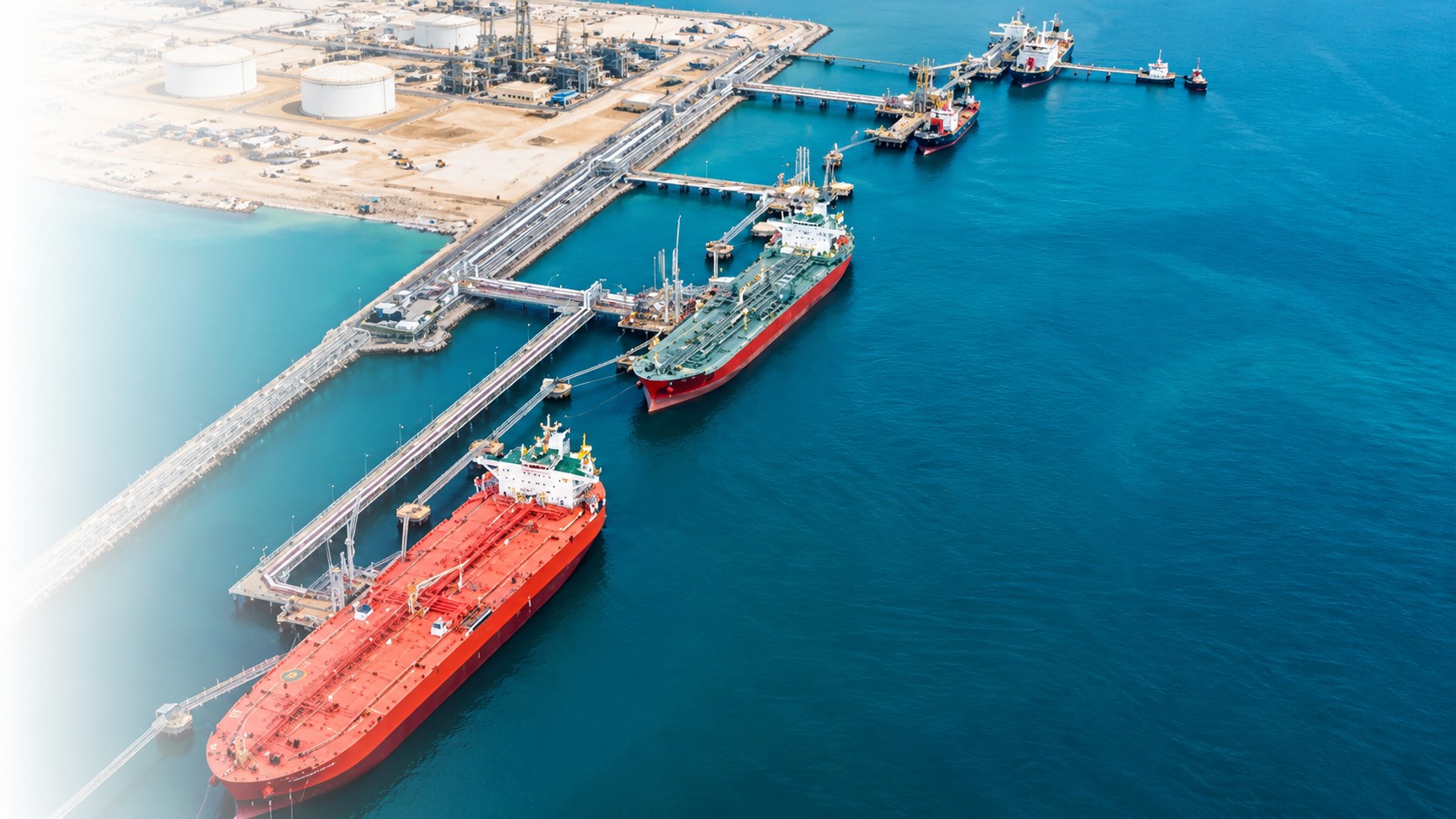
Russia looks just as severe. Taman's terminal was attacked on 30 July, and a wider safety perimeter at the Kerch Strait bridge means vessels cannot load at Kavkaz either, which has seen no shipments since the week ending 13 July. Novorossiysk, fed mainly by rail, is the main functioning point, handling around 50% of exports versus 32% for Kavkaz and 8% for Taman, with Tuapse at roughly 5%. Only two-thirds of terminals at Novorossiysk could resume quickly even with vessels returning tomorrow, and normal capacity of 6 to 7 million tonnes will stay lower for the rest of the year regardless of a ceasefire. Storage compounds it: Novorossiysk's terminals hold under a million tonnes combined against 2.5 million tonnes exported monthly at peak, so with nowhere to unload, domestic prices have fallen sharply exactly when they should be supported by export demand. Ukraine holds a similar overhang, with stocks above 6 million tonnes on a new crop and only limited overland relief through Romanian ports such as Constanta, itself with no spare capacity during its own harvest peak.
Kpler still tracks a positive vessel lineup for the Black Sea, but most now route to Romania and Bulgaria instead, with a significant number anchored off Istanbul in the Sea of Marmara, in the hope of a ceasefire.
Importers reliant on Ukraine or Russia for over 30% of their wheat span North Africa, the Middle East and East Africa, and most have simply drawn on domestic stocks rather than rushing to alternatives, aside from Saudi Arabia's unseasonal Romanian purchases and Jordan's repeat tender likely serviced from Eastern Europe. The reluctance is about price: the jump from Black Sea wheat to Argentine or Australian origin is significant, and the jump to European wheat is larger still. Demand destruction is already shrinking global trade through July, August and likely September, echoing the 15 million tonne contraction seen in 2024-25; if disruption persists, lost volume shifts to Europe first, with spillover to Canadian, Australian and Argentine supply.
Choke points beyond the Black Sea, and a widening fertiliser gap
Gulf Cooperation Council countries have largely solved bulk grain imports by routing around the Strait of Hormuz. Iran is the exception, still importing large quantities via Hormuz because Chabahar plus limited Caspian volumes cannot match the capacity or logistics of its main northern import point.
Fertiliser looks worse. Mideast Gulf exports spiked after last month's ceasefire memorandum but have fallen back to spotty activity, and Saudi Arabia's lifted Red Sea fertiliser exports remain roughly ten times smaller than what was lost via Hormuz. That gap shows up in urea trade between India and Brazil: India rushed to buy urea through tenders at very high prices as the Gulf conflict began, crowding out supply from Egypt and Russia that would otherwise have gone to Brazil. Brazilian urea imports have dropped sharply over the last three months, right before the country needs nitrogen for its main soybean and corn crop (180 million tonnes of soybeans, 26 million tonnes of corn) planted from late September, and flows suggest a shortfall just before that window opens.
El Niño builds toward a September test
A strong El Niño for the rest of the year has become more likely. Eastern Australia and Southeast Asia face significantly lower September to November precipitation, while western Australia sees higher temperatures. Australia's wheat crop looks good so far on soil moisture, but the crop is made by September rain, and the long-term forecast for that month is significantly below average. Kpler's yield estimate already sits below the market's, assuming a full El Niño effect, and will be revised weekly against actual rainfall.
In Brazil, Rio Grande do Sul tends to run wetter than normal in El Niño years while the rest of the country, including top producer Mato Grosso, runs hotter and drier. Kpler's soybean view sits below the market and below last year, but the 2015-16 analogue, the closest comparable strong El Niño year, showed a much sharper drop across states covering 29% of Brazil's soybean production, a downside not yet fully reflected in the balance sheet. Southern African corn imports, currently just over 2 million tonnes, have historically risen in strong El Niño years, and India's monsoon, 12% below normal, matters less given record wheat and rice stocks.
US-China trade: strong on soybeans, quiet elsewhere
Chinese demand for US soybeans remains firm, including a flash sale in the latest session, driven largely by tariff-exempt state buyers such as Sinograin. A fourth auction of Chinese soybean reserves since July points to space being cleared for incoming US cargoes, and Kpler now expects China to take 25 million tonnes of US soybeans under current relations, with US FOB values around $10 a tonne under Brazil keeping the flow competitive. September to November alone typically covers at least 40% of the full export campaign, risking front-loaded sales that leave the balance sheet tighter later, especially with 500 to 600 million more bushels of crush demand this year on more favourable biofuel policy.
Elsewhere, the picture is far quieter. China's $17 billion 2026 non-soybean agricultural commitment implies roughly $1.4 billion a month pro-rated from June to December, yet the latest US customs data excluding soybeans shows just under $0.6 billion, down about 4% from May. China has picked up no US corn or wheat, remaining active only in sorghum; recent wheat flows to China have been Canadian, corn from Argentina and Brazilian safrinha supply. The 24 September Xi-Trump meeting is the watchpoint: stronger purchasing could follow if the relationship holds, or demand could stay absent as it did for much of last year.
EU corn takes the heat, wheat and barley escape largely unscathed
Record average temperatures across Western Europe in June and July hit the bloc's cereal crops differently. Wheat and barley, both winter-sown, were forced into an early finish, with small losses, as earlier dryness accelerated maturity and harvest; barley yields sit close to the five-year average and only a few million tonnes have come off wheat. Corn took the brunt, with the heat coinciding with its key yield development stages. The French crop is currently about 50% through the dough stage, and coming rain is unlikely to offset the damage already done.
That shortfall is feeding stronger EU corn import demand on a more competitive wheat-corn feed spread. A softer Ukrainian presence in August is being offset by more US corn and the seasonal pickup of Brazilian safrinha supply, with buyers already positioning for a tighter balance sheet. If Ukraine's Black Sea access stays constrained, the 2022-23 pattern of Ukrainian corn moving overland into Romania before onward export could resurface, though it depends on some Black Sea access to reach demand centres such as Spain and Netherlands.
Key watchpoints
- Whether Black Sea shipping resumes if a ceasefire holds, given only two-thirds of Russian terminals could restart immediately.
- Australian rainfall through September, which will determine how much of Kpler's below-market wheat yield estimate materialises.
- The 24 September Xi-Trump meeting, which will shape whether China's non-soybean purchases close the gap to its $17 billion commitment.
- Whether Mideast Gulf fertiliser trade normalises, given Red Sea alternatives remain roughly a tenth of the volume lost via Hormuz.
The Black Sea disruption has not yet been fully priced into wheat markets, and neither has the scale of El Nino's potential hit to Brazilian soybeans. Both are still building, not resolving.

See why the most successful traders and shipping experts use Kpler

Get real-time market intelligence on how global disruptions are reshaping grains trade