
Russia to the rescue? Not with these freight rates
Trump's decision to reopen the US market to Russian diesel could provide temporary relief to a global market facing a significant diesel deficit, but Russia's constrained refinery capacity limits how much additional supply it can deliver. With crude and freight costs exceptionally high and refinery margins already negative in some regions, further declines in diesel prices risk triggering refinery run cuts and a broader refined-product shortage.
Russia to the Rescue? Not with these Freight Rates
On Friday, President Trump surprised Ukraine and the market, by announcing an agreement with President Putin to make Russian diesel available to the US and global markets. According to Trump, Russia would immediately supply more than 2.2 million bbl, followed by another 3.7 million bbl in November and 7.5 million bbl shortly thereafter. An additional 22.4 million bbl could follow, depending on the condition of Russian refineries.
The announcement comes just three weeks after President Trump signed the Lindsey O. Graham Sanctioning Russia and Iran Act into law on September 18, authorizing tariffs of up to 100% on certain countries importing Russian energy. The US Treasury's subsequent decision to authorize Russian diesel imports marks a shift in policy.
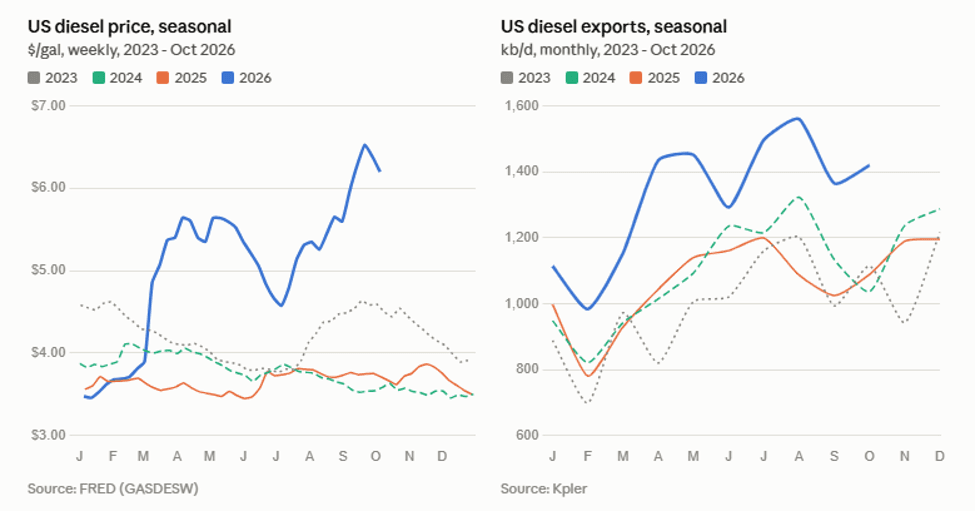
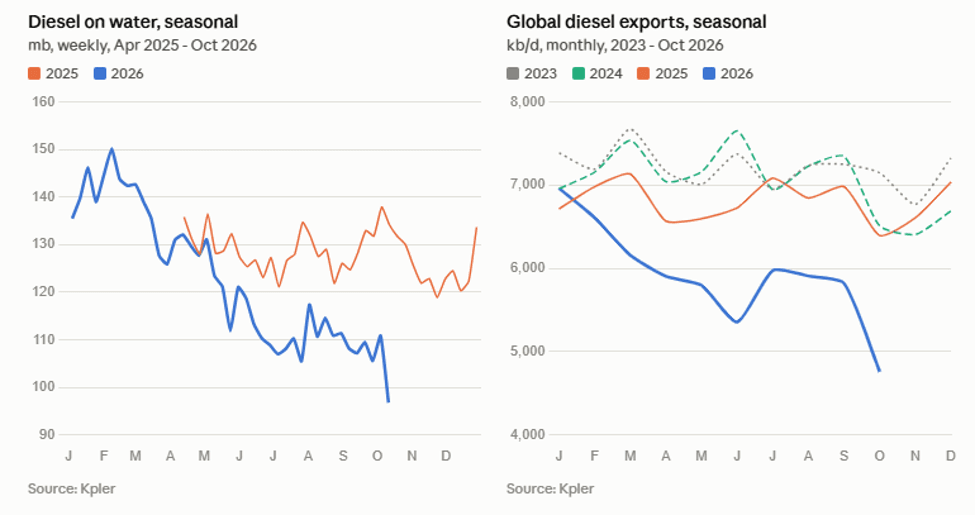
While the US certainly has a diesel price problem, it does not have a supply problem. US diesel prices have recently climbed above $6/gal, driven by strong international demand and reduced diesel exports from Russia and the Middle East. Yet the US remains the world's largest diesel exporter, with shipments running at approximately 1.4 million b/d in October. Importing Russian diesel into a market that is already exporting substantial volumes does little to address the underlying price pressures and creates trade flows that would not naturally occur under current market conditions.
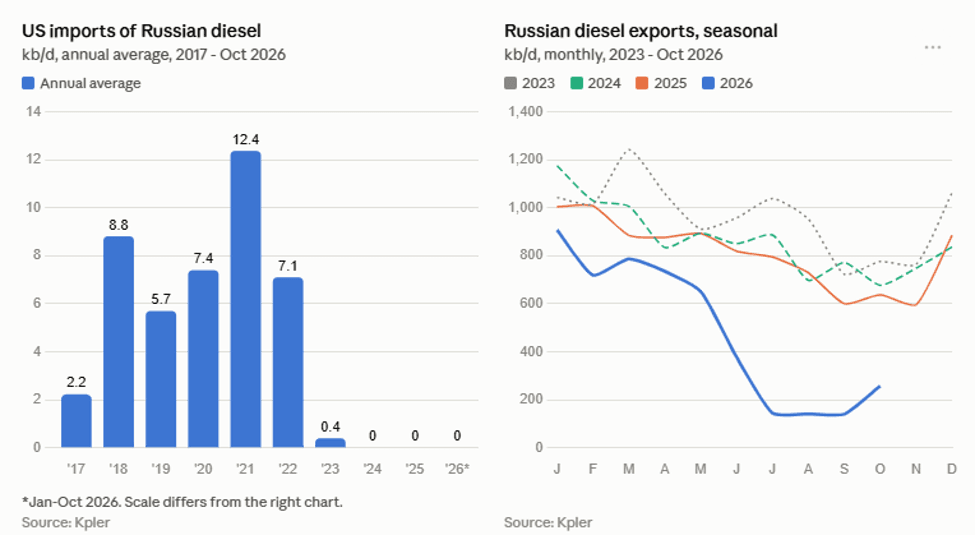
Russian diesel has historically played almost no role in US supply. Kpler data shows that US imports of Russian diesel have remained below 15k b/d over the past decade and have been effectively zero since 2024. So why would the US begin importing Russian diesel now, when it is already exporting substantial volumes to the rest of the world?
Russia’s Constraints
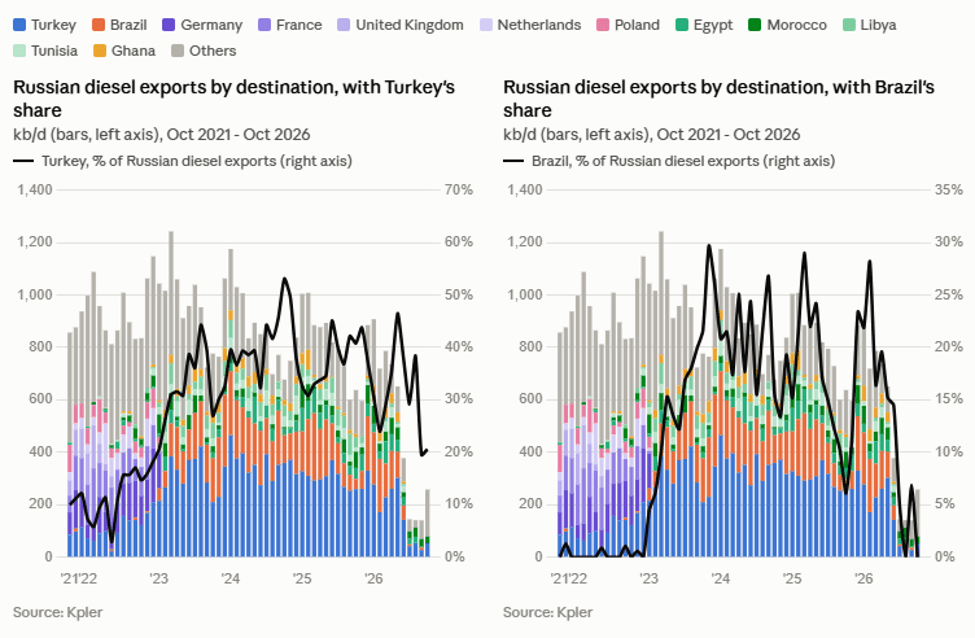
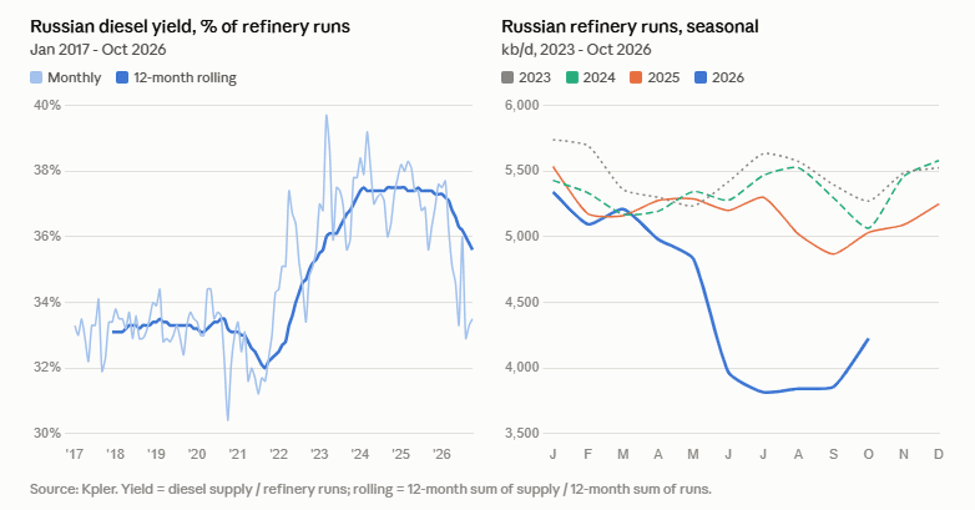
Russia has limited additional diesel to offer. Nearly 40% of its refining capacity is idle amid repeated Ukrainian attacks, while shipments to its largest customers, Turkey and Brazil, have already fallen sharply. If Russia had more diesel available, those barrels could readily move through established trade routes rather than requiring a new market in the US.
Russia has also restricted diesel exports to ensure adequate domestic supply. With demand running at approximately 1.2 million b/d and production at just 1.4 million b/d, there is little surplus available for export, particularly as domestic consumption rises heading into winter.
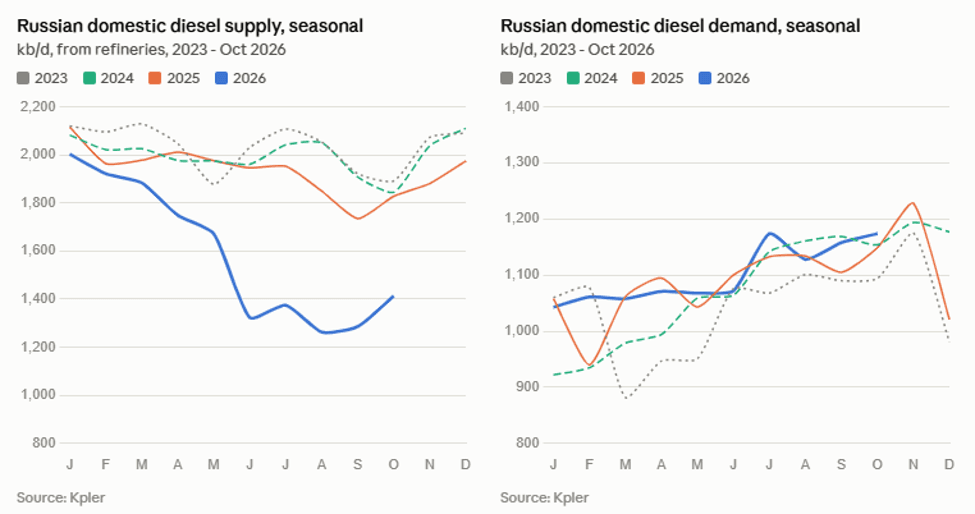
Despite diesel yields increasing from 33% to 37% over the past several years, the sharp decline in refinery runs has left Russia with little room to increase production or exports.
Current Market Deficit
The global diesel market is facing an estimated 1 million b/d supply deficit as we head into peak seasonal demand. European strategic stock releases, combined with the potential return of additional Russian diesel, could temporarily cut that deficit in half over the next 90 days. However, Russia's ability to deliver additional barrels remains uncertain, and stock releases offer only temporary relief. More importantly, with crude and freight costs already exceptionally high, lower diesel prices will exacerbate another problem: deteriorating refinery margins.
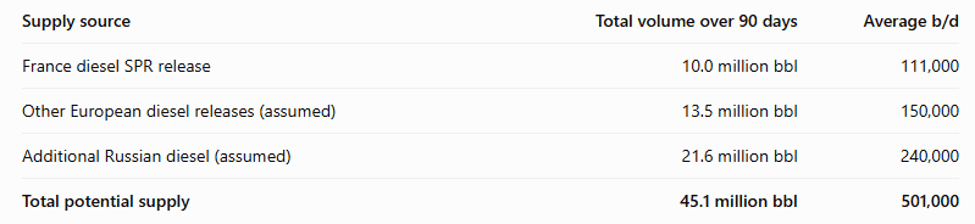
Note: Assumes a 90-day release period. French diesel volumes are announced, while additional European stock releases and incremental Russian diesel exports are illustrative estimates, subject to availability and timing. Russian volumes are assumed to represent additional global supply rather than redirected trade flows.
Baltic and Black Sea Risks
Source: Kpler
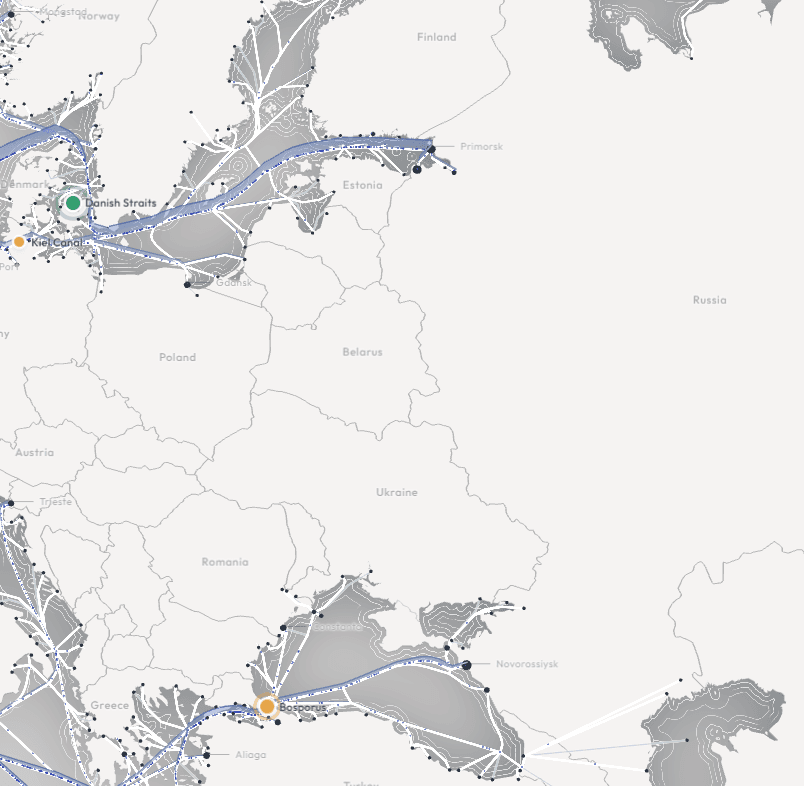
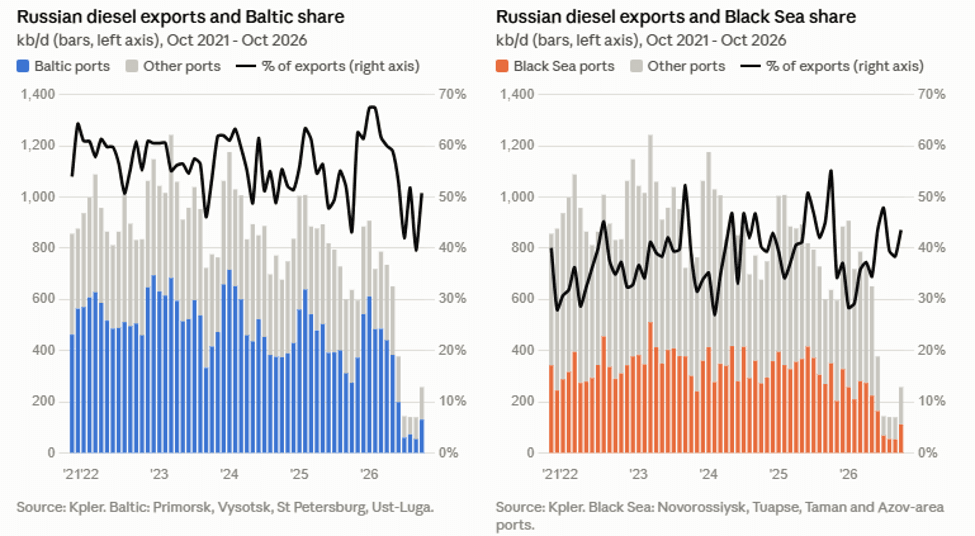
Getting Russian barrels to international markets presents another challenge. Historically, roughly half of Russian diesel exports have moved through Baltic ports, with another 30–40% moving through the Black Sea. Both routes face growing disruption risks. Ukrainian drones have targeted Baltic export infrastructure at Primorsk and Ust-Luga, while attacks on commercial shipping in the Black Sea have raised concerns about maritime security. On October 6, the tanker Aframax Rio was reportedly struck off Russia's coast near Sochi, while two other commercial vessels were hit off Bulgaria, one of which sank.
For Black Sea exports, which must transit the Bosphorus Strait to reach international markets, the risk of further attacks could drive freight and insurance costs higher. That would make Russian diesel more expensive to deliver, potentially offsetting some of the price relief from additional exports.

See why the most successful traders and shipping experts use Kpler