Distillates continue to drive support for margins
Tight diesel inventories and Russian supply disruptions support refining margins globally, while weakening gasoline demand and softer Asian fuel oil cracks expose growing regional divergences and limit further upside.
Market & Trading Calls
Light Ends:
- Slightly bearish WoS naphtha cracks amid tapering gasoline blending demand and weaker petchem margins, although November cracks should settle above October levels.
- Neutral EoS naphtha cracks, with weak downstream margins and cracker maintenance capping upside despite constrained Middle Eastern and Russian outflows. Elevated freight rates should persist, while the E/W arbitrage remains open.
Gasoline:
- Neutral West of Suez cracks: USGC cracks should hold steady, with most of the seasonal softness already baked into prices. In Europe, lingering refinery turnarounds should offer cracks some modest support.
- Neutral East of Suez cracks: Singapore cracks look set to hold flat after their sharp slide, with Chinese export volumes the key swing factor. Pertamina’s tighter Q1 2027 tender rules could also redraw regional supply flows.
Middle Distillates:
- Slightly bullish West of Suez gasoil: ongoing refinery attacks against Russian refineries will impair future diesel exports as refinery runs drop. The effect of this will be somewhat lagged but will affect trading for December cargoes in the likes of Brazil and Turkey, bolstering support for alternative sources such as India and the US Gulf Coast.
- Neutral East of Suez gasoil: fewer Chinese cargoes are expected and now already priced in. High freight is keeping arbitrage out of Asia to the West difficult but movement in the Gulf is in a slight weekly decline.
- Slightly bearish jet fuel in Europe and Asia: Tighter gasoil in Asia to keep the regrade negative in the short term, while there is limited prospects for European jet fuel given seasonal demand reductions and normal level of imports.
Heavy Distillates:
- Slightly bullish NWE VLSFO cracks due to resilient hydrocracking economics and thin distillate inventories sustaining competition for low sulfur blendstocks, supporting VLSFO cracks into winter.
- Slightly bearish Singapore VLSFO due to softer Asian conversion margins and increasing Indonesian low sulfur waxy residue exports improve potential blending availability and pressuring regional cracks.
Americas: USGC cracks up as diesel stocks hit October low
USGC refinery margins rose across configurations w/w with low domestic inventories, healthy domestic demand and constrained global supply boosting gasoline and middle distillates. Refinery runs rose by 199 kbd w/w in the latest EIA release to 16.7 mbd and will likely rise further to around 17 mbd with some maintenance still finishing up.
USGC refinery margins ($/bbl)
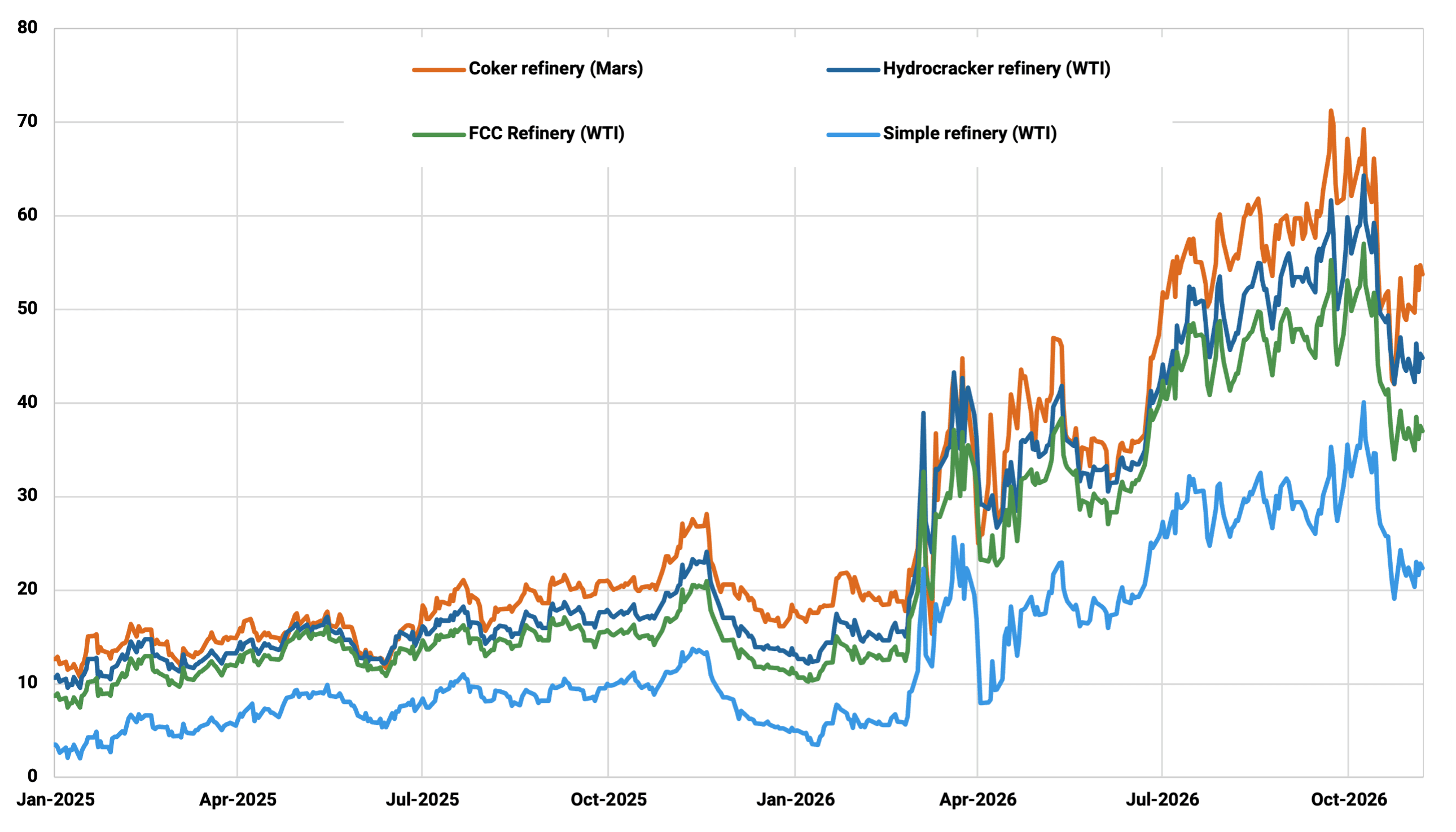
Source: Kpler calculations based on Argus Media data
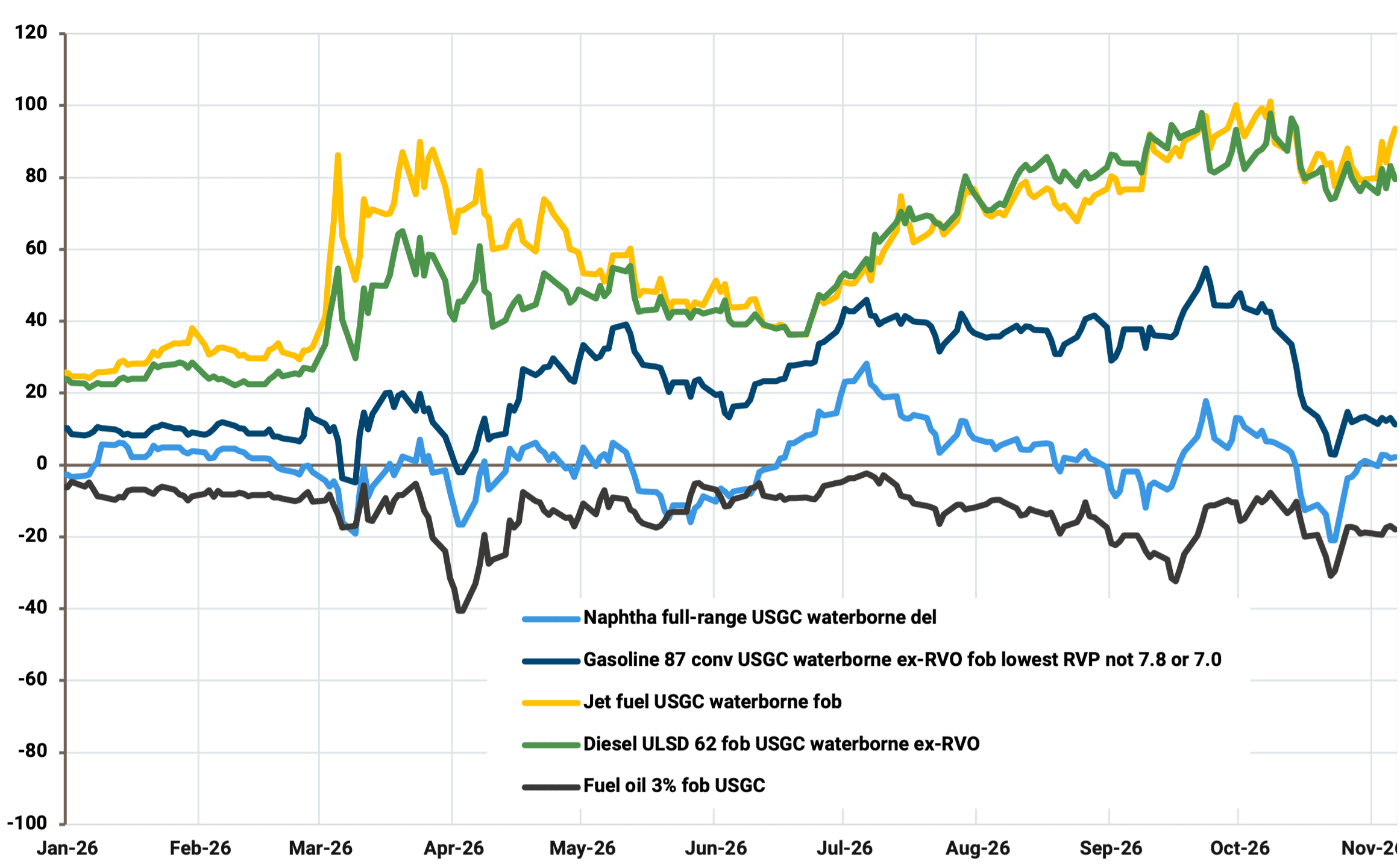
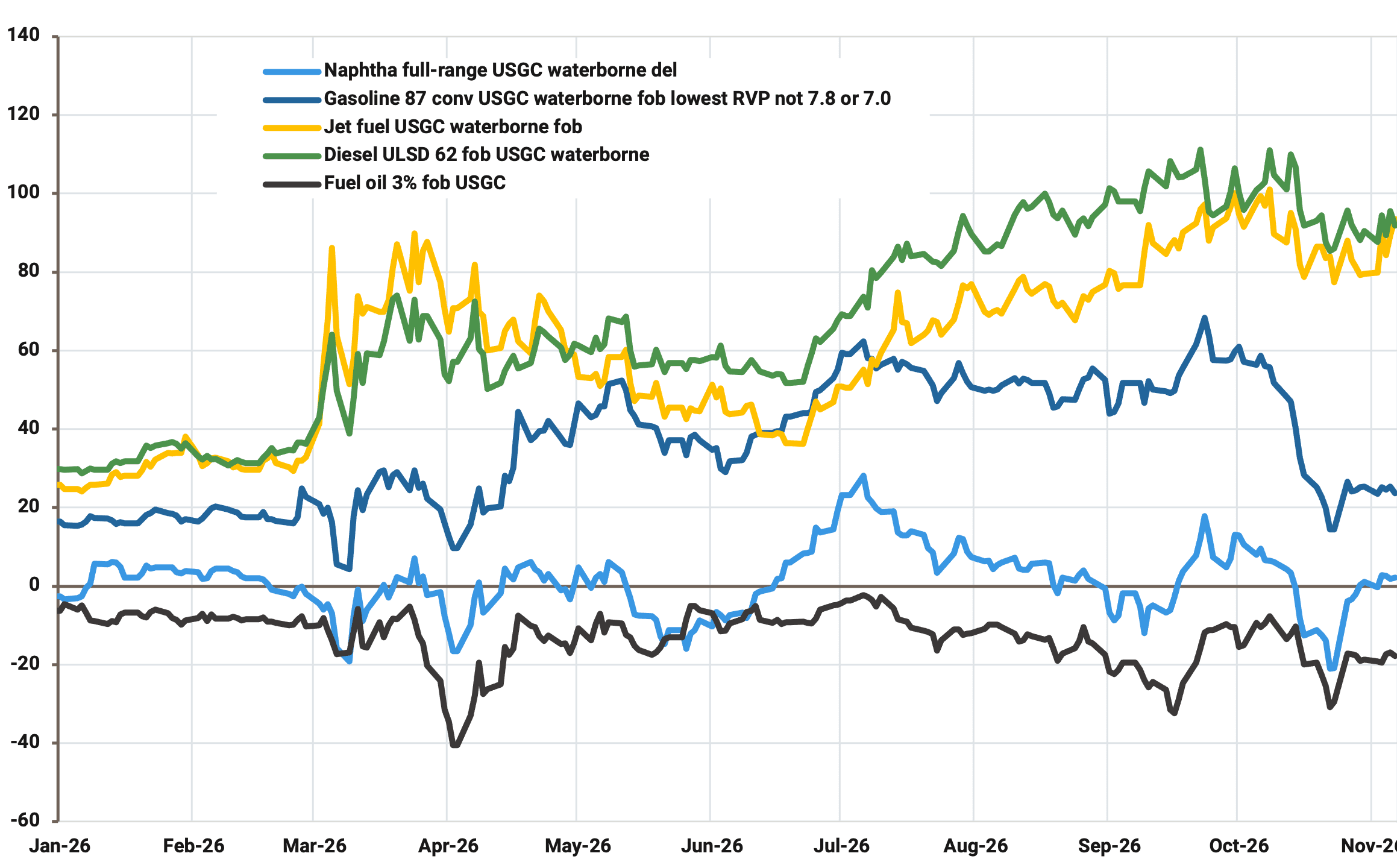
USGC naphtha cracks rose by $1.3/bbl w/w, boosted by reformer outages. Exports are constrained by high freight rates, and the strength in the market is concentrated in the east with Middle East and Russian supply constrained. The outlook is bearish with gasoline blending demand likely to fall further.
USGC gasoline cracks excluding RVO declined by $1.2/bbl w/w, while RVO-included cracks fell by $0.8/bbl. Demand is down by less than one percent on four-week average basis per the EIA, despite AAA retail prices averaging almost $1/gal higher as of November 6. Supply is constrained by middle distillate cracks outperforming gasoline and limiting yields with finished motor gasoline production down by 112 kbd y/y on a four-week average basis. Demand will wane seasonally while refinery runs pick up post-maintenance season, driving a bearish outlook.
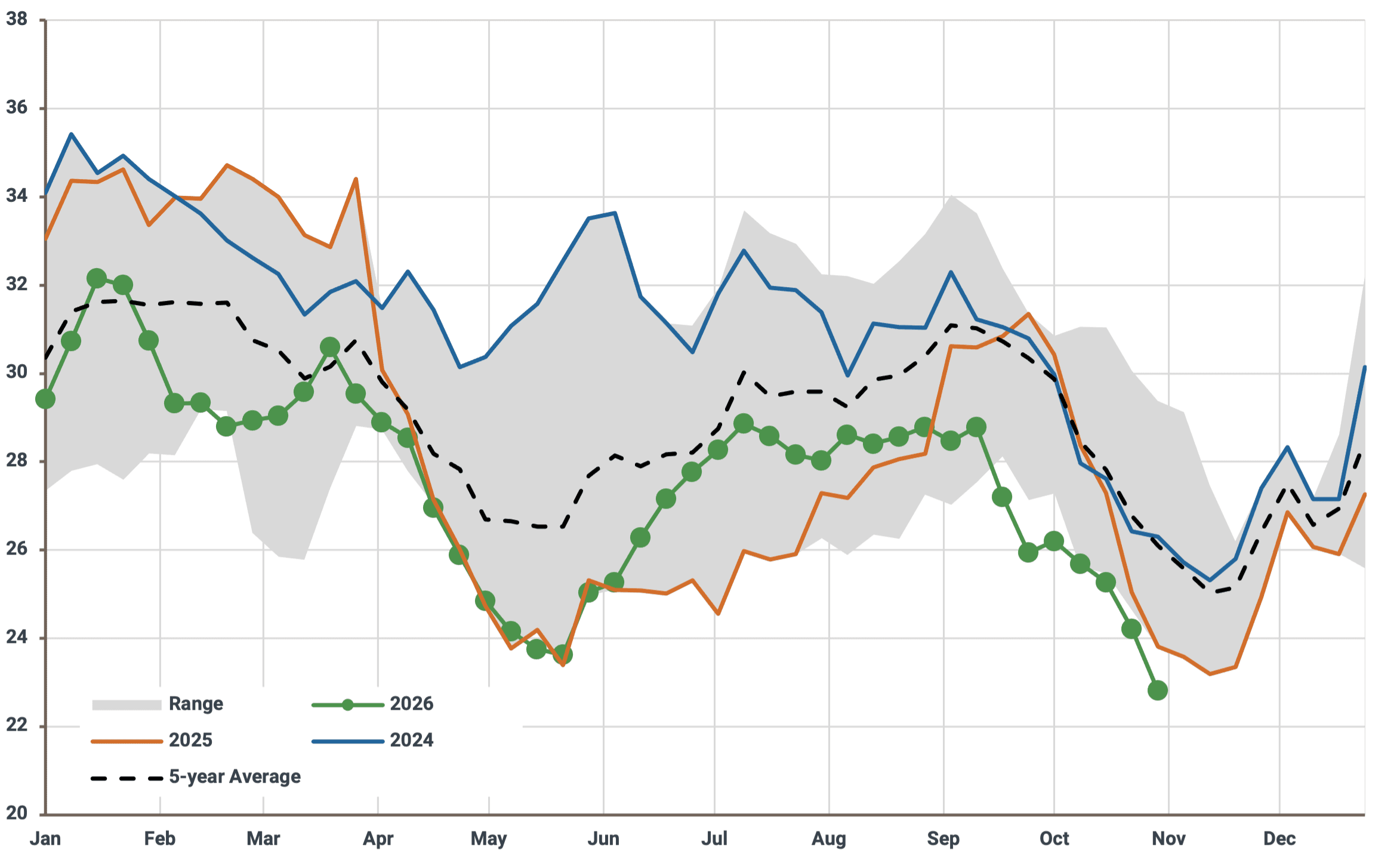
PADD 2 Diesel Inventories (mb)
Source: EIA
USGC ultra-low sulfur diesel (ULSD) cracks excluding RVO rose by $4.0/bbl w/w, while RVO-included cracks rose by $4.4/bbl. US diesel inventories dropped below 100 Mb in the week ending October 30, hitting a 22-year low for any month and an all-time October low (-22 mb from the five-year seasonal average) in EIA data. PADD 2 inventories fell by 1.4 mb to the lowest level since November 2014, with the corn harvest running behind the five-year average and driving an extended demand boost. Export demand remains robust, while rising Russian exports will lessen the pull if they are sustained, but renewed attacked on Russia’s refineries mean the recovery in its runs and diesel exports will likely come in below initial expectations. The outlook still leans bearish with PADD 2 harvest demand easing in the near-term even if the export pull remains elevated, but winter still presents an upside risk given PADD 1’s seasonal demand increase for heating, against regional stocks still near the all-time low level for EIA PADD 1 inventories.
USGC jet fuel cracks rose by $12.1/bbl w/w, while the regrade rose by $8.2/bbl. While continually spiraling Middle East tensions constrain global supply, PADD 3 exports will likely dip from the current elevated pull with NWE and Med import demand both easing from October. Jet inventories are 1.8 mb above the five-year seasonal average, but the length is concentrated in PADD 3 which is 2.4 mb above its average. Tightness going into the holiday season should drive elevated differentials in PADD 1 (-500 kb from the five-year average) and PADD 2 (-100 kb) as the regions compete for volume with the export market and line space with the diesel and gasoline market. TSA passenger throughput dropped by 9% m/m (-4% y/y) in the first five days of November and air travel will be subdued until late-November Thanksgiving travel. Jet cracks lean bearish with high refinery runs against tepid domestic demand but the regrade will stay positive given easing diesel demand.
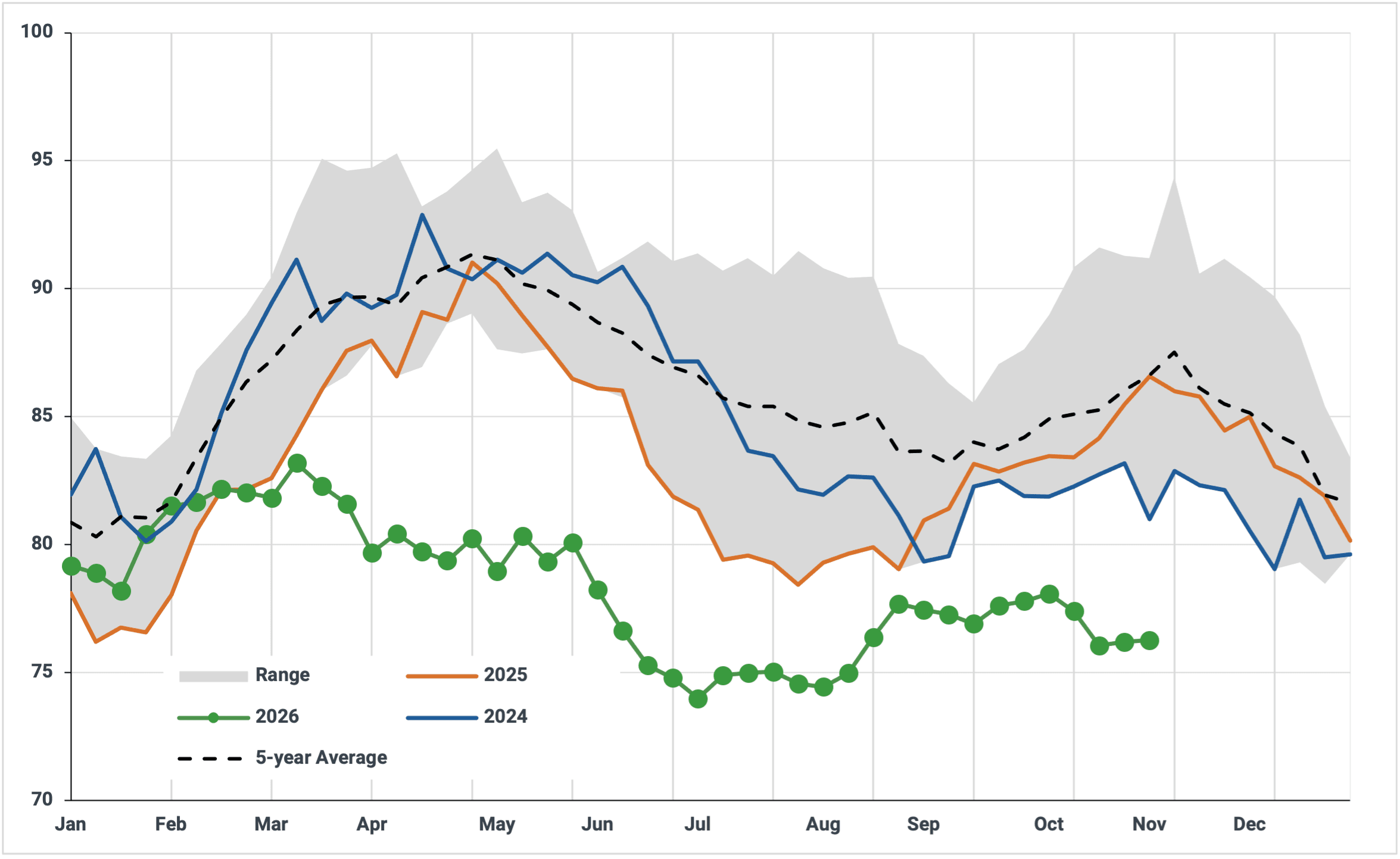
US Unfinished Oil Inventories (mb)
Source: EIA
USGC high sulfur fuel oil (HSFO) cracks rose by $1.6/bbl w/w, while VLSFO cracks rose by $8.5/bbl with the sulphur spread widening by $6.9/bbl. Mexico’s HSFO exports picked up, with the Olmeca refinery’s maintenance expected to end by the beginning of November. Demand from the US for secondary feedstock will rise with its maintenance season ending and refinery runs rising, and the outlook leans bullish with inventories 2 mb below the five-year average against rising domestic demand and healthy export volumes. The VLSFO outlook is also bullish with limited VGO supply tightening blending components. VGO cracks are outpacing gasoline with unfinished oils inventories 10 mb below the five-year average, but until FCC utilization dips, the outlook remains firm.
USGC cracks (excluding RVO) based on Mars month 1 ($/bbl)
Source: Kpler calculations based on Argus Media
USGC cracks (including RVO) based on Mars month 1 ($/bbl)
Source: Kpler calculations based on Argus Media
Europe & FSU: Margins recover in both European regions, but the Med continues to lag
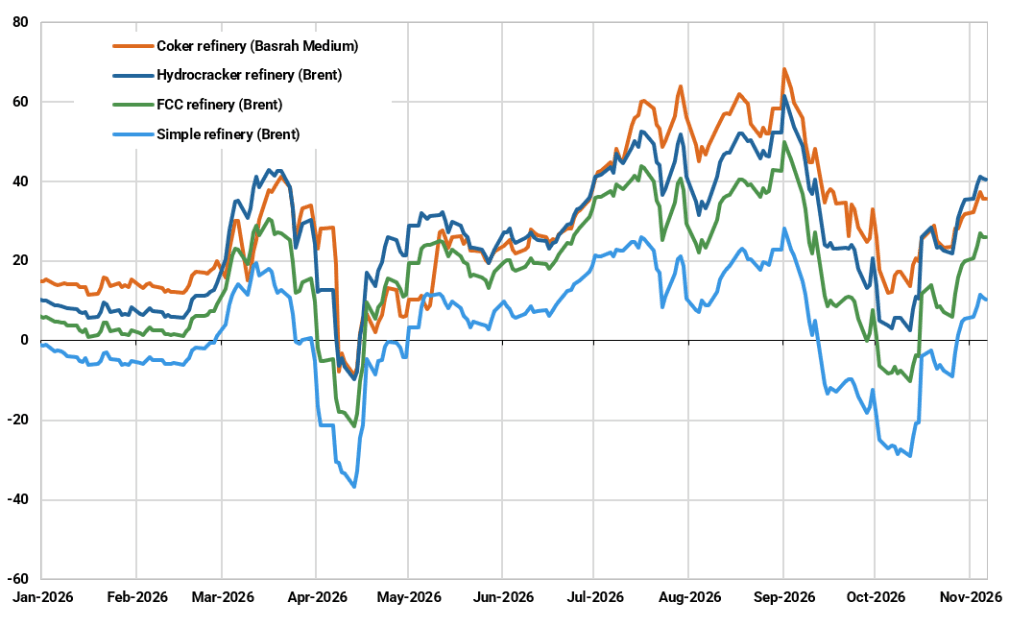
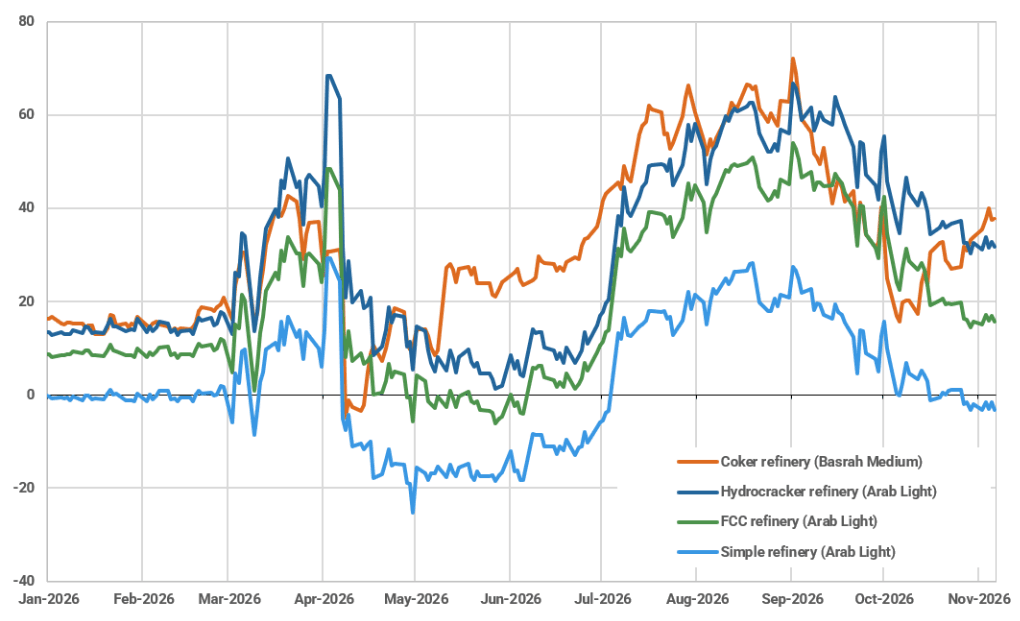
Refining margins recovered w/w in both NWE and the Med, but with the latter region still lagging. Product cracks were up w/w across the barrel, except for HSFO, sustaining refining gains. However, upside potential will be capped going forward, given lengthening refined product balances.
Margins for cokers were up by $4.35/bbl in NWE and $4.15/bbl in the Med. In turn, hydrocrackers added around $6.00/bbl in NWE, while edging up $0.90/bbl in the Med. Gasoline-heavy FCC and RFCC units were up $6.55-$6.95/bbl in NWE but only $0.80-$1.25/bbl in the Med. Lastly, simple refineries gained $5.45/bbl w/w in NWE, moving out of unprofitability territory, whereas the Med recovered only $0.20 /bbl w/w, remaining in the red.
NWE Refining Margins ($/bbl)
Source: Kpler based on Argus Media
Med Refining Margins ($/bbl)
Source: Kpler based on Argus Media
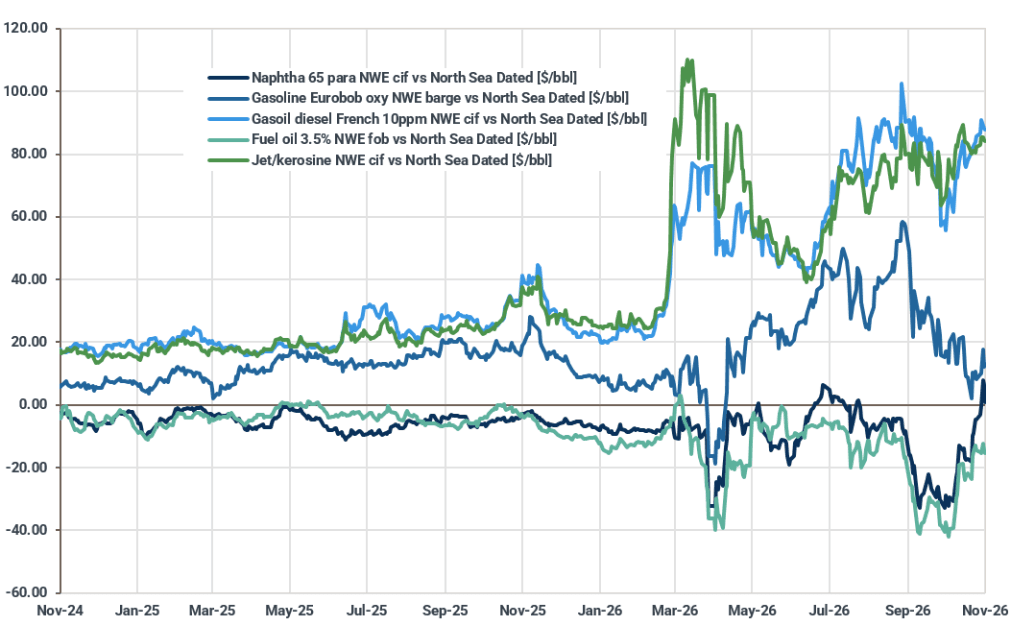
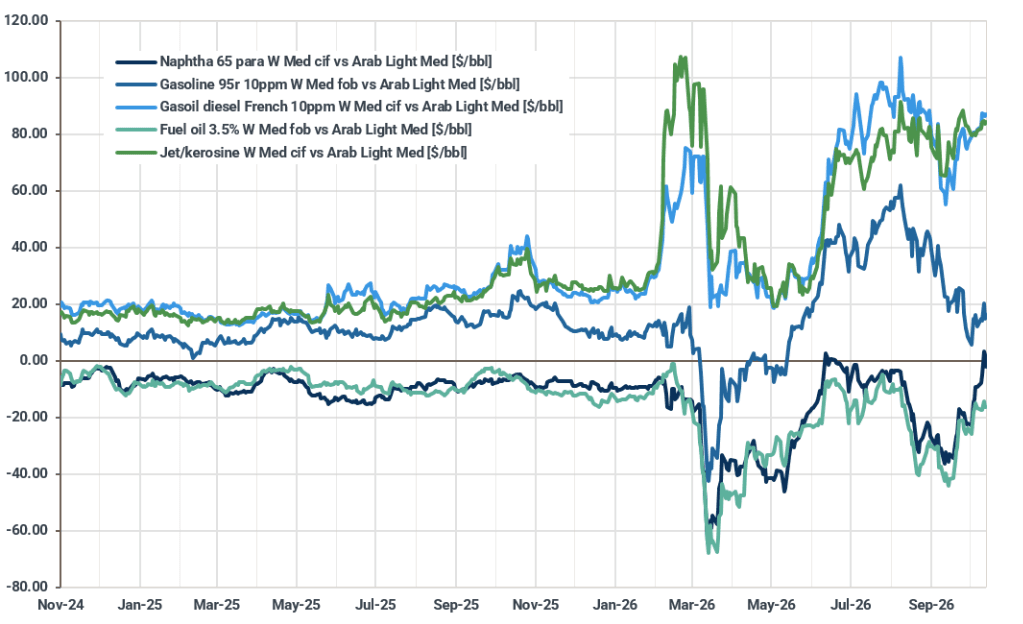
Naphtha cracks jumped $8.10/bbl w/w in NWE and $9.20/bbl in the Med, as crude price losses outpaced the fall in outright naphtha prices. That said, gasoline blending demand continues to weaken in line with seasonality with reforming spreads falling further w/w, while easing refinery outages should increase regional naphtha availability. As such, we expect cracks to soften over the coming weeks, although supporting eastbound arbitrage opportunities for Med cargoes will add a floor.
Gasoline cracks reverted some of the recent losses, up by $3.15/bbl in NWE and $1.25/bbl in the Med, coming back to the mid-teens and re-aligning with seasonal ranges. We believe this correction will leave cracks broadly stable in the near term as gasoline fundamentals continue to lengthen over the coming weeks. ARA stocks have risen again in the latest data, coming back within the lower bound of the seasonal range, and EU-27+UK+Norway gasoline exports have had a weak start to the month, limiting any sustained recovery for European gasoline.
Middle distillate cracks were up w/w, with ULSD gaining $3.25/bbl in NWE and $6.10/bbl in the Med, while jet fuel cracks advanced about $2.95/bbl in NWE and $3.45/bbl in the Med. The regrade moved lower in both regions, down by $0.30-$2.65/bbl w/w as of Friday, staying in negative territory. Our outlook for European middle distillates is mixed with slightly bullish diesel/gasoil in the near term, but with bearish jet fuel fundamentals, given fast reducing regional deficits. Refinery disruptions, logistical constraints, and geopolitical risks should sustain prompt diesel strength, as renewed attacks on Russia's Yaroslavl and Ryazan refineries threaten the recovery in refinery runs observed in October. Russian diesel exports are now expected to fall short of the initially planned volume exceeding 2 million tons, reducing the anticipated supply pressure on European markets.
HSFO cracks fell by around $1.15/bbl in NWE and $0.60/bbl in the Med, undoing some of the previous weeks’ gains. Additional imports from the US, Venezuela, and Mexico are adding to rising regional supply availability, pressuring the market. That said, we maintain a neutral outlook for European HSFO in the near term, with benchmark crude volatility remaining a risk.
NWE Cracks ($/bbl)
Source: Kpler based on Argus Media
Med Cracks ($/bbl)
Source: Kpler based on Argus Media
East of Suez: Diesel bounce bumps margins but gasoline and fuel oil drag
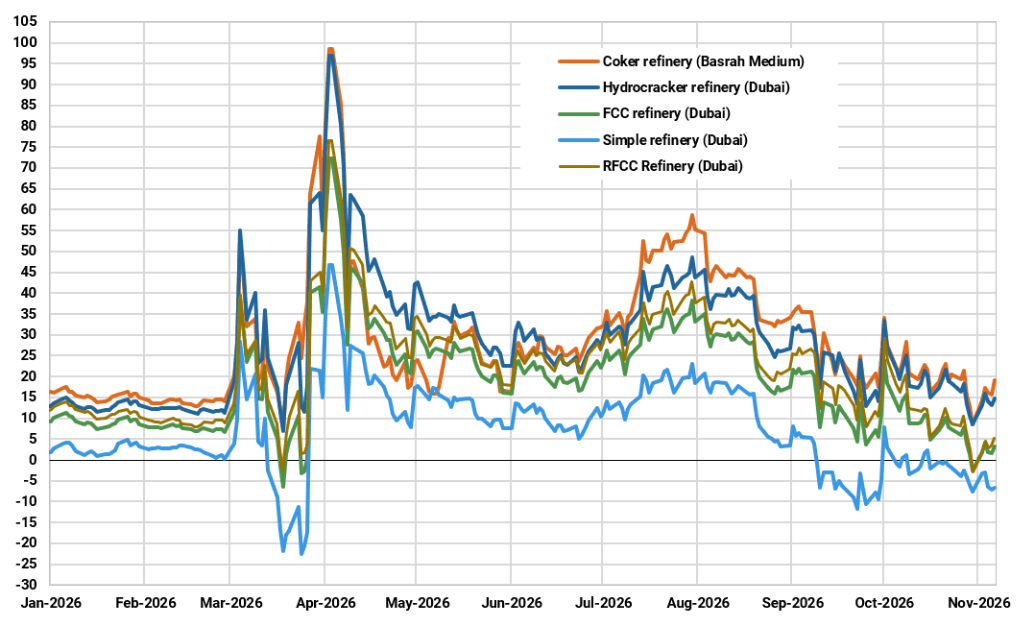
Singapore benchmark refinery margins increased across nearly all setups w/w due to stronger distillates cracks. Weaker fuel oil saw simple refineries’ economics drop slightly w/w and they remain negative. Gasoline correcting lower over recent weeks is similarly weighing on FCC-focused refinery margins. Uncertainty around Chinese run rates and their effect on product exports, given low domestic stocks, continues to be a driver of short-term transportation cracks. Some pressure on China is also evident in Shandong refiners missing feedstock given their reliance on Iranian crude. While outright crude values have dropped sharply, and MEG–China (TD3C) freight costs have eased from recent highs, landed costs remain substantial impacting profitability.
Singapore refinery margins ($/bbl)
Source: Kpler using Argus Media Pricing
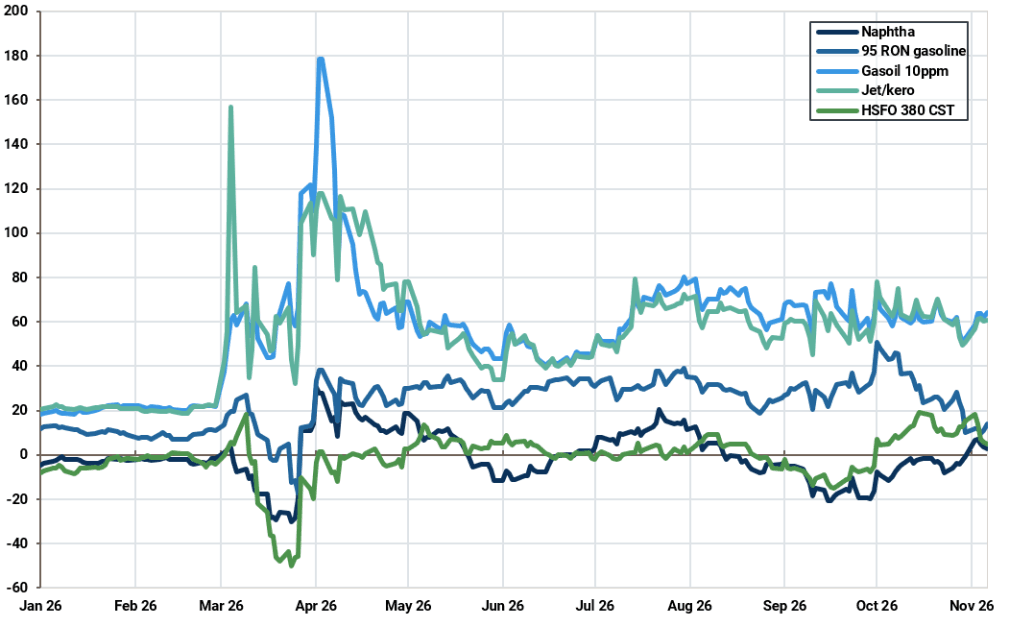
Singapore naphtha cracks rose by $4.83/bbl w/w. Naphtha cracking is still favored over tight LPG which will keep support in place. In terms of East to West flows, Ust-Luga supply to Asia is broadly stable, but Black Sea outflows are greatly diminished and more affected by lower Russian refinery runs amid attacks. We expect the current environment to keep the arbitrage from the Mediterranean open, but still weak petchem demand will be a dampening factor.
Singapore gasoline cracks slipped by $2.47/bbl w/w recovering ground towards the end of last week. Supportive buying from Indonesia and uncertainty around Chinese flow helped arrest a rapid decline in values at the prompt, which should continue in the short term. In the Middle East, typically net short Iraq has been importing gasoline overland via Syria, as there is still limited supply available within the Strait of Hormuz. The crisis in the Strait and low refinery run rates have effectively put the wider Middle East into a slight negative balance.
Singapore gasoil cracks rose by $11.13/bbl w/w as the likelihood of fewer cargoes from China in November was increasing with less financial incentive and still-low inventories, leading to a firming market. While there are expectations around more South Korean exports now that export limits have been increased this has already been priced in at this point. Gasoil cracks are still within their range over the last months and will continue to be supported within these bounds.
Jet cracks rose by $10.38/bbl w/w, tracking the movement in gasoil but the regrade widened by -$2.50/bbl as jet remains comparatively better supplied in the region. Greater consumption in the next months will narrow the regrade, but the winter demand season is generally well-covered. A workable arb across the pacific will also help clear any length.
The HSFO Singapore crack dropped by $8.62/bbl w/w but remains nearly $18/bbl higher than last year. The Singapore bunker market remains tight (with floating volume for fuel oils outside of the five-year range), with long lead times for product, keeping cracks high despite recent movements. VLSFO cracks dropped by $6.28/bbl w/w, and tightness here is attracting more imports, taking values off their recent highs.
Singapore product cracks ($/bbl)
Source: Kpler using Argus Media Pricing
Charts
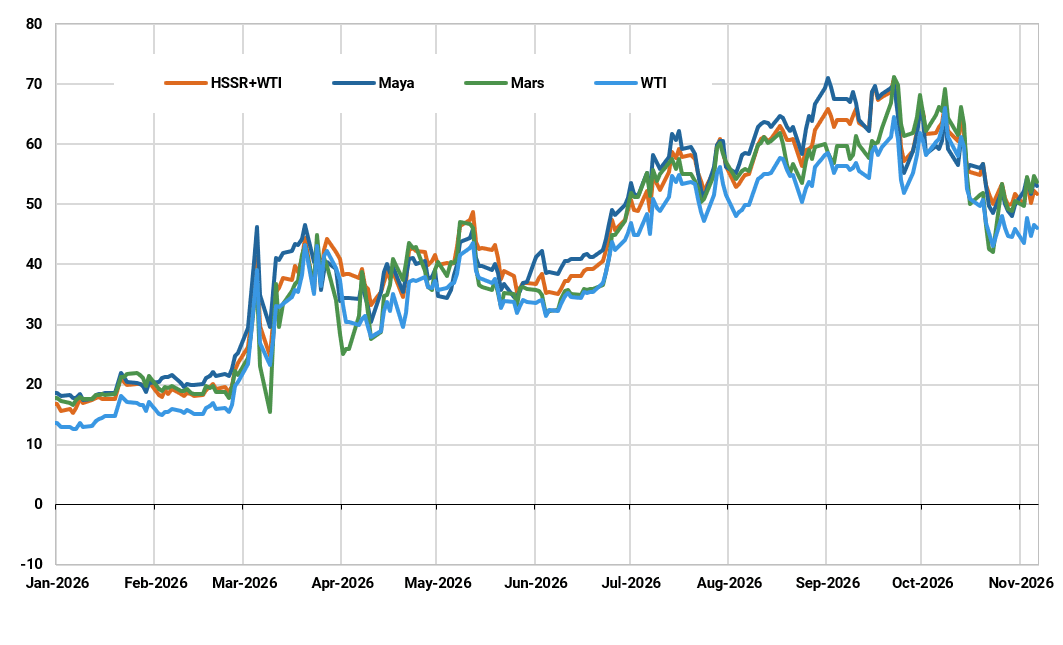
USGC: Coker conversion refinery margins for different feeds ($/bbl)
Source: Kpler based on Argus Media
NWE: Coker conversion refinery margins for different feeds ($/bbl)
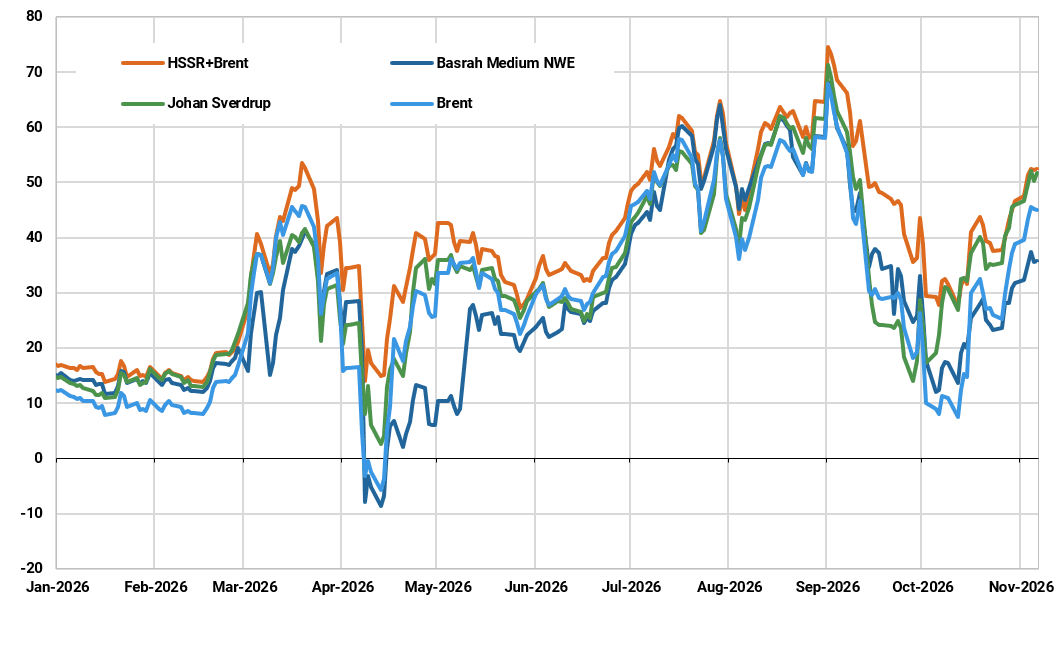
Source: Kpler based on Argus Media
Med: Coker conversion refinery margins for different feeds ($/bbl)
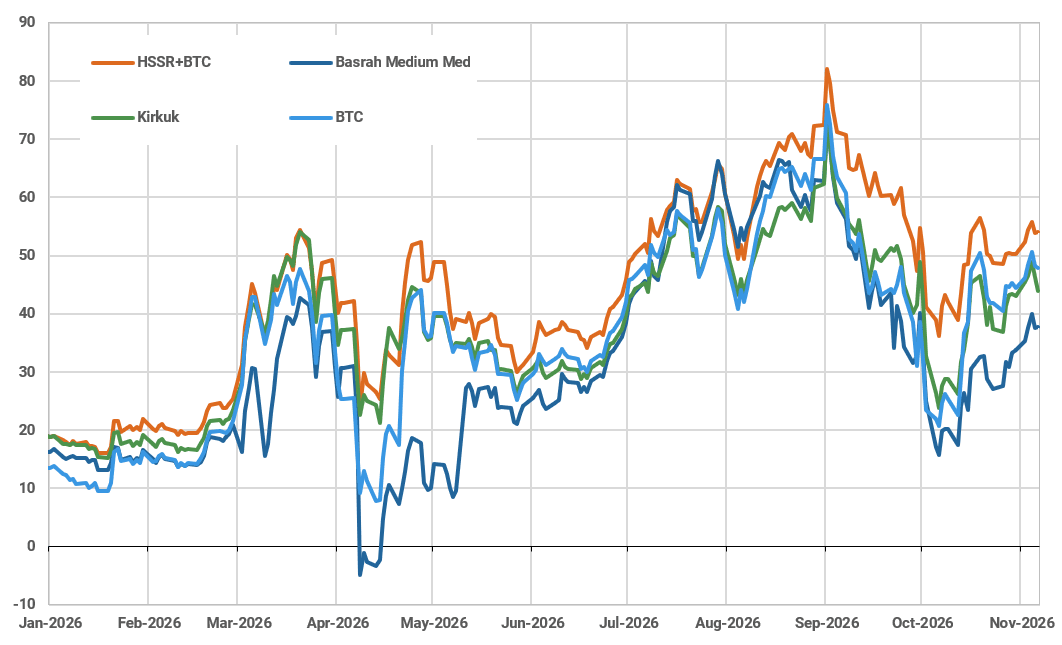
Source: Kpler based on Argus Media
SG: Coker conversion refinery margins for different feeds ($/bbl)
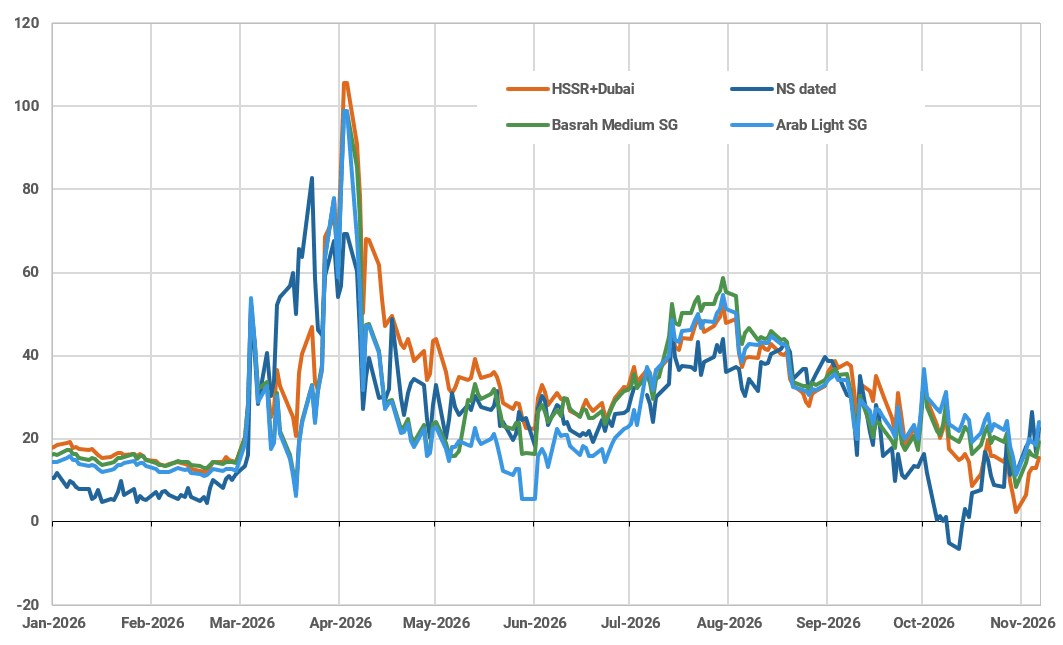
Source: Kpler based on Argus Media
Refining Margins Complexity weighted (5DMA, $/bbl)
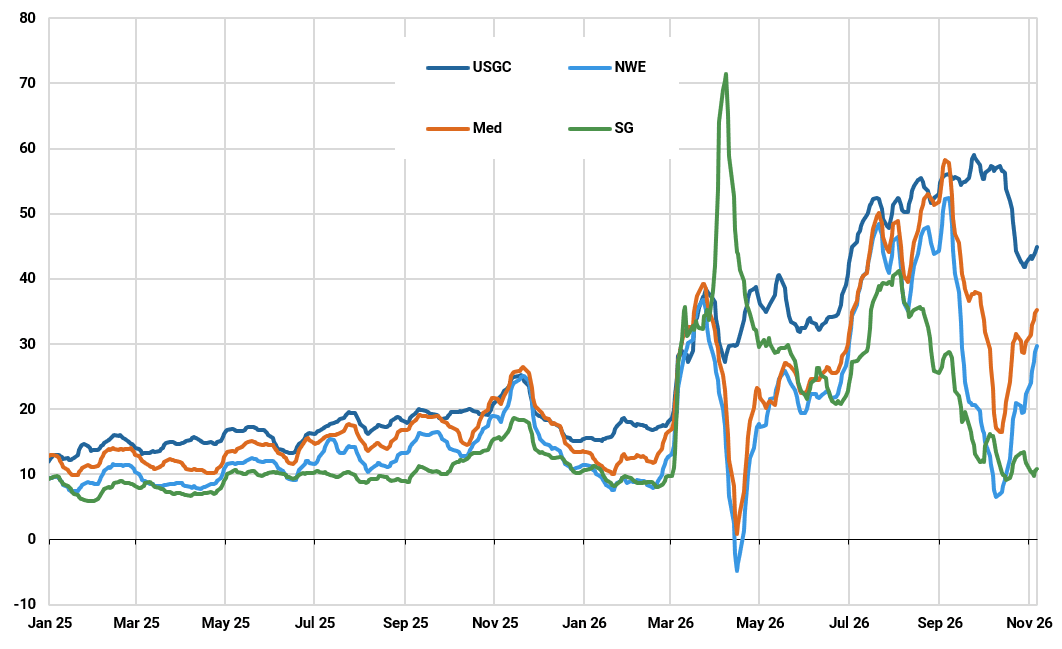
Source: Kpler based on Argus Media

See why the most successful traders and shipping experts use Kpler