Saudi crude transits via Bab-el-Mandeb fall close to zero in August
Saudi Arabia's crude inventories have climbed to multi-year highs this month as exports remain squeezed by disruptions at both the Strait of Hormuz and the Bab-el-Mandeb. Rerouting via the Suez Canal is now in full swing, pushing Sidi Kerir departures to record levels. The alternative route around the Cape of Good Hope adds roughly 40 days to the round-trip voyage, driving freight costs substantially higher.
Market & Trading calls:
- Further increases expected for Saudi crude exports to Egypt’s Ain Sukhna terminal as well as Saudi crude departures from Sidi Kerir to Asian destinations, a result of the country’s diversion strategy.
- Potential for more build-ups in Saudi crude inventories amid double whammy of Red Sea threats and continued Strait of Hormuz blockade.
- Expect Saudi crude exports to Europe to rise next month as Aramco lowered its official selling prices for European buyers in order to steer more sales that way.
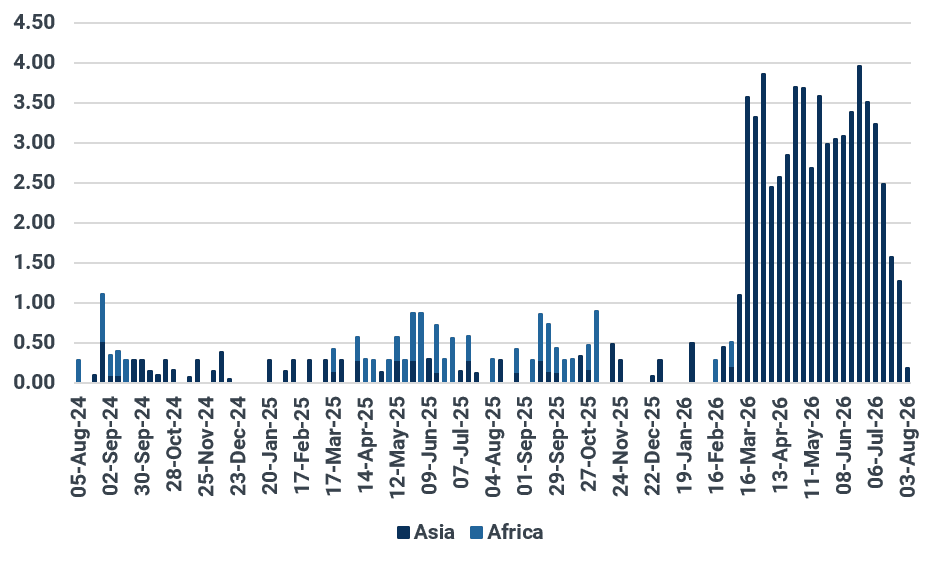
Houthi threats in the Red Sea have caused Saudi crude transits through the Bab-el-Mandeb (BeM) strait to drop sharply since mid-July. Weekly transits averaged above 3.5 Mbd in early July — buoyed by higher Yanbu exports following the start of the US-Iran war — but have fallen close to zero so far in August (see chart). Meanwhile, Russian and Sudanese crude traffic via the BeM has remained quite stable, suggesting the disruption is specific to Saudi-linked trade.
Weekly transits via Bab-el-Mandeb of Saudi crude, Mbd
Source: Kpler
Meanwhile, Saudi Arabia has pursued its diversion strategy through the SUMED pipeline and the Suez Canal, redirecting Yanbu exports northward rather than southward to bypass Bab-el-Mandeb. Kpler data reflects this shift: Saudi crude transits via the Suez Canal have risen from zero in May-June to nearly 500 kbd by late July. Crude departures to Ain Sukhna, Egypt surged to the second-highest level on record in July at 1.32 Mbd — almost double June's 770 kbd. Correspondingly, departures from Egypt's Sidi Kerir terminal, the endpoint of the SUMED pipeline, jumped to a record 2.4 Mbd in the first week of August, up from a July average of 1.3 Mbd. Notably, some 700 kbd of this volume is now headed to Asia: Thailand, India, and the Philippines, a marked shift from the terminal's usual European destinations such as Poland, Italy, Lithuania, and Spain.
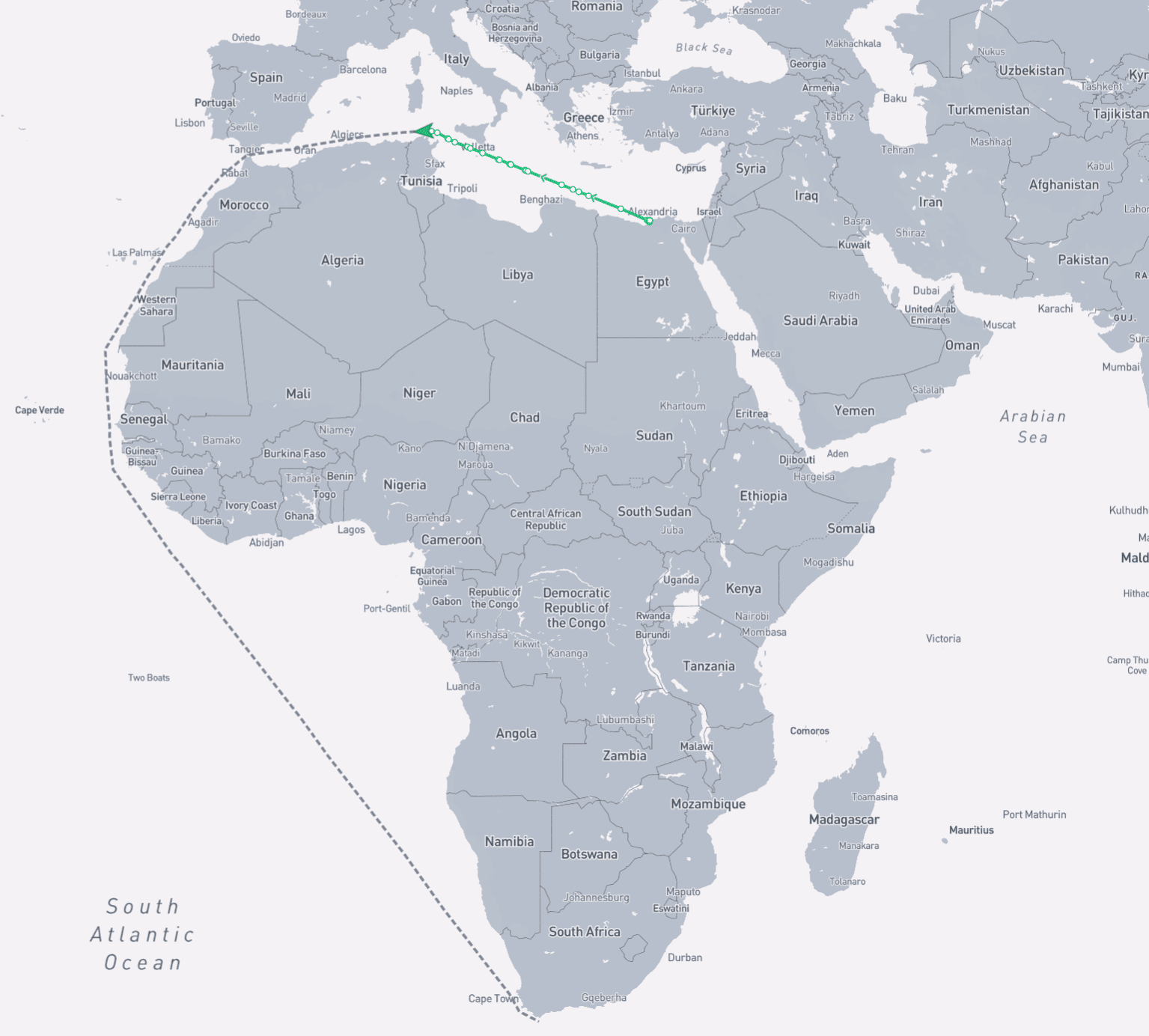
One illustrative case is the VLCC Front Empire, which departed the Muajjiz terminal part-laden with 1.2 million barrels of Saudi crude on July 25, transited the Suez Canal (VLCCs cannot cross fully laden), and took on a further 800 kbd at Sidi Kerir on August 6. The tanker is expected to sail on to South-Central Asia — likely India — via the Cape of Good Hope, implying a discharge date in early September. That reflects a voyage of roughly 40 days, versus the usual 8 days from Yanbu to India's west coast.
VLCC Front Empire further voyage from Sidi Kerir
Source: Kpler, mapbox
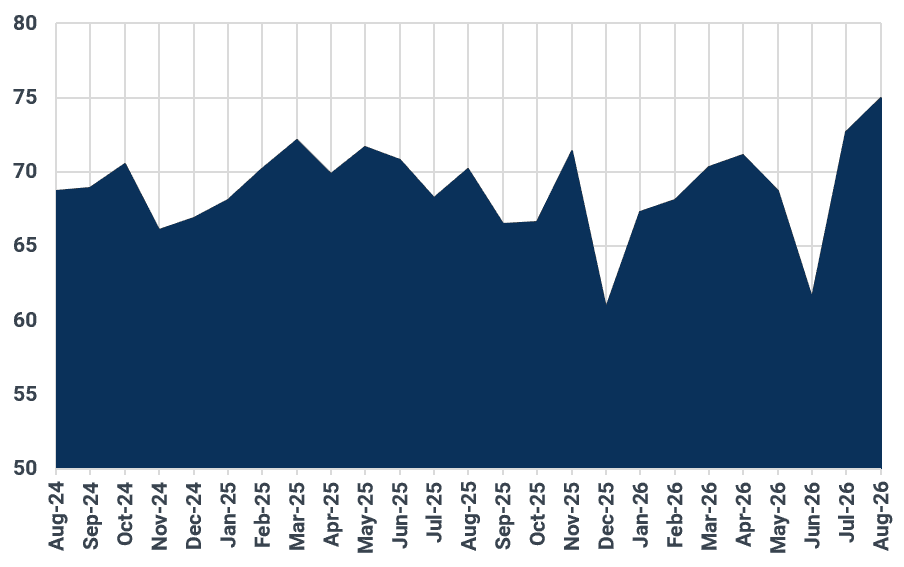
While this rerouting allows exports to continue, the sharp rise in voyage times is constraining loading throughput. Combined with tighter Saudi crude transits via the Strait of Hormuz since mid-July and the Jizan refinery shutdown in late July, these factors have driven Saudi crude inventories to multi-year highs. Kpler data shows utilisation climbing to 63% by early August — equivalent to 75 million barrels — up sharply from June's 61 million barrels (52% utilisation).
Saudi crude inventories, Mbbls
Source: Kpler
Facing mounting logistical and shipping risks for its Asian customers, Aramco cut its September OSPs for light crude grades by $0.50/bbl from August levels, broadly tracking the monthly shift in the Dubai forward curve — though it remains unclear whether the revised pricing will be enough to keep Asian refiners lifting their full contracted volumes. At the same time, in a push to redirect sales toward Europe, Aramco cut September OSPs for European customers by $3/bbl, a move that could lift Saudi crude flows to Europe in the near term.

See why the most successful traders and shipping experts use Kpler