Complete container supply chain visibility, from vessel departure to final terminal arrival.


.webp)


8,700+
1,200+
160+
770+
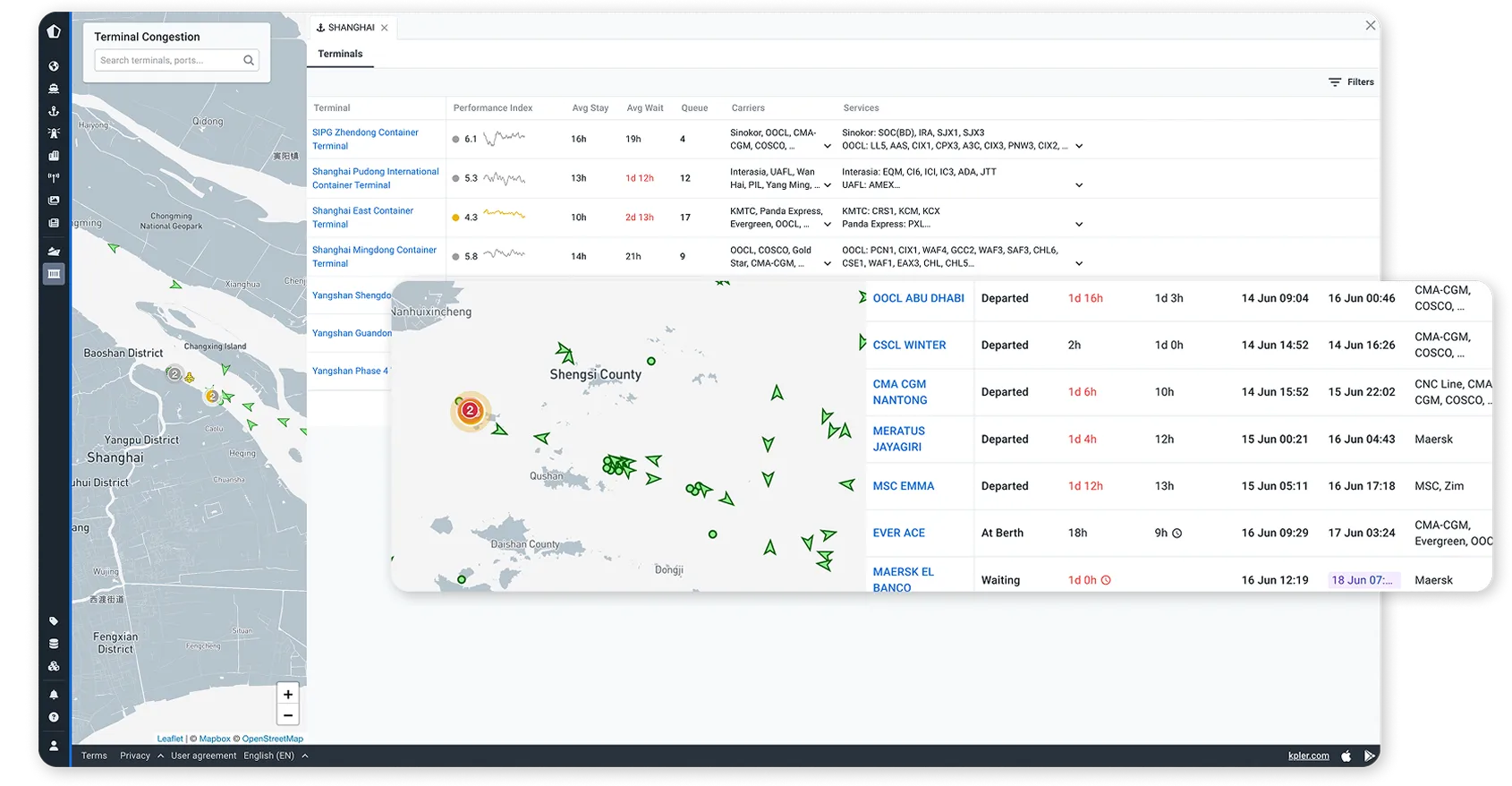
- Waiting time, berth time, and call volume computed independently from AIS across 1,200+ terminals — no self-reported inputs.
- Carrier, alliance, service, and TEU size class splits let you see exactly what your counterpart brings to port rotation negotiations.
- Third-party data both sides trust means shorter disputes and faster resolution on SLA terms.
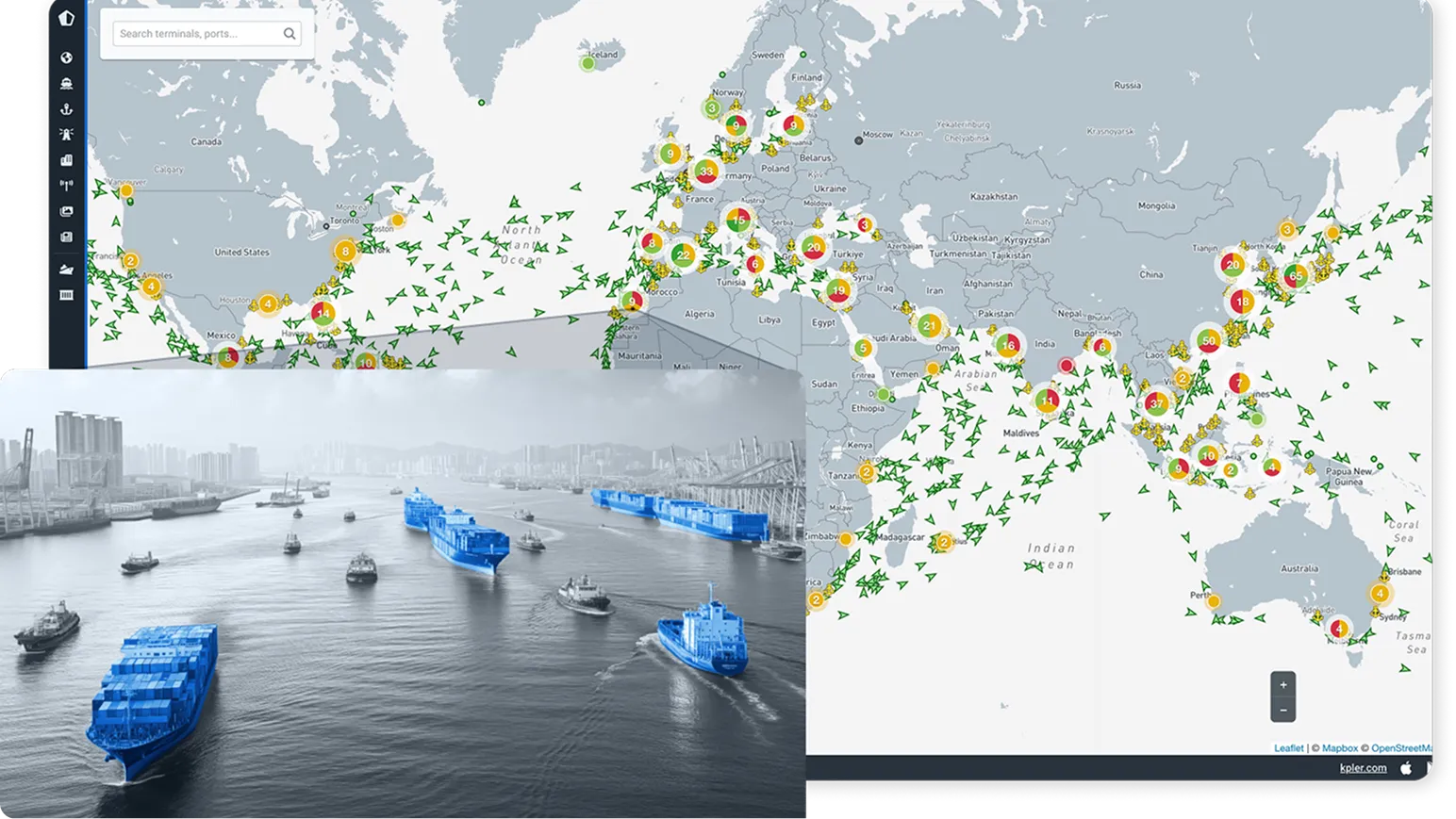
- Carrier-agnostic ETAs built on AIS and 13+ years of berth behaviour, so you're never the last to know.
- Early delay detection gives you the window to act before D&D charges start accumulating.
- Shipment status centralised and shareable across customers and internal teams, so nobody's working off stale information.

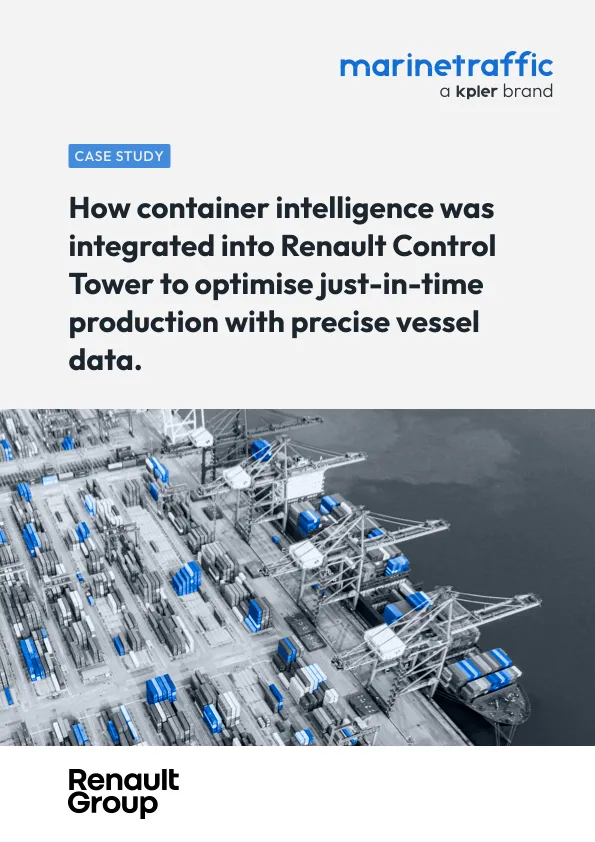
“We had no real-time visibility on our container shipments. Now, we can proactively manage disruptions before they impact production.”

“Initially, our goal was to track around 175,000 containers a year. Since then, customers have grown and we’re tracking upwards of around 1 million containers a year.”

“The accurate, real-time tracking of our shipments ensures that we can provide our customers with precise delivery estimates, which is crucial for their cash flow planning.”

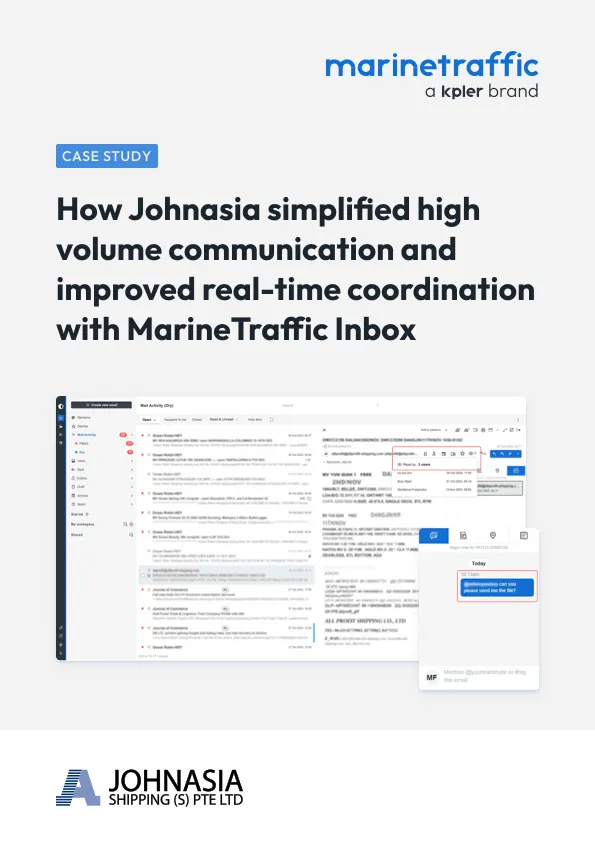
“It allows our team to focus on more meaningful, strategic work rather than repetitive administrative tasks.”
Explore our case studies for maritime markets


FAQ
Kpler's container intelligence platform delivers real-time vessel tracking, predictive ETAs, carrier performance benchmarking, and port and terminal analytics, all built on independent, carrier-agnostic data combining AIS and proprietary algorithms.
Carrier-reported data reflects what shipping lines choose to publish, which can lag reality during disruptions. Kpler's tracking is entirely independent,built on AIS vessel positions, port call data, anchorage times, giving users an objective view that can be used to benchmark, challenge, and negotiate with carriers.
Kpler goes beyond shipment location to explain root causes of delays, surfacing emerging bottlenecks at specific ports or terminals, congestion patterns, and downstream supply chain impacts before they escalate. This gives logistics and procurement teams the advance warning needed to act rather than react.
Kpler's predictive ETA models draw on multiple inputs simultaneously — vessel behaviour, port congestion, terminal activity, berth utilisation, and historical patterns — rather than relying on carrier-reported data alone. This delivers carrier-independent, high-confidence arrival forecasts that reflect actual conditions on the water.
Kpler enables objective comparisons across carriers and trade lanes using actual port calls, anchorage times, dwell times, and terminal performance data. Users can benchmark on-time delivery, schedule reliability, and port skip frequency, turning tracking data into actionable procurement and contract negotiation intelligence.
Kpler goes beyond shipment location to explain root causes of delays, surfacing emerging bottlenecks at specific ports or terminals, congestion patterns, and downstream supply chain impacts before they escalate. This gives logistics and procurement teams the advance warning needed to act rather than react.