Track, forecast, and analyze dry bulk cargo movement ahead of customs data.


.webp)



16,500+
40+
4,300+
- Live vessel positions with full commercial context — cargo type, load and discharge locations, counterparties, ETA, and vessel status — across every iron ore, coal, grain, fertilizer, metals, and minerals cargo moving globally
- Filter by commodity, grade, port, route, or counterparty to focus on the flows that matter to your market
- 16,500+ dry bulkers tracked globally with extensive coverage across coal, iron ore, agriculture, metals, and minerals — down to sub-grades and cargo quality
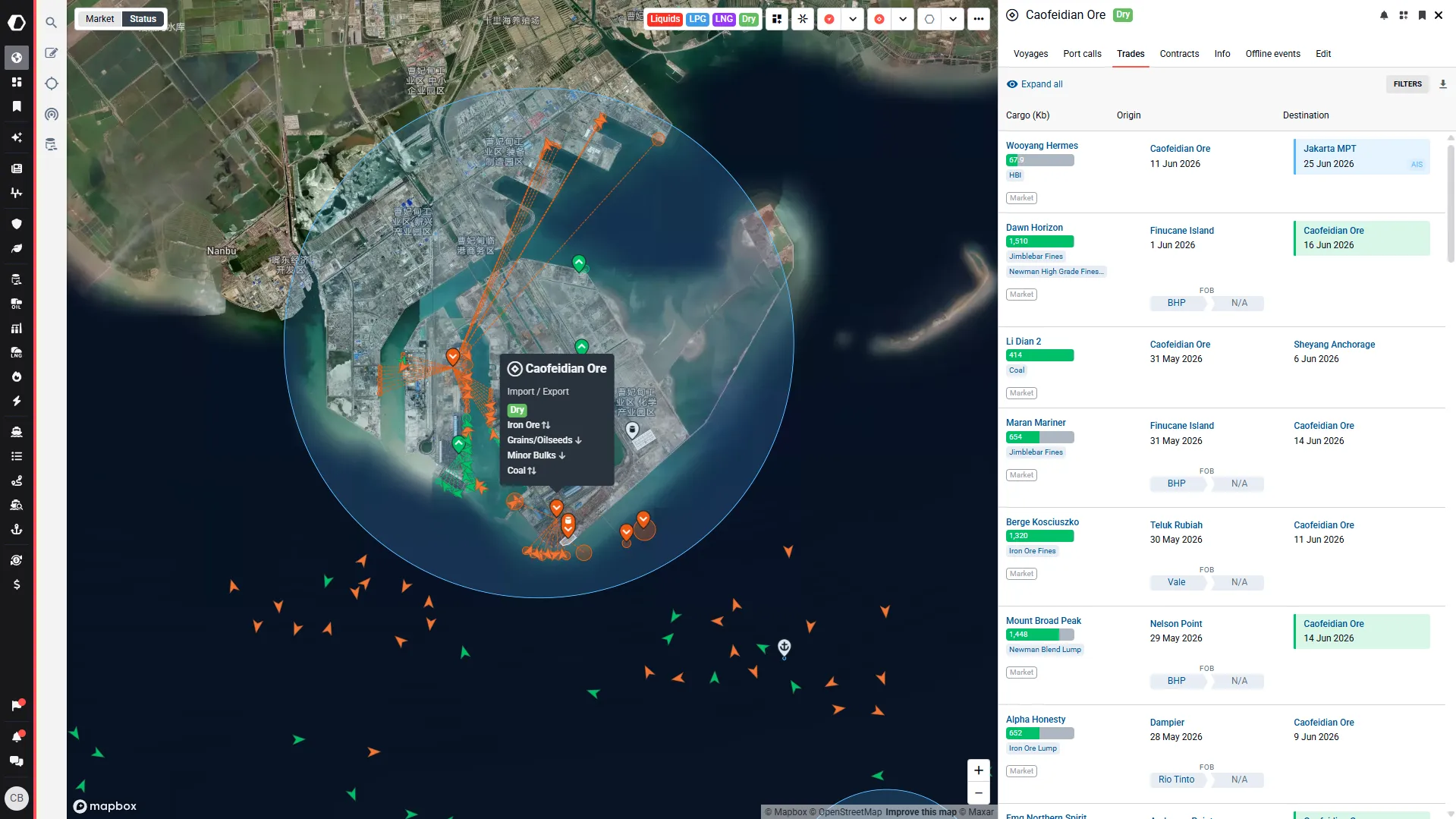
- Analyse millions of cargo records in a powerful web terminal — zooming from continent-level trade flows to individual port installations and buyer-seller relationships
- Define your exact market with filters across product, grade, and geography — surfacing the competitive intelligence needed to trade with conviction
- Identify top exporters, monitor strategic trade route shifts, and uncover emerging arbitrage windows weeks ahead of the broader market
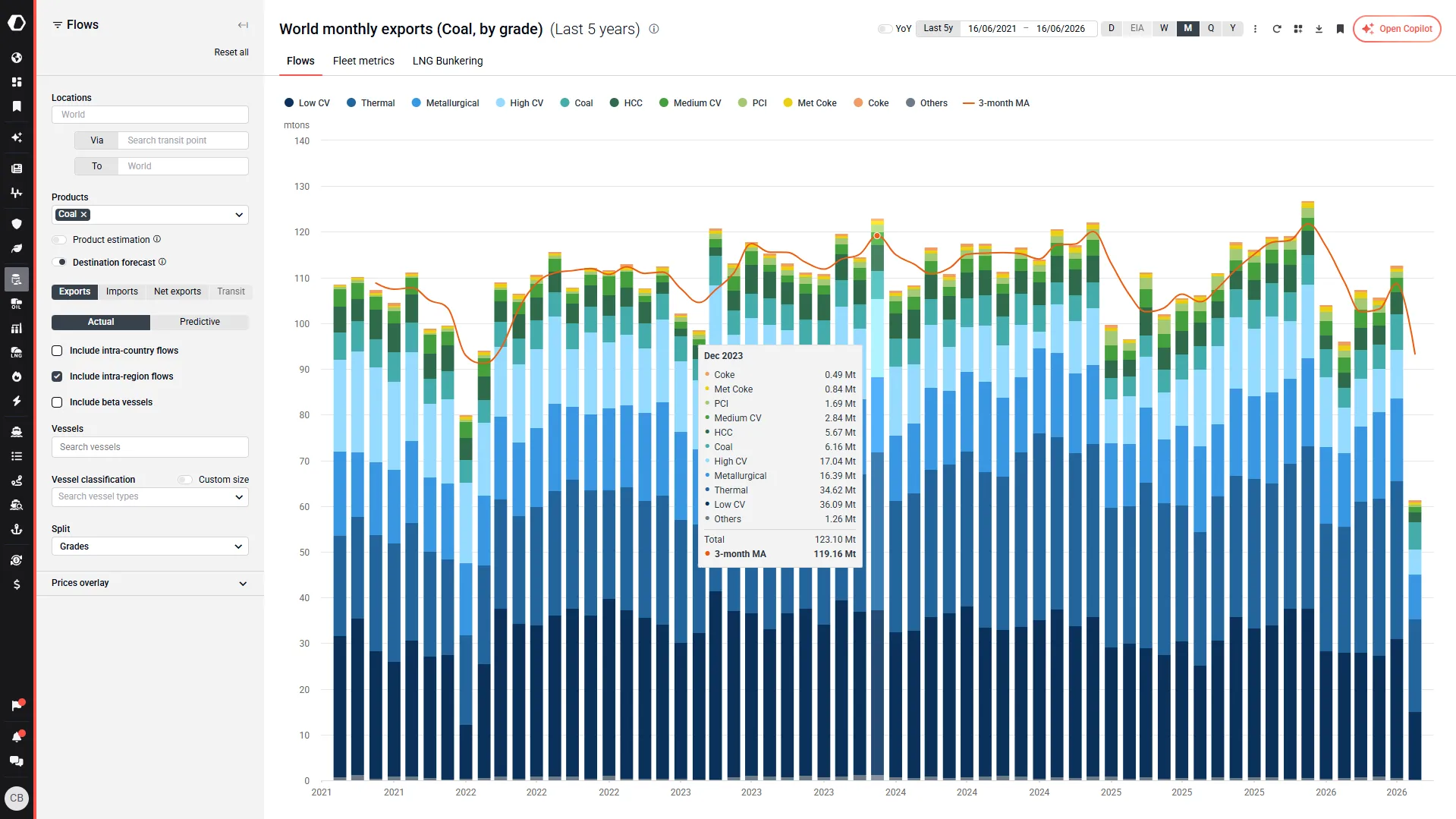
- Up to 15 days of predictive cargo flows — anticipate movements well ahead of customs data, with models continuously backtested at 95–99% accuracy across major commodity routes
- Every forecast embeds port congestion, draft limits, weather, and seasonal patterns — not just historical averages
- Front-run customs data by an average of 7 weeks — with backtest accuracy above 90% validated against official figures across key routes
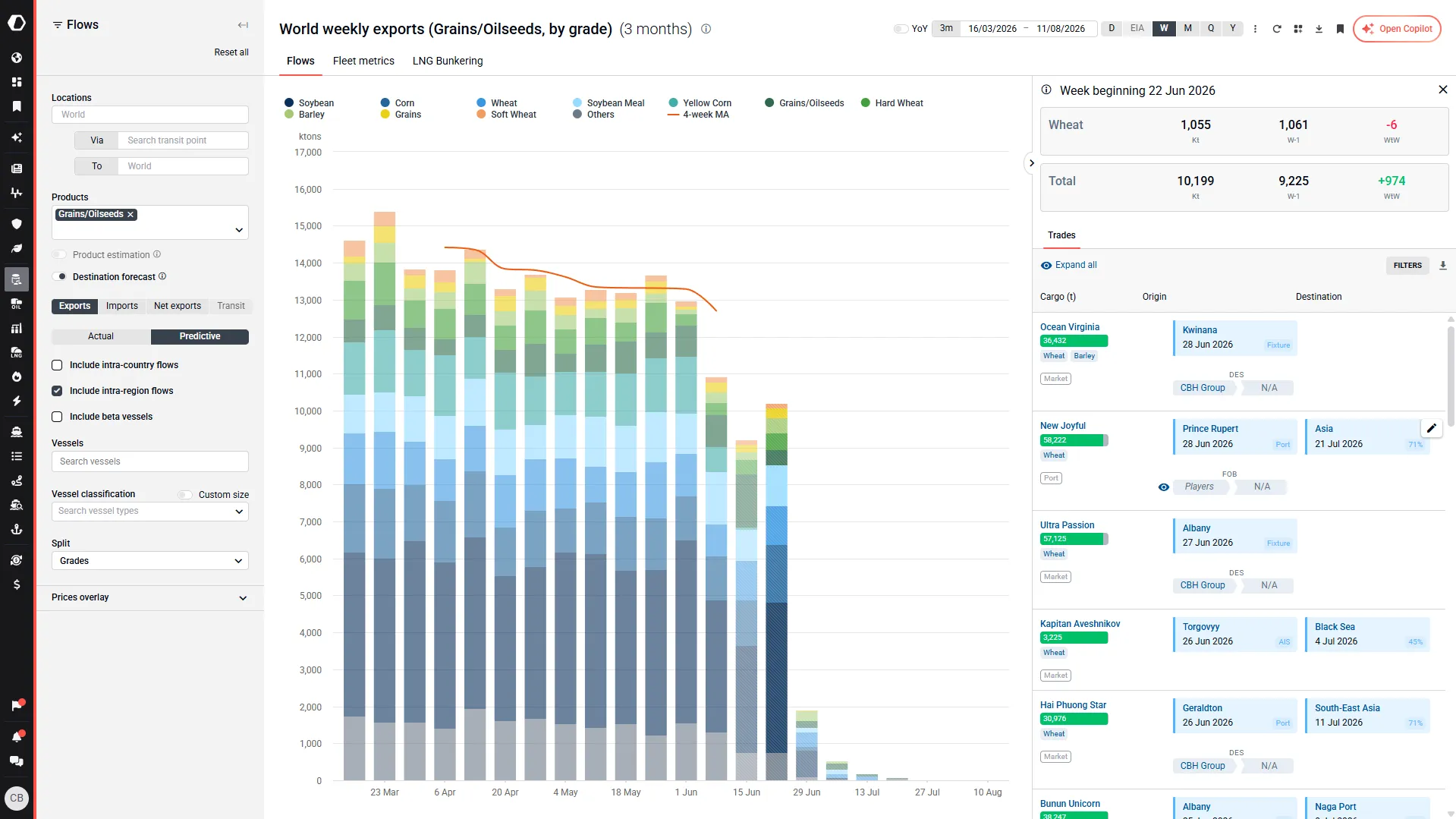
- Real-time vessel arrivals and departures across 4,300+ dry bulk installations worldwide — tracking commercial players, cargo types, and dwell times port by port
- Essential intelligence for logistics planning, supply chain strategy, and reading demand signals before they appear in aggregate flow data
- Coverage across all major dry bulk terminals — with real-time arrival and departure data across every key commodity corridor
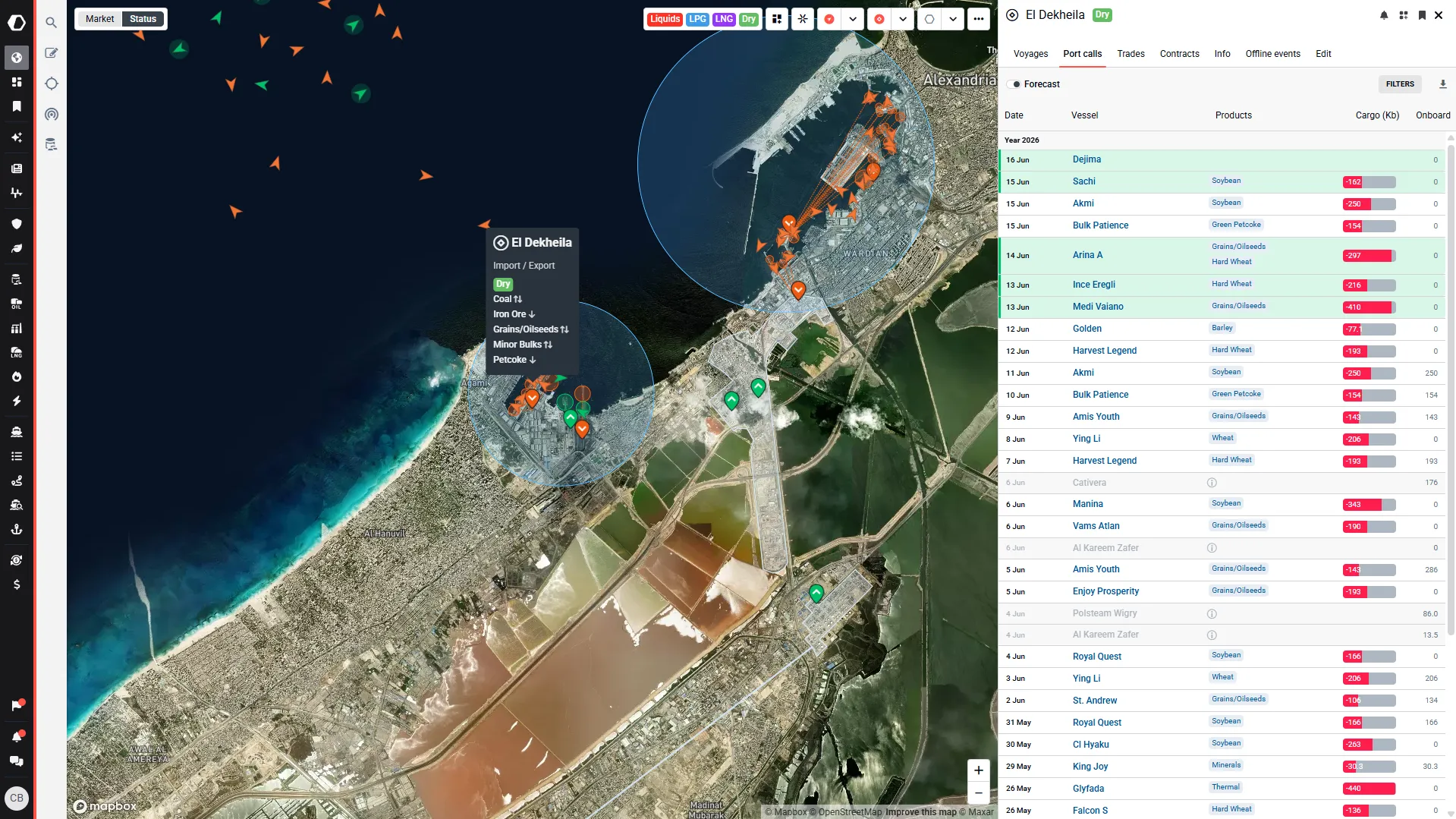
- Complete visibility of every tonne in transit — from global aggregate down to individual terminal level, always knowing precisely what is on the water versus what has landed
- In markets where cargo sits at anchor for weeks, that distinction is the difference between acting early and reacting late
- 4,300+ dry installations monitored across 7+ years of historical data with real-time refresh frequency
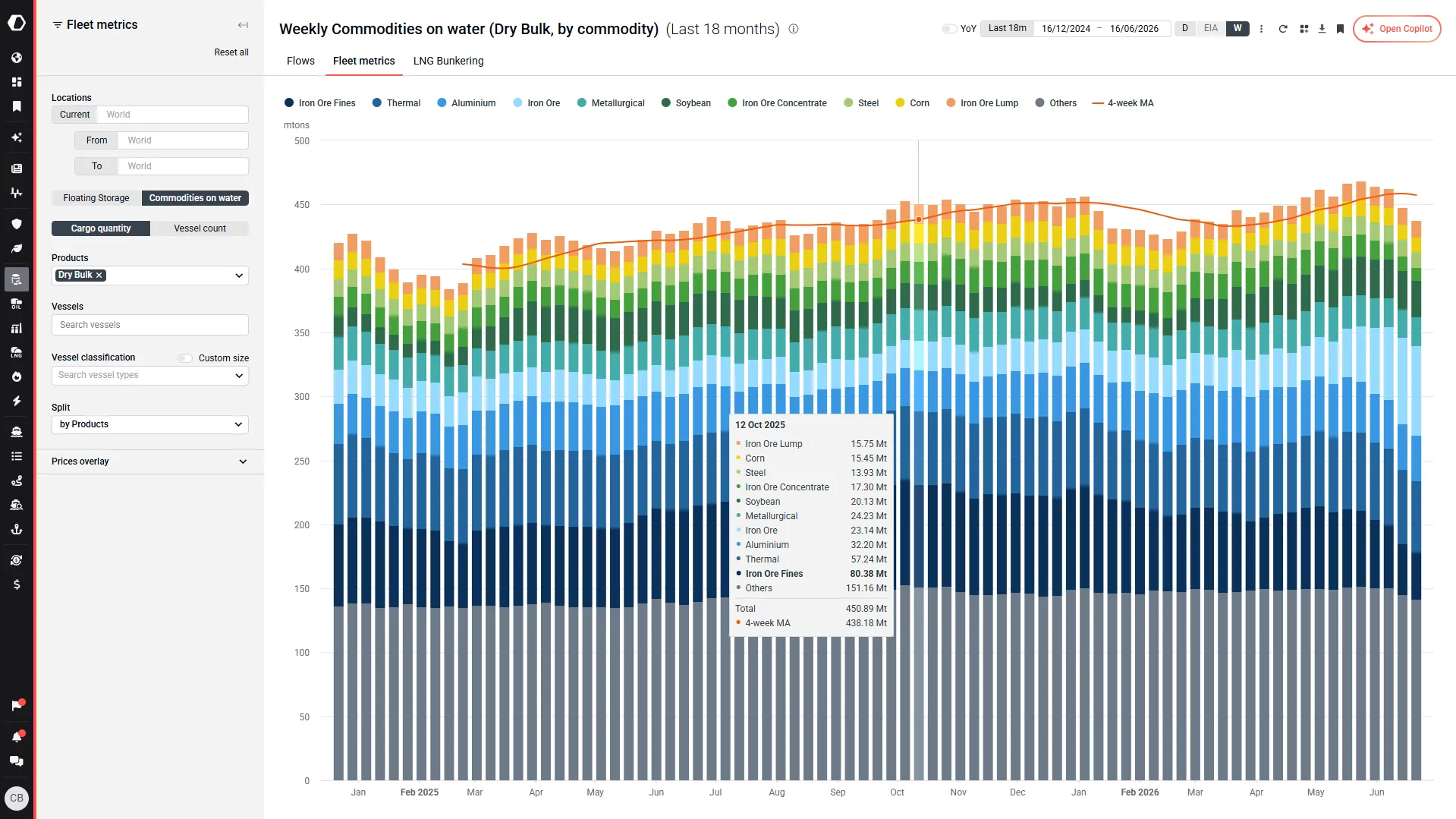
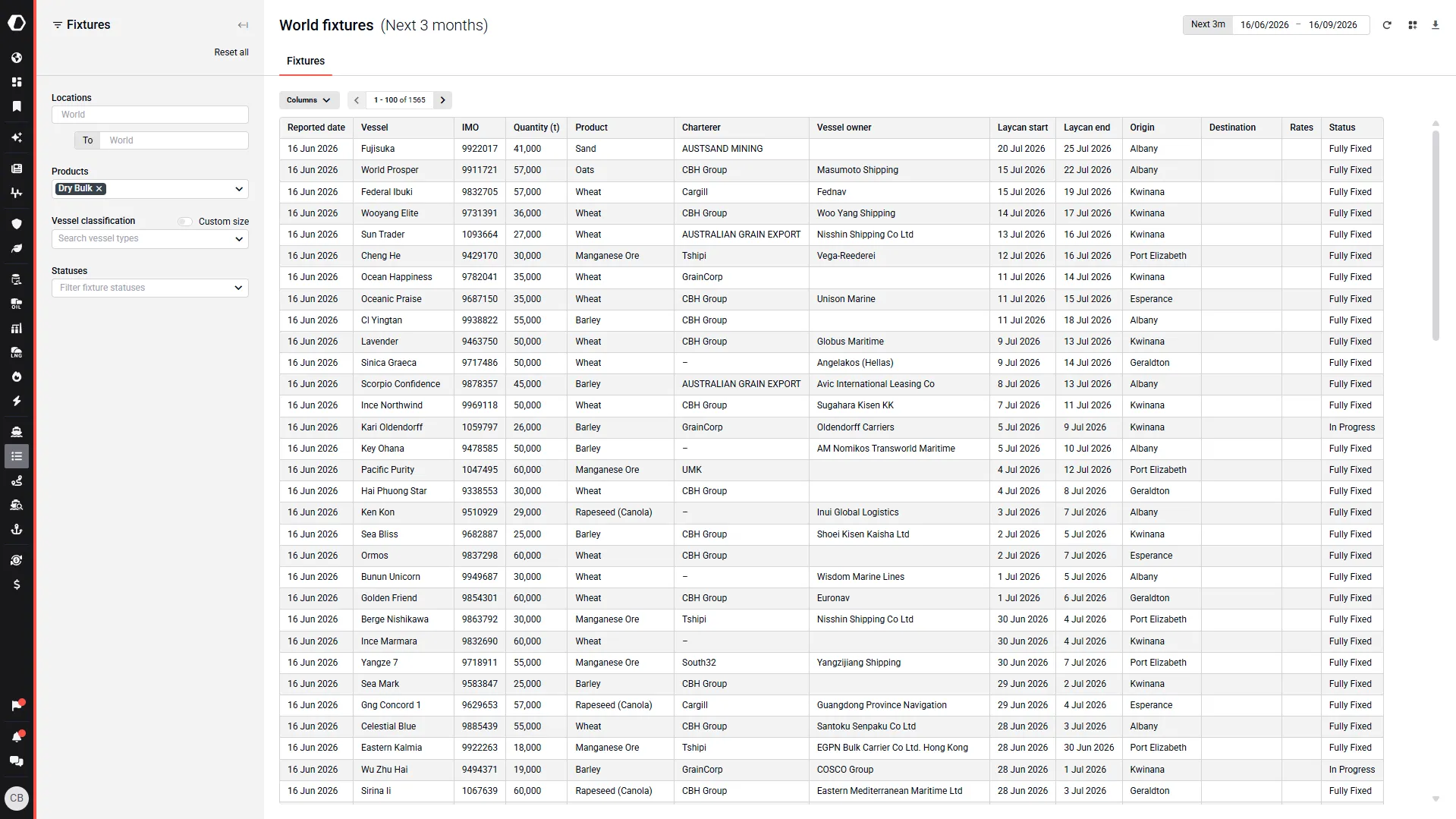
- Fixture tracking across all dry bulk vessel classes — from Handysize to Capesize — with full commercial context including cargo type, load and discharge ports, counterparties, laycan, and vessel details
- Every fixture enriched with Kpler's proprietary cargo and vessel data — monitor competitor activity, benchmark market levels, and identify where demand is building before it shows in rates
- 16,500+ dry bulkers monitored with fixture status tracking from on subjects to fully fixed and failed

“The platform offers an exceptionally intuitive interface, making it effortless to access real-time market intelligence or conduct deep dives.”



FAQ
Kpler Cargo Analytics delivers real-time and predictive intelligence across all major and minor bulk commodities - including coal, iron ore, grains, oilseeds, metals, minerals, and fertilizers. Every cargo is tracked vessel by vessel from loading port to final discharge, with granularity down to grade, sub-grade, and cargo quality. Coverage spans 16,500+ dry bulk carriers globally, 4,300+ dry installations, and is backed by 7+ years of historical data.
Kpler provides up to 15 days of predictive cargo flows at the vessel level, and delivers trade flow indicators up to seven weeks ahead of official customs data. The 18-month supply-demand balance forecasts extend further for strategic planning. All models are continuously backtested against customs figures to maintain accuracy rates of 95–99% across major commodity routes.
Kpler rigorously backtests all cargo flow data against official customs figures. Accuracy rates consistently reach 95–99% depending on commodity and route. For example 99.44% for Chile copper concentrate exports, and 99.52% for Brazil soybean exports. In-house analysts continuously validate outputs to maintain this standard.
Most dry bulk intelligence is fragmented across point solutions with separate tools for vessel tracking, freight, trade data, and research. Kpler unifies all of this in a single platform, combining granular cargo tracking, freight economics, buyer/seller intelligence, predictive analytics, and expert research. The result is a coherent, connected intelligence layer that eliminates blind spots at the intersections of these data streams.
Yes. Kpler data is accessible via API, Python SDK, Snowflake Data Share, Kafka stream, and Excel Add-in, enabling direct integration into proprietary trading systems, risk models, and BI tools. Kpler also supports Model Context Protocol (MCP), allowing teams to connect Kpler intelligence directly to internal LLMs for natural-language queries across commodity flows and freight markets.