Maritime data delivered straight into your tools and workflows, so you can track, analyse and act on global fleet activity in real time.


1.2B+
350K+
11Y+
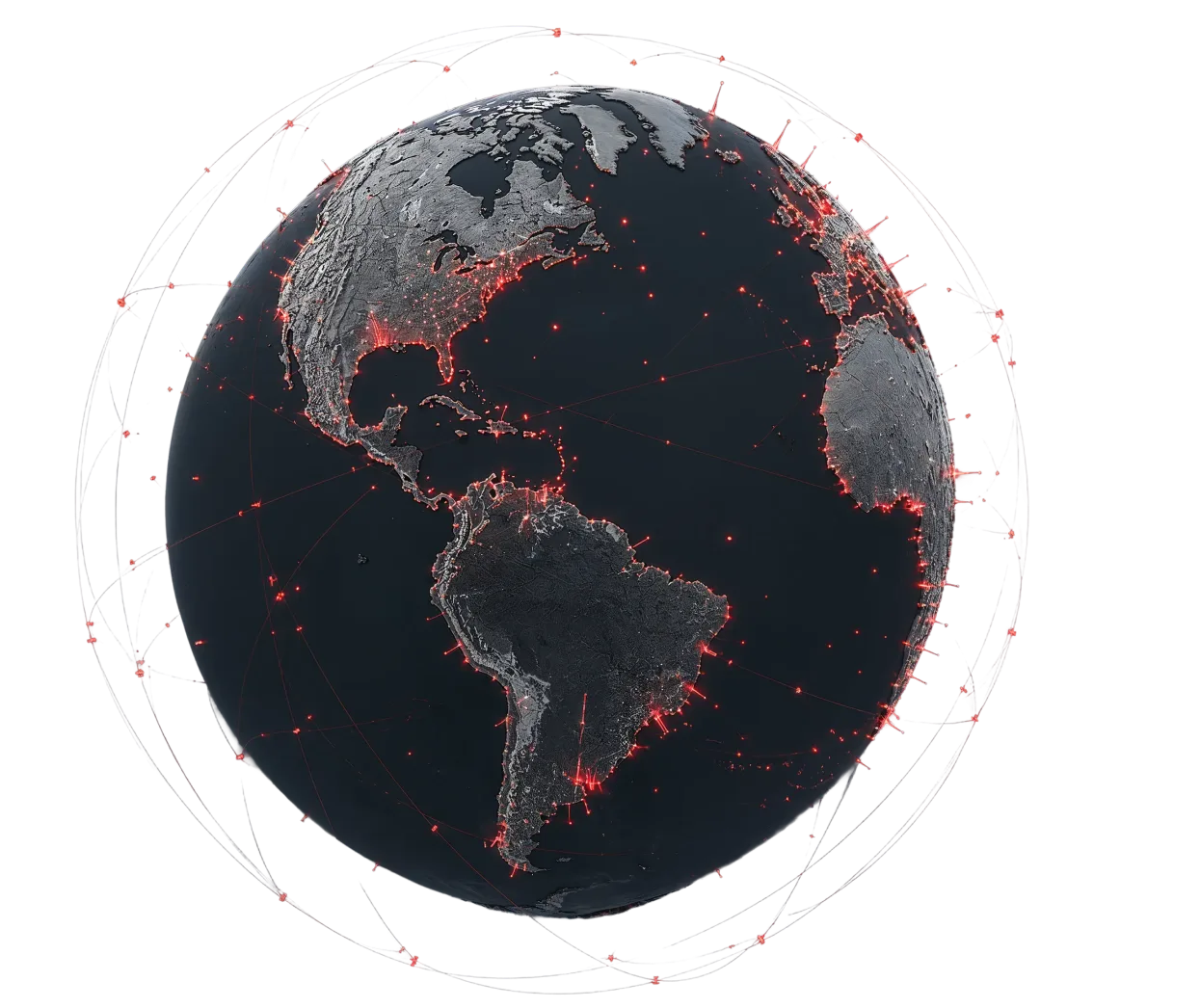
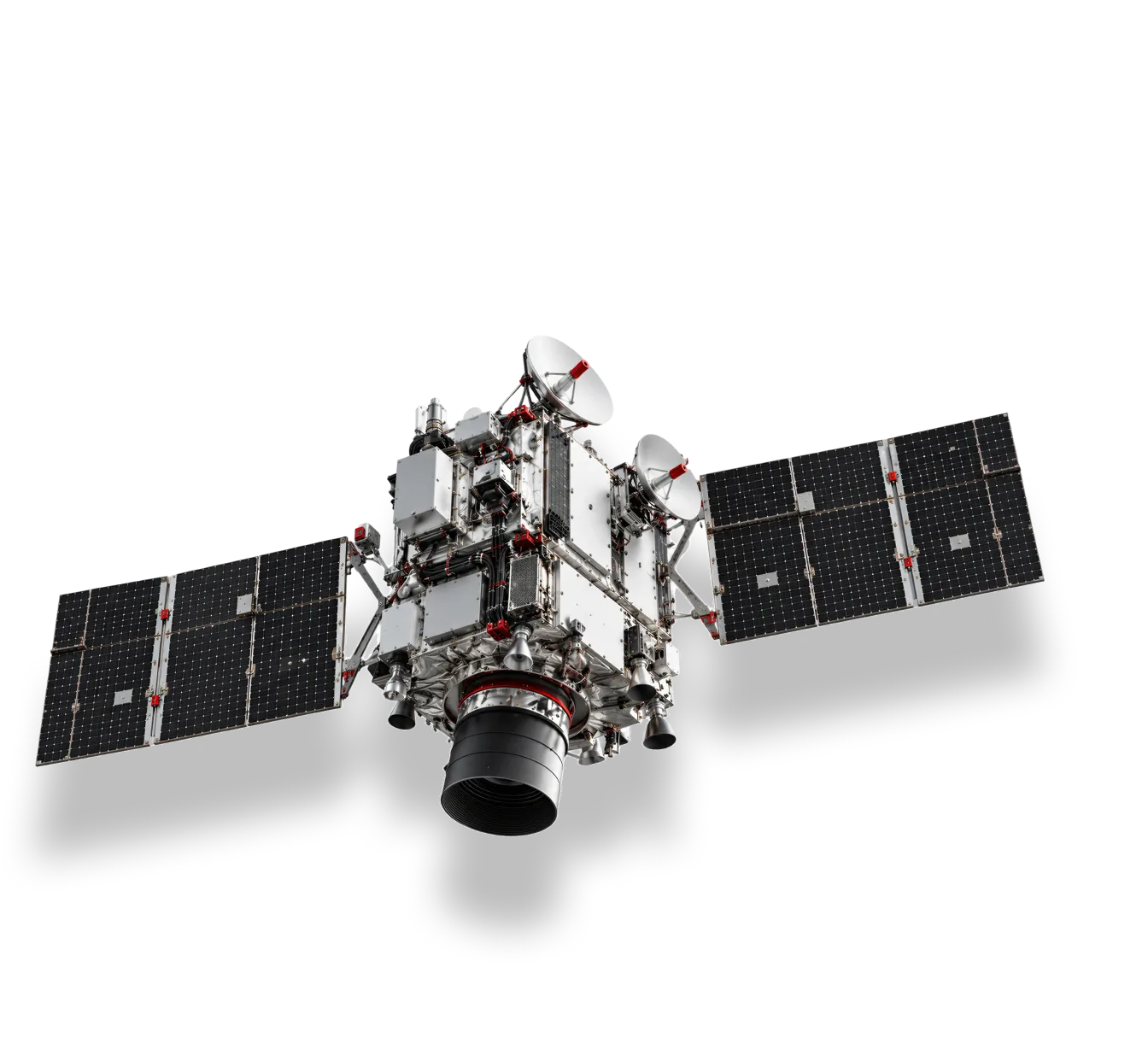
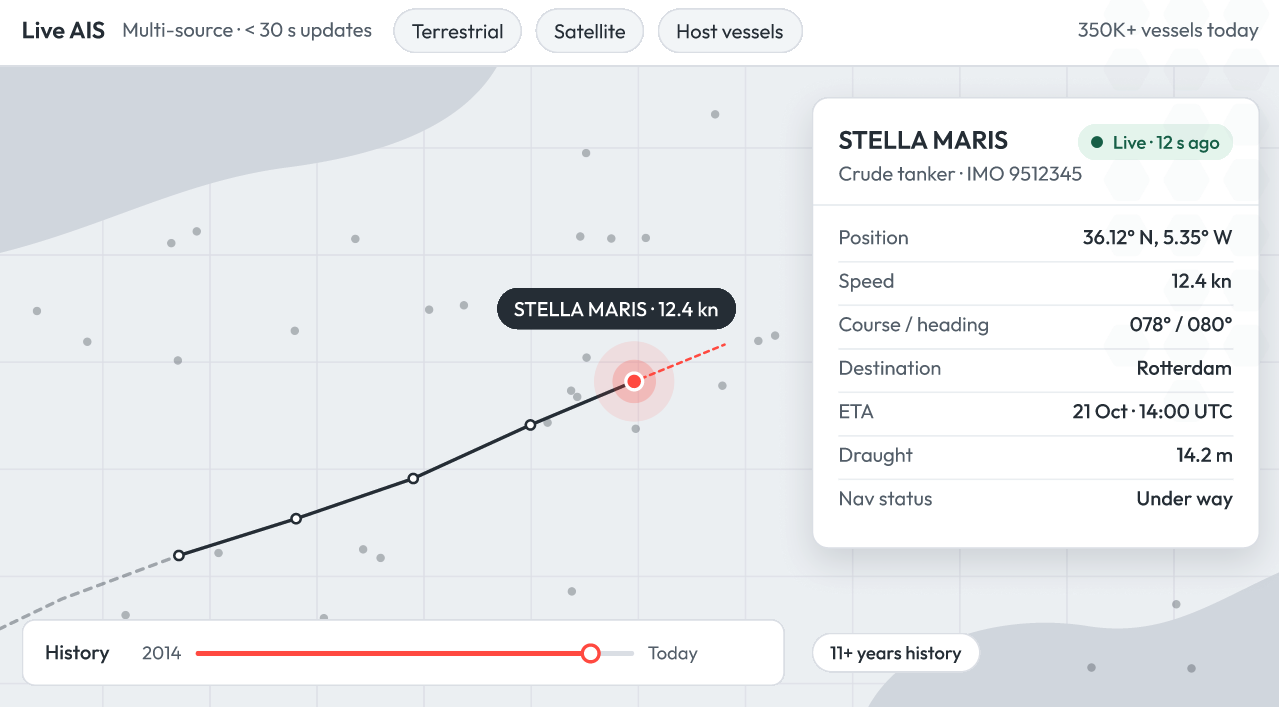
Kpler AIS is the largest multi-source AIS feed on the market, built on over 13,500 coastal receivers, host vessels and our proprietary satellite constellation, and delivering 1.2 billion+ daily messages at sub-30 second frequency for fewer coverage gaps across ports, coastlines, congested lanes and open ocean.
Live positions deliver vessel location, speed, course, heading, destination, ETA, draught and navigational status via REST API, NMEA, Kafka or custom download.
Over 11 years of historical AIS positions let you reconstruct past tracks, backtest models and build defensible movement timelines, available via REST API or custom download.
A contextualised picture of vessel movements shows not only where a vessel has been but also what it has been doing, with real-time events delivering ETA updates, destination changes, draught adjustments, course changes and status transitions as they happen.
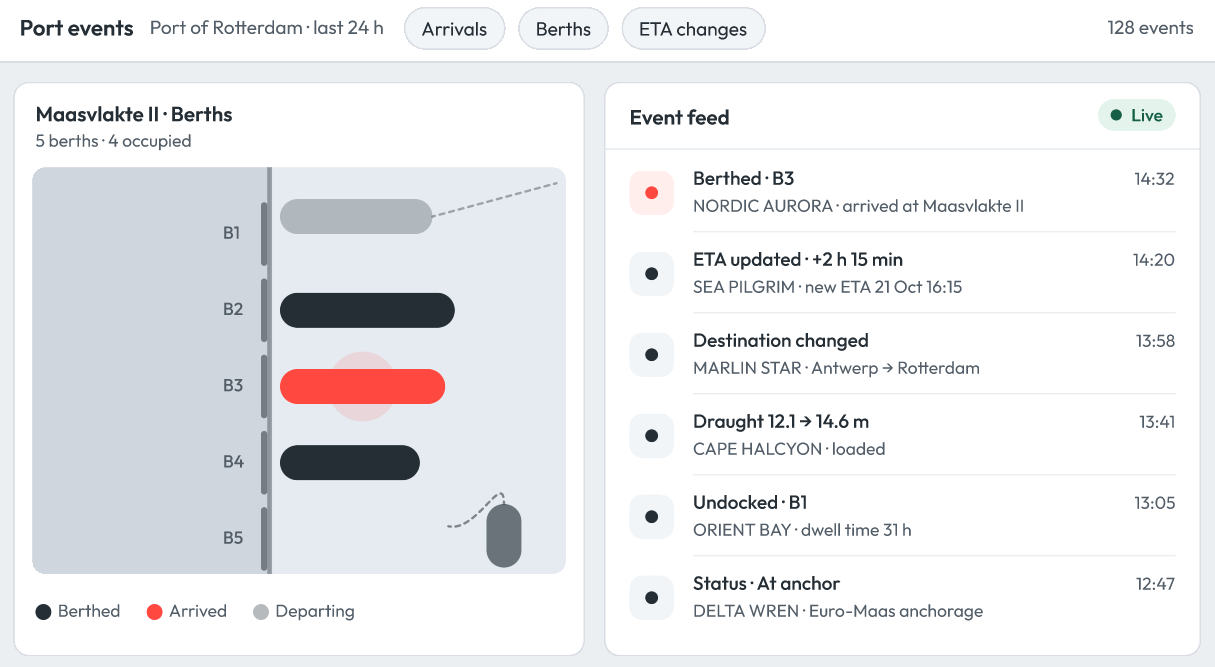
Port, terminal and berth monitoring tracks traffic and performance, including vessel arrivals, departures, dockings and undockings at port and berth level.
Historical port activity, dwell times and movement patterns, available as a custom download, let you surface trends and build defensible operational baselines.
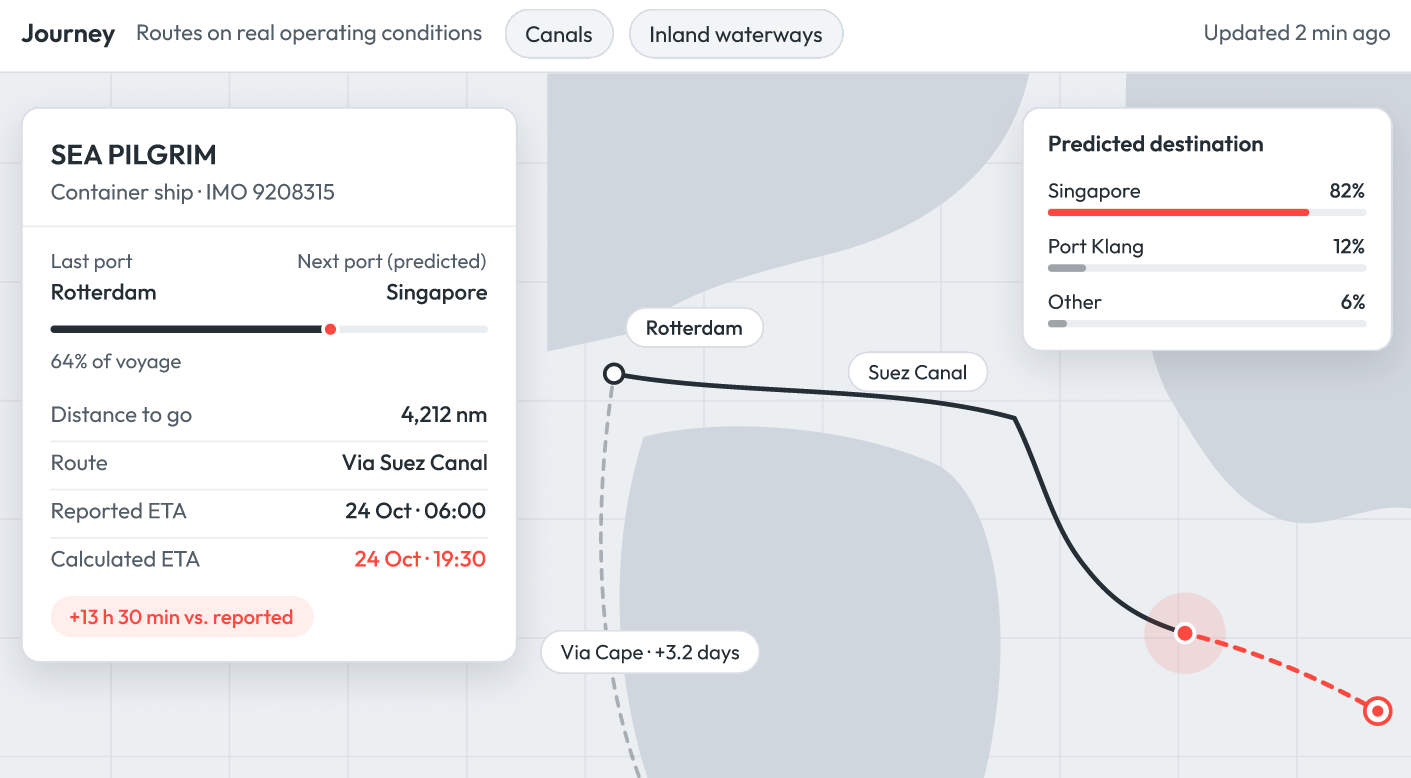
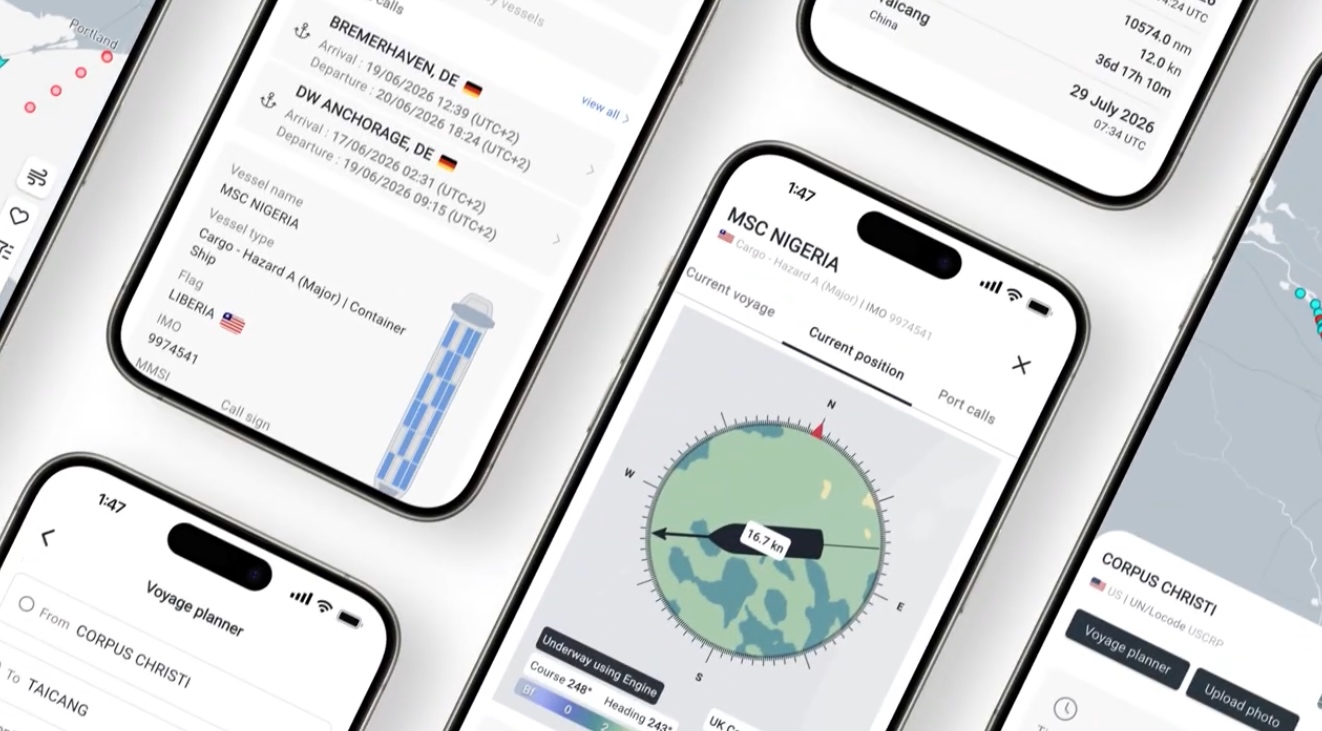
Realistic vessel routes, distances and ETAs are modelled on actual operating conditions rather than straight-line estimates, giving you a navigable route or distance between a vessel, point or port and a destination, with canal, inland-waterway and alternative-route options for accurate voyage planning and fleet operations.
Journey progress and arrival times show the likely path of a voyage, including last and next port context and both reported and calculated ETAs, essential for arrivals and logistics planning.
Predicted destinations anticipate where a vessel is heading before it arrives, giving logistics, port operations, trading and customer visibility teams an earlier signal to act on.
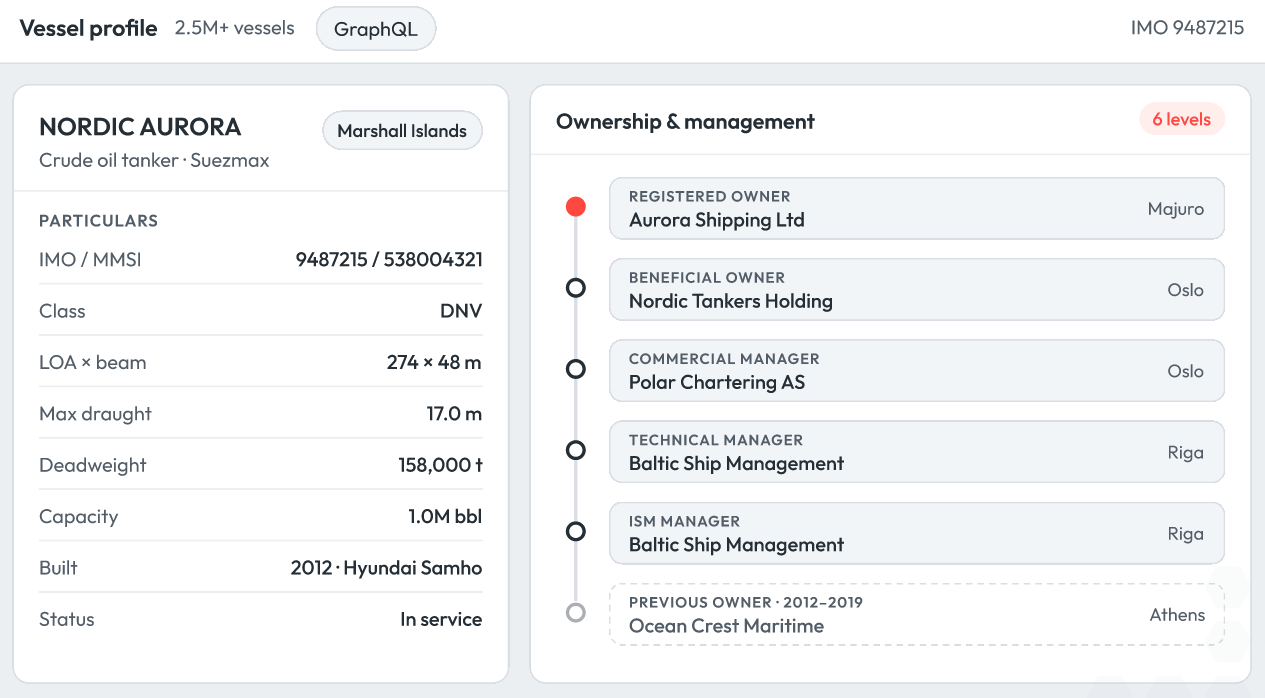
Flexible, granular vessel particulars and ownership data for the entire global fleet of 2.5M+ vessels supports fast, accurate due diligence and supply chain optimisation.
Six levels of ownership and management context cover the registered owner, commercial manager, associated companies and historical company associations, alongside enhanced particulars including identifiers, type, flag, class, dimensions, draught, capacity, build details and shipyard information.
Our GraphQL format makes querying and filtering highly flexible, so it's easy to retrieve exactly the data that meets your criteria and use case.
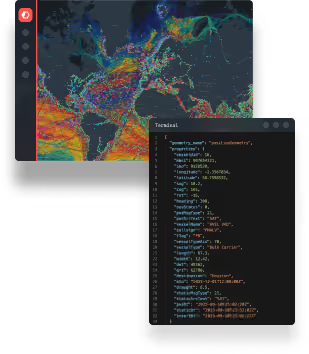
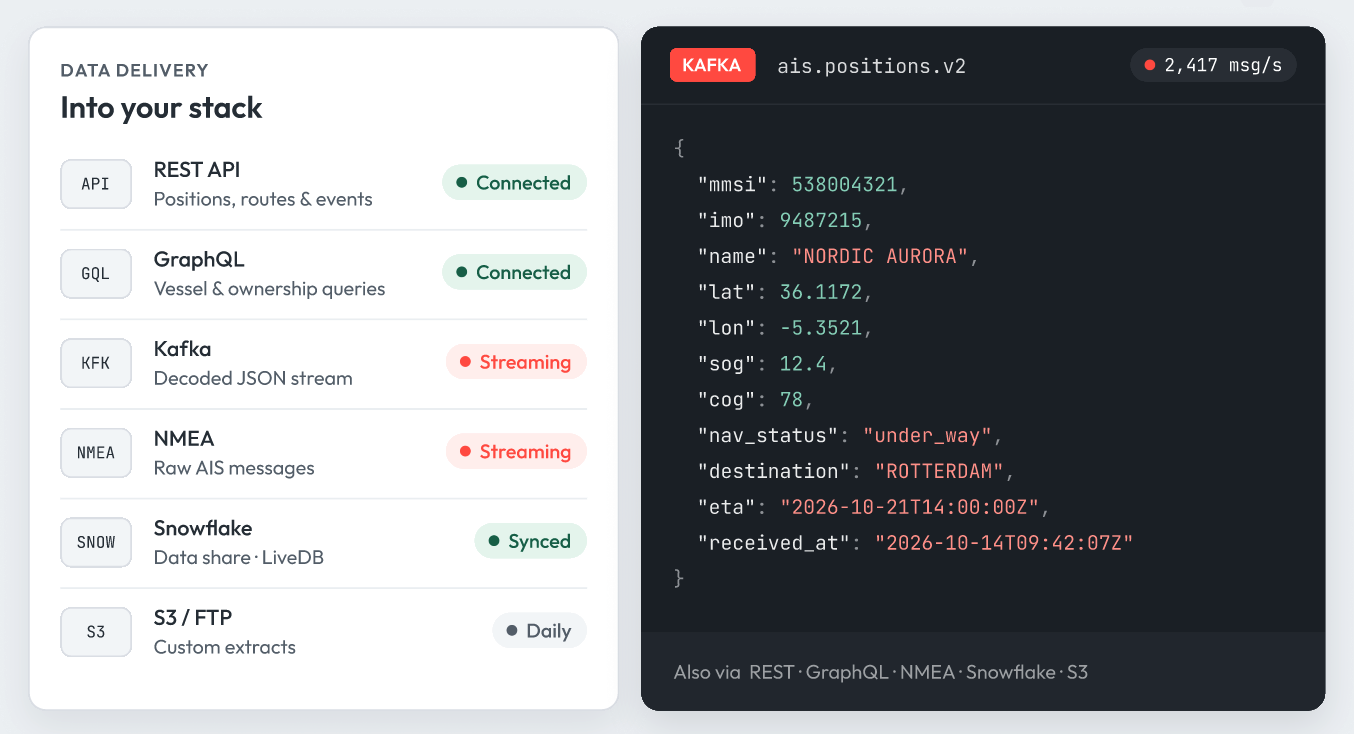
REST APIs and GraphQL give on-demand access to AIS positions, historical positions, routes, events, and vessel ownership and particulars, integrating maritime intelligence into your applications, dashboards and workflows while letting you request exactly the fields you need.
Kafka and NMEA streams support real-time ingestion, delivering decoded JSON through Kafka or raw AIS messages through NMEA to fit the infrastructure your team already runs.
Snowflake, LiveDB, S3, FTP and custom extracts bring maritime datasets into BI tools, data lakes, GIS systems and internal models.
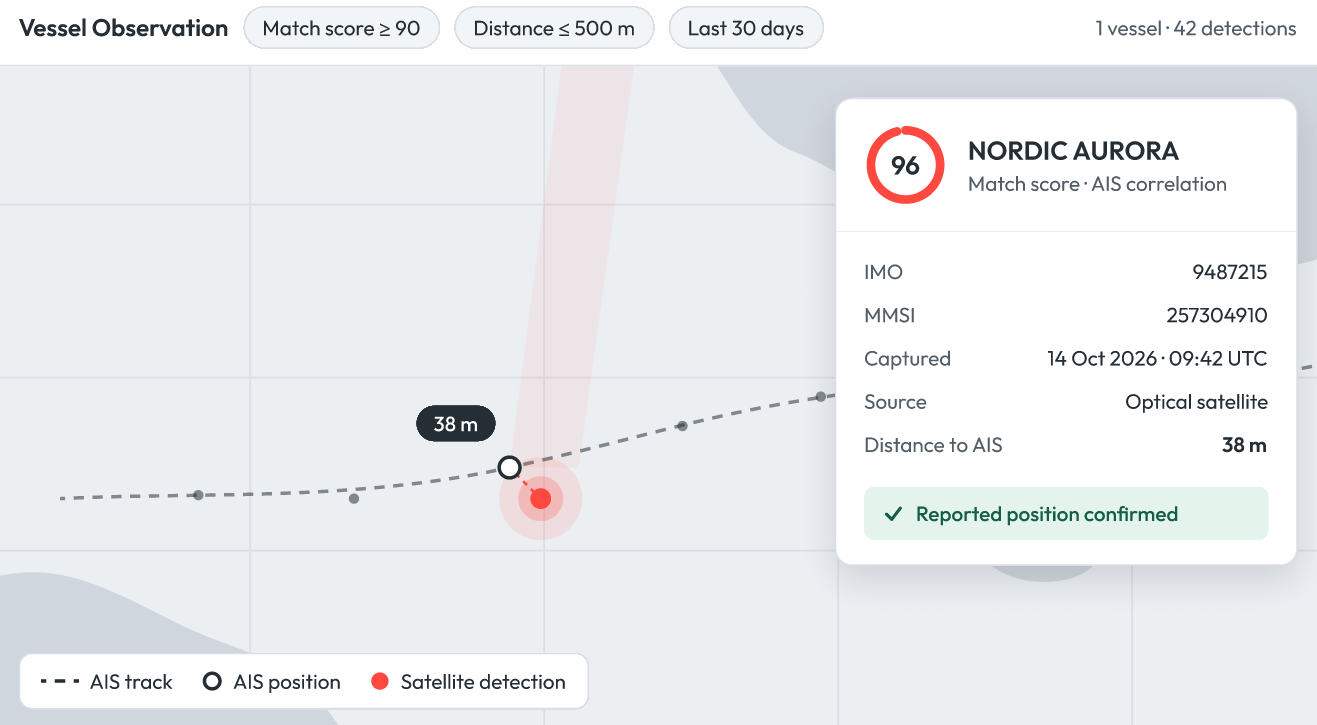
Kpler’s Vessel Observation API returns satellite detections tied to the same vessel ID as our AIS and vessel APIs, so reported and observed positions join on a single key.
Use the same v2 API key, pull JSON or CSV, and generate access yourself through the developer portal.
“Shipment insights are accurate and updated in just a few minutes.”
Keerthi Subawickrama
Import / Export Manager

“It allows our team to focus on more meaningful, strategic work rather than repetitive administrative tasks.”
Daria Banks
Managing Director, Banks & Lloyd

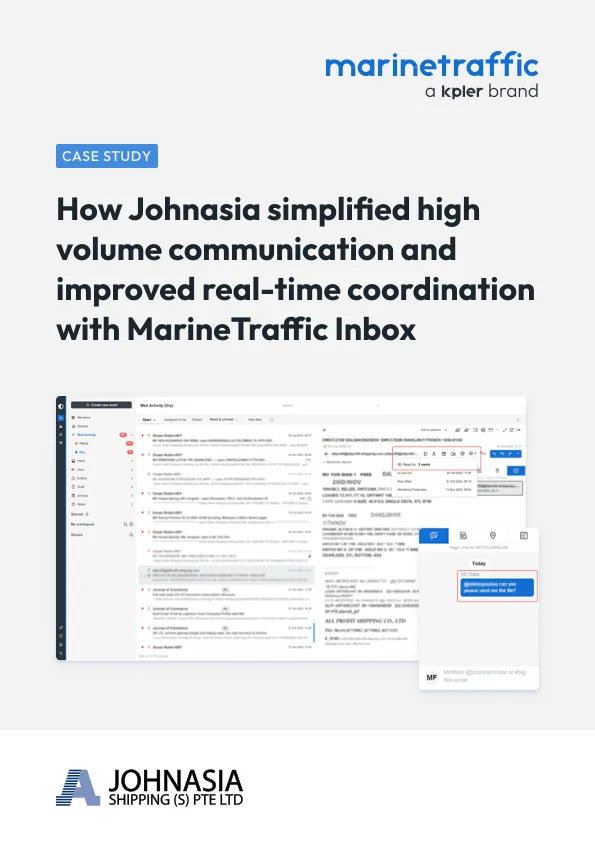
“The platform provides a reliable, and collaborative solution that supports our operational needs and helps us stay ahead in a competitive industry.”
Ahmad Hassan
IT Manager, Johnasia Shipping

“Working with Kpler allows us to provide better products, reduce emissions, and help customers optimise their operations.”
Manolis Levantis
Global Data Science Team Leader, Jotun

“We have managed to streamline the way we work, and MarineTraffic has definitely supported that.”
Eleftherios Ramfos
Operations Manager, Minerva Marine Inc.

“We had no real-time visibility on our container shipments. Now, we can proactively manage disruptions before they impact production.”
Alexandre Royer
Inbound Process Engineering, Renault Group
Explore our case studies for maritime markets

The latest news & insights











FAQ
Live AIS data includes a vessel’s location, speed, course, heading, destination, ETA, draught and navigational status. Kpler delivers it through REST API, NMEA, Kafka or custom download, with 1.2 billion+ messages a day at sub-30 second frequency.
A single source leaves gaps in some areas. Kpler combines 13,500+ coastal receivers, host vessels and its own satellite constellation. This gives fewer gaps across ports, coastlines, congested lanes and open ocean.
Use REST API or GraphQL for on-demand queries, with GraphQL letting you request exactly the fields you need. Use Kafka for real-time decoded JSON, or NMEA for raw AIS messages. Snowflake, LiveDB, S3, FTP and custom extracts suit BI tools, data lakes and GIS systems.
Routes, distances and ETAs are modelled on actual operating conditions rather than straight-line estimates. They include canal, inland-waterway and alternative-route options. You also get reported and calculated ETAs and last and next port context.
Yes. Predicted destinations estimate where a vessel is going before it arrives. Logistics, port operations, trading and customer-visibility teams get an earlier signal to act on than the reported destination alone.
The Vessel Observation API returns satellite detections tied to the same vessel ID as Kpler’s AIS and vessel APIs, so reported and observed positions join on a single key. It uses the same v2 API key and returns JSON or CSV. You can generate access yourself through the developer portal.
Yes. Port, terminal and berth monitoring tracks arrivals, departures, dockings and undockings. Historical port activity, dwell times and movement patterns are available as a custom download, so you can set operational baselines and spot trends.