Geopolitical pressure is increasingly visible in physical LNG flows, shipping behavior and ownership structures, not only in headline supply numbers. LNG has traditionally been a relatively transparent seaborne commodity, but that transparency can erode when vessels, counterparties and trading routes come under sustained geopolitical pressure.
This whitepaper focuses on how market participants can identify and interpret the physical response. Drawing on Yamal, Arctic LNG 2, the Arc7 fleet and vessel-level case studies, it shows how trade flows, vessel tracking, fleet characteristics, ownership, satellite and compliance intelligence combine to give a clearer view of physical LNG markets.
Key takeaways
- Sanctions reshape logistics and ownership: They do not simply remove molecules from the market. Russian LNG cannot be analysed as a single trade, because the status of individual projects, vessels, counterparties and destinations determines how, and whether, supply reaches the market.
- Political intent and physical flows can diverge: From December 2025 to March 2026, 100% of Yamal LNG exports went to the EU, and the share reached its highest level on record over the first five months of 2026, as European buyers appeared to maximize access before the January 2027 ban on long-term Russian LNG imports.
- AIS remains essential, but it is not enough: Satellite imagery showed the Arctic Pioneer docked at Arctic LNG 2 while its AIS placed it more than 800 nautical miles away in the Barents Sea. Less transparent trades increasingly require corroboration across multiple independent datasets.
- The vessel biography can be an earlier warning: Changes in ownership, flag, commercial management, classification or insurance can appear before unusual behavior at sea. 56 active LNG carriers cross the 20-year threshold between 2026 and 2027, a clearly identifiable pool worth monitoring.

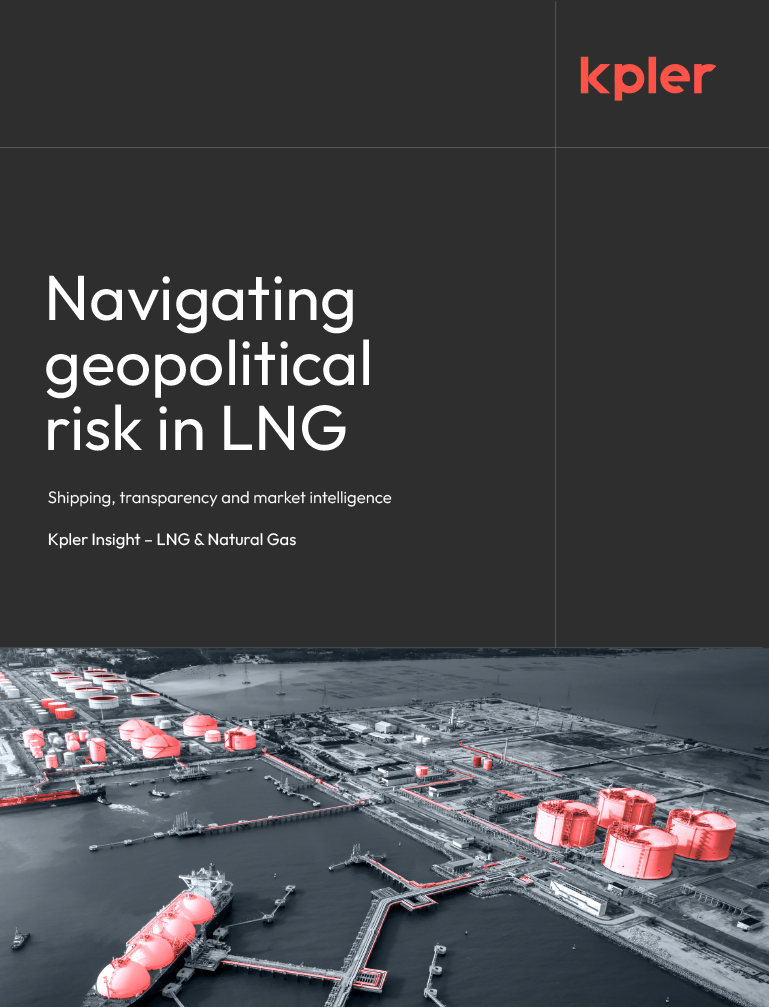
Access our free whitepaper to gain valuable industry insights:
“I rely on the Kpler Whitepapers to stay ahead of the latest market trends and industry insights.”
Michael Rodriguez
Chief Strategy Officer, Global Trade Inc

Known from...