.webp)


500+
16,500+
80+ iron ore
9
- Cargo and trade flow tracking across iron ore fines, lump, pellets, concentrates, magnetite, and intermediate iron products — mapping raw material movements through the steelmaking supply chain
- Grade-level segmentation by iron content: low-grade fines (55–60% Fe), medium-grade (60.1–63.5% Fe), and high-grade (>63.5% Fe)
- Brand-level intelligence covering Pilbara Blend, Newman High Grade, Fortescue Blend, Carajás, Roy Hill, Kumba, Jimblebar, and more
- Intermediate product coverage including Direct Reduced Iron (DRI), Hot Briquetted Iron (HBI), pig iron, and mill scale
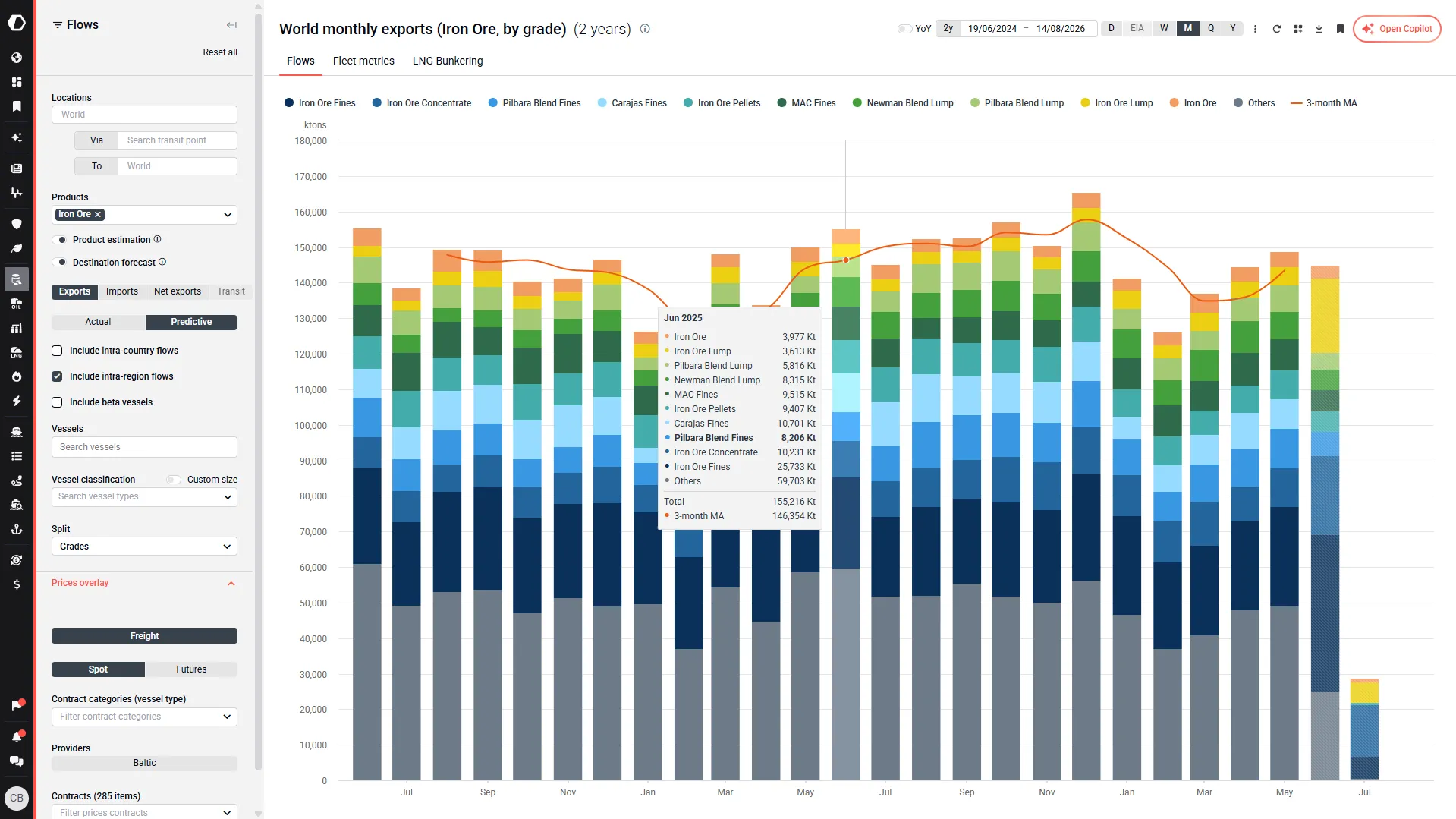
- Fleet utilisation analytics by location, ownership, vessel status, and deadweight — tracking active, idle, ballast, and laden vessels to assess capacity and detect freight market shifts
- Port congestion monitoring — vessel queues, waiting times, and congestion patterns across key ports to support voyage planning and anticipate delivery delays
- Ton-mile demand and vessel speed indicators by vessel type and cargo state — evaluating shipping demand, fleet deployment, and trade distance across global routes
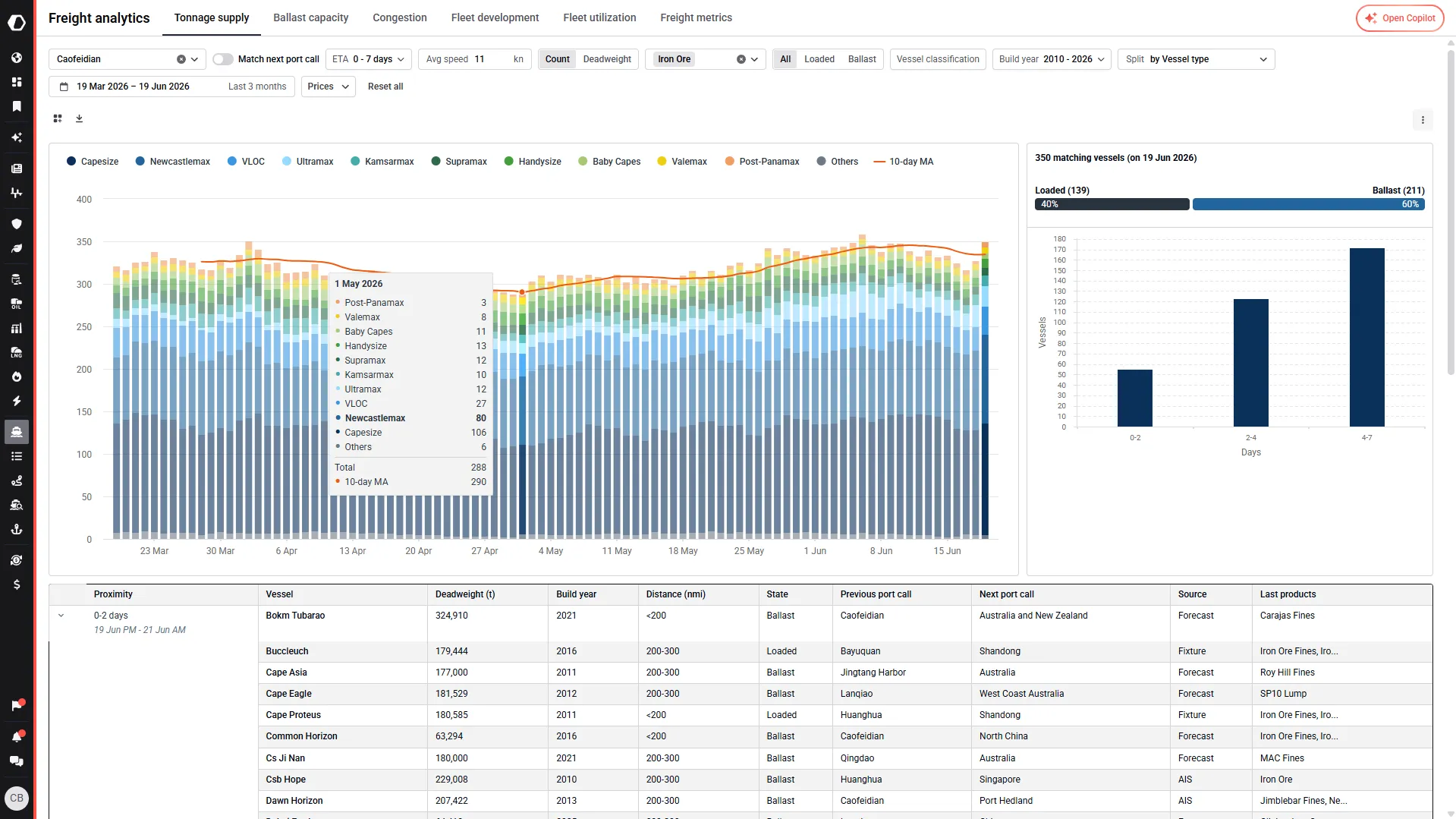
- Daily, weekly, and monthly research across the iron ore and steel complex — combining seaborne trade signals with supply, demand, freight, and disruption analysis
- Fundamental coverage spanning Australian and Brazilian exports, Chinese port inventories, steel production trends, and Middle East pellet supply
- Ore quality spread and product availability insights — explaining how volume shifts affect pricing differentials across fines, lump, and pellets
- Freight and route analysis connecting vessel diversions, bunker costs, congestion, and voyage distances to delivered costs and regional pricing
- Coverage from major miner supply growth to Chinese import demand and steel market outlook
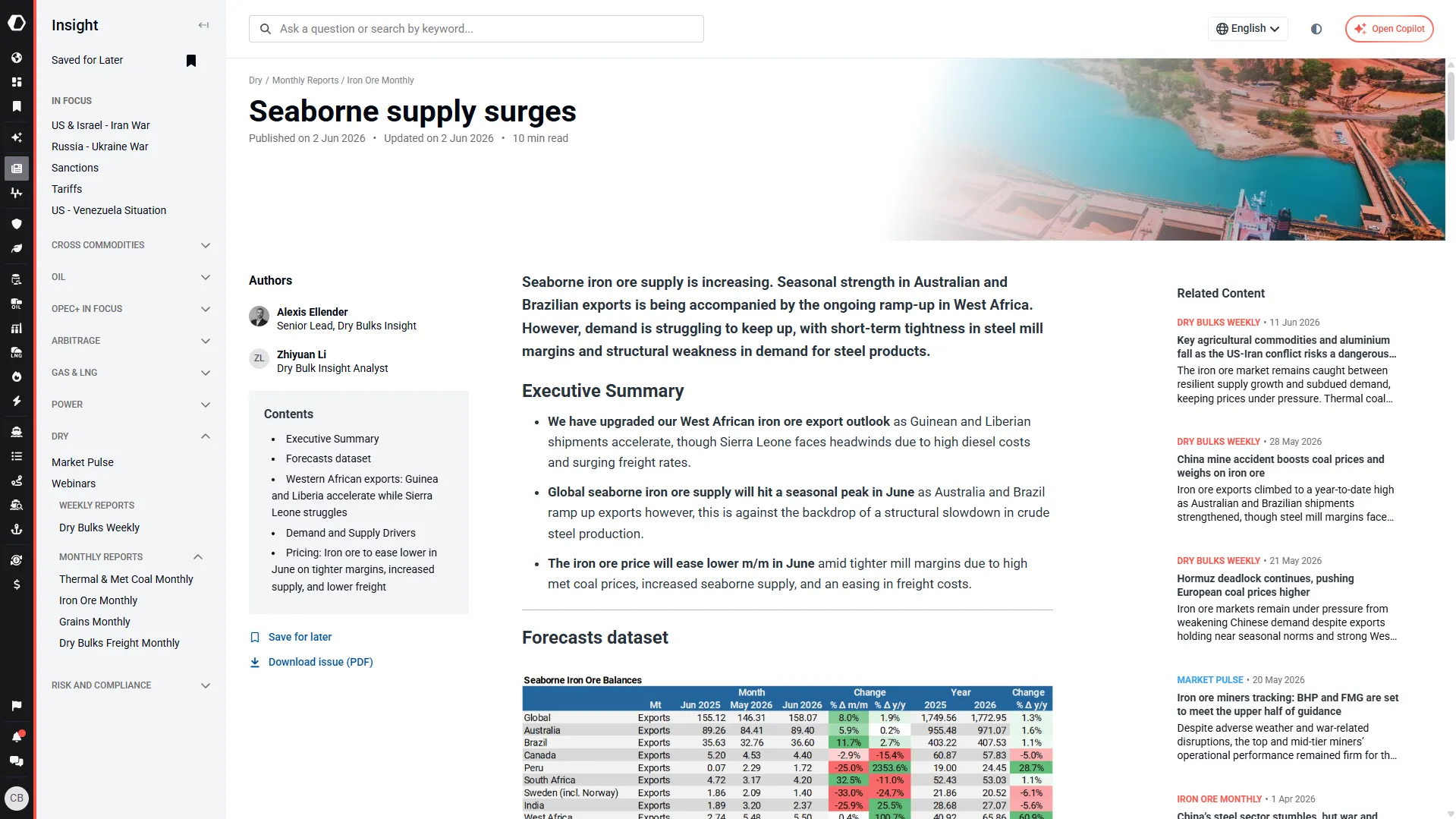
- Structured seaborne supply & demand balances tracking export supply, import demand, and regional consumption across the global iron ore market
- Export coverage across Australia, Brazil, West Africa, and emerging supply hubs — alongside import demand analysis for China, Japan, South Korea, Europe, and Southeast Asia
- Monthly trade balances combined with forward-looking projections to identify structural market trends
- 18-month price forecasts for key benchmarks — linking physical fundamentals with market direction


“The platform offers an exceptionally intuitive interface, making it effortless to access real-time market intelligence or conduct deep dives.”


FAQ
Kpler provides comprehensive iron ore market intelligence covering global trade flows, freight analytics, research insights, and supply-demand modeling.
The platform tracks cargo movements for a wide range of iron ore products including fines, lump, pellets, concentrates, magnetite, and intermediate iron products such as direct reduced iron (DRI) and hot briquetted iron (HBI).
By combining cargo intelligence, shipping analytics, market research, and supply-demand balances, Kpler helps market participants understand how iron ore moves through the global steelmaking supply chain.
Kpler provides highly granular visibility into seaborne iron ore cargo movements across the global market.
Users can monitor:
- Export and import flows by country and installation
- Shipments by buyers and sellers
- Cargo movements across major iron ore grades
- Trade flows between leading exporters and steel-producing regions
This enables analysts and traders to follow iron ore shipments from key producers such as Australia, Brazil, and West Africa to major demand centers including China, Japan, South Korea, Europe, and Southeast Asia.
Kpler tracks a wide range of iron ore products used in steelmaking.
Coverage includes:
- Iron ore fines
- Iron ore lump
- Iron ore pellets
- Iron ore concentrates
- Magnetite
The platform also tracks intermediate iron products such as:
- Direct Reduced Iron (DRI)
- Hot Briquetted Iron (HBI)
- Pig iron
- Mill scale
This allows users to analyze the full spectrum of raw materials used in global steel production.
Yes. Kpler provides detailed segmentation of iron ore grades based on iron content.
This includes:
- Low-grade fines: 55–60% Fe
- Medium-grade fines: 60.1–63.5% Fe
- High-grade fines: above 63.5% Fe
Tracking these quality categories helps users understand pricing differentials, blending strategies used by steel mills, and how different ore qualities move through global markets.
Yes. Kpler offers detailed brand-level tracking for widely traded iron ore products.
Examples of covered brands include:
- Pilbara Blend Fines
- Newman High Grade Fines
- Fortescue Blend Fines
- Carajás Fines
- Roy Hill Fines
- Kumba Fines
- Jimblebar Fines
Brand-level intelligence allows market participants to track specific ore qualities that influence benchmark pricing and steel mill procurement strategies.
Kpler’s freight analytics provide insight into how bulk carrier fleets are deployed across global iron ore trade routes.
Users can analyze:
- Vessel movements and fleet positioning
- Shipping capacity by vessel type and deadweight
- Vessel status including laden, ballast, idle, or active
- Fleet deployment across major iron ore shipping corridors
This helps market participants evaluate freight capacity and anticipate changes in shipping availability.
Kpler provides real-time visibility into vessel congestion and port activity at major iron ore export and import terminals.
Users can track:
- Vessel queues at loading and discharge ports
- Waiting times for bulk carriers
- Operational delays affecting cargo movements
- Changes in port congestion levels
Monitoring congestion helps traders and logistics teams anticipate delays and understand how port bottlenecks impact freight rates and delivery schedules.