.webp)



170+
9
11
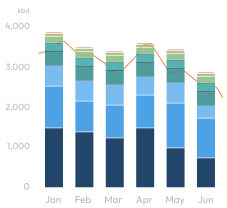
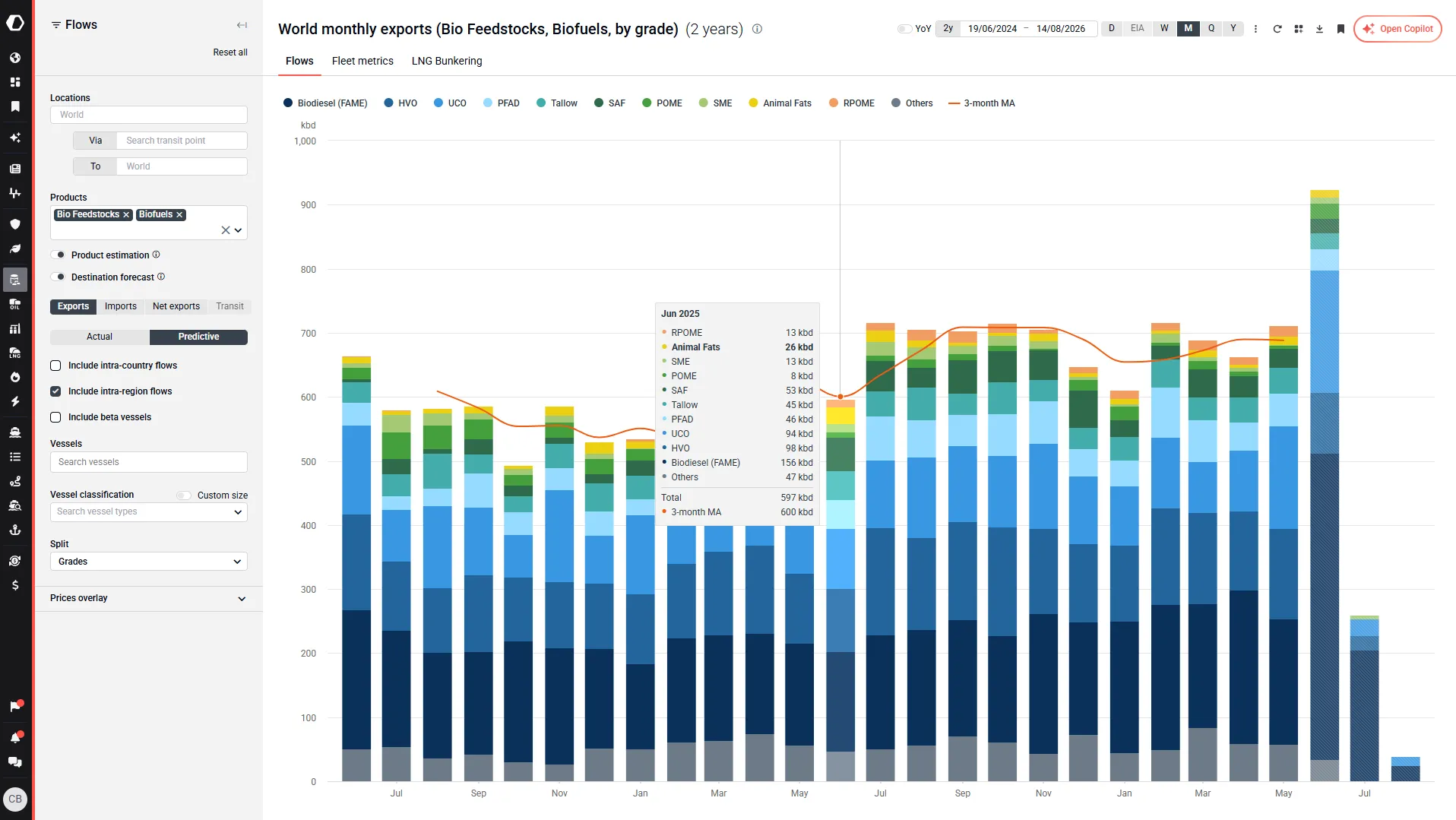
- Cargo tracking across major biofuel products — renewable diesel (HVO), SAF, bionaphtha, and biodiesel (FAME) — mapping flows between production hubs and consumption markets
- Granular biodiesel segmentation by feedstock: PME, RME, SME, TME, UCO methyl ester, and POME-derived biodiesel
- Deep feedstock coverage spanning UCO, animal fats, tallow, fish oil, PFAD, acid oils, pyrolysis oil, and tall oil
- Waste-based input tracking — food waste oil, SBEO, EFB oil, and cashew nut shell liquid — for circular economy visibility
- Broader oleochemical coverage including fatty acids, fatty alcohols, glycerine, lecithin, molasses, and soap stocks
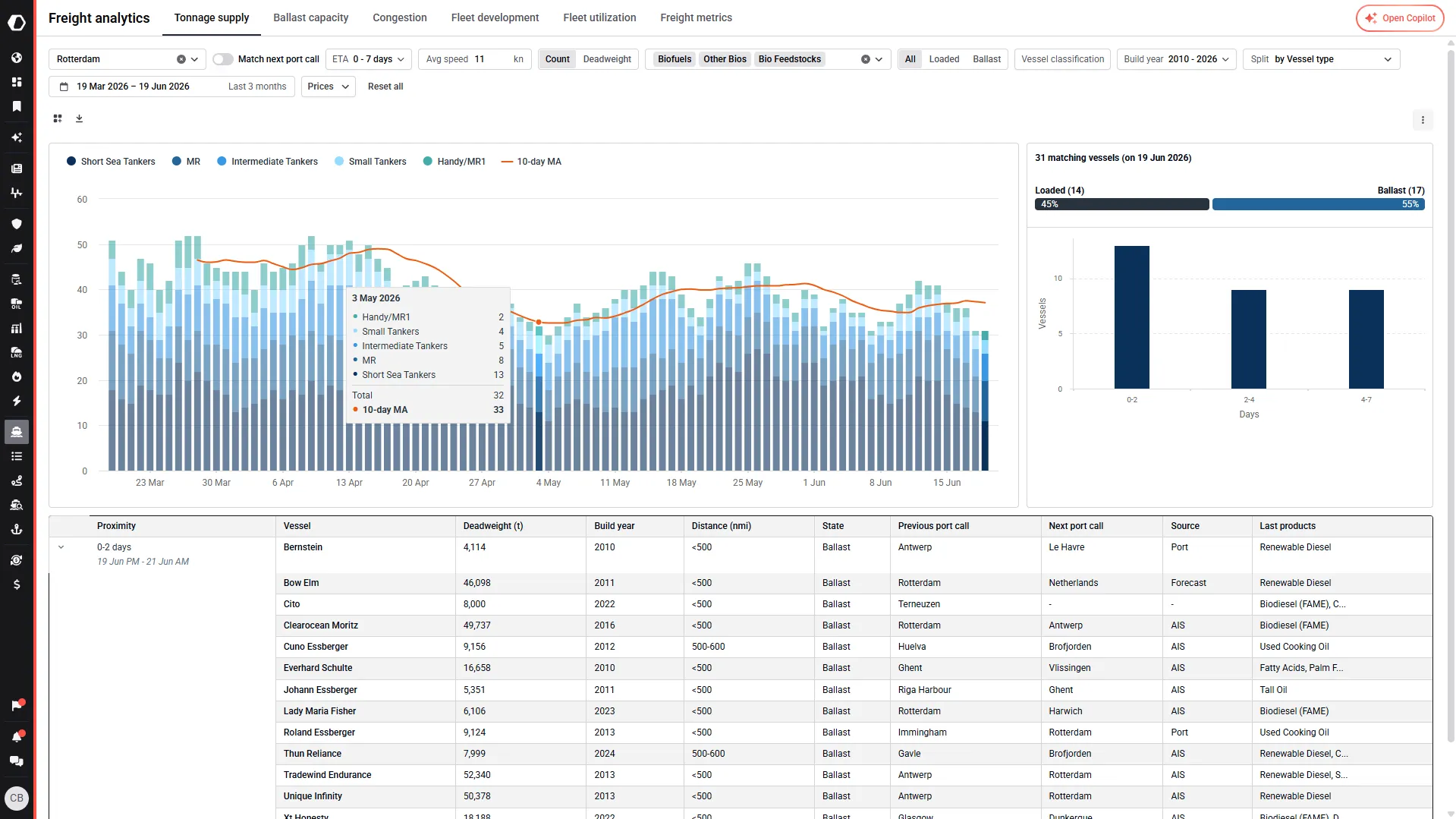
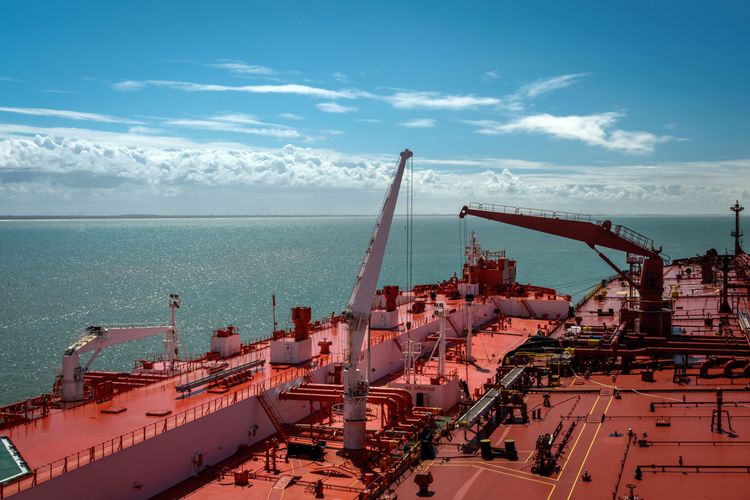
- Freight analytics connecting cargo movements with vessel activity across major biofuel corridors — shipping routes, utilisation, and voyage costs
- Fleet insights covering ownership, charter parties, and ballast/laden ratios across any time series
- Voyage calculator to optimise planning, timing, and cost
- Port and canal congestion monitoring — duration and count data linking routes to trade flows
- Emerging route tracking, including Asia-Europe renewable diesel corridors, to evaluate how freight costs shape arbitrage opportunities
- Forward-looking research covering policy, mandates, regulatory shifts, production trends, and import flows
- Structured supply & demand balances for HVO, FAME, SAF, and other emerging fuels
- Regional coverage across Europe, North America, and Asia — tracking how feedstock availability, refinery capacity, and policy incentives shape production and trade
- Upstream feedstock integration connecting biofuel balances with UCO, animal fats, and vegetable oils to assess supply competitiveness
- Projections and market insights to help traders, analysts, and energy companies anticipate supply chain shifts

“The platform offers an exceptionally intuitive interface, making it effortless to access real-time market intelligence or conduct deep dives.”


FAQ
Kpler provides detailed coverage of global biofuel trade flows, enabling users to monitor how renewable fuels move between production hubs and demand centers across international markets. The platform tracks major biofuels such as renewable diesel (HVO), sustainable aviation fuel (SAF), bionaphtha and biodiesel (FAME).
By monitoring cargo movements across these fuels, Kpler helps market participants understand global renewable fuel supply chains, trade routes and market dynamics.
Kpler offers granular product-level coverage across the biodiesel market, allowing users to analyse trade flows by feedstock type.
Tracked biodiesel types include:
- Palm methyl ester
- Rapeseed methyl ester
- Soybean methyl ester
- Tallow methyl ester
- Used cooking oil (UCO) methyl ester
- Palm oil mill effluent methyl ester
This level of segmentation helps users understand how feedstock selection affects biodiesel supply chains, carbon intensity profiles and regulatory compliance.
Yes. Kpler provides extensive visibility into biofuel feedstocks and upstream inputs, enabling users to track how raw materials move through the renewable fuel supply chain.
Coverage includes feedstocks such as:
- Used cooking oil (UCO)
- Animal fats and tallow
- Fish oil
- Palm fatty acid distillate (PFAD)
- Acid oils
- Pyrolysis oil
- Palm oil mill effluent
The platform also tracks emerging waste-based feedstocks, including:
- Food waste oil (FWO)
- Spent bleached earth oil (SBEO)
- Empty fruit bunch oil (EFB oil)
- Cashew nut shell liquid
This helps market participants monitor the circular economy and waste-based feedstock supply chains supporting renewable fuels.
Yes. In addition to fuels and feedstocks, Kpler tracks several bio-based and oleochemical products linked to the renewable fuels ecosystem.
These include:
- Fatty acids
- Fatty alcohols
- Glycerine (crude and refined)
- Lecithin
- Molasses
- Soap stocks
Tracking these related markets provides a broader view of biofuel supply chains and by-product markets.
Kpler freight analytics connect cargo intelligence with vessel tracking, allowing users to analyze how biofuels move across global shipping routes.
Customers can evaluate:
- Vessel utilization and fleet deployment
- Ownership and charter party structures
- Whether vessels are operating ballast or laden
- Shipping costs and voyage economics
This helps market participants understand how freight markets influence biofuel trade flows and arbitrage opportunities.
Yes. Kpler provides visibility into congestion and operational activity at key ports and canals involved in biofuel trade.
Users can monitor:
- Vessel queues at export and import terminals
- Waiting times at ports and canals
- Congestion trends affecting shipping schedules
This insight helps traders and logistics teams anticipate delays, route changes and cost impacts on biofuel supply chains.
Yes. Kpler freight analytics allow users to analyze shipping routes, voyage costs and trade corridors for renewable fuels.
For example, users can track emerging routes such as Asia-to-Europe renewable diesel shipments, helping evaluate how freight costs affect arbitrage opportunities and global trade flows.