.webp)


260+
1,700+
11
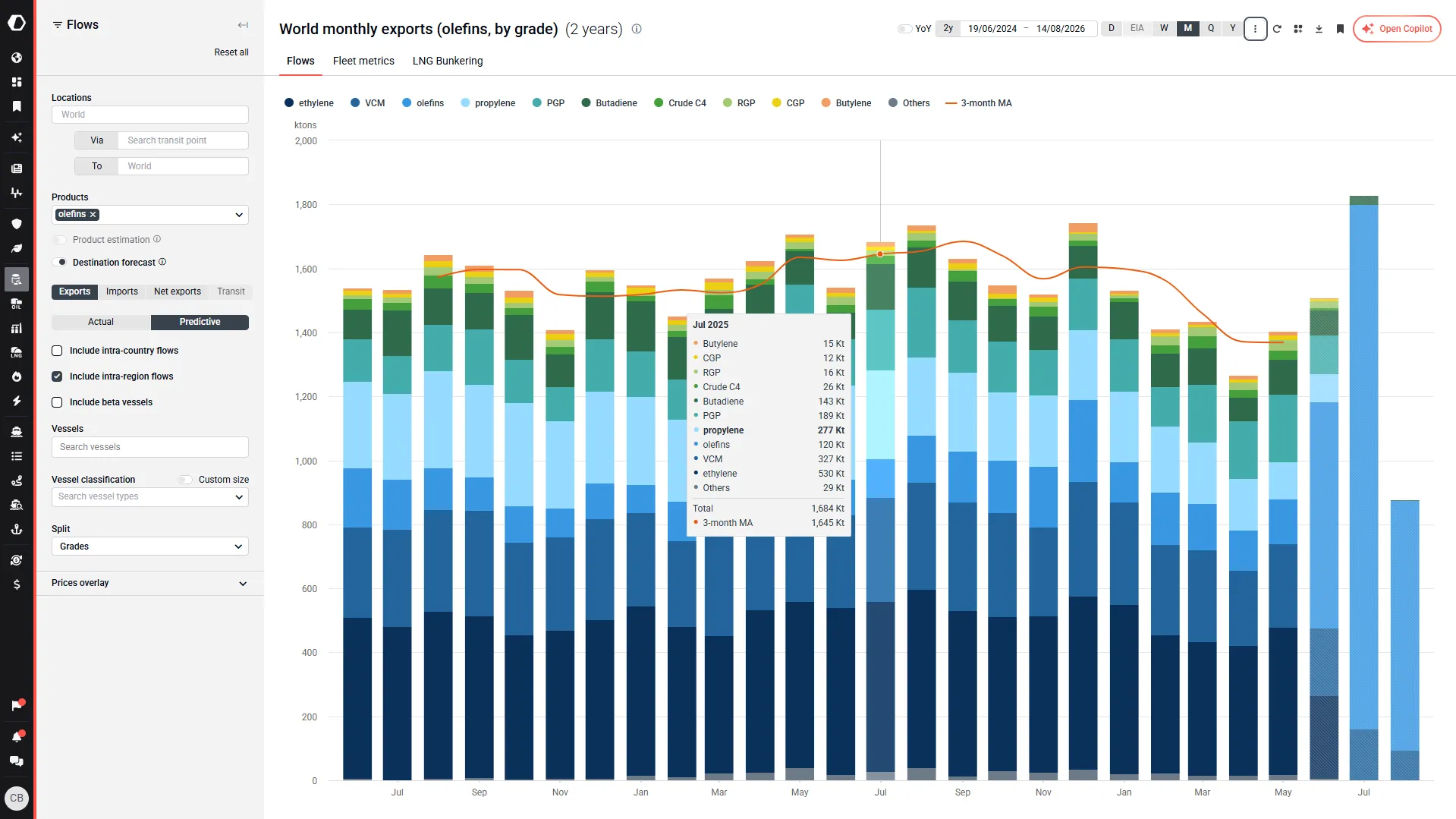
- Granular trade flow tracking across major olefin products — ethylene, propylene, butadiene, crude C4, VCM, isobutylene, butylene, and isoprene monomer (IPM)
- Propylene value chain segmentation across polymer grade (PGP), chemical grade (CGP), and refinery grade (RGP) — differentiating petrochemical feedstocks from refining streams to support downstream demand analysis
- Coverage of intermediate C4 streams including raffinate-1 and raffinate-2 — combining broad commodity coverage with product-level detail across global olefin supply chains
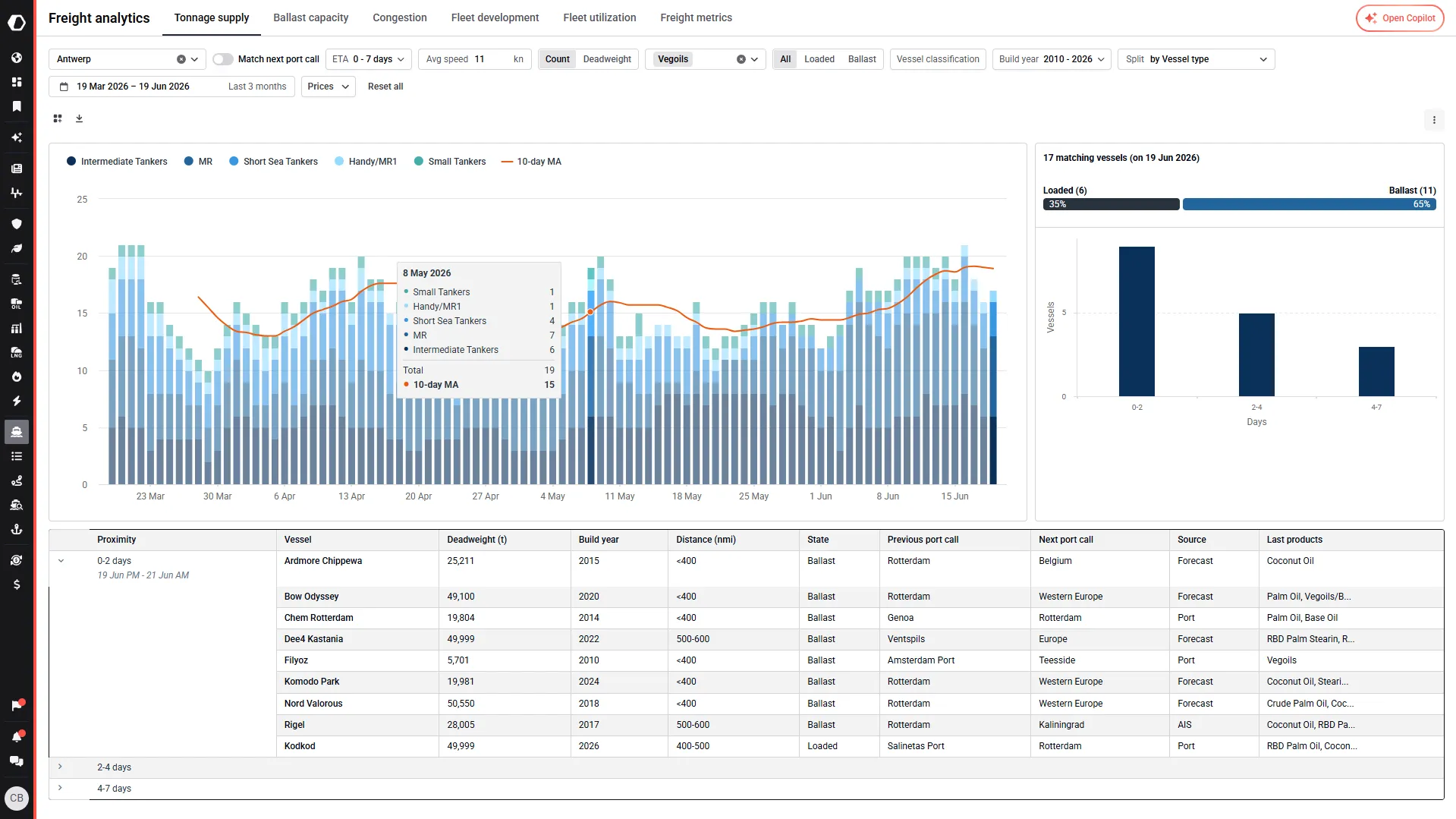
- Fleet analytics for tanker and gas carrier fleets by location, ownership, vessel status, and deadweight — tracking active, idle, ballast, and laden vessels across key petrochemical trade routes
- Port congestion visibility at major petrochemical export hubs — vessel queues, waiting times, and bottlenecks to support voyage planning and anticipate loading delays
- Ton-mile demand and vessel speed metrics by vessel type and cargo state — assessing freight demand, fleet utilisation, and voyage distances across global chemical trade routes
- Regular research across ethane, propane, butane, naphtha, and downstream olefins — covering pricing, supply & demand balances, infrastructure developments, and trade flow intelligence across the Atlantic and Asia
- Fundamental analysis spanning NGL production, inventory movements, export terminal capacity, cracker demand, PDH run rates, and new petrochemical project impacts on regional balances
- Logistics and geopolitical context — export disruptions, terminal outages, shipping constraints, and bunker costs assessed for impact on delivered prices, spreads, and arbitrage
- Market commentary integrating stocks, trade flows, cracking margins, and regional demand — from US ethane tightness and LPG export growth to East-West spread dynamics

“Best part? Kpler dashboards. I set up my metrics once, and they update in real-time. I can access the latest insights instantly.”

FAQ
Kpler provides detailed coverage of global olefins cargo movements, enabling users to monitor how key petrochemical feedstocks move across international markets. Coverage includes major olefin products such as ethylene, propylene, butadiene, crude C4 streams, vinyl chloride monomer (VCM), isobutylene, butylene and isoprene monomer (IPM).
These chemicals are essential building blocks for the production of plastics, synthetic materials, and petrochemicals, making visibility into their trade flows critical for traders, producers, and analysts monitoring the global petrochemical supply chain.
Kpler provides granular segmentation within the propylene value chain, allowing users to analyze shipments across different product grades.
Coverage includes:
- Polymer Grade Propylene (PGP) – primarily used for polypropylene production
- Chemical Grade Propylene (CGP) – used in chemical intermediates
- Refinery Grade Propylene (RGP) – typically used in refining and blending processes
This classification helps market participants track specific demand drivers across refining and petrochemical sectors, offering deeper insight into how propylene supply moves through the market.
Yes. In addition to primary olefins, Kpler tracks important intermediate streams used in petrochemical production, including raffinate-1 and raffinate-2, which are byproducts of C4 processing.
These intermediate products serve as feedstocks for further chemical processing and polymer production, making them important for understanding petrochemical supply chains and feedstock availability.
Kpler combines cargo intelligence with product-level classification, allowing users to track shipments of petrochemical feedstocks across producing regions and demand centers.
By monitoring flows of ethylene, propylene, butadiene and related intermediates, customers can analyze:
- Supply availability from key exporting regions
- Shifts in petrochemical feedstock demand
- Changes in global trade routes
- Supply chain disruptions affecting petrochemical production
This helps traders, analysts and petrochemical companies better understand how the global olefins market is evolving.
Kpler provides detailed freight analytics for tanker and gas carrier fleets transporting petrochemical cargoes.
Users can analyze vessel movements based on:
- Vessel location
- Ownership
- Vessel status (active, idle, ballast, laden)
- Deadweight and vessel class
This allows market participants to evaluate shipping capacity, fleet deployment and freight market conditions across major petrochemical trade routes.
Yes. Kpler provides real-time insight into congestion and operational activity at major petrochemical ports worldwide.
Users can monitor:
- Vessel queues at export terminals
- Waiting times at ports
- Congestion trends impacting loading schedules
This helps traders and logistics teams anticipate delays, manage shipping risk and understand how infrastructure constraints influence petrochemical supply chains.
Kpler includes several freight market indicators that help users understand shipping demand and fleet efficiency.
These include:
- Ton-mile demand metrics to measure trade distances and shipping activity
- Average vessel speed data to analyze operational efficiency and freight market conditions
Combined with filters for vessel type and cargo status (laden or ballast), these metrics provide deeper insight into the dynamics of global chemical shipping.