.webp)



500+
16,500+
35
18 month
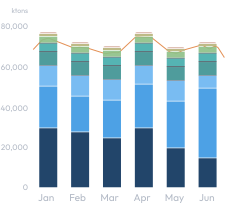
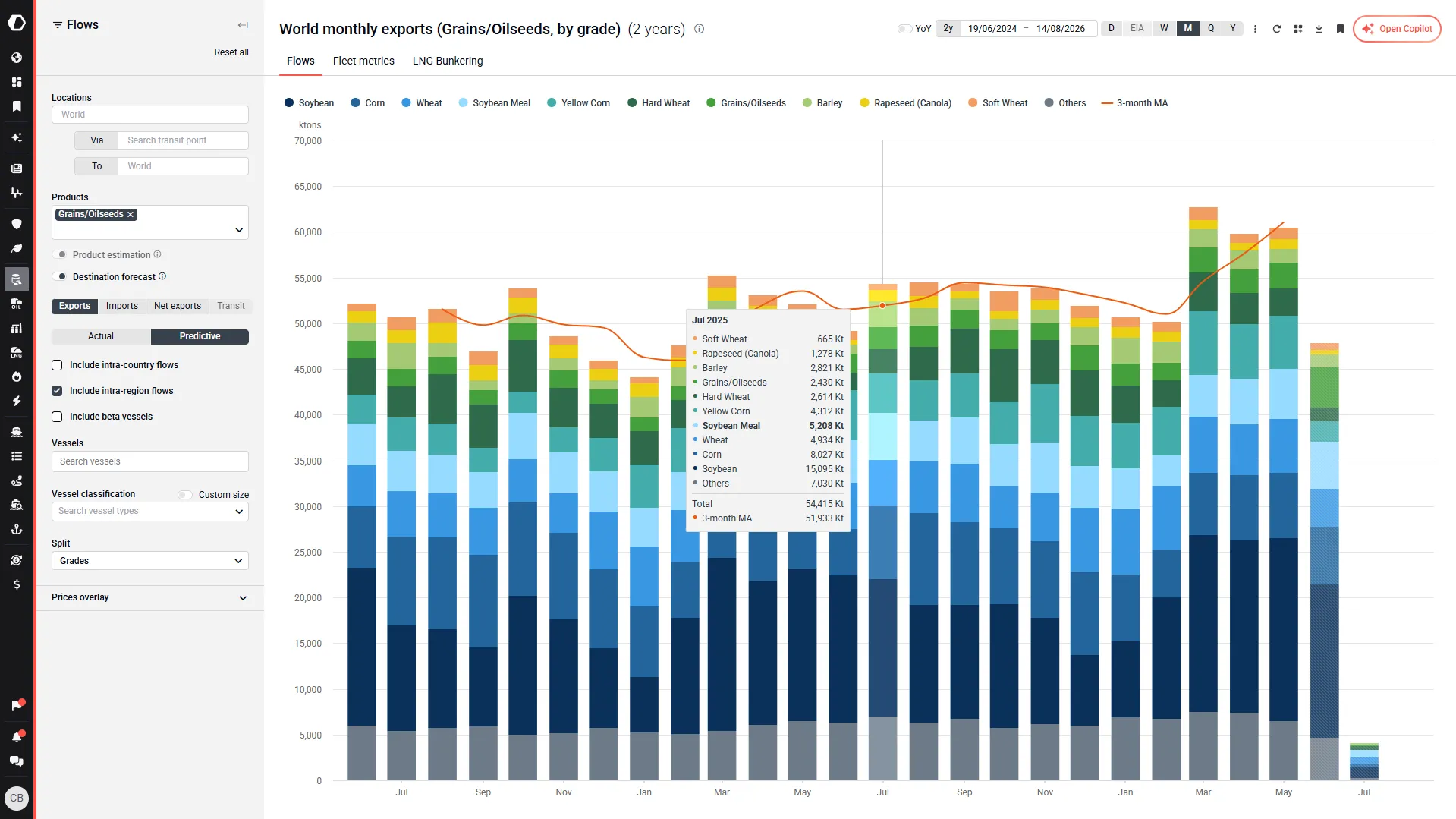
- Cargo and trade flow tracking across global grain and oilseed markets — mapping movements from major producing regions to demand centers
- Full oilseed value chain: soybeans, rapeseed, sunflower seed, cottonseed, peanuts, palm kernel, and copra — plus processed products including meals, soy flour, and hulls
- Grain coverage across corn, wheat, barley, sorghum, oats, rye, millet, and DDGs — with product-level detail including corn grades, durum and hard/soft wheat varieties, and malting vs. feed barley
- Detailed product classifications enabling quality specification and regional trade pattern analysis across both categories
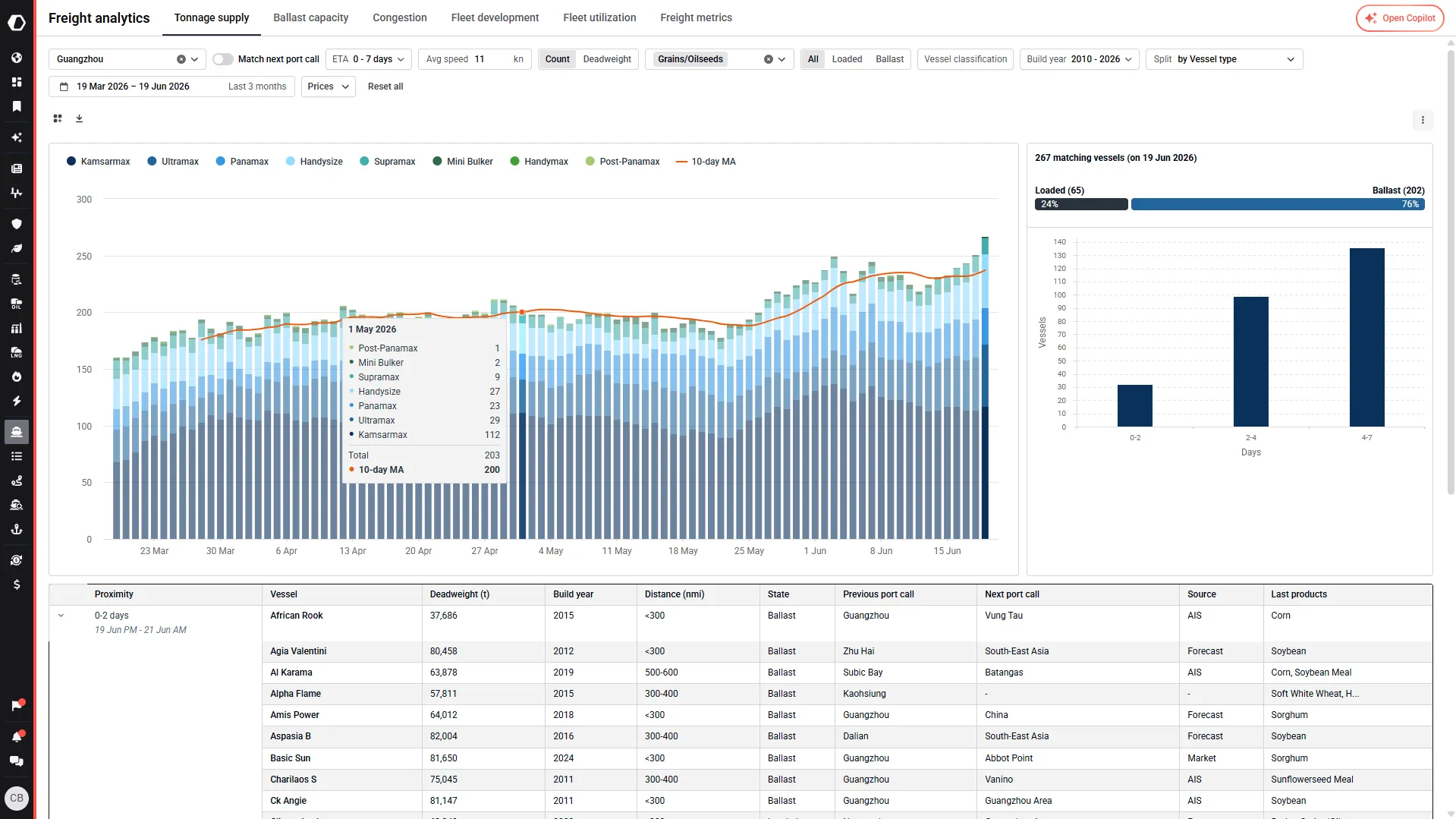
- Fleet tracking across major grain and oilseed corridors by geography, ownership, vessel status, and deadweight — monitoring laden, ballast, idle, and active vessels to assess capacity and detect market shifts
- Port congestion visibility at key grain export and import hubs — vessel queues, waiting times, and congestion trends to support voyage planning and anticipate loading delays
- Ton-mile demand and vessel speed analytics by vessel class and cargo state — tracking shipping demand, route distances, and fleet efficiency across global grain trade routes
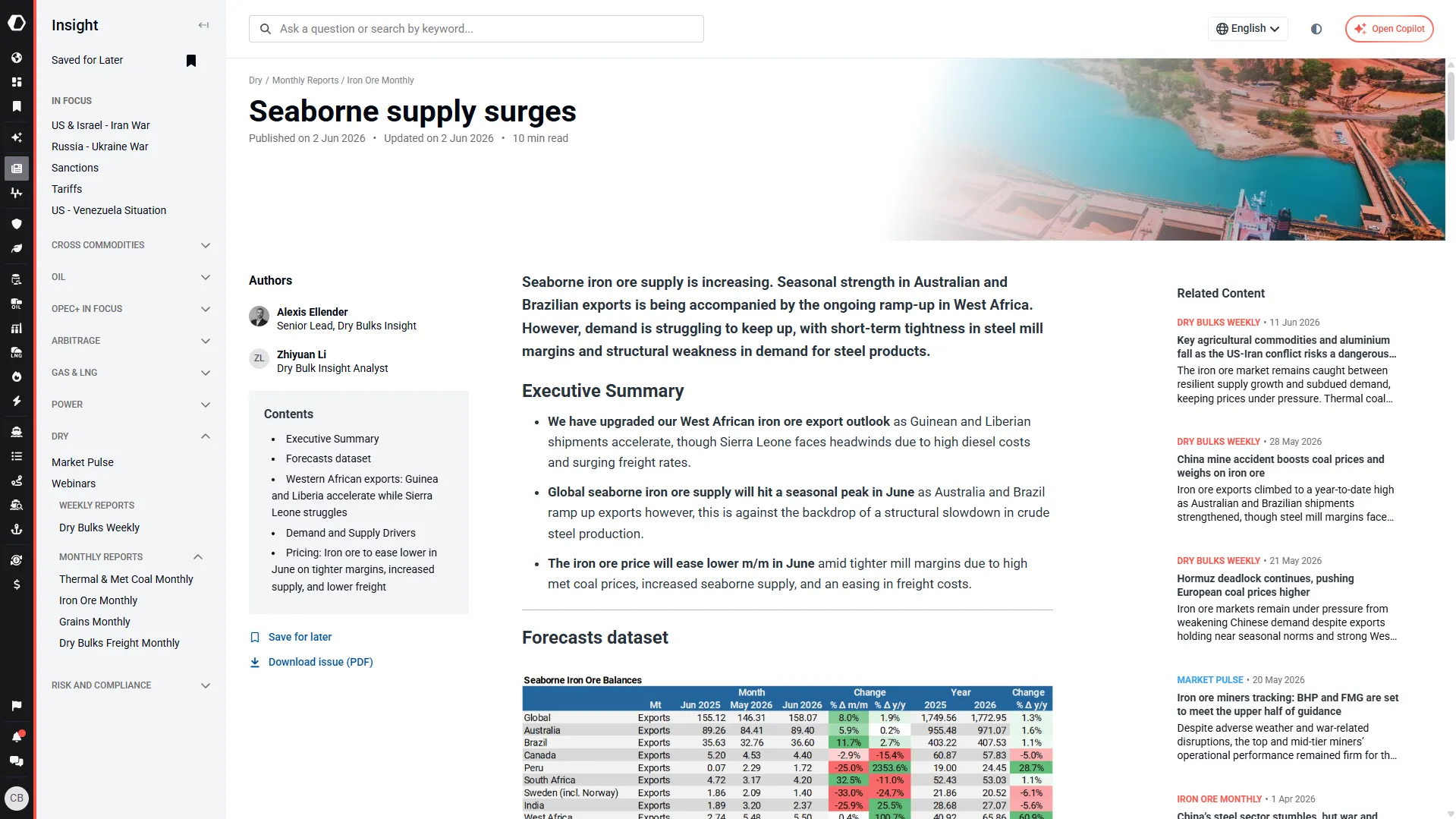
- Daily, weekly, and monthly research across the global agricultural complex — combining physical trade data with weather, planting progress, export competitiveness, and geopolitical developments
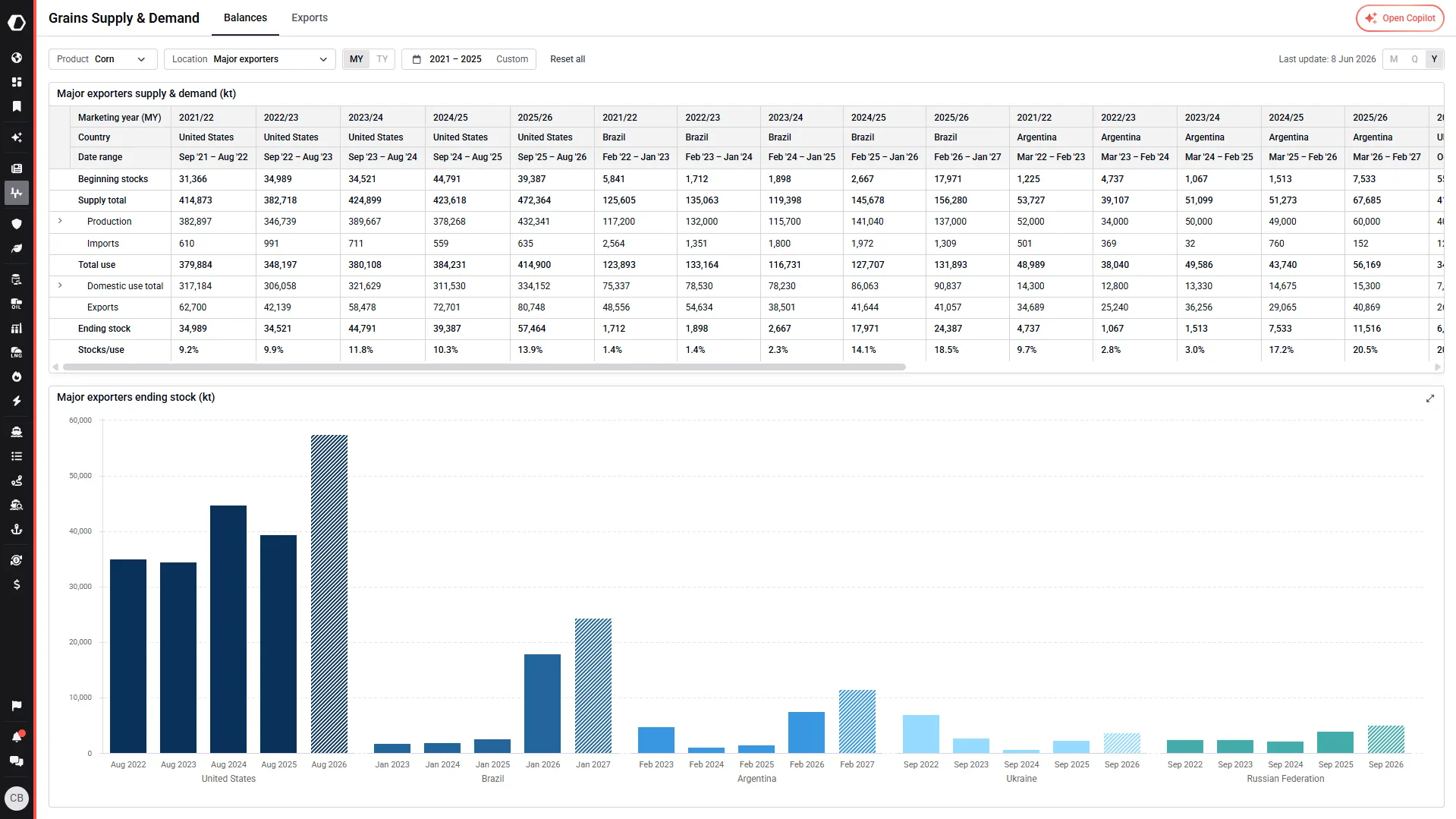
- Supply and demand analysis across corn, soybeans, and wheat — covering the US, Brazil, Argentina, Ukraine, Russia, and the EU
- Crop progress, harvest conditions, planting decisions, and global inventory trend tracking
- Logistics and geopolitical context — port capacity, river transport, fertiliser prices, and tensions shaping planting decisions and yields
- Data-driven commentary connecting trade flows, crop development, and export competition to anticipate supply shifts and demand trends
- Structured supply & demand balances across corn, soybeans, wheat, and barley — tracking production, consumption, trade flows, and inventories across major producing and importing regions
- Regional export coverage for the US, Brazil, Argentina, Ukraine, Russia, and the EU — alongside global import demand analysis
- Monthly trade flow data combined with broader balance views and forward-looking projections
- Weather, planting decisions, and export competition integrated into balance analysis to support crop market fundamentals

“The platform offers an exceptionally intuitive interface, making it effortless to access real-time market intelligence or conduct deep dives.”



FAQ
Kpler provides detailed coverage of global grain and oilseed trade flows, helping users track how key agricultural commodities move between major producing regions and global demand centers. Coverage spans major grains such as corn, wheat, barley, sorghum, oats, rye, millet and dried distillers grains (DDGs), alongside a broad range of oilseeds including soybeans, rapeseed (canola), sunflowerseed, cottonseed, peanuts, palm kernel, copra, linseed and lupin.
The platform also tracks processed oilseed products and feed ingredients, including soybean meal, sunflowerseed meal, rapeseed meal, cottonseed meal, palm kernel meal, peanut meal, soy flour and hulls. This allows market participants to analyze both raw agricultural commodities and downstream products moving through global food and feed supply chains.
Kpler tracks physical cargo movements across the global agricultural trade, providing visibility into shipments between exporting countries and importing markets. Users can monitor grain and oilseed flows by origin, destination, buyer and installation, helping them understand how agricultural supply moves through global trade networks.
This cargo intelligence helps traders, analysts and agribusiness companies identify shifts in export competitiveness, seasonal trade patterns and changing demand dynamics across the global grain and oilseed markets.
Kpler provides granular product-level coverage across major grain markets, allowing users to analyze trade flows by crop type and quality specifications.
Examples include:
- Corn varieties such as yellow corn, white corn and feed corn
- Wheat categories including durum, hard wheat (hard red spring, hard red winter, hard white wheat) and soft wheat (soft red winter and soft white wheat)
- Barley types including feed barley and malting barley
This level of classification helps market participants understand how specific grain qualities and grades move between producing regions and end-use markets such as feed, milling and malting industries.
Kpler offers detailed coverage across the entire oilseed value chain, enabling users to track how oilseeds and their derivative products move through global agricultural supply chains.
By monitoring shipments of commodities such as soybeans, rapeseed, sunflowerseed and palm kernel, alongside processed products like soybean meal and vegetable oil feedstocks, users can better understand crush demand, feed market dynamics and global oilseed trade patterns.
Kpler’s freight analytics provide visibility into how the global dry bulk fleet supports agricultural trade. Users can track vessel movements by location, ownership, vessel status and deadweight, allowing them to see how ships are deployed across major grain export corridors.
By monitoring whether vessels are laden, ballast, idle or active, customers can evaluate freight capacity, detect tightening or loosening shipping conditions, and anticipate changes in vessel availability.
Kpler provides real-time visibility into vessel congestion and terminal activity at key grain export and import hubs worldwide. Users can track vessel queues, analyze waiting times, and monitor congestion trends that may disrupt cargo loading schedules or increase freight costs.
This operational visibility helps traders and logistics teams anticipate delays, optimize voyage planning and better understand how port infrastructure and shipping bottlenecks influence global grain flows.
Kpler offers key freight performance indicators including ton-mile demand and vessel speed analytics, which help users evaluate shipping market conditions.
By tracking changes in average vessel speeds alongside ton-mile demand, market participants can assess shifts in shipping demand, trade distances and fleet efficiency across global grain and oilseed routes. These metrics can be analyzed by vessel type and cargo state (laden or ballast) to provide deeper insight into freight market dynamics.