.webp)


500+
23
9
- Cargo and trade flow tracking across major vegetable oils — palm, soybean, sunflower, rapeseed, corn, cottonseed, castor, olive, and groundnut oil
- Granular palm and lauric oil complex segmentation: CPO, palm olein, palm stearin, palm mid fractions, PFAD, crude and refined palm kernel oil, palm kernel olein, and palm kernel stearin
- Crude vs. refined grade tracking across soybean, sunflower, and rapeseed oil — analysing how processing stages influence trade flows and pricing dynamics
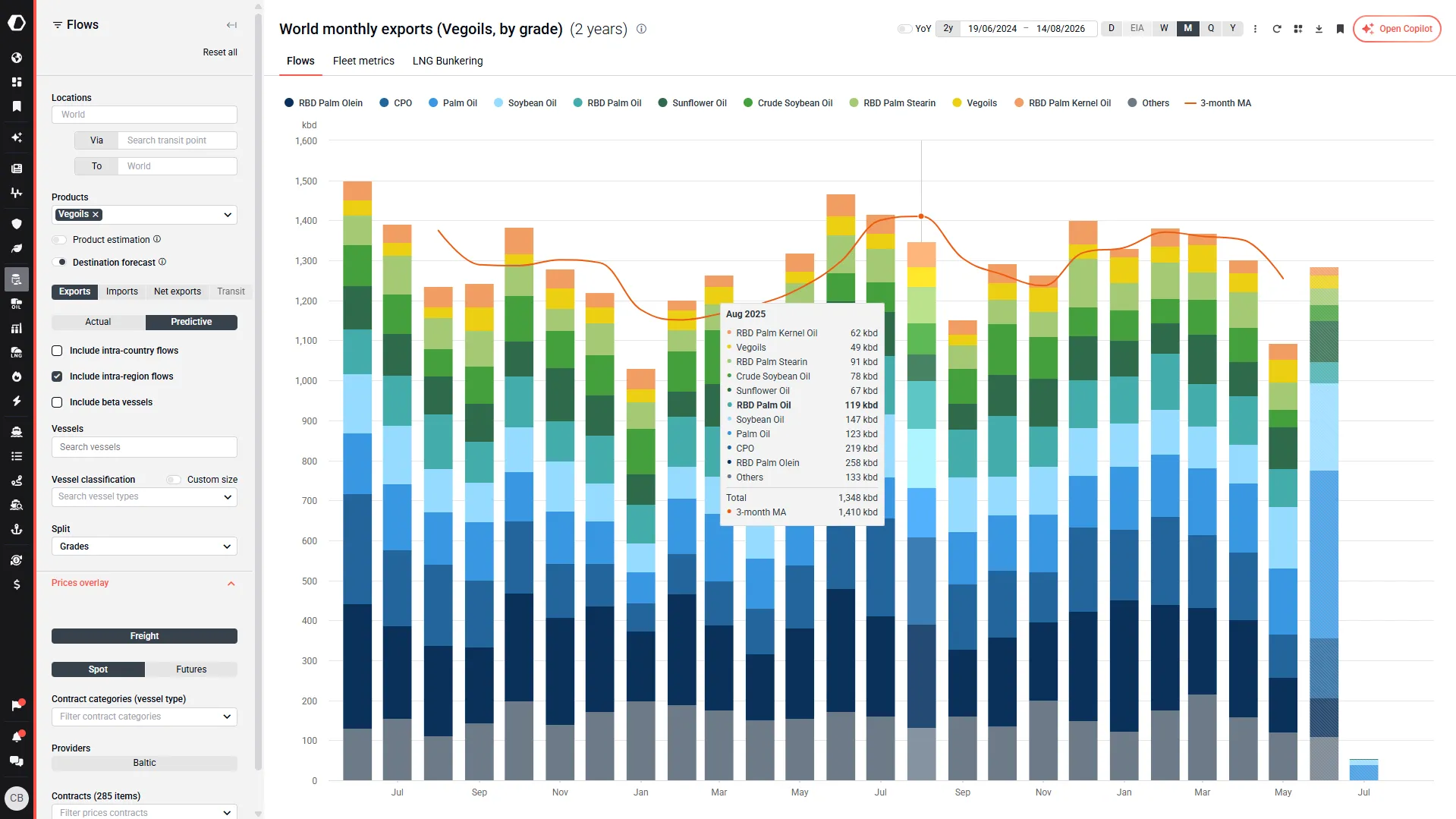
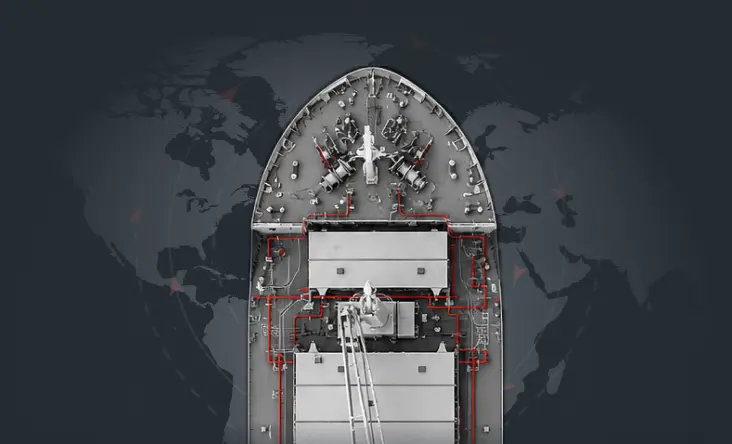
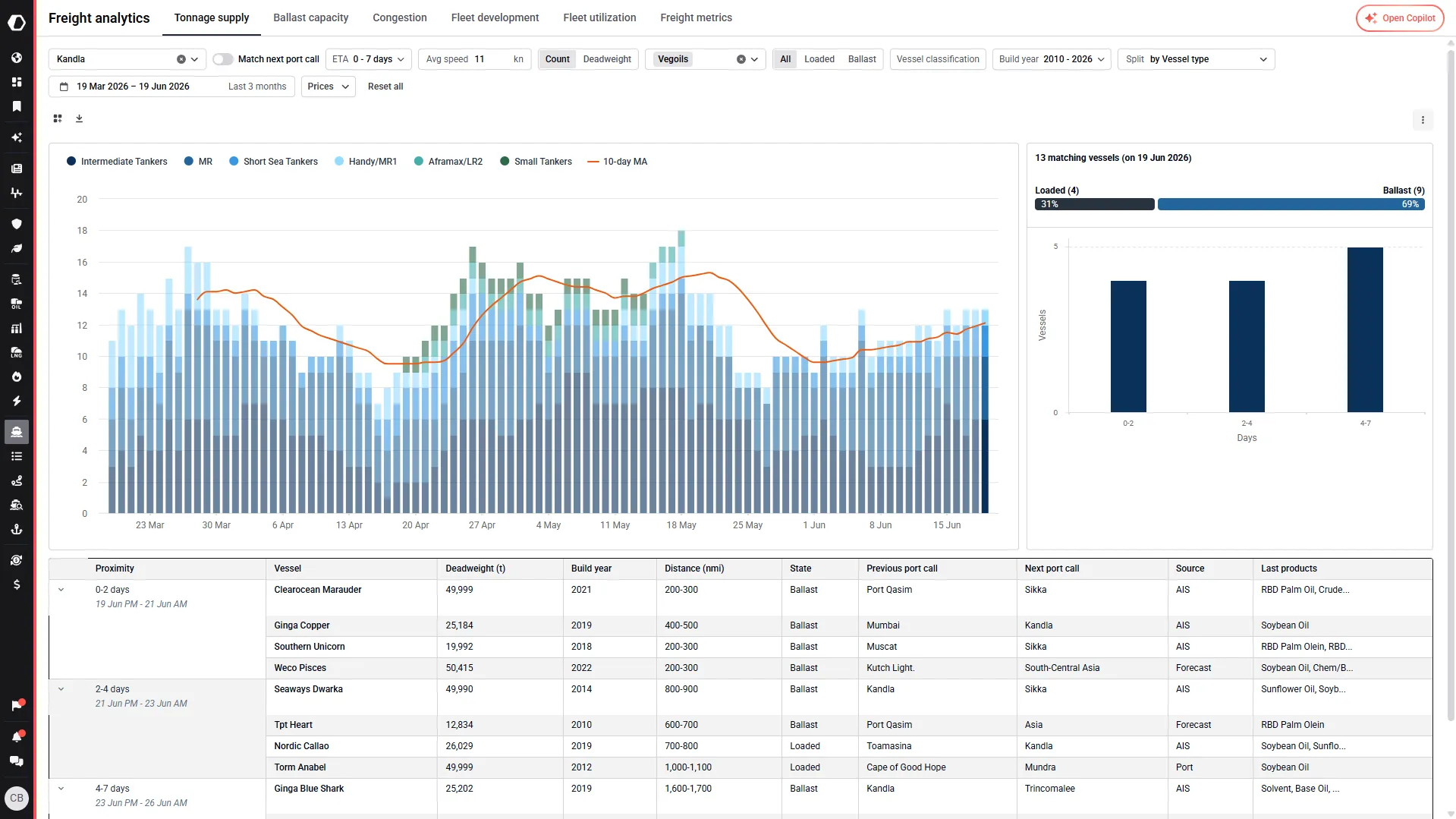
- Freight analytics combining cargo intelligence and vessel tracking — monitoring tanker activity, freight routes, and logistics patterns connecting key vegetable oil export regions with major import markets
- Fleet utilisation analytics with clarity on ownership, charter parties, and ballast/laden ratios across any time series
- Voyage calculator tools to streamline planning and optimise time and cost
- Canal and port congestion monitoring — duration and count data for a robust understanding of the interplay between routes and trades
- Ton-mile and average speed metrics filterable by laden and ballast vessels for fleet performance insight

“Best part? Kpler dashboards. I set up my metrics once, and they update in real-time. I can access the latest insights instantly.”


FAQ
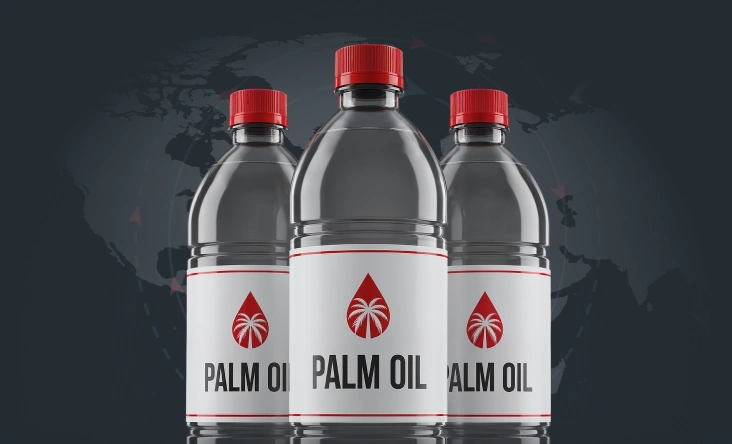
Kpler provides detailed visibility into global vegetable oil trade flows, enabling users to track how edible oils move between major production hubs and key demand centers worldwide. Coverage includes a wide range of vegetable oils such as palm oil, soybean oil, sunflower oil, rapeseed (canola) oil, corn oil, cottonseed oil, castor oil, olive oil and groundnut oil.
This broad coverage helps traders, analysts and agribusiness companies understand global supply chains, trade routes and demand trends across the edible oils market.
Kpler monitors physical cargo movements across international shipping routes, allowing customers to track exports and imports of vegetable oils between producing regions and consuming markets.
Users can analyze how edible oils move across major global trade corridors, helping them identify shifts in supply availability, evolving trade routes and changing demand dynamics across food, biofuel and industrial markets.
Kpler provides granular coverage of the palm oil and lauric oil complexes, allowing users to analyze trade flows across refined and fractionated palm products.
Tracked products include:
- Crude palm oil (CPO)
- Palm olein
- Palm stearin
- Palm mid fractions
- Palm kernel fatty acid distillate (PFAD)
- Crude and refined palm kernel oil
- Palm kernel olein
- Palm kernel stearin
This level of detail helps users understand how palm derivatives move through food, biofuel and oleochemical supply chains.
Yes. Kpler tracks both crude and refined vegetable oil products, enabling users to analyze how processing stages influence global trade flows.
Examples include:
- Crude and refined soybean oil
- Crude and refined sunflower oil
- Crude and refined rapeseed (canola) oil
Distinguishing between crude and refined grades helps market participants evaluate refining capacity, downstream demand and regional supply chain dynamics.
Kpler combines cargo intelligence with detailed product classification, enabling users to analyze vegetable oil markets from multiple perspectives.
Customers can track:
- Global exports and imports of edible oils
- Refining and fractionation flows
- Trade routes between producing and consuming regions
- Demand trends across food, biofuel and industrial sectors
This helps market participants better understand how vegetable oil supply chains evolve over time.
Kpler freight analytics combine cargo intelligence with vessel tracking, providing insight into how vegetable oils move across global shipping routes.
Users can analyze:
- Tanker activity transporting vegetable oils
- Shipping routes connecting export and import markets
- Fleet deployment across key trade corridors
This helps market participants understand how freight markets influence vegetable oil trade flows and shipping costs.
Yes. Kpler enables users to evaluate fleet utilization across vegetable oil shipping markets.
Customers can analyze:
- Vessel ownership and charter parties
- Vessel utilization across time series
- Whether vessels are operating laden or ballast
This provides deeper insight into shipping capacity and logistics patterns across edible oil trade routes.