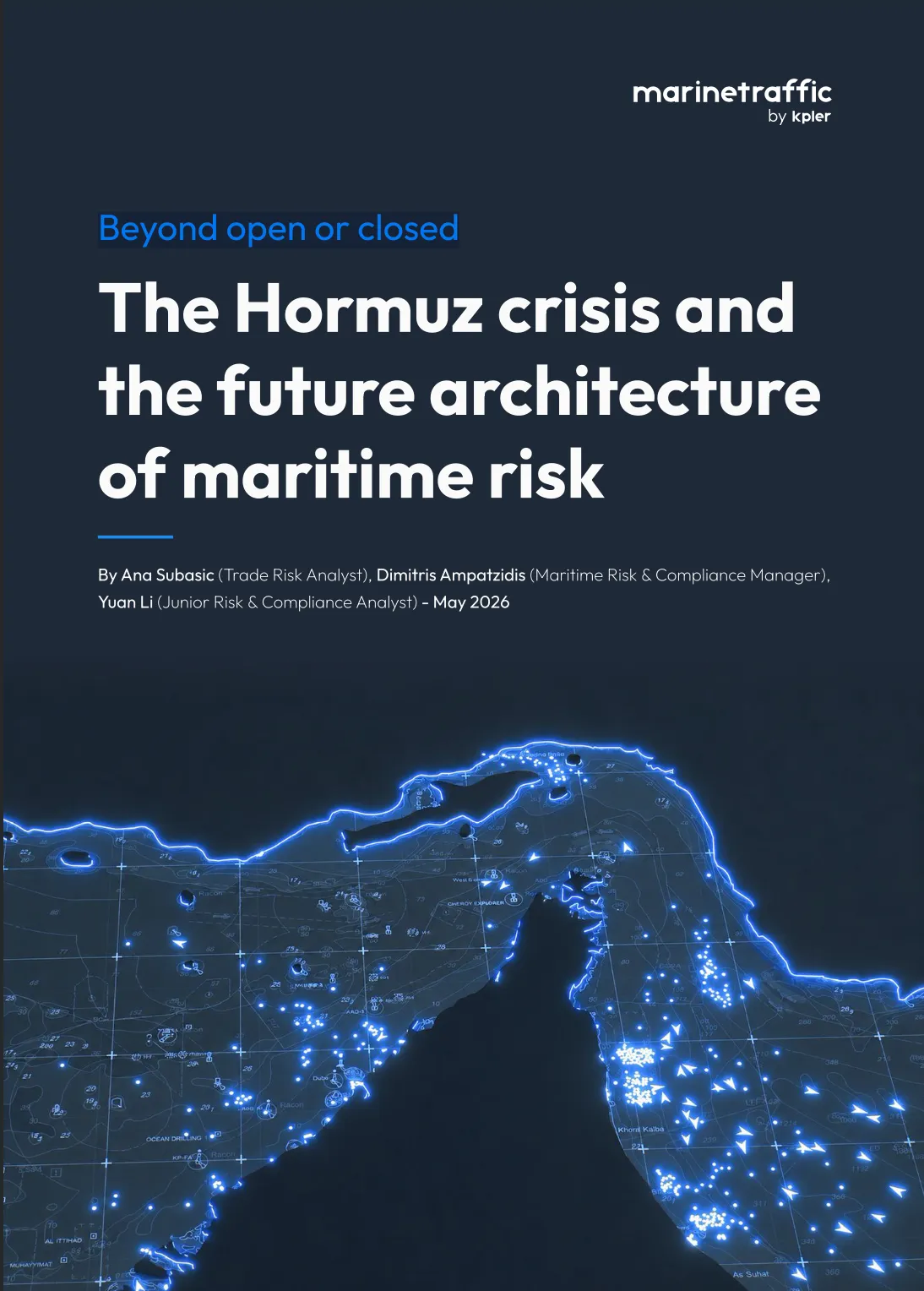
The 2026 Hormuz crisis has fundamentally changed what maritime risk means. Transits are down 92%, GNSS spoofing is distorting vessel records at scale, and sanctions exposure now begins before a payment is made.
Drawing on proprietary data from 895 observed crossings, this whitepaper examines how visibility, routing, insurance and compliance exposure have converged into a single, harder-to-navigate risk environment.
Ket takeaways
- 93.6% of vessels are deviating from the IMO TSS — and route choice alone no longer tells you enough about risk profile
- GNSS spoofing and AIS disruption are creating voyage record gaps that raise the evidentiary burden for compliance teams, insurers and counterparties
- Four forward-looking scenarios show why Hormuz risk is shifting from open-versus-closed to conditional passage — and which vessel behavior signals to watch

Access our free whitepaper to gain valuable industry insights:
“I rely on the Kpler Whitepapers to stay ahead of the latest market trends and industry insights.”
Michael Rodriguez
Chief Strategy Officer, Global Trade Inc

Known from...





%201.svg)







