
China's LNG-ready vessel arrivals have quadrupled. Container ships lead the shift.
When people think about LNG in shipping, LNG carriers may come to mind first. China's port call data tells a broader story.
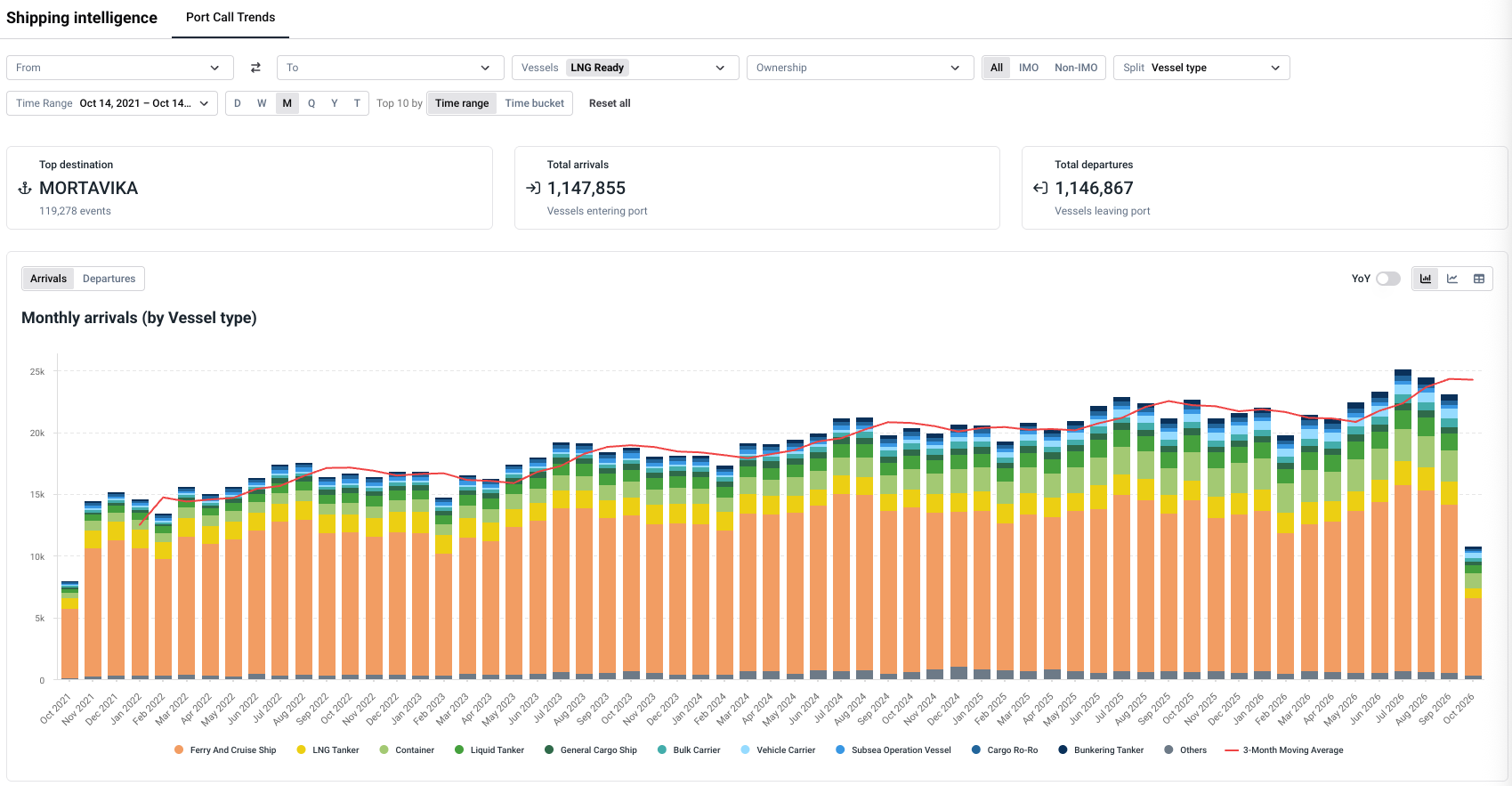
Monthly arrivals of LNG-ready vessels at Chinese ports rose from about 250 in late 2021 to around 1,000 or more in 2026, roughly a fourfold increase. Yet container vessels, not LNG tankers, form the largest group of arrivals.
For shipowners, ports and marine fuel suppliers, that changes the question from how many LNG carriers exist to where LNG-capable vessels across different segments are actually calling. It does not tell us how much LNG they burn.
Container ships lead the mix
Kpler's Port Call Trends analysis shows container vessels as the largest category of LNG-ready arrivals in China, followed by bulk carriers, subsea vessels and LNG tankers.
MONTHLY LNG-READY ARRIVALS IN CHINA BY VESSEL TYPES OVER FIVE YEARS
Fleet lists show which vessels have LNG capability. Port call records add the operational perspective: which vessels arrive in China, how often and in which categories.
For ports and fuel suppliers, that provides a starting point for investigating possible infrastructure needs, not a direct measurement of bunkering demand.
Is this a temporary spike?
The five-year view shows a rising moving average, alongside a recurring February dip consistent with Lunar New Year seasonality.
The distinction matters. A single month's decline can be misleading without comparison to previous years. The broader pattern supports an observation of sustained growth in LNG-ready arrivals, though it does not establish why the fleet mix changed.
What the shift could mean
Shipowners can see how LNG readiness is represented among vessel types calling at Chinese ports. Charterers can assess the presence of LNG-capable vessels in relevant trades. Ports and fuel suppliers can identify which vessel segments merit closer analysis.
An ownership breakdown would be a useful next test: is the growth concentrated among a few operators or spread across the market? That is an open question, not a finding from this chart.
LNG-ready does not mean LNG consumed
The LNG-ready flag indicates a vessel's potential to operate on LNG. It does not prove LNG was used on a particular voyage, or that the vessel bunkered LNG in China.
Port calls also do not establish fuel consumed, cargo carried or commercial intent. A separate fuel-type check is needed before interpreting LNG-ready arrivals as evidence of actual LNG use. Additional supporting data would be needed to quantify fuel consumption or bunkering demand.
What to watch next
Does growth continue beyond seasonal fluctuations? Which owners account for the additional arrivals? How does LNG-ready activity compare with vessels actually operating on LNG?
The key finding is already meaningful: LNG readiness among vessels arriving at Chinese ports extends beyond LNG carriers, and container vessels lead the mix. Understanding actual fuel use is the next step.

See why the most successful traders and shipping experts use Kpler
The LNG-ready fleet is changing. Are you seeing the full picture?