New crop outlook: Higher fertiliser prices influence grower decisions
Key takeaways
- The trade of international container ships is not currently passing through the Strait of Hormuz, with only vessels serving Iranian ports or attempting to leave the Gulf crossing the Strait
- Over 40 vessels carrying approximately 2 Mt of fertiliser product remain bottled in the Middle East Gulf
- Corn and soybean planting in the US has begun with little disruption, as the arrival of rainfall across the Midwest helps to support soil moisture conditions
- Brazilian soybean exports are expected to remain strong throughout the remainder of the marketing year, similar to the trend seen last year
- The emergence of El Niño conditions has been forecast later this year, potentially threatening agricultural production across several geographies such as Australia and India
The situation in the Middle East Gulf has not improved, with crossings of the Strait of Hormuz remaining minimal.
Those of us tracking vessel movements, cargo flows, and port utilisation know that the past month has introduced new layers of disruption on top of an already strained trade picture. A fragile ceasefire, a US naval blockade, a brief reopening of the Strait, and then a reversion. Grain and fertiliser trade through the world's most critical maritime chokepoint remains highly disrupted.
Container trade: Still at zero
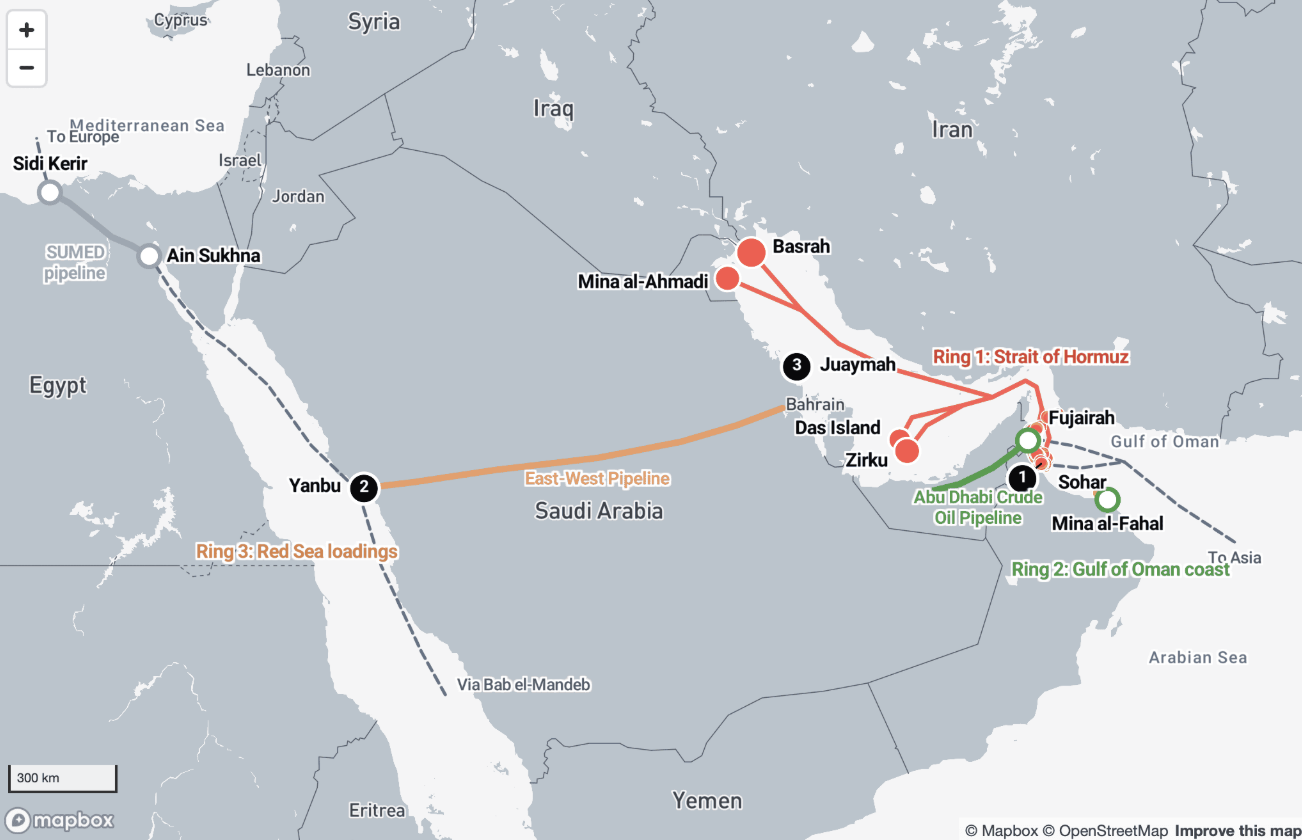
Since the beginning of the conflict, there has been technically zero international container ship trade through the Strait of Hormuz. The only vessels crossing are those serving Iranian ports or attempting to leave the Gulf without any intention to return.
Containers operate more like a bus than a bulk carrier. They depend on forward planning and guaranteed routing. That guarantee does not exist today. Recent weeks have made that painfully clear. Two Chinese-controlled vessels operated by COSCO were turned back at the end of March and only managed to cross on a second attempt. Several French-operated vessels under Indian flag were prevented from leaving during the short ceasefire period, with one physically attacked. They remain stuck. The only successful exits were four MSC vessels that crossed close to the Omani coast without adhering to Iran's announced rules.
Alternative ports on the eastern coast of the UAE and Oman, including Salalah, Sohar, and Korfakkan, are absorbing some volume through focused shuttle services using smaller vessels. But they cannot replace what has been lost. Any cargo arriving at these ports must travel overland to reach its destination, adding truck and rail costs on top of already elevated freight rates. Salalah itself faced strikes several weeks ago, closing the terminal for several days. The Bab el-Mandeb remains heavily restricted, meaning any cargo diverted to Jeddah or Aqaba must travel around Africa and face additional transshipment in the Mediterranean. Transit times have increased significantly.
Only the most essential commodities are being prioritised. Food, pharmaceuticals, cold chain goods. Low-paying cargoes simply cannot absorb the premium.
Dry bulk and fertiliser: Strait of Hormuz crossings remain minimal
On the dry bulk side, the number of cargoes laden with grains and oilseeds entering the Middle East Gulf is limited. Loaded vessels destined for Iran that entered the Gulf pre-blockade have since discharged, seeing Iran more reliant on imports in Chabahar Bay. Vessels from South America are en route to the region, but whether they will attempt to cross the Strait remains an open question.
The fertiliser picture is more concerning. There are a little over 40 vessels laden with fertiliser products bottled in the Middle East Gulf. Collectively, they are carrying approximately 2 Mt of fertiliser products, such as urea.
Fertiliser loadings inside the Gulf have begun to slow as the number of ballast vessels has declined. When the Strait briefly appeared to open, several vessels began heading toward it, only to turn back when the US naval blockade was confirmed and attacks in the Arabian Sea and Gulf of Oman intensified.
At Kpler, we have been verifying every Strait of Hormuz crossing since 28 February, accounting for AIS spoofing and vessels going dark.
US planting: Soybean progress at record pace
US corn and soybean planting is underway, and the early picture is positive. Soybean planting is running just over 10% complete by the third week of April, ahead of the historical pace. Fieldwork conditions across the Midwest are broadly favourable, and recent studies have shown a meaningful correlation between earlier planting and greater yield potential for soybeans.
Corn planting is 11% complete by 19 April, in line with the historical average, as progress across key producing states is underway. Above-average rainfall is forecast across the Midwest for the next two weeks, which should support soil moisture levels without significant disruption to planting progress.
With urea prices rising, many US corn growers are considering to apply less fertiliser in efforts to manage profitability. Our current analysis suggests this could see the national corn yield for 2026 drop below the trendline. The fertiliser constraint is a real headwind that the market has not fully priced in, though weather conditions remain the most influential factor regarding yield potential.
South America: Soybean and corn exports rise in competition with the US
Brazil’s soybean harvest is nearly complete, with the remaining work concentrated in northern and southern areas. Despite phytosanitary inspection concerns between Brazil and China earlier in the season, March exports were very strong, and our outlook expects this strength to continue throughout the remainder of the marketing year.
Brazil currently undercuts US FOB offers by around $30/t. That discount is supporting demand not just from China but from ex-China destinations too. Our base case does not include 25 Mt of Chinese soybean purchases from the US that some market participants are projecting for the 2026/27 marketing year. When China agreed to buy 12 Mt from the US last year, US soybeans were the cheapest origin on the market. Today, US soybeans are more expensive than Brazilian. The commercial conditions are fundamentally different.
In Argentina, the corn and soybean harvest is progressing well. Yield results are reportedly favourable, particularly across the Pampas region, which was experiencing drought conditions only a few months ago. Grower sales of corn are at their highest level since 2021, reflecting confidence in both crop production and the export demand. The Buenos Aires Grain Exchange has raised its corn production forecast to 61 Mt, with Rosario Stock Exchange at 67 Mt. Argentina does not typically sit on heavy corn stocks. We are expecting a much stronger export campaign than last year.
US corn exports since the beginning of the marketing year to March are the highest on record. But we are more conservative than the USDA on performance for the remainder of the campaign. Stronger South American competition should soften US export demand in the latter half of the marketing year.
Wheat: Drought in the US, benign conditions elsewhere
For the Northern Hemisphere winter wheat crop, the US is facing the most difficulty at present. Due to limited rainfall across the Great Plains and Southeast, soil moisture deficits are anomalously low. Therefore, the percentage of the crop experiencing moderate or more intense drought conditions has continued to climb since emerging from dormancy.
Forecasted rainfall across the Great Plains over the next two weeks will provide some relief, but more will be needed as the crop transitions to key yield-determining growth stages. This has been factoring significant premium into the wheat market, and systematic funds were at their largest net long positions for Chicago SRW and Kansas City HRW since 2022.
In contrast, European winter wheat conditions are broadly positive. In France, 84% of the crop is reportedly in good or excellent condition. There are some dryness concerns across western Europe and the Baltics, while the crops in Ukraine and Russia appear in relatively favourable condition. No significant production concerns in Europe at this stage.
On the global balance sheet, 2025/26 wheat production by major exporters reached a record high, the first year in at least a decade without a supply-side issue for any major exporter. We currently forecast 2026/27 production to fall lower y/y, but with a larger-than-usual carryover stock from last year, total supply in 2026/27 is still expected to be plentiful.
El Niño: The emerging tail risk
The probability of El Niño developing later in 2026 has risen significantly. There is currently a 20% chance of El Niño emerging in Q2 2026, of which the probability increases progressively through the year to 93% for Q4. Furthermore, the strength of the climate phenomenon could intensify, potentially increasingly the likelihood of its weather and climatic influence.
The impact on agricultural production would include Eastern Australia, where El Niño typically reduces precipitation across key wheat-growing areas and India, where El Niño can impact the Indian monsoon, which would affect the 2026 rice crop and the 2027 wheat crop. If El Niño conditions do persist into late 2026, Brazilian soybean production for the 2027 harvest could also be affected. No significant impact on US crops is expected under current conditions.
Actionable insights
- Dry bulk traders: grain entries into the Middle East Gulf have effectively stopped. Monitor Chabahar Bay as an alternative for Iranian imports, but factor limited infrastructure capacity and congestion risk into any cargo planning.
- Fertiliser desks: over 40 vessels carrying approximately 2 Mt of fertiliser products remain bottled in the Middle East Gulf. Watch urea and phosphate prices for further upside as the supply constraint extends into Q2.
- Agricultural commodity traders: soybean planting pace in the US is at record pace. Early planting is linked to yield benefits. Set a reminder for the USDA’s Acreage report in June as this will offer insight as to whether US growers changed their spring planting intentions as reported in March.
- Risk managers: AIS spoofing and signal blackouts around Hormuz crossings remain prevalent. Do not rely solely on AIS data for vessel position verification in this region.
- Compliance teams: the US naval blockade established on 13 April adds a new layer of legal complexity for vessels attempting to transit. Confirm war risk and compliance positions before any cargo planning involving the Middle East Gulf.
- Operations planners: The emergence of El Niño is expected later this year. Begin scenario planning for Australian wheat production and Indian monsoon impacts now.
What we are watching
The fragile ceasefire has not translated into normalised trade flows, and the US naval blockade has introduced a new layer of uncertainty for vessels considering transit. Global fertiliser supply concerns will worsen as existing stocks are drawn down and laden vessels remain bottled in the Middle East Gulf.
In crop markets, upcoming rainfall will be key for the US winter wheat crop. Argentine corn exports are set to accelerate, and Brazil's soybean competitiveness shows no signs of easing. The 25 Mt China-to-US soybean commitment in 2026/27 remains, in our view, unlikely to materialise under current market conditions.
As the emergence of El Niño conditions is at a high probability, it is becoming a base case consideration.
The vessels are watching the Strait. So are we.

See why the most successful traders and shipping experts use Kpler

Get real-time market intelligence on how global disruptions are reshaping grains trade