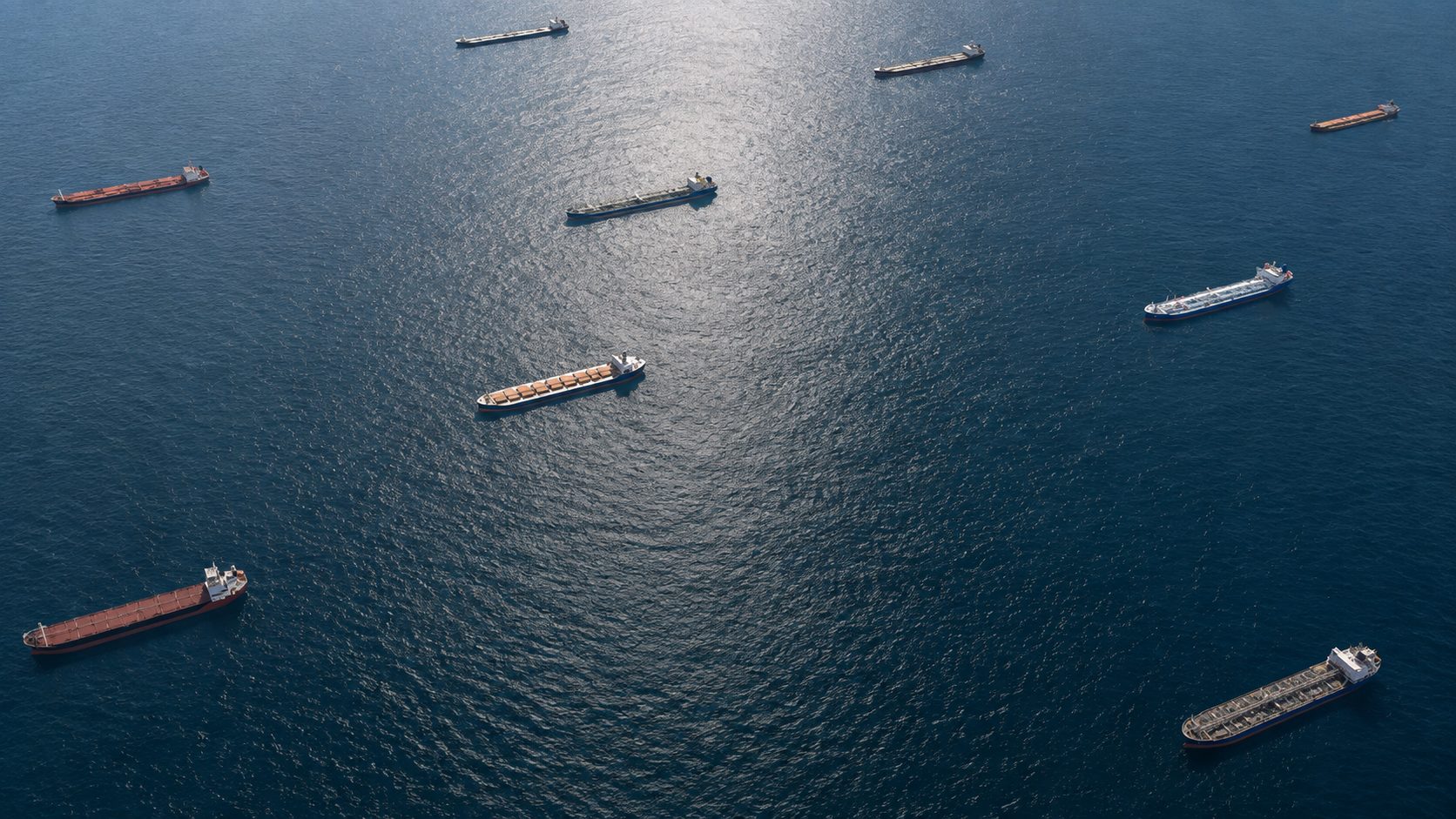
Strait of Hormuz crossings drop 70% as tanker traffic shifts almost entirely to the Iranian route
Middle East oil supply won't return to pre-war levels this year. Kpler risk and compliance data shows daily Strait of Hormuz crossings falling from roughly 45 to just 13 following the return to conflict, and the vessels still crossing have moved almost entirely onto the unrecognised Iranian route rather than the Omani alternative.
Between 7 June and 7 July (the window covering the temporary truce arrangement), Kpler recorded an average of around 45 crossings per day through the Strait of Hormuz. After the return to conflict, that average fell to roughly 13 crossings per day, a drop of about 70%. On 21 July, Kpler recorded just nine crossings; by 22 July, 15. Traffic has also concentrated on one route: among vessels still willing to cross, the Iranian unilateral route, announced in April but not approved by the IMO or recognised by the US or EU, carried around 60% of traffic versus 40% for the Omani route during the truce period. Between 15 and 22 July that split moved to roughly 90% Iranian, 10% Omani, and on the most recent day tracked, all eight vessels that crossed used the Iranian route.
Why the Omani route hasn't picked up the slack
The Omani route runs through Omani territorial waters and, like the Iranian route, sits outside the official Hormuz Traffic Separation Scheme. In theory it offers a safer alternative for mainstream operators. In practice, insurers haven't priced it that way: because the route wasn't an established transit corridor before this conflict, its risk profile hasn't been mapped the way the main strait has, and insurance premiums haven't dropped meaningfully even for vessels using it. That's kept the Omani option a marginal choice rather than a genuine safety valve, which helps explain why traffic has concentrated on the Iranian side instead.
What this means for Middle East supply timing
Kpler has pushed back its recovery estimate for Middle East oil supply. The base case has shifted from a de-escalation scenario, which had pointed to a return to pre-war output (around 27 MBD) by December, to a prolonged-conflict scenario, with normalisation now expected in early 2027 instead.
The trajectory in between:
- May 2026: regional output fell as low as 15 MBD, with outages of around 12 MBD
- Current outages: roughly 8 MBD, reflecting a brief pickup in Saudi and Iraqi production during the truce window
- August 2026 forecast: outages expected to rise back to around 10 MBD and hold there for several months
- Exception: the UAE, already back at pre-war output by routing volumes through its pipeline network and using ship-to-ship transfers via the Gulf of Oman
The regional total is expected to run around 20 MBD through the next few months, well below the 27 MBD pre-war baseline.
The price signal backing this up
Physical crude markets are already pricing the tighter supply picture in. Brent moved from around $70/bbl in early July to just under $100/bbl currently. Dated Brent and Dubai market structures have flipped from a contango of a few dollars into backwardation of close to $5/bbl over the past few weeks, and the DFL spread sits at $4.70/bbl, both consistent with a market pricing physical tightness rather than pure headline risk.
The takeaway for traders and compliance teams
The 90/10 route split is the number to watch. As long as the Iranian route keeps absorbing nearly all Hormuz-adjacent traffic while the Omani route stays underused on insurance-pricing grounds, that split is a live signal of how constrained, and how selective, transit through the Strait has become. A shift back towards split routing, or a jump in Omani-route insurance appetite, would be an early sign that the market is moving towards the de-escalation scenario rather than the prolonged-conflict one Kpler is currently forecasting.
Get the full Middle East supply model and weekly Strait of Hormuz transit data on the Kpler terminal, and if you are a client, join next Thursday's cross-commodity Markets in Motion webinar for the latest.
Not yet a client? You can request your personalised demo here.

See why the most successful traders and shipping experts use Kpler