Tracking recent aluminum disruptions with Kpler
When the conflict in the Middle East began, many in the aluminum market were signalling that within weeks smelters would run out of feedstock and raw material and subsequently for prices to reach new highs. When Iran began to target smelters, fears escalated further that there would be a global shortage that would cripple global supply chains.
However in recent weeks the industry has proven to be extremely resilient, finding supply through a combination of unexpected production ramp ups from Asian countries such as China and Indonesia, as well as resilient middle eastern smelters finding novel ways to get critical feedstock imported. These unexpected supply buffers have provided support in keeping aluminum prices down from projected record highs. However, major discrepancies still exist in short term future expectations for the market - ranging from JPM calling for $4,000 a ton prices this year but others, such as Goldman Sachs calling for a move to $3,000 this year in light of new information. This range of potential expectations reflects the markets’ overall lack of certainty driven by a lack of clarity in fundamentals. This is where Kpler can help market professionals navigate these volatile times with real-time fundamental insight. Let’s take a look at how Kpler is able to provide insight into these current disruptions.
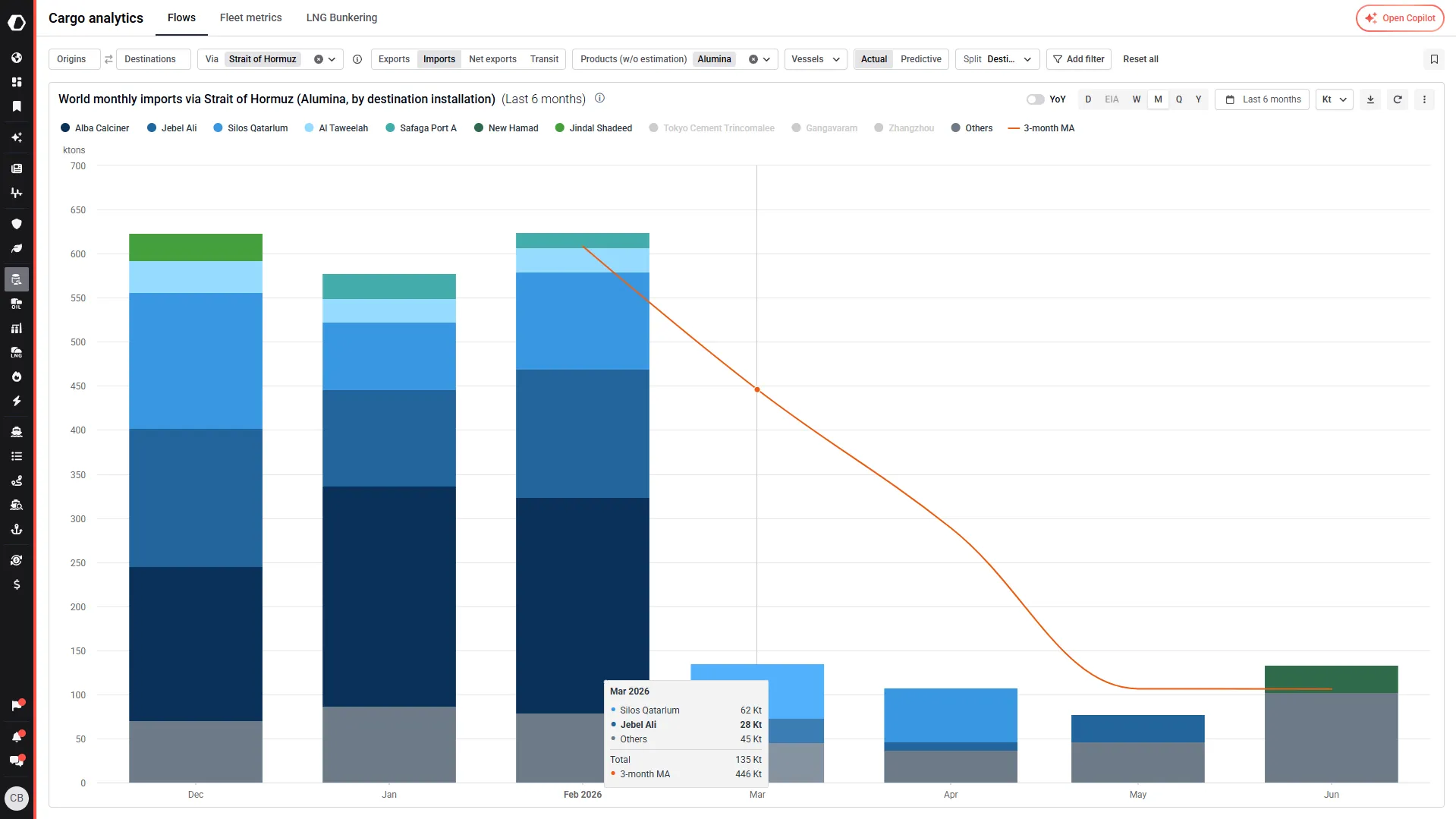
To begin we can take a look at the last 6 months' picture of alumina imports via the Strait of Hormuz. We can see in the image below that there was a dramatic month over month drop between February 2026 and March 2026 from 625 kt to 186 kt. Not only is Kpler able to surface the total volumes of alumina that have been imported via the Strait of Hormuz, it can also enable users to analyze this data split by specific installations where that cargo is arriving. This provides extra insight into which connected terminals are being affected the most and insight into the implications of said imports.
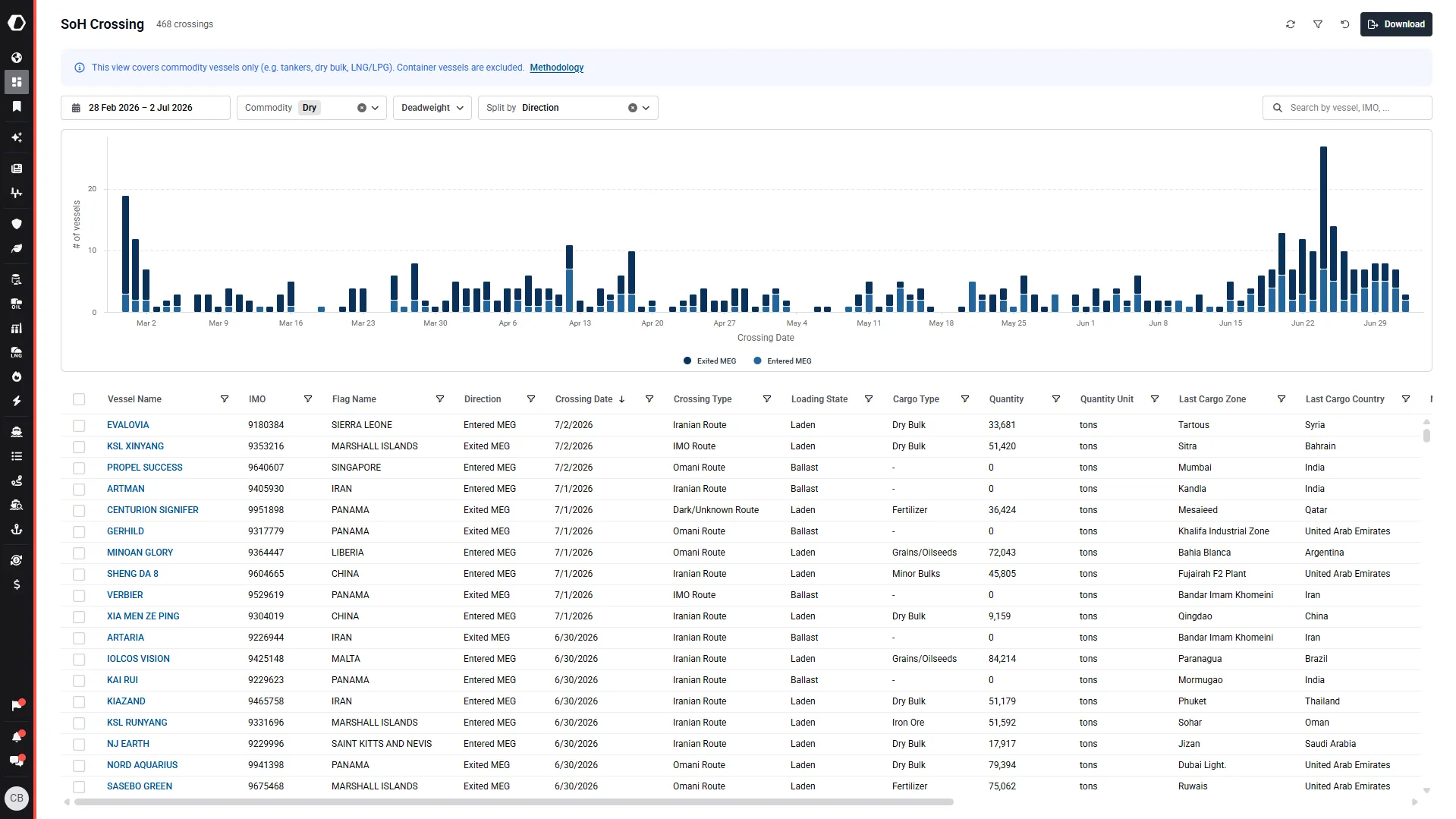
Kpler’s cargo analytics workspace enables users to track aggregate volumes, but also to look individually at each vessel within these aggregate compositions. Staying within imports that have crossed the Strait of Hormuz, we can now look weekly over the last month to understand which specific vessels have crossed laden with alumina with their AIS turned off.
Kpler developed a unique dashboard for its users to quickly identify vessels and products that have crossed the Strait of Hormuz specifically. Due to GNSS interference and AIS spoofing, these crossings are validated by Kpler’s analysts manually to ensure only accurate data is displayed. We can find that several vessels have crossed in the last week or two that have transported alumina across the Strait of Hormuz with their AIS turned off. Of these, we can identify Ghantout, the Abu Al Abyad and the Al Watan that have taken alumina through the strait with AIS turned off.
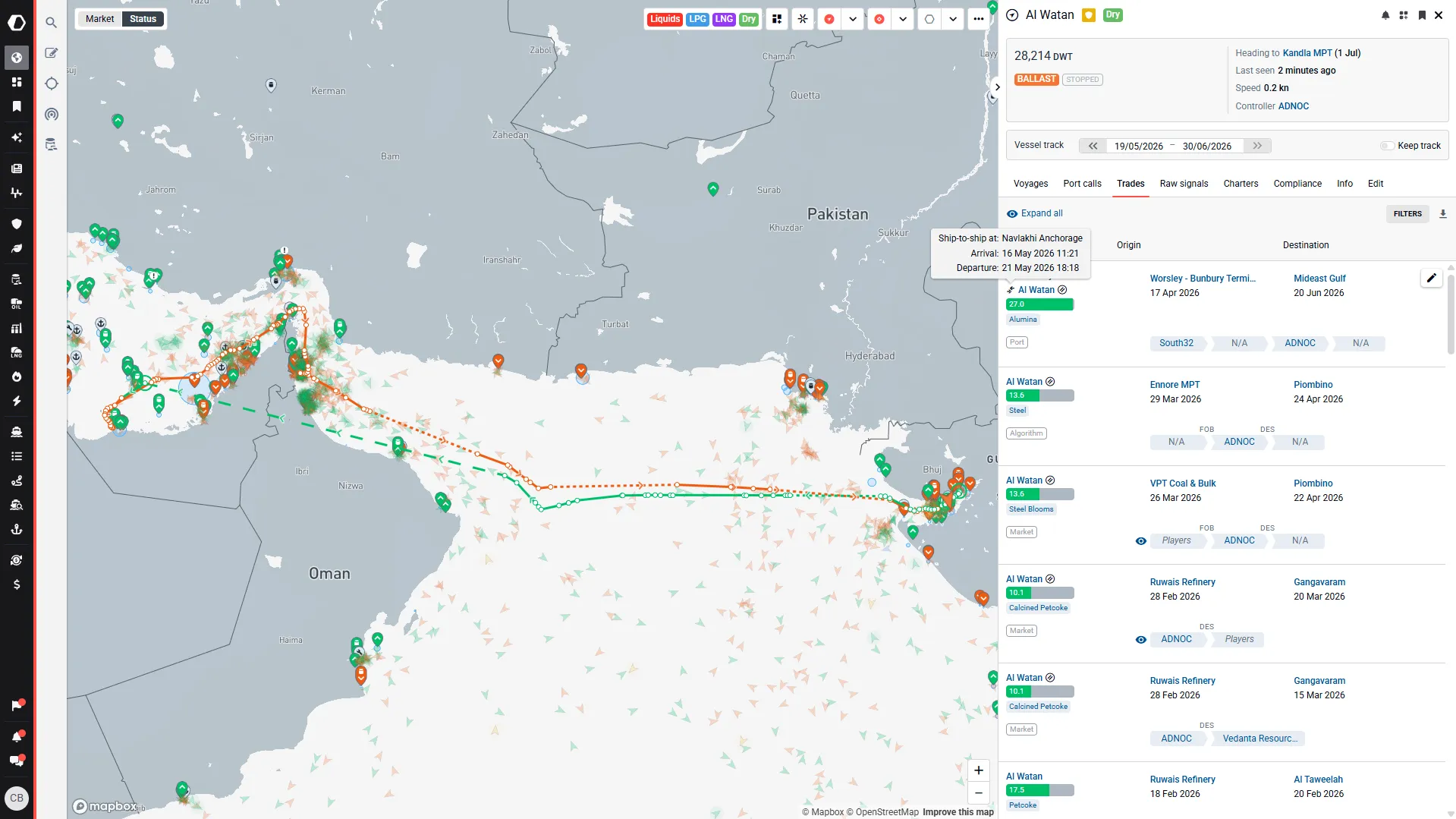
Kpler is additionally able to identify for its users when either a transshipment has occurred or whether any canal or strait crossing has occurred. The vessel Al Watan appears to have done both recently. With Kpler we are able to identify not only the transshipment itself, but also look at past tracks from the AIS in order to identify where some AIS spoofing or dark period may have occurred. In the image below we can see that the vessel Al Watan appears to have its AIS turned on after crossing the strait initially, but not during its voyage, which is how it was able to appear laden without seemingly having made a loading. In a time when each individual shipment can mean a big difference in price expectations globally, Kpler is able to provide critical clarity in real time for market professionals.
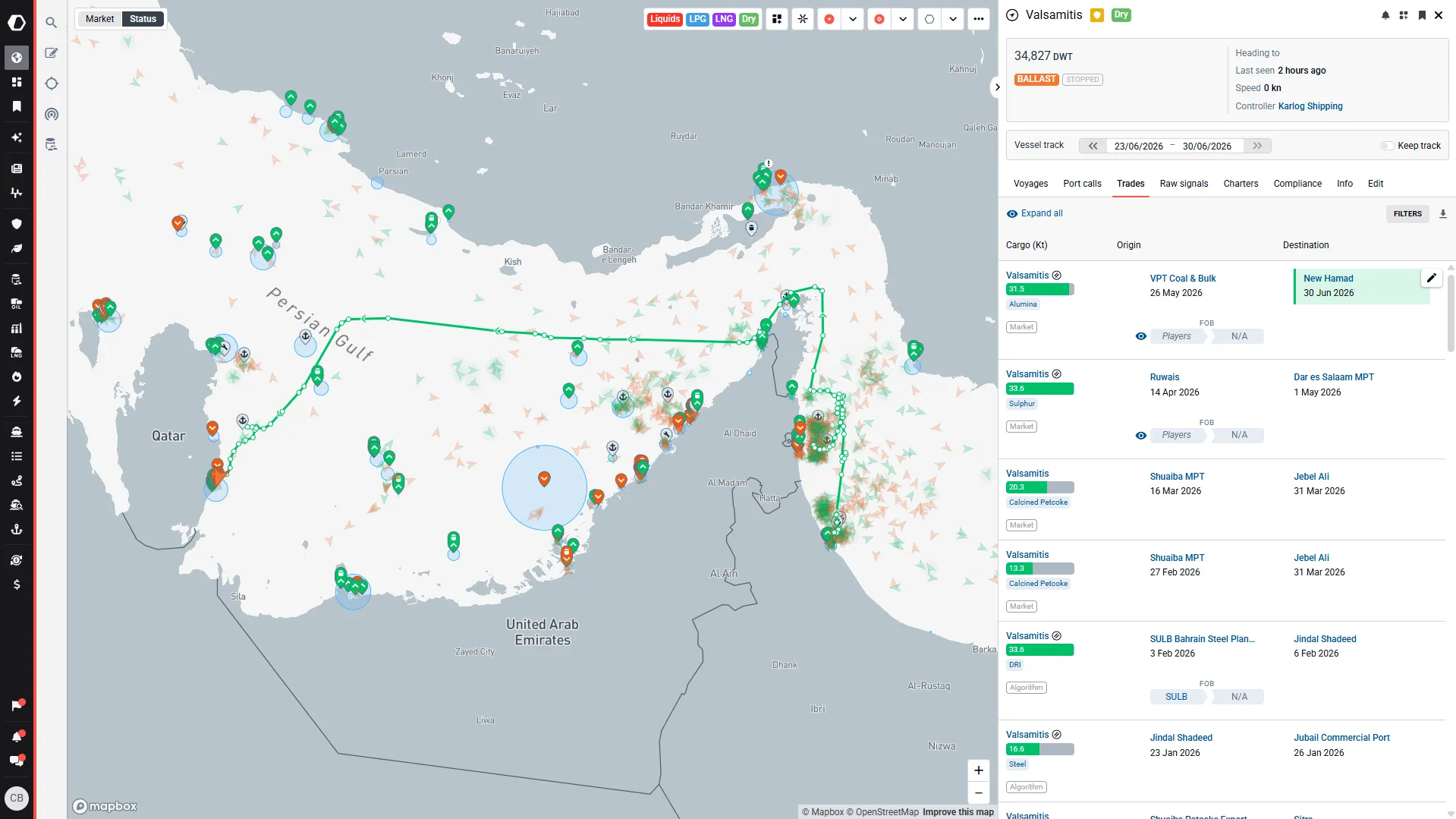
We can find for example that in this past week, the vessel Valsamitis has crossed the Strait of Hormuz to discharge at New Hamad with a cargo of ~32kt of alumina with its AIS turned on - signaling that smelters are perhaps feeling more confident about supplying their reserves and that vessels are gaining confidence to cross with their AIS turned on.
We can now zoom out beyond the Strait of Hormuz in order to capture the full alumina picture. As smelters in the region began to take novel approaches to receiving the feedstock that had traditionally been imported by crossing the Strait of Hormuz, Kpler can provide important visibility on imports that arrive at installations outside of the areas within the Strait. For example, imports of alumina began to arrive in general purpose dry bulk terminals like in the port of Sohar located in the country of Oman. This cargo is then driven via truck to its smelter destination, an unprecedented development. The costs of bagging and trucking alumina are so high that no one would move the cargo in this way under normal circumstances. When we look at the data we can see a dramatic change from April to May, with imports of alumina into installations within Oman rising significantly. Here the installation split is particularly valuable, enabling users to see precisely where these imports are being discharged.
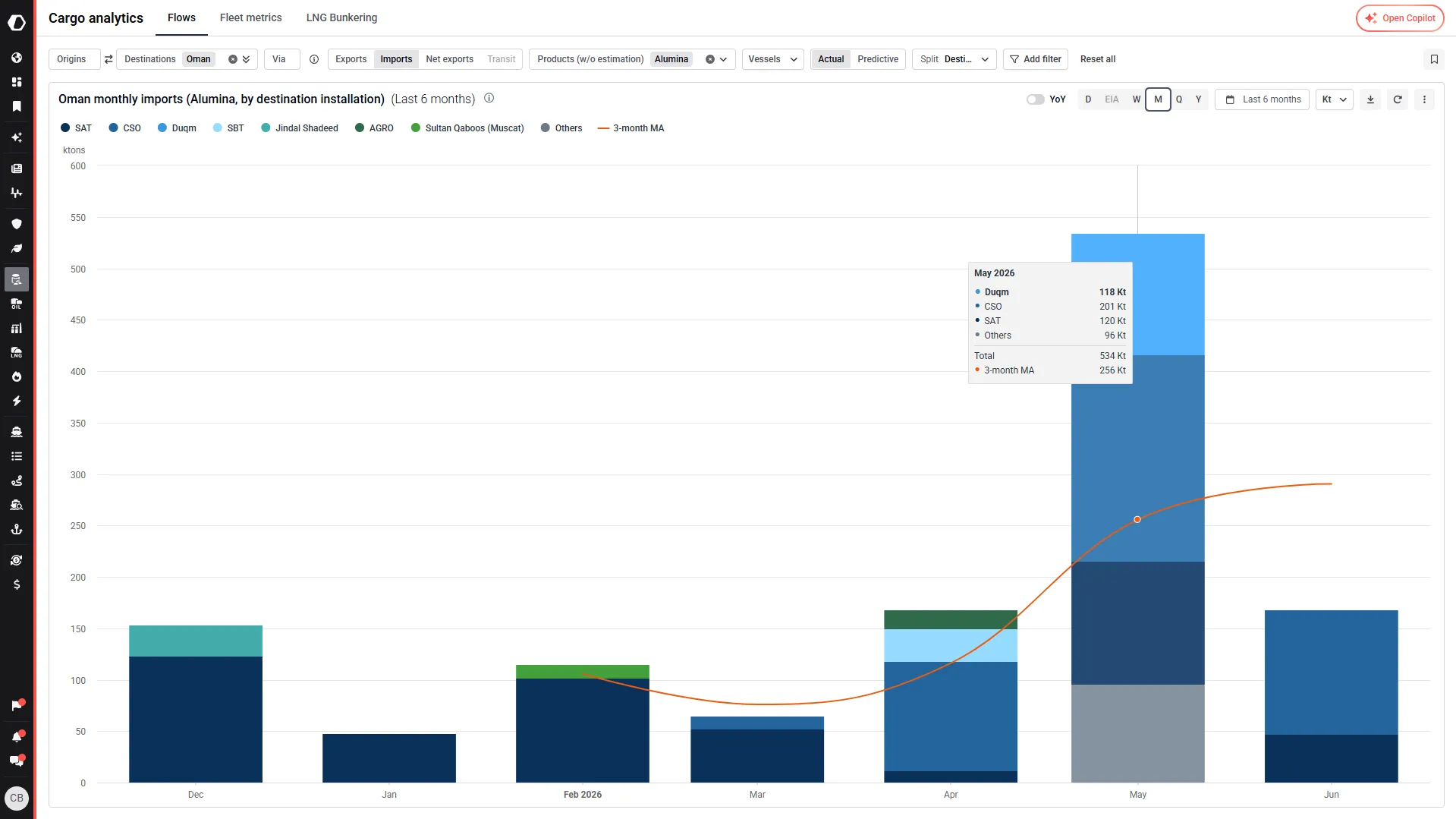
Notably, installations that have never received alumina in the prior 6 months or more are beginning to take this cargo, such as Duqm. These volumes have been crucial for the continued output of middle eastern aluminum smelting operations.
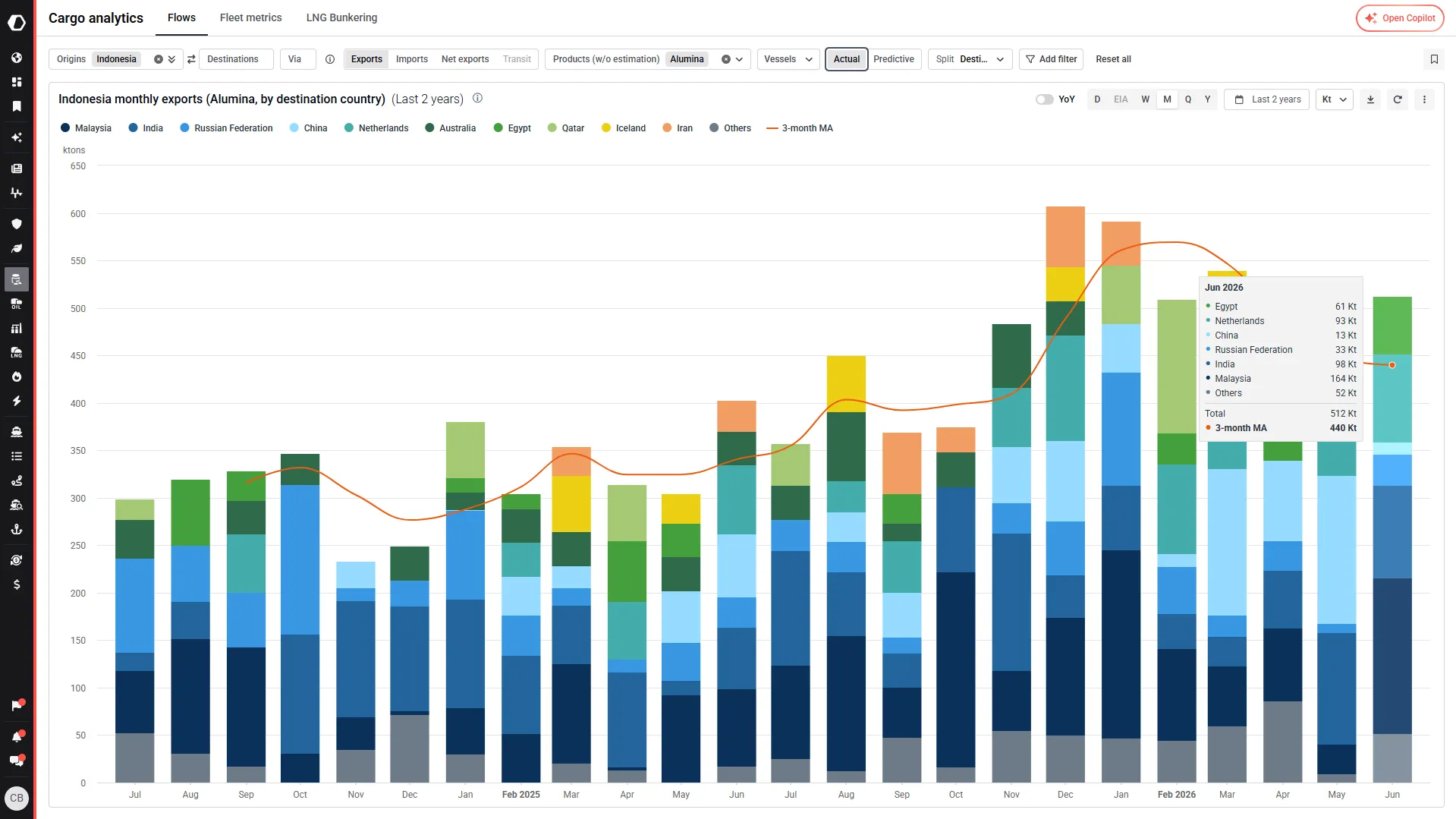
Elsewhere in the world, strong alumina exports have helped bolster market supply. While it is a longer term trend that has emerged, Indonesia has been able to continue its alumina export in 2026 at levels higher than in the previous year. Whereas in June 2025 the 3 month moving average for alumina exports was at 341 kt, in the same month this year that moving average will now be 449 kt - showing the sustained levels of export growth from Indonesia. Kpler provides its users with 5+ years of historical data in order to enable users to analyze seasonality and drive better decision making. With this supply able to help soften the losses experienced elsewhere, it appears that Indonesia will continue to emerge as a global supplier next to countries like China.
In times of great uncertainty, Kpler is able to provide critical transparency for market professionals with highly accurate real-time data. Kpler not only provides data, but also delivers research and forecasting from a team of expert analysts for its customers. If you are interested in accessing Kpler data & research, please reach out to us by clicking the link below and requesting a demo.

See why the most successful traders and shipping experts use Kpler