Sever bay launch: Rosneft unlocks Vostok oil exports as maiden Arctic stems load
Rosneft's flagship Vostok Oil Project has officially begun maritime exports from the Sever Bay terminal in Northern Siberia.
Key Takeaways:
- Maiden Lifting Confirmed: Rosneft has officially activated the Sever Bay Terminal (Bukhta Sever), with the sanctioned Panamax MT Valentin Pikul completing the maiden loading of ~470 kb over the weekend.
- Rapid Operational Cadence: A second tanker, MT Akademik Gubkin, is berthed at Sever Bay and scheduled to begin loading on Tue., 8 Sept. 2026, signaling immediate operational scaling.
- Crude Stream Blend: Initial export cargoes consist of a combined crude mix of Payakha and Vankor grades, establishing a new Arctic export stream.
- Strategic Arctic Corridor: Initial AIS signals show Sweden as a waypoint—a routing pattern typically preceding Mediterranean transit or East of Suez delivery via the Northern Sea Route (NSR).
- Aggressive Capacity Expansion: Rosneft aims to scale Vostok Oil exports to 30 mtpa by H2 2027, expanding to a final capacity of 50 mtpa by 2030.
The operational launch of the Sever Bay Oil Terminal (Bukhta Sever) in Northern Siberia represents a critical milestone for Russian state oil producer Rosneft and broader Arctic energy infrastructure. As the primary export outlet for the massive Vostok Oil Project, the terminal's activation unlocks direct maritime access to vast hydrocarbon reserves situated across the Taymyr Peninsula and the Krasnoyarsk Territory.
Initial flow data captured by Kpler AIS tracking confirms that the sanctioned Panamax Valentin Pikul completed the maiden lifting over the weekend, with draught changes indicating a loaded volume of approximately 470 kb. The vessel's reported AIS destination indicates Sweden as an initial waypoint—a routing pattern consistent with established operational flows from other Northern Russian ports. Vessels utilizing this corridor typically proceed toward the Mediterranean Sea and eventually toward East of Suez destination markets.
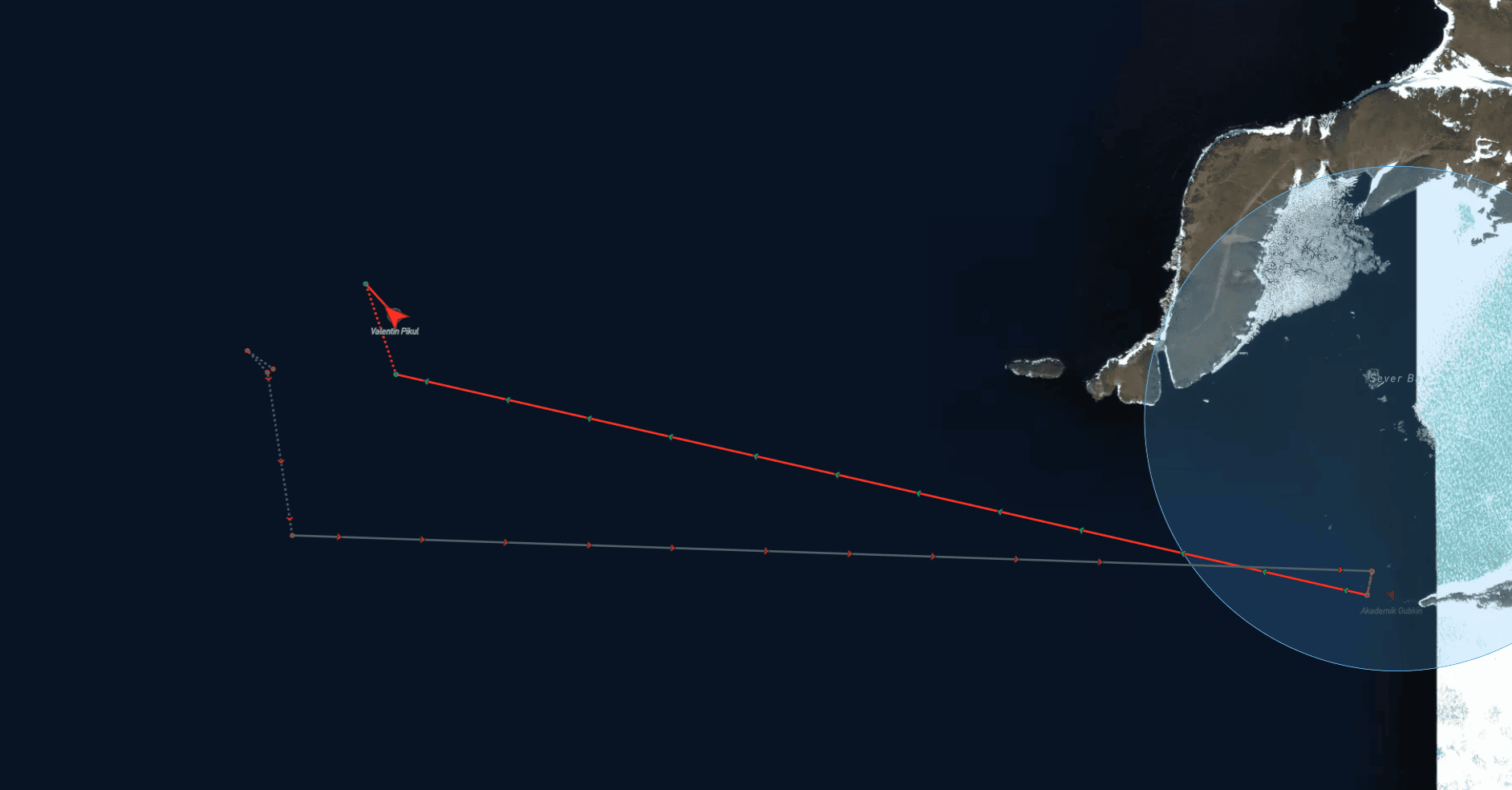
Reflecting a rapid operational cadence at the terminal, Kpler AIS tracking identifies a second vessel, Aframax Akademik Gubkin, already berthed at Sever Bay and scheduled to begin loading operations on Tue., 8 Sept. 2026. Market sources confirm that export cargoes consist of a crude mix combining Payakha and Vankor grades.
Over the medium to long term, Rosneft leadership aims to scale Vostok Oil shipments to 30 mtpa as early as the second half of 2027, with long-term export capacity targeted at 50 mtpa by 2030. The project forms the linchpin of Russia's Arctic energy strategy, designed to exploit pristine northern reserves, maximize seasonal utilization of the Northern Sea Route (NSR), and expand market penetration across Far East and Asian import hubs. Kpler will continue to monitor vessel tracking data, STS transfer hubs, and lifting patterns as operational activity ramps up at Bukhta Sever.

See why the most successful traders and shipping experts use Kpler