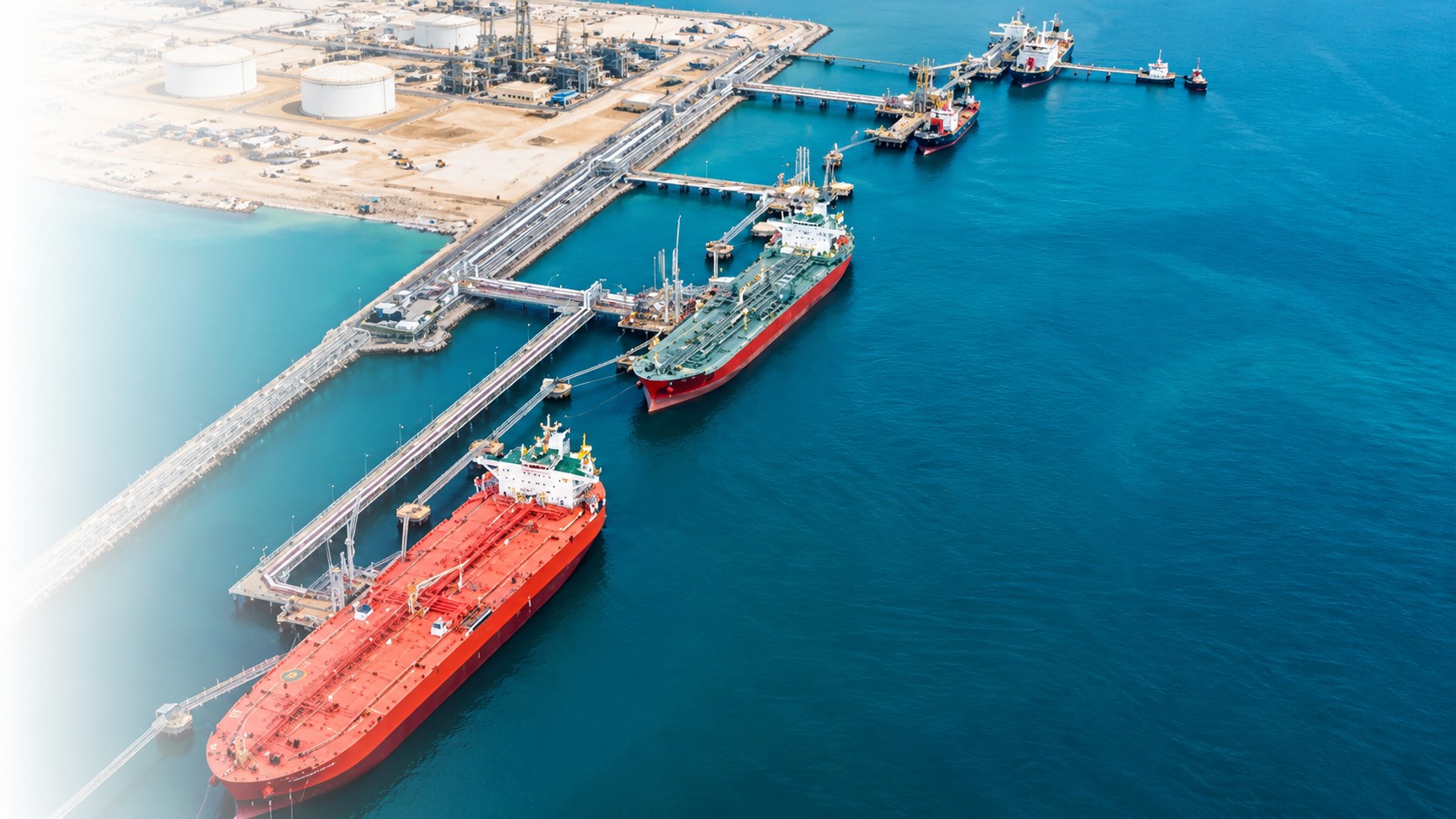
US naval blockade threatens further 1.8 Mbd supply outage
The US Central Command has instituted a naval blockade against all vessels entering or departing Iranian ports, effective April 13. Simultaneously, President Trump has threatened to interdict any vessel in international waters that pays an unofficial transit toll to Tehran.
The US Central Command has instituted a naval blockade against all vessels entering or departing Iranian ports, effective April 13. Simultaneously, President Trump has threatened to interdict any vessel in international waters that pays an unofficial transit toll to Tehran.
Key Takeaways
- Prices surge on blockade news: ICE Brent has breached $102/bbl following the collapse of US-Iran negotiations and the announcement of a US naval blockade on Iranian ports.
- Massive supply loss: An effective blockade would choke off around 1.8 Mbd of Iranian crude exports, pushing total global supply outages above 13 Mbd.
- Execution hurdles: Enforcing the blockade faces severe logistical hurdles, from shadow fleet GPS spoofing to the geopolitical minefield of intercepting Chinese VLCCs.
- The Houthi wildcard: Iran has explicitly threatened to activate Houthi forces in the Bab el-Mandeb strait. A disruption there would disrupt Saudi Arabia's 4.5 Mbd Yanbu exports, potentially pushing global outages even higher.
Any effective and enforced blockade would remove an estimated 1.8 Mbd of Iranian crude exports from the market, pushing global outages above 13 Mbd, exacerbating the bullish impetus for the market to price to demand destruction in order to restore balance.
While the US declaration is robust, the mechanics of implementation are highly fragile. Chasing down vessels that have paid Iran’s unofficial $1/bbl toll in international waters will severely drain military resources, while identifying the “shadow fleet” that uses GPS spoofing is also complicated. The blockade is likely to take place in an area that also covers Iran's Jask terminal (outside the Strait of Hormuz), but this still lends itself to the threat of attacks from the IRGC.
The blockade is effectively a collision course with Asia's largest buyers. At least two Chinese VLCCs transited Hormuz over the weekend, allegedly after paying Iranian tolls, according to media reports. If the US Navy attempts to interdict or penalize Chinese vessels, the conflict will rapidly metastasize into a US-China standoff.

See why the most successful traders and shipping experts use Kpler