

Fresh decade-low Cushing stocks raise upside risk for WTI
Tightening US commercial, Cushing, and SPR inventories are leaving the US market with little buffer against a potential domestic supply shock, raising the risk of a sharp WTI price spike if outages were to occur.
Key takeaways
- Cushing hit fresh decade lows: Stocks fell 771 kb to 18.6 Mbbl last week, the lowest since August 2014, confirming prior downside calls — a break toward the low teens remains likely as demand for US barrels is set to reemerge.
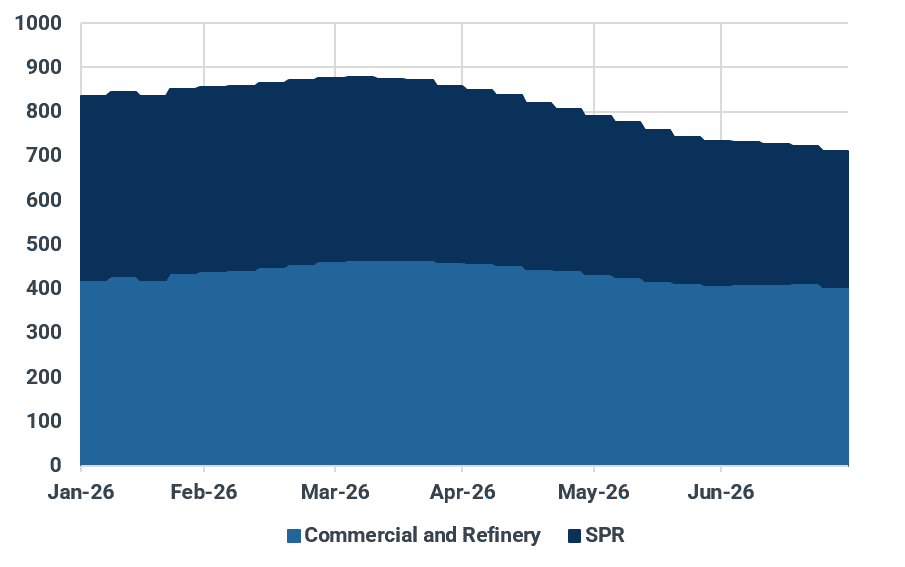
- Thin buffers raise price-shock risk: Commercial and SPR inventories combined fell to 712.2 Mbbl, the lowest since March 1984; a larger domestic disruption (Alberta wildfires, Gulf hurricanes) could push WTI toward $100/bbl rapidly given limited near-term alternative supply.
- Americas barrels diverted from US market: Record output from Venezuela, Brazil, Guyana and Canada will increasingly flow toward Europe and Asia under a prolonged closure of the Strait of Hormuz, limiting how much reaches the US and reinforcing the domestic supply squeeze.
Although current US crude availability — including domestically produced grades and barrels arriving from Canada — remains sufficient to cover most refining operations, rapidly falling domestic inventories are raising the odds of a price shock scenario for WTI. The risk is particularly acute if Alberta wildfires disrupt Canadian supply or US Gulf output comes under pressure during the Atlantic hurricane season.
With commercial and reserve stockpiles already thin, the US has little buffer left to absorb a domestic disruption, especially in a worst-case outage scenario. In such a scenario, WTI could push toward $100/bbl rapidly (up from $84/bbl currently), given limited alternative sources of crude: SPR releases take time to materialize, and the commercial inventory buffer offers little additional near-term cushion.
Latest EIA data show just how tight the picture has become. US commercial crude inventories fell by 7.2 Mbbl last week to 404.5 Mbbl — the lowest since September 2018 — as refiners ramped up runs and net imports declined.
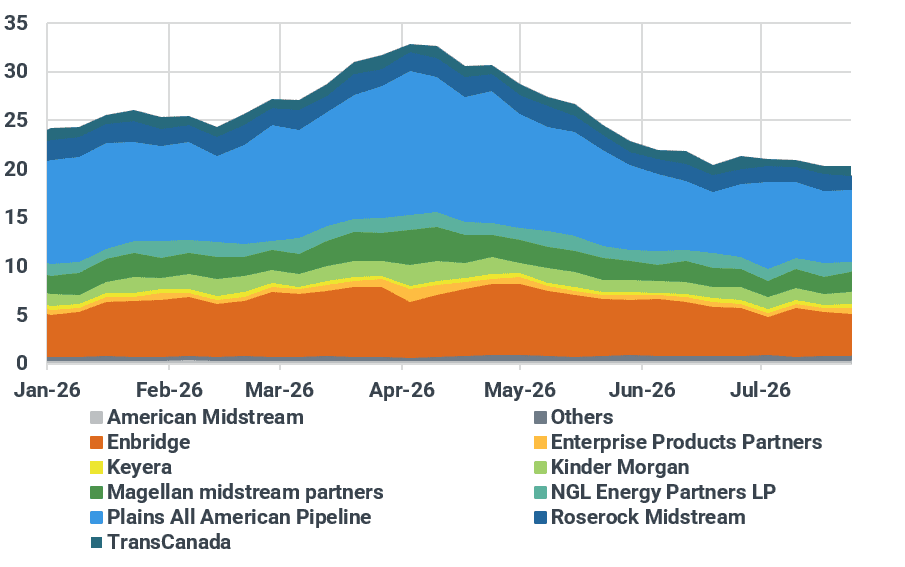
Stocks at Cushing fell 771 kb to 18.6 Mbbl, the lowest since August 2014, confirming our prior call that flagged further downside risk: we had suggested a break below 19 Mbbl to fresh decade lows were likely as renewed demand for US barrels materialized.
SPR inventories, meanwhile, fell by 3.8 Mbbl to 307.7 Mbbl — their lowest since 1983 — as the targeted drawdown announced in March continues. Combined commercial and SPR stocks slid to 712.2 Mbbl, the lowest since March 1984.
US crude inventories by tank type, Mbbl
Source: Kpler
We continue to see 15 Mbbl threshold as the structural floor for aggregate Cushing storage, though reaching it would require all operators to hit their individual minimums simultaneously — an unlikely scenario.
Tank levels at Plains All American Pipeline are sitting around 1 Mb above the lows seen in the week of 19 June, while Magellan Midstream Partners and TransCanada saw combined stock builds of 500 kb last week. Together, this amounts to ~1.5 Mbbl, which suggests further downside into the low teens remains on the horizon if the US net exports momentum picks up in the weeks ahead.
It should be noted, however, that a further tightening in Cushing stocks may improve arbitrage opportunities that would incentivize refilling instead of exporting crude, limiting further draws and resulting in a leveling off in inventories and low levels.
Cushing stocks by operator, Mbbl
Source: Kpler
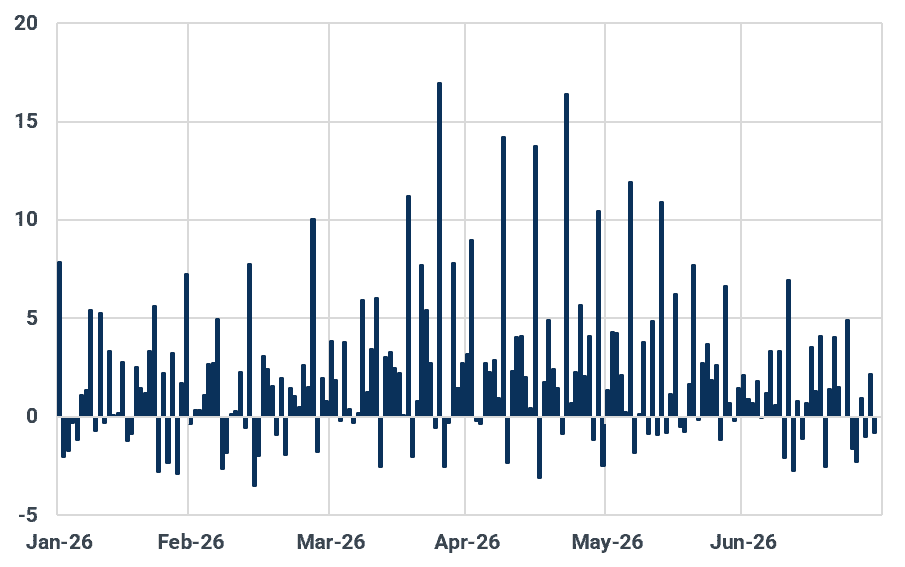
The drawdown of domestic inventories comes as refiners are running hard: nationwide refinery utilization climbed to 97.2%, pushing runs up to 17.5 Mbd. At the same time, seaborne crude imports fell by 500 kbd to 1.9 Mbd while exports rose 300 kbd to 3.6 Mbd, increasing net exports to 1.7 Mbd for the week ending 24 July (see chart below). Although net exports have eased since, supporting domestic inventories over the last days elevated Middle Eastern disruptions are poised to see net exports rise again in the weeks ahead.
US net exports, Mbd
Source: Kpler
While supply in close proximity to the US is rising — Venezuela, Brazil, Guyana and Canada are all pumping at or near record highs — providing support to regional crude availability, the escalation in the Middle East and a corresponding rise in Middle Eastern supply outages are increasingly expected to push these barrels toward Europe and Asia instead of the US, limiting how much of that growth actually reaches the domestic market.
Market insights you can trust
Kpler delivers unbiased, expert-driven intelligence that helps you stay ahead of supply, demand, and market shifts.
Trade smarter. Request access to Kpler today.

See why the most successful traders and shipping experts use Kpler

.jpg)