Brent prices balancing risks within US-Iran conflict
ICE Brent flat prices and prompt futures spreads are currently demonstrating an highly accurate pricing of the balance of risks surrounding the US-Iran conflict and the wider, second-order implications.
Key takeaways
- Accurate risk pricing: ICE Brent flat prices and prompt futures spreads are precisely reflecting the current state of affairs in the geopolitical landscape. The market is justly focusing on expressing upside in structure due to fundamental threats and strength in product cracks.
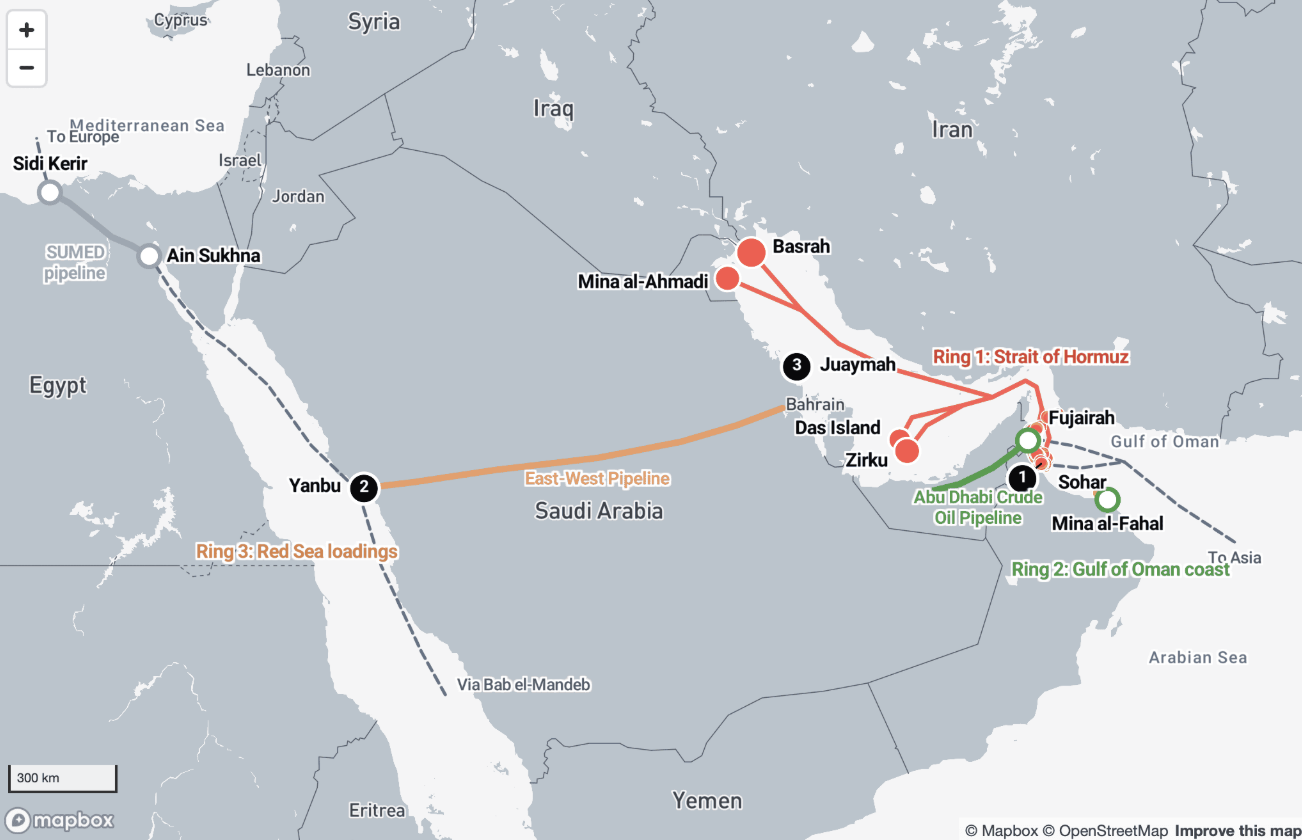
- Downside anchors: One eye on the US midterm elections, ample Chinese stockpiles and the ability of around 7 Mbd to bypass the Strait of Hormuz via pipeline have factored into prices trading under $80/bbl.
- Upside catalysts: A prolonged conflict with a de facto closure of the Strait of Hormuz due to prohibitive insurance and freight costs, coupled with concurrent threats to CPC flows in the Black Sea, maintain a rapid upside potential in the event of oil supply-related news.
The market is meticulously weighing the severe threat to Middle Eastern infrastructure against the wider permutations to solve for high oil prices in a global physical market that remains structurally oversupplied.
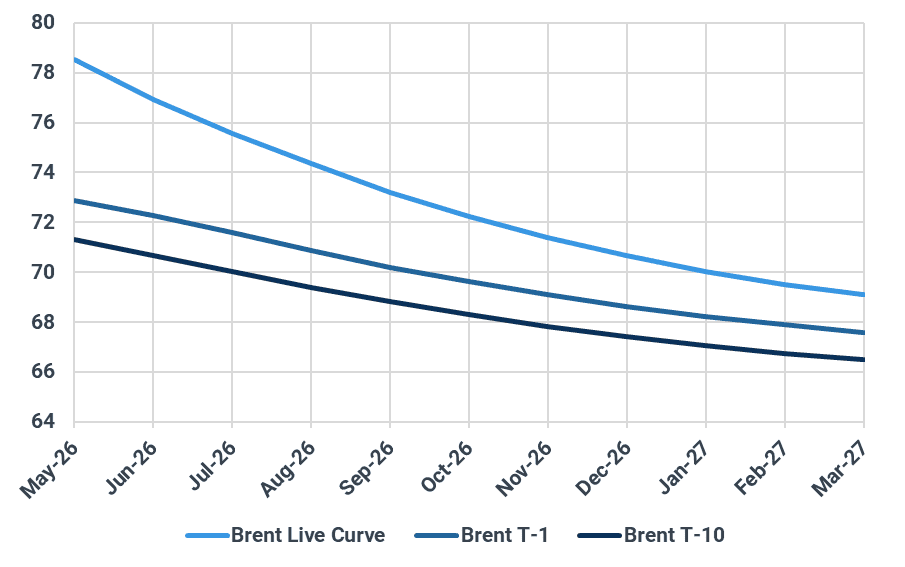
ICE Brent futures curve, $/bbl
Source: ICE, MarketView
Downside risks: Fundamentals and technicals
Traders remain characteristically poised to "sell the geopolitical event," even though this time around is different due to the widespread and continuous nature of the attacks (targeting oil-related infrastructure). With no oilfield being directly hit for now, this ‘fading’ behaviour may have dampened the aftermath of the market open.
The lack of direct panic was reinforced by OPEC+ dynamically responding by increasing output more than anticipated starting in April, exacerbating an already structurally oversupplied market (despite the threat of disruptions).
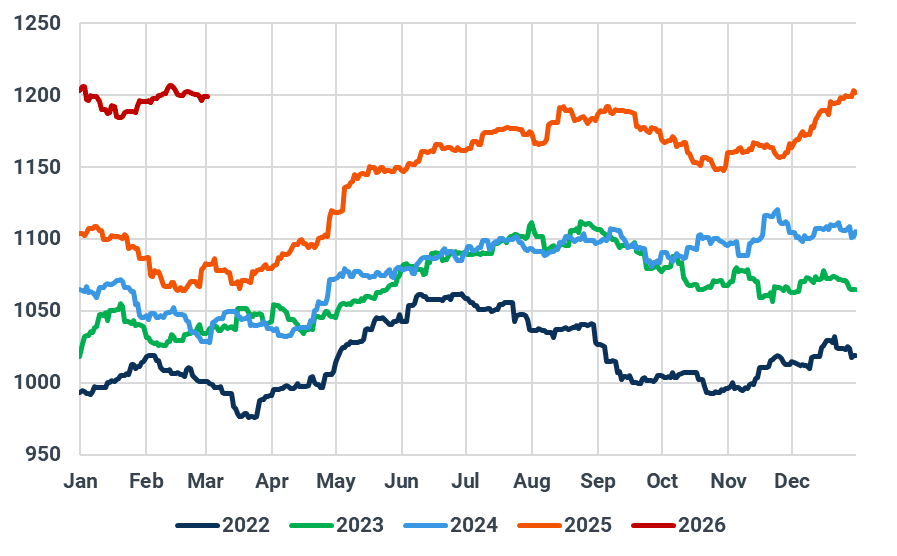
Furthermore, China has aggressively built up massive strategic stockpiles specifically to buffer against this type of supply shock and could draw down on inventories very readily.
Political realities also cap upside potential; with US midterm elections taking place this year, President Donald Trump is highly motivated to keep a lid on domestic gasoline prices and will act (to the best of his abilities) to contain escalation accordingly. The US population does not want to be embroiled in another drawn-out, expensive foreign conflict, especially with the domestic inflation implications. As such, ensuring that oil prices do not spike over a four-week period is of critical importance for the Trump administration.
One potential tool to help would be to turn more of a blind eye to Russian oil flows at present, allowing India and China to buy those barrels more openly as well as draw down on Russian and Venezuelan barrels in floating storage. The financing of Russian crude trade may become more difficult with the UAE coming under attack and the risk of capital flight from the region, but it is a reasonable to expect more Russian crude discharges as the conflict continues.
Finally, technical factors are exerting downward pressure. With the proliferation of algorithmic trading, Brent futures have a strong tendency to "close the gap" created by initial price spikes. As any signals of de-escalation emerge, algorithms will aggressively push the market to at least touch the price of Friday’s settlement ($72.87/bbl) after it gapped higher on the open ($81.57/bbl).
China onshore oil inventories, Mbbls
Source: Kpler
Upside risks: Escalation and chokepoints
Conversely, the upside risks are substantial and could materialize rapidly. An Iranian regime under severe threat, combined with a lack of clear leadership, raises the probability of the conflict extending for weeks. This ensures heightened geopolitical risk and material threats to both oil production and transport infrastructure. The de facto closure of the Strait of Hormuz (with the withdrawal of insurance certificates), can rumble on.
Beyond the Middle East, concurrent geopolitical risks threaten to tighten the market further. Fresh Ukrainian drone strikes in the Black Sea, targeting the Sheskharis terminal, are likely to impede CPC flows once again. Around 1 Mbd of this baseload crude for European refiners was lost at periods in January, marking a significant tightening of oil balances.
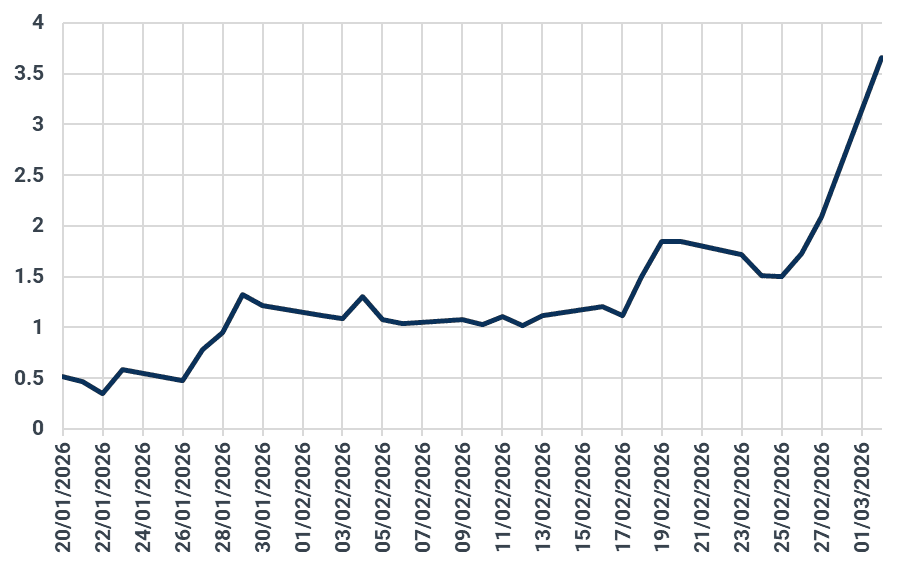
This dual-front disruption will heavily support benchmark Dated Brent prices and keep the prompt Brent strip (M1-M3) structurally supported, even if there is a rapid de-escalation in the Persian Gulf.
ICE Brent Jun 26- Sep 26 strip, $/bbl
Source: ICE, MarketView
Market insights you can actually trust
Kpler delivers unbiased, expert-driven intelligence that helps you to track critical crude oil market developments for your own analysis. Our precise forecasting empowers smarter trading and risk management decisions. In times of conflict and geopolitical uncertainty, our real-time data keeps you ahead of supply disruptions and price volatility.
Unbiased. Data-driven. Essential. Request access to Kpler today.

See why the most successful traders and shipping experts use Kpler