Strait Of Hormuz watch amid Iran conflict risk – tracking crude flows, interference and diversions in Kpler
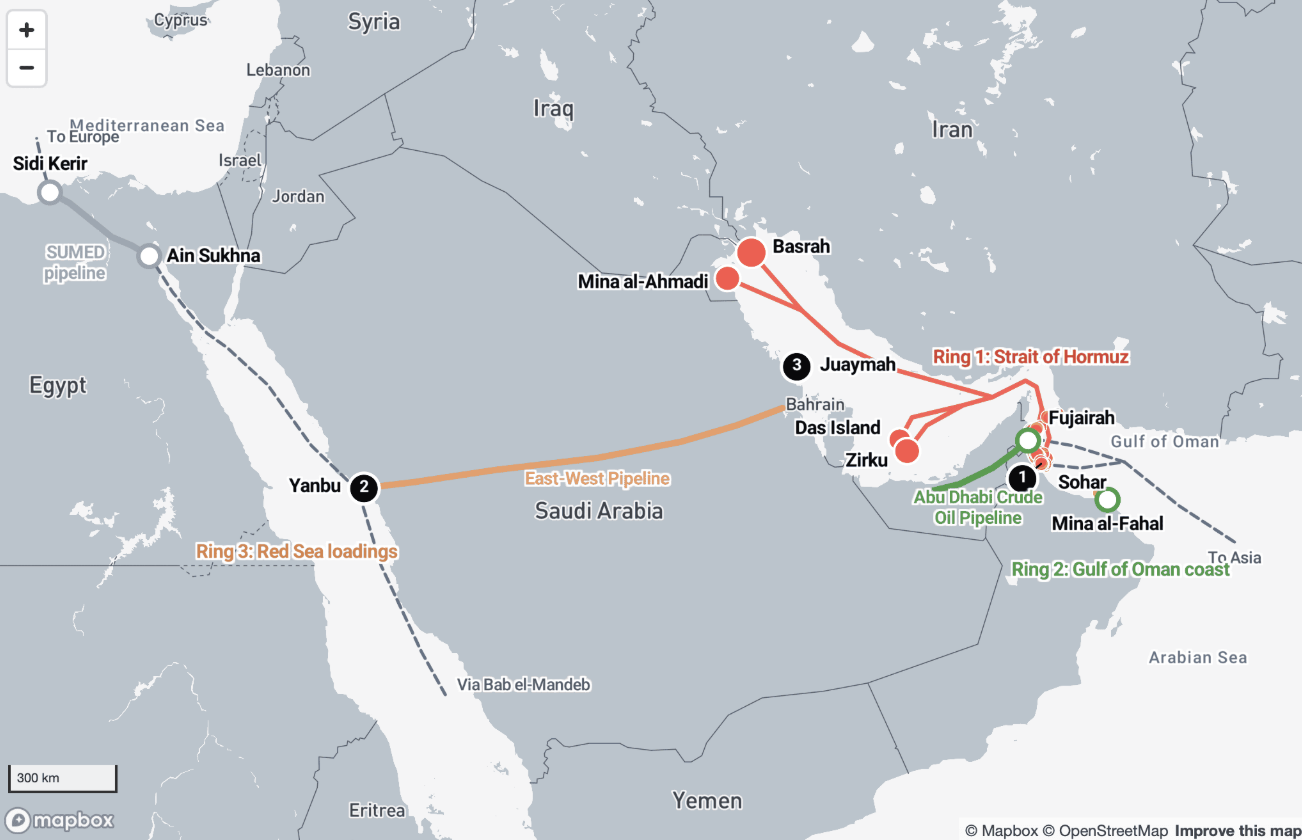
Amid heightened Iran-related geopolitical risk following U.S.-Israeli military operations, February Mideast Gulf crude exports excluding Iran have so far maintained a robust pace, led by Saudi Arabia and Iraq. At the same time, renewed satellite navigation interference across the Gulf is distorting AIS positioning and complicating vessel monitoring, while a small set of tankers in the Gulf of Oman have been confirmed diverting or pausing ahead of the Strait of Hormuz. This factbox summarizes the key flow signals and operational disruptions to watch-and provides a Kpler how-to guide for tracking ex-Iran exports, navigation interference impacts, tanker behavior, and Iranian crude supply indicators in near real time.
Mideast Gulf crude loadings (excluding Iran)
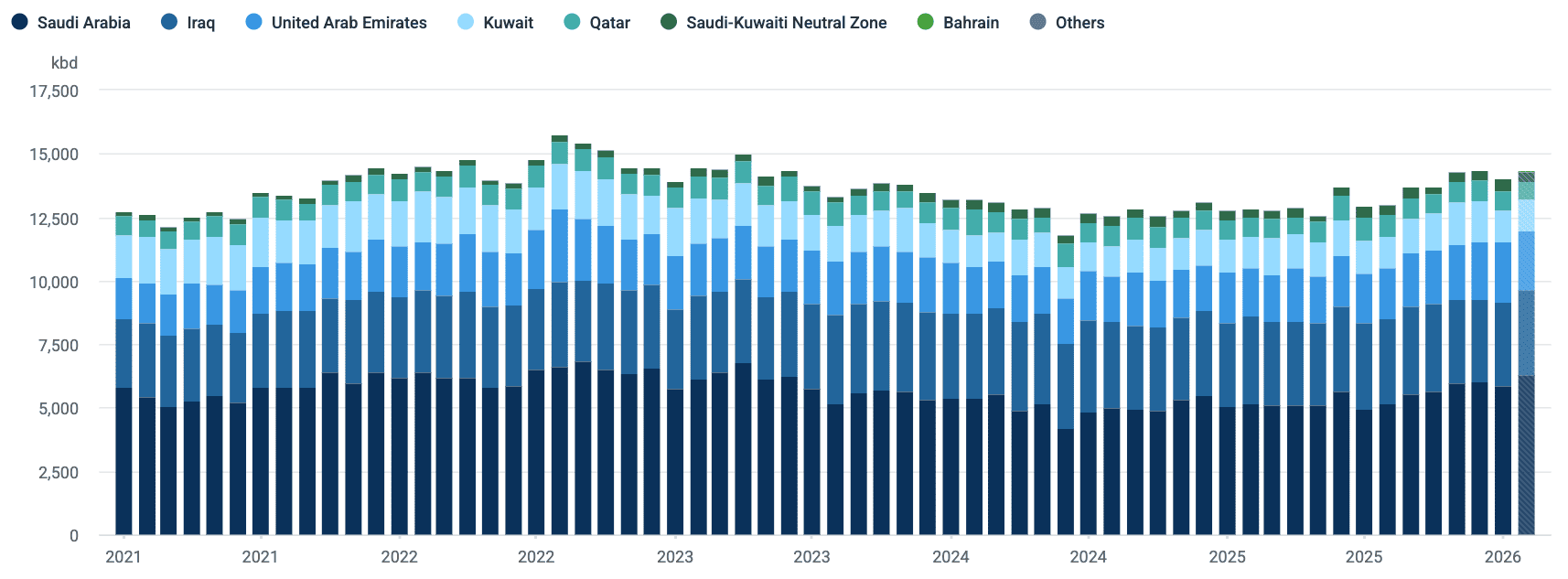
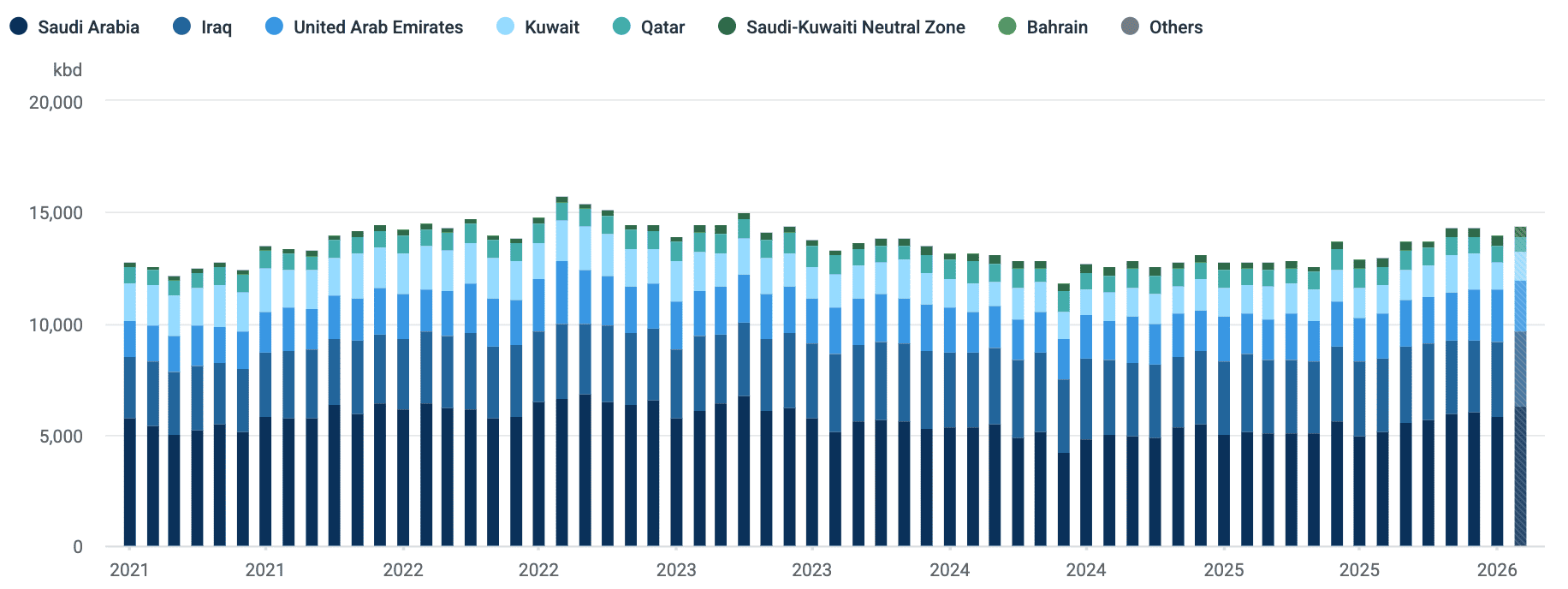
Amid rising geopolitical uncertainty in the region, February Mideast Gulf crude exports excluding Iran to date maintain a high pace near November and December’s 14.30 Mbd. Saudi Arabia and Iraq currently lead the robust crude exports out of the zone within the Strait of Hormuz, while Qatar registered month-on-month pace declines.
Mideast Gulf excl. Iran monthly Crude/Co exports by origin country
Satellite Navigation Interference Status in the region
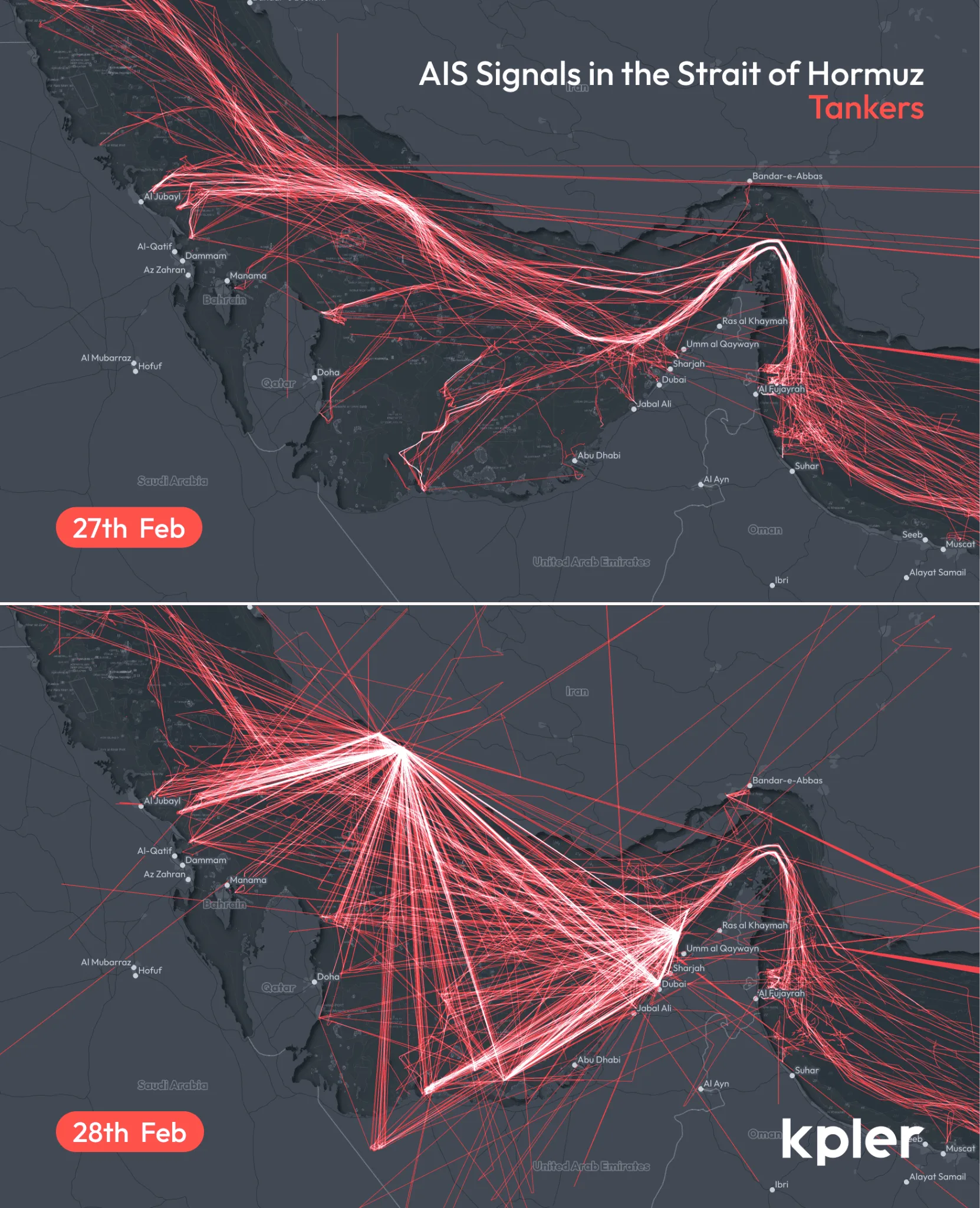
In the days prior to the the start of U.S.-Israeli military operations, renewed satellite navigation interference has been observed across the Mideast Gulf, including near Assaluyeh complex, Bandar Abbas as well as across the coast line of Mideast Gulf states. The disruption can distort AIS reporting by causing vessel positions to cluster unnaturally in a single area and skew the apparent distribution of maritime traffic, complicating situational awareness around key terminals and transit lanes.
Critically, the interference is not limited to sanctioned or "shadow fleet" activity-it can affect any vessel operating within range, degrading the accuracy and reliability of AIS positional data across the region. This makes it more than a monitoring issue: in congested waters where ships operate near terminals, anchorages, and narrow approach routes, degraded positioning increases the risk of close-quarters encounters and navigational errors.
In practical terms, affected vessels may broadcast AIS locations that appear miles from their true position, sometimes even inland, or appear plausibly "on water" but in the wrong location-an outcome that can be harder to identify at first glance. From a market intelligence standpoint, these distortions can also create false port calls and misrepresent apparent loadings and discharges at sensitive terminals. To mitigate these risks, Kpler has enhanced its methodology to detect and filter interference-driven location anomalies, helping maintain the integrity of port call detection and regional vessel tracking during periods of elevated geopolitical tension.
Pre-processed AIS signals comparison between 27 February and 28 February
Oil tanker diversion status
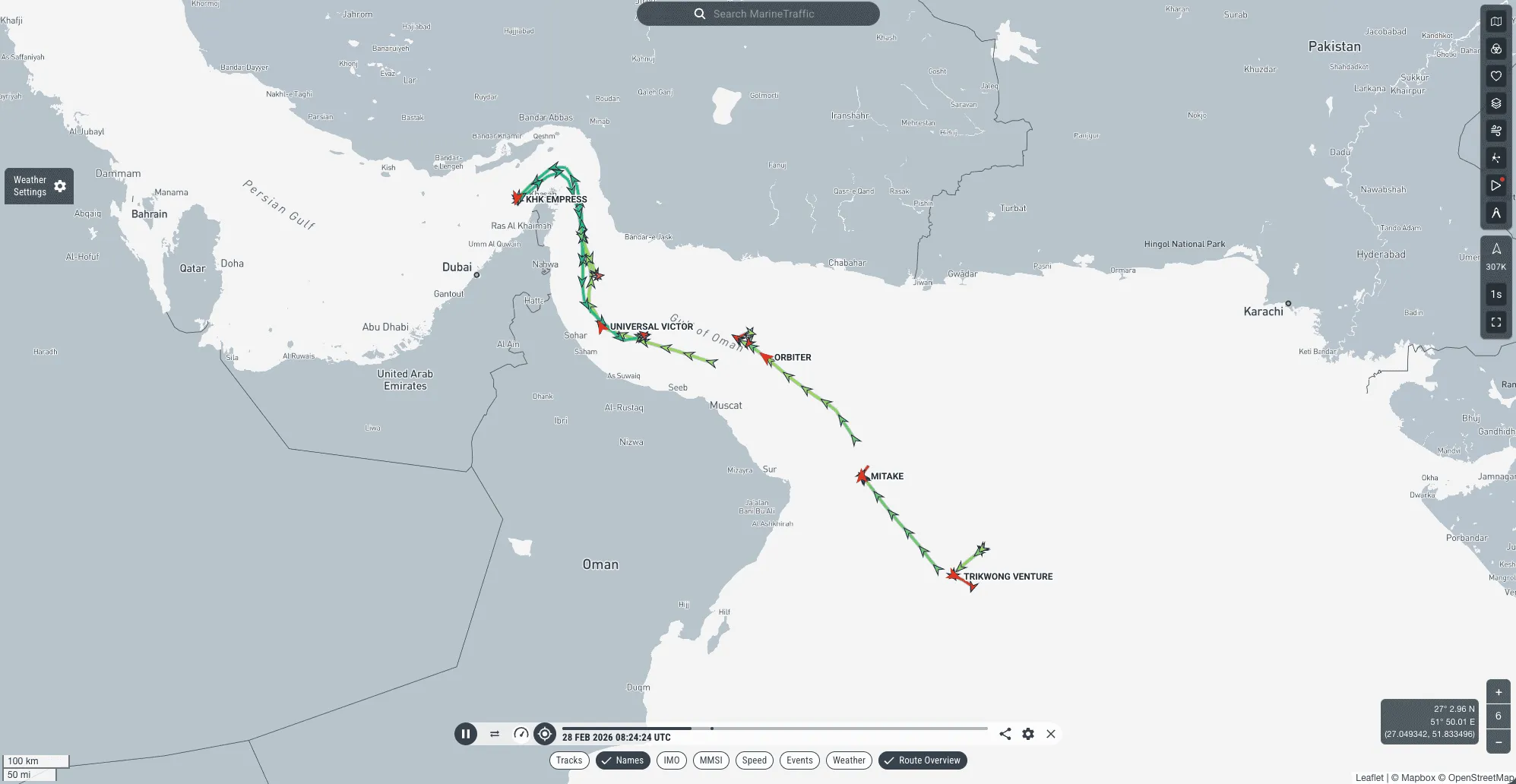
At least five ballast Very Large Crude Carriers (VLCCs) appear to be turning away from the Mideast Gulf today after the United States and Israel launched strikes on Iran, with Iran's Revolutionary Guards responding by broadcasting warnings to shipping that passage through the Strait of Hormuz is not permitted, Kpler data shows.
Among the vessels identified so far, Orbiter, Universal Victor, Mitake, and Trikwong Venture are all ballast tankers that had been tracking toward Mideast Gulf loading ports before appearing to reverse course, while a fifth — KHK Empress — appears to have diverted its loading program entirely. As of Saturday afternoon UTC, Kpler positions place the four ballast vessels in the Gulf of Oman and northern Arabian Sea, short of the Strait. Together the five vessels represent nearly 1.4 million metric tons (10 million barrels) of affected crude capacity — the four ballast vessels carrying scheduled liftings with laycans opening as soon as March 3, and KHK Empress having already loaded and diverted away from a planned Iraqi cargo.
The fixtures now in doubt span some of the Gulf's most significant loading programmes. Orbiter (313,239 DWT, Liberia, Navios Tankers) was scheduled to load crude at Ras Tanura, Saudi Arabia around March 5, with no charterer confirmed. Universal Victor (299,981 DWT, South Korea, HMM) was due to lift crude from Mesaieed, Qatar, chartered by PetroChina, with a laycan from around March 3. Mitake (305,219 DWT, Panama, Mitsui OSK Lines) was set to load an ENEOS Holdings-bound cargo at Ras Tanura from around March 7. Trikwong Venture (297,136 DWT, Hong Kong, Wah Kwong) was due to lift a Sinopec-chartered cargo out of Muscat, Oman, also from around March 7.
KHK Empress (314,014 DWT, Singapore, Tai Chong Cheang Steamship) tells a different story. Having completed the first leg of a co-load at Mina Al Fahal, Oman, the vessel had passed through Hormuz and was tracking toward Al Basrah, Iraq for a second lifting before appearing to reverse course. With a Vitol-chartered cargo bound for Mangalore, India already on board, it is now transiting the Strait at full speed in the opposite direction — apparently racing to clear Hormuz ahead of the deteriorating situation.
Five ballast VLCCs among the first to divert from the Mideast Gulf
Vessel positioning ahead of Strait of Hormuz entry
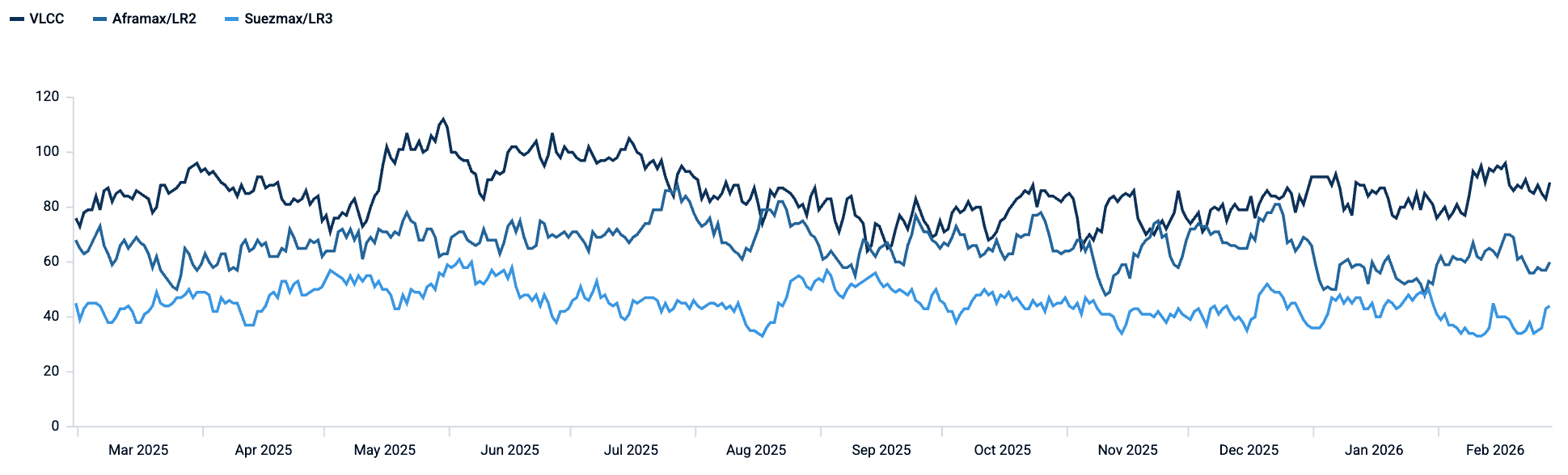
Ballast VLCC tankers currently within the Gulf of Oman and Arabian Sea have surged to 96 vessels on 17 February, the highest level since late July; however, the number fell below 90 vessels over the past week suggesting continued vessel inflows into the Mideast Gulf and conversion from ballast to laden status.
On the other hand, while smaller Aframax and Suexmax tankers in a ballast status in the zone also surged around the 17 February and showed subsequent decline, the tanker pool in the zone is indicating a small recovery sign.
Count of ballast vessels in Gulf of Oman and Arabian Sea by vessel classification
Current status of Iranian crude oil exports
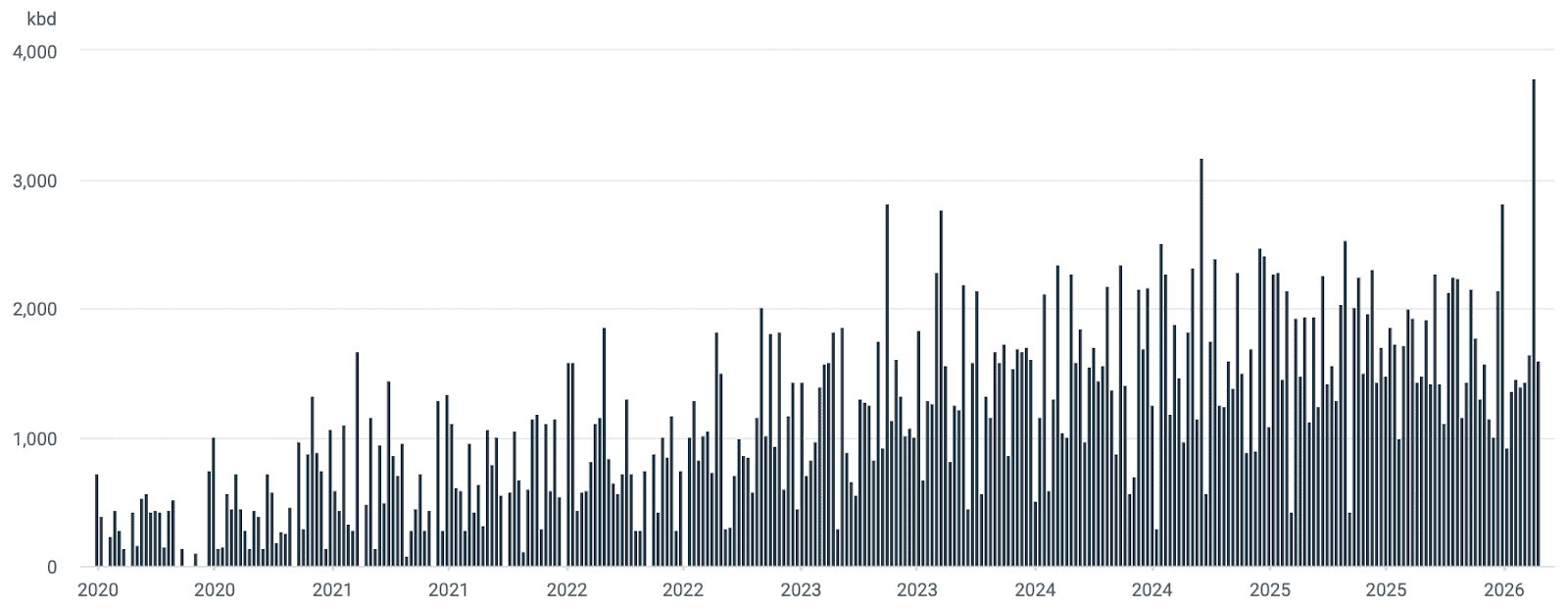
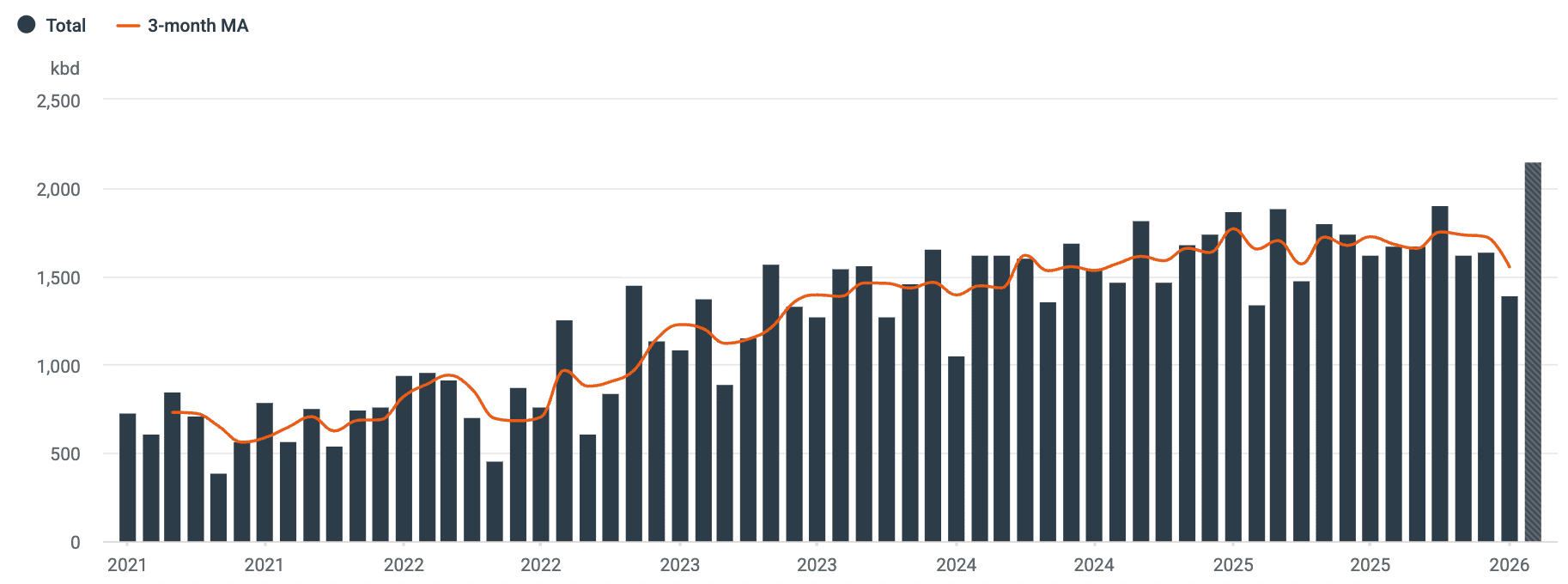
Iranian crude oil and condensate loadings approached the weekly all-time record in November 2016 during the week of February 16–22, 2026, surging to nearly 27 million bbl, or roughly 3.78 mbd. The sudden influx marks a sharp departure from recent weekly baselines of around 10 million bbl (1.48 mbd). As a result, February loadings month-to-date have climbed to about 2.3 mbd, a 50% increase versus the prior three-month average of 1.54 mbd. If this pace holds, February would be set to deliver the highest monthly loading rate since 2018, before the re-imposition of nuclear-related sanctions.
While nearly all of the loadings were conducted dark, Kpler cross-validates activity using satellite imagery. Iran typically loads more than 90% of its crude and condensate from Kharg Island.
Iran weekly crude oil loadings
Iranian onshore inventory status
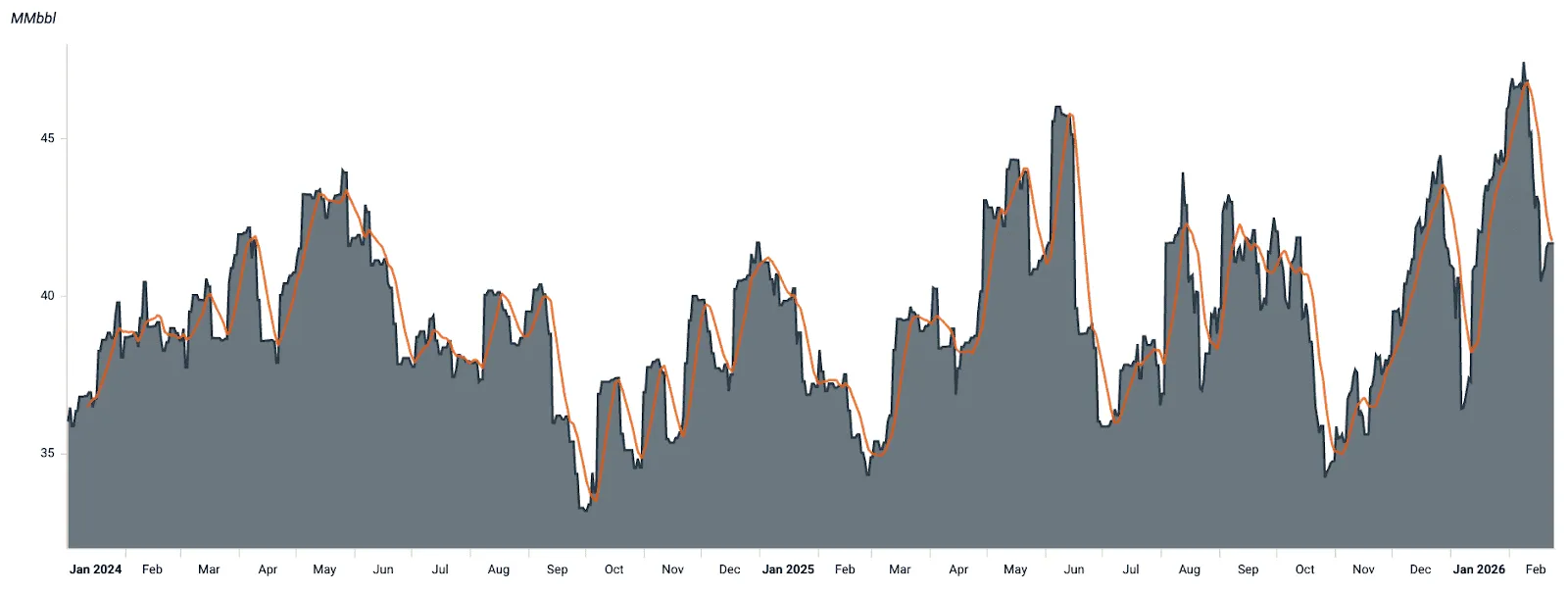
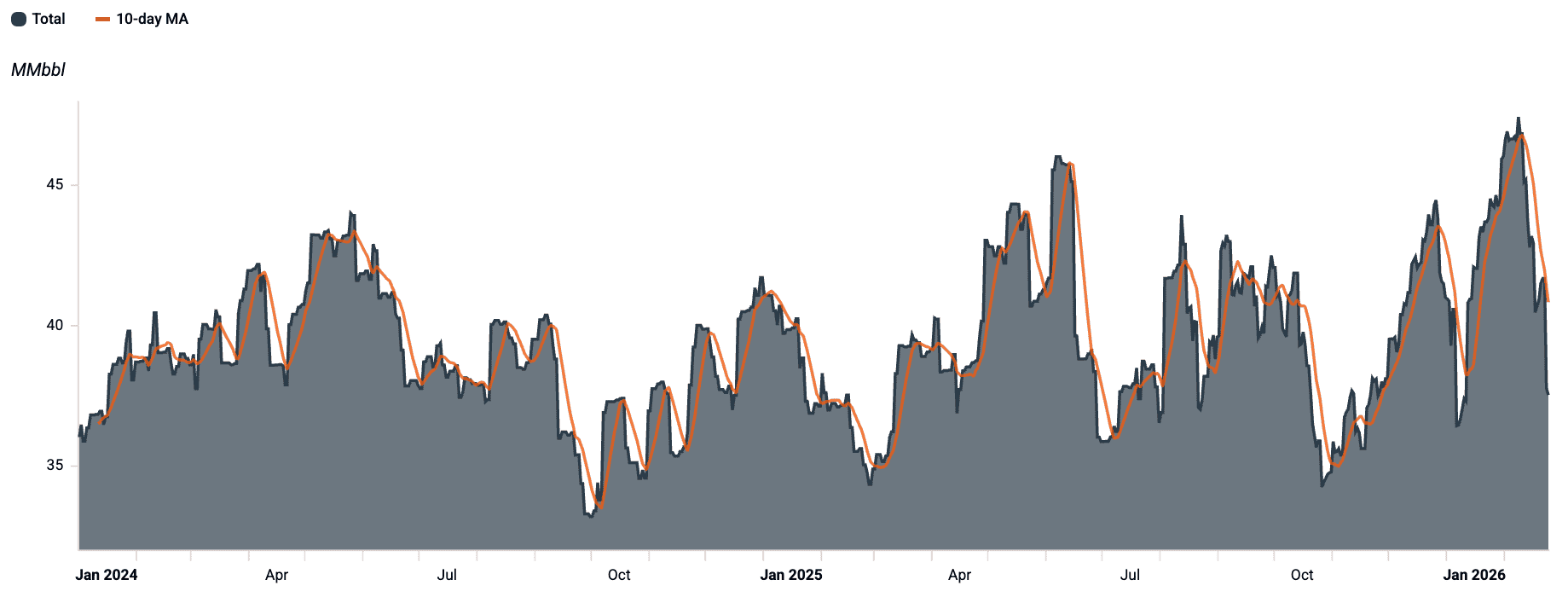
Kpler’s Iran onshore inventory indicators also point to tightening local availability alongside the February loading surge. The 10-day moving average of total tracked stocks declined steadily from 46.8 million bbl on Feb 10 to below 40 million bbl by Feb 27, a drop of nearly 7 million bbl in under two weeks. Over the same period, implied capacity utilization eased from roughly 56% to 46%, consistent with inventories being drawn down as seaborne loadings accelerated.
Iran daily crude oil inventories
Iranian crude oil on water
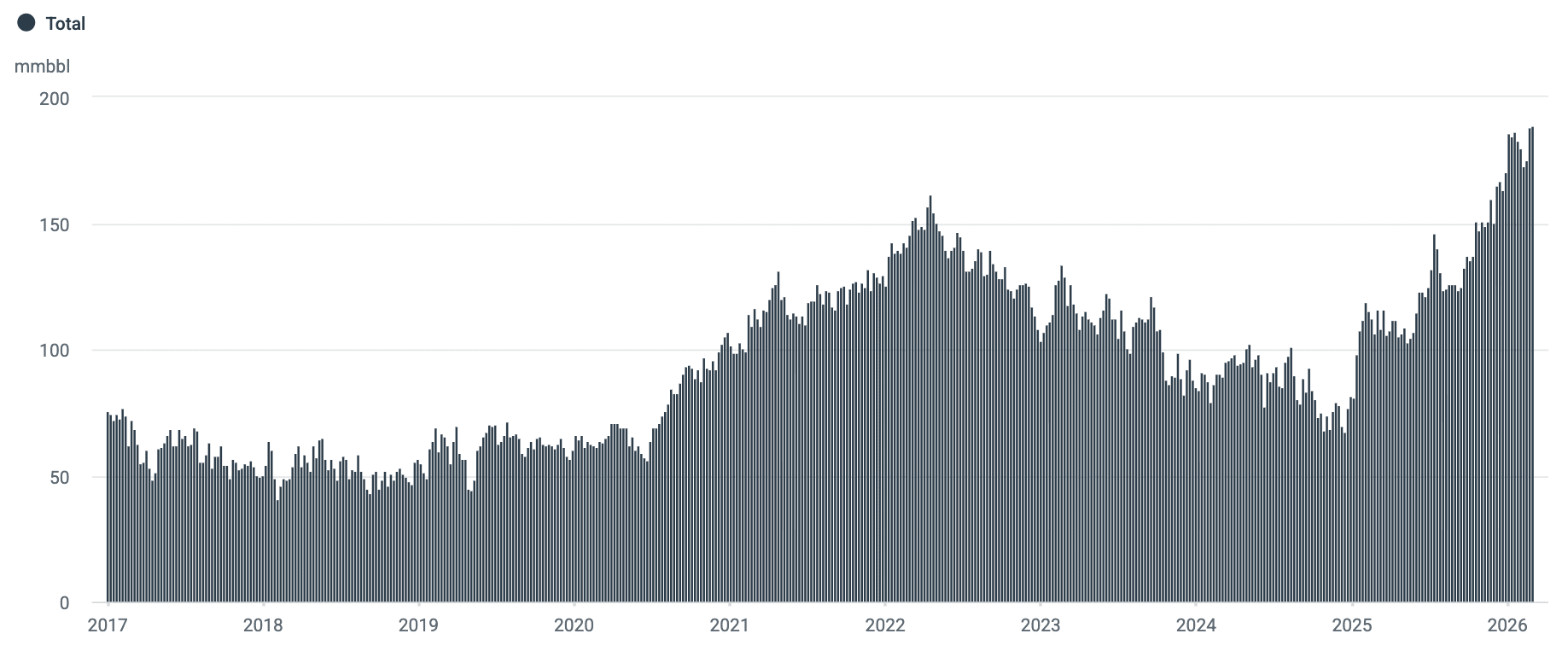
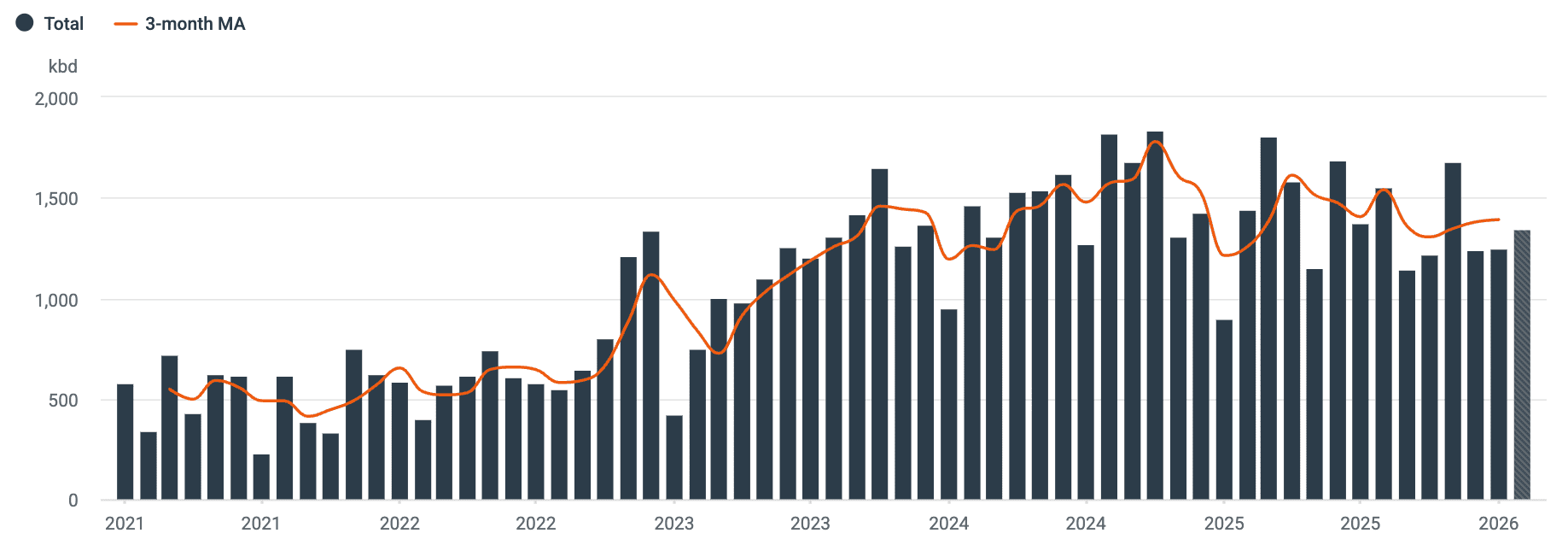
Kpler tracking shows Iranian crude oil-on-water reaching a new all-time high toward 200 million bbl. Along with increased loadings, this record level is buoyed by continued demand slowdown from China. Chinese imports of sanctioned Iranian crude and condensate have averaged 1.20 mbd so far in 2026, representing a 14% decline versus 2025 and a roughly 18% retreat from the 2024 peak of 1.48 mbd. The high pace of continued Iranian crude oil loading and suppressed discharge to China have contributed to the current record high Iranian crude oil on water.
Iranian crude oil on water
An accurate breakdown of the Iranian crude oil on water by current location provides a clearer picture of the sanctioned cargo’s floating storage and transit status.
As of 27 Feb 2026, Kpler estimates that total Iranian crude oil currently on the water globally stands at approximately 191 million barrels. This includes cargoes suspected to be Iranian crude (denoted by the crude grade EOPL, a synthetic grade created by Kpler to earmark sanctioned cargoes received offshore Malaysia at the Eastern Outside Port Limit (EOPL) and offshore Hong Kong).
Of this total, around 25 million barrels remain within the Mideast Gulf, mainly comprising cargoes that were recently loaded. Of the remaining 166 million barrels, approximately 127 million barrels are currently in the East (including the Malacca Strait, Singapore Strait, South China Sea, East China Sea, and Yellow Sea), while around 39 million barrels are located in the Arabian Sea and Gulf of Oman, possibly en route to the East as well.

As of 26 Feb 2026

As of 25 Feb 2026

As of 24 Feb 2026

Iran Crude/Co Tracking Methodology
How does Kpler track Iranian crude loadings and subsequent offshore transfers?
Kpler monitors Iranian crude and condensate exports using a combination of AIS vessel tracking, satellite imagery, and detailed cargo flow analysis. The methodology traces liftings from Iranian export terminals, identifies dark activity and ship-to-ship (STS) transfers, and monitors floating storage and vessel movements to maintain continuity of cargo tracking throughout the voyage. For a full breakdown, please refer to our detailed Iranian tracking methodology here.
How does Kpler track Iranian crude oil discharges to their final destination and key development?
Unlike loadings from Iran or subsequent STS transfers, Iranian crude oil cargoes discharging to its final destination largely maintain their AIS signals and these operations are seamlessly registered. However, Kpler increasingly observes practices of using AIS transponders from decommissioned vessels. Central to this is "zombie vessel" spoofing—a trick previously seen in sanctioned flows to China—where active tankers broadcast the AIS data of scrapped or inactive ships to create a digital mask. This method allows vessels to remain visible on global tracking systems under false pretenses, avoiding the red flags typically raised by turning off transponders.
Key Kpler Terminal Data Query Guidance data query advices
Mideast Gulf Crude/Co exports
Crude/co loadings solely from the Mideast Gulf zone (inside the Strait of Hormuz) can be viewed via Flows module by selecting From: Mideast Gulf and filtering by product (Crude/Condensate).
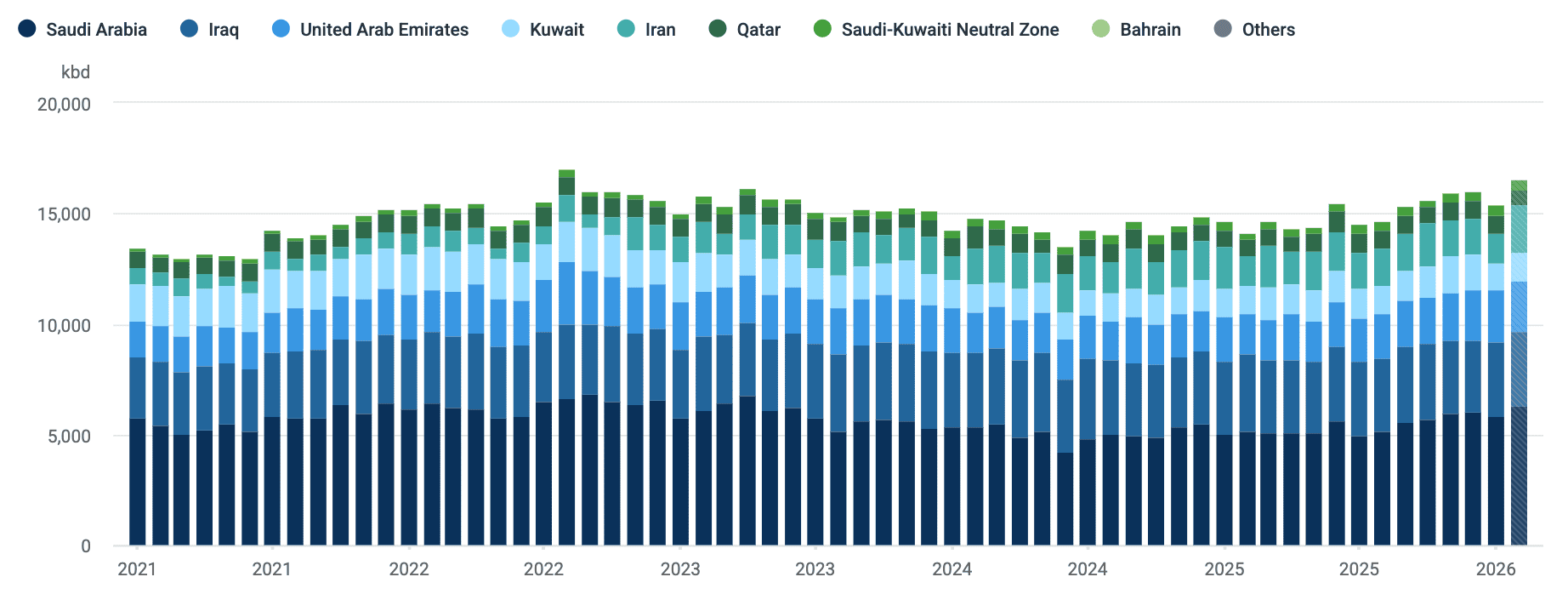
Mideast gulf Crude/Co exports excluding Iranian volume
Crude/co loadings solely from the Mideast Gulf zone (inside the Strait of Hormuz) but excluding crude/co originated from Iran can be viewed via Flows module by selecting From: Mideast Gulf, applying “-” sign with Iran to exclude Iran and filtering by product (Crude/Condensate).
Iran Crude/Co exports
Iranian crude and condensate exports can be viewed via the Flows module by selecting From: Iran and filtering by product (Crude/Condensate).
China imports of Iranian Crude/Co
To accurately capture China’s imports of Iranian crude, the query should include not only direct flows from Iran but also cargoes listed with origin as EOPL (Eastern Outside Port Limit) and Offshore Hong Kong. These STS transfer zones account for movements where dark or unmatched vessel activity obscures the original loading port. While the precise origin cannot always be confirmed, these barrels are widely assessed to be Iranian and are classified under Kpler’s synthetic EOPL crude grade. Omitting EOPL and Offshore Hong Kong from the “From” field would understate China’s total imports of Iranian-linked crude.
Iranian Daily Crude/Co Inventories
Iranian inventory levels can be accessed through the Oil Inventories module by selecting Location: Iran.
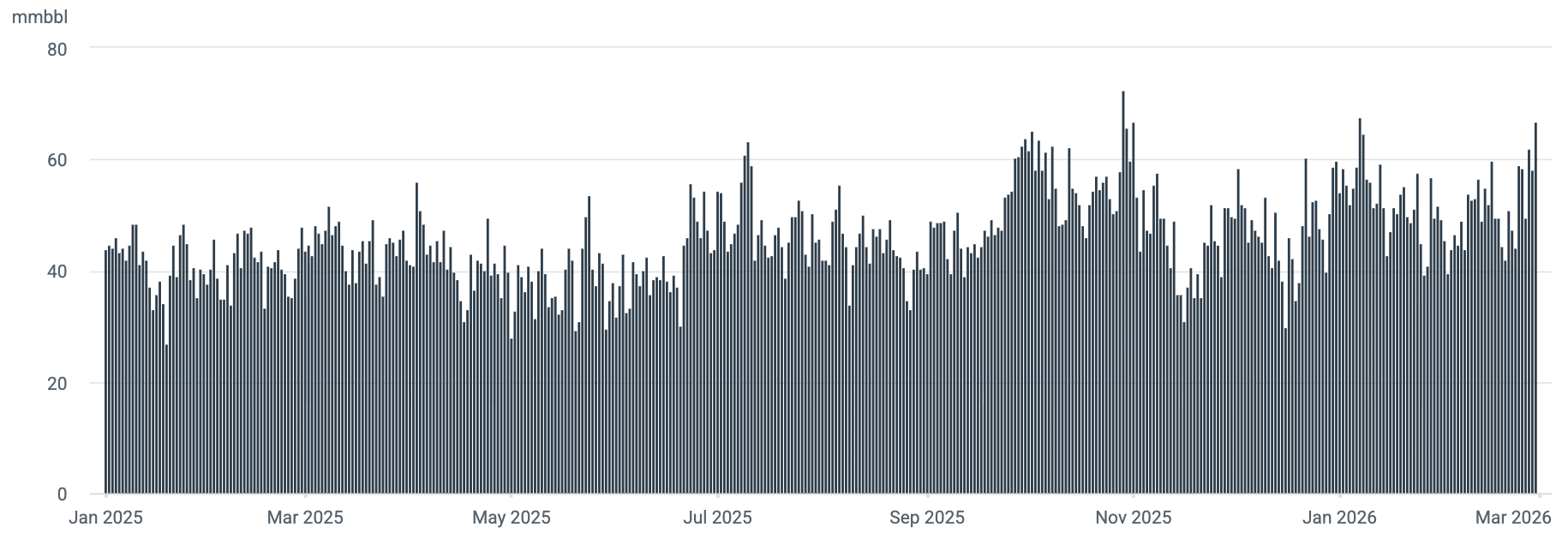
Mideast Gulf Crude/Co on Mideast Gulf Water
Volume of Mideast gulf origin crude/co currently inside Mideast Gulf rose to the highest level since early January nearing 70 Mbbls.

See why the most successful traders and shipping experts use Kpler