
The Strait of Hormuz blockade: what it means for grain and food security
Key takeaways
- The blockade has cut off container supply to Jebel Ali and Khalifa Port, disrupting daily food supplies for a GCC population of over 50 million people
- Fertiliser exports are effectively bottlenecked, with only five vessels exiting the Middle East Gulf since 28 February
- US farmers are shifting acreage from corn to soybeans; we forecast 94.8 million corn acres and 84.2 million soybean acres for 2026 planting
- Brazil's soybean production has been revised down to 179 million tonnes, and Brazil's competitiveness on the export market means the 8 million tonne China-to-US commitment is unlikely to materialise
- Wheat supply is ample but demand destruction is the key risk; grain trade should rebound quickly once hostilities end, fertiliser markets will not
The closure of the Strait of Hormuz is not only a shipping story. It is also a food story.
Those of us who track vessel movements, cargo flows, and port utilisation know that what happens in the Strait ripples far beyond tanker markets. What we are seeing is a multi-layered disruption with consequences that will be felt well beyond the Gulf region, and in some cases, well beyond 2026.
The container supply chain collapse
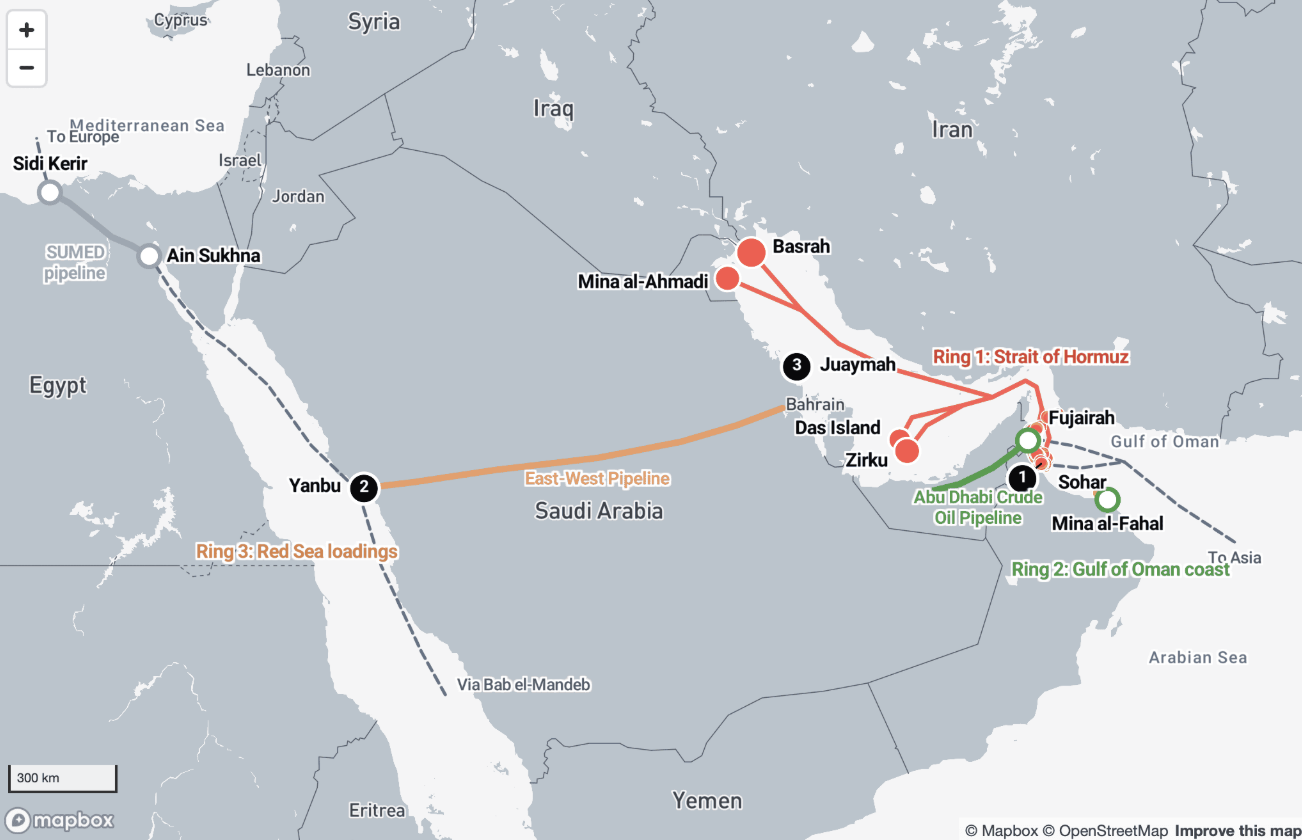
The immediate impact is on container shipping into the Gulf. The port of Jebel Ali, the largest in the region and the primary entry point for day-to-day food supplies including fruits, vegetables, meat, dairy, and essential medicines, is currently unreachable. So is Khalifa Port in Abu Dhabi, the second largest. Together, these two ports serve a GCC population of over 50 million people.
Alternative ports, primarily on the eastern coast of the UAE and Oman, offer support in managing imports. But they are unable to completely offset the lost import capacity. Salalah was attacked and paused container operations briefly. Container vessels from the Indian Ocean cannot reach Saudi Arabia's west coast ports via the Red Sea. Only vessels transiting through the Suez Canal can access those facilities, which were already operating close to full capacity before the conflict escalated.
Cold storage buffers exist, but they are finite. Fresh food supply will become a pressing issue.
Dry bulk trade is not immune
Iran is the largest bulk grain and oilseed importer in the region, bringing in significant volumes of corn from Brazil and wheat from Russia. That supply has effectively stopped.
What we are tracking in the Kpler platform tells a more nuanced story. A small number of grain vessels have continued to transit the Strait. The Giacometti entered the Mideast Gulf on 20 March through an unusual route via Iranian waters and signalling as food for Iran. The Levantis delivered corn at Bandar Imam Khomeini, departed on 18 March, updated its signals, and transited on 23 March. These are exceptions, not a pattern.
The broader picture is one of diversion. Some vessels are shifting from Bandar Imam Khomeini toward Chabahar Bay, on Iran's southern coast outside the Strait. The port has been receiving more grain cargoes since March 2025, but capacity is limited. Origins are diversifying from Russian wheat to Brazilian and Argentine barley and soybean meal, but volumes are a fraction of what Iran normally receives.
For the majority of the dry bulk fleet, the calculus is simple. War risk insurance is available, but shipowners will not put crews and vessels at risk regardless of assurances. The vessels idling in the Arabian Sea are waiting for clarity that has not come.
Fertiliser: the downstream threat
The blockade is not just restricting inbound grain flows. It is bottlenecking outbound fertiliser exports. That is where the long-term agricultural risk lies.
The Middle East Gulf accounts for roughly 25% of global seaborne nitrogen fertiliser exports and a significant share of sulphur exports, the feedstock used to produce phosphorus fertilisers such as DAP. The indirect effect on Morocco is less obvious but critical. Morocco is one of the largest phosphorus fertiliser exporters and imports much of its sulphur from the UAE. Less sulphur from the Gulf means less production of phosphorus fertiliser from Morocco, which could in turn reduce the supply of phosphorus fertiliser to the Northern Hemisphere, including countries that do not source from the Gulf at all.
China has added another layer by tightening its own fertiliser export restrictions since the blockade began. Major agricultural producers that typically source from China rather than the Gulf are being impacted too.
Vessels continue to load inside the Gulf, such as urea at Jubail. But since 28 February, only five fertiliser vessels have exited. The Nadab cleared the Strait on 22 March carrying what we believe to be Iranian urea, identified through a significant AIS gap between 6 and 17 March and a notable draft change on reappearance. The KSL Henyang, carrying sulphur from Jubail, also crossed and is now headed to Indonesia.
The rest of the fleet is waiting for a safer passage.
US planting season: the fertiliser cost crunch
US fertiliser prices were already elevated in 2025 relative to 2023 and 2024. The blockade has seen prices rise even higher. For farmers who did not lock in their needs prior to March, the exposure to higher fertiliser prices will tighten profit margins.
As the average US corn and soybean grower is facing a third consecutive year of losses, these are not farm businesses which can comfortably absorb higher input costs.
Our crop profitability analysis across Iowa, Illinois, and Indiana suggests that for most US farmers the net return on rotating from corn to soybeans is more attractive than continuous corn. In contrast to soybeans, corn requires the application of nitrogen-based fertiliser, so farmers are likely to opt for soybeans to control input costs. Also, while the soy-corn ratio has been volatile, driven by US-China trade headlines, the price ratio favours soybeans.
For 2026 spring planting, we forecast 94.8 million acres of corn, slightly above the USDA's forecast in February of 94 million, and 84.2 million acres of soybeans, just below the USDA at 85 million. The market will pay close attention to the upcoming Prospective Plantings report on 31 March. Farmers were surveyed during the first two weeks of March, meaning the results will have captured at least some of the war's impact on input cost expectations.
South America: harvest delays compound the picture
Brazil's soybean harvest has been interrupted by excessive rainfall across northern and central producing states, leading to a lag in exports. Though Rio Grande do Sul in the south faced the opposite problem, a water deficit during key reproductive growth stages. We estimate Brazilian soybean production at 179 million tonnes, revised lower from an earlier estimate of 180 million tonnes.
Export loadings for February and March are running slightly behind 2025 pace. A phytosanitary inspection issue between Brazil and China added near-term pressure. More structurally, Brazil's competitive discount to US soybeans is significant and we do not expect it to shift. As a result, we do not expect China to purchase an additional 8 million tonnes of soybeans from the US during the 2025/26 marketing year, as had been purported earlier this year.
In Argentina, January and the first half of February were very dry, coinciding with critical reproductive stages for both corn and soybean crops. Rainfall improved from late February into March, preventing significant yield cuts. We currently forecast corn production at 56 million tonnes, supported by greater planted area. With Argentine corn pricing approximately $10/t below US origin we expect a much more aggressive export campaign in 2025/26 than 2024/25. We forecast Argentina will directly compete with the US for price-sensitive destinations in East Asia and Southeast Asia.
Wheat: supply is not the issue
The wheat market enters this period with more stocks at major exporting countries than at any point in the last decade. No significant weather concerns are currently present for the 2026 Northern Hemisphere winter wheat crop as it emerges from dormancy. In the US, HRW crop conditions in Kansas are declining but not at alarming levels, with ample time for recovery. In France, conditions have shifted from excess moisture to mild dryness but remain manageable. In the Black Sea, snow melt is underway and the 14-day rainfall forecast is reasonable. Weather conditions during April and May will be key as the crop transitions to more yield-determining growth stages.
The risk in the wheat market is not supply, but demand. Higher energy and fertiliser costs will drive food inflation. Elevated landed costs will cause demand destruction, starting from price-sensitive Asian importers. The wheat balance sheet is already dealing with moderate oversupply. Demand destruction will compound that, not resolve it.
Actionable insights for market participants
- Dry bulk traders: monitor vessel diversions to Chabahar Bay closely. Volumes remain a fraction of normal Iran import levels, but the shift in routing and origin mix signals a structural change in how Gulf grain trade flows while the blockade is present.
- Fertiliser desks: the bottleneck is outbound, not inbound. With only five vessels exiting the Gulf since 28 February, loading activity inside the Gulf is accumulating inventory with no clear exit. Watch nitrogen and phosphorus fertiliser prices for further upside as downstream availability tightens.
- Agricultural commodity traders: the soy-corn ratio is the key signal for 2026 US planted area. Our analysis points to a meaningful rotation out of corn into soybeans. The USDA Prospective Plantings report on 31 March will be the first hard data point.
- Risk managers: distinguish between vessels transiting via Iranian waters under food for Iran signals and standard commercial movements. The Giacometti and Levantis transits are notable exceptions, not evidence of normalising flows.
- Compliance teams: China's tightening of fertiliser export restrictions since the blockade began creates indirect exposure for agricultural producers that do not source from the Gulf. Map your supply chain dependencies before upcoming crop planting windows.
- Operations planners: Chabahar Bay is emerging as Iran's primary grain import alternative, but infrastructure capacity is limited. Factor extended discharge times and congestion risk into any cargo planning for the region.
What we are watching
The downstream effects on fertiliser availability for Southern Hemisphere winter wheat planting in Argentina and Australia, and for rice and oilseed planting in Asia later in 2026, are not yet fully priced in. As on-farm stocks are drawn down, the supply question will become more acute.
Grain trade will rebound quickly once hostilities end. The infrastructure is there and the demand is real. Fertiliser markets will take longer to normalise, and crops planted with reduced or delayed inputs will carry the yield risk through to harvest.
The vessels are watching the Strait. So are we.

See why the most successful traders and shipping experts use Kpler
Get real-time market intelligence on how the Middle East conflict is reshaping grains trade