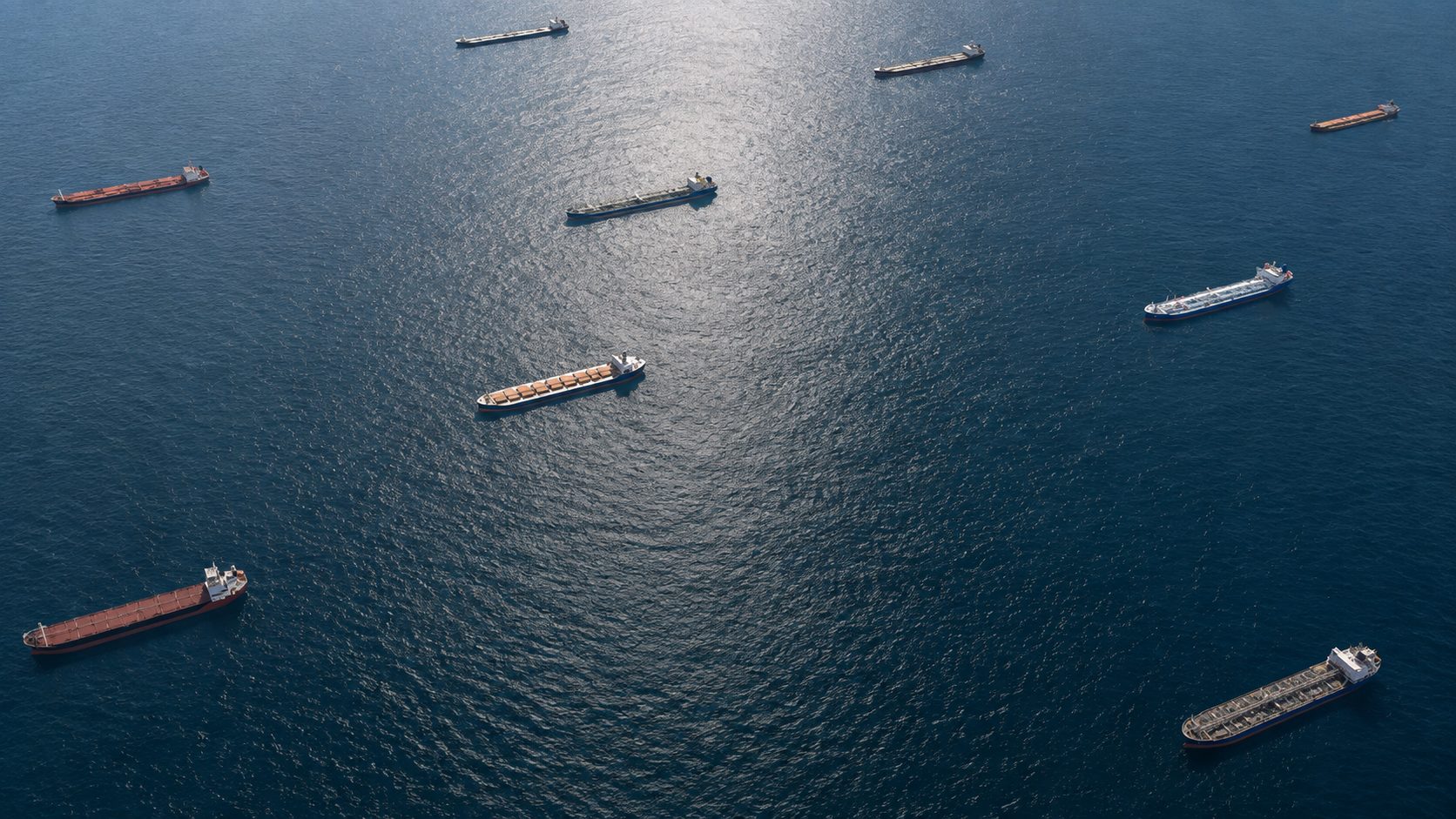
US naval blockade threatens further 1.8 Mbd supply outage
The US Central Command has instituted a naval blockade against all vessels entering or departing Iranian ports, effective April 13. Simultaneously, President Trump has threatened to interdict any vessel in international waters that pays an unofficial transit toll to Tehran.
The US Central Command has instituted a naval blockade against all vessels entering or departing Iranian ports, effective April 13. Simultaneously, President Trump has threatened to interdict any vessel in international waters that pays an unofficial transit toll to Tehran.
Key Takeaways
- Prices surge on blockade news: ICE Brent has breached $102/bbl following the collapse of US-Iran negotiations and the announcement of a US naval blockade on Iranian ports.
- Massive supply loss: An effective blockade would choke off around 1.8 Mbd of Iranian crude exports, pushing total global supply outages above 13 Mbd.
- Execution hurdles: Enforcing the blockade faces severe logistical hurdles, from shadow fleet GPS spoofing to the geopolitical minefield of intercepting Chinese VLCCs.
- The Houthi wildcard: Iran has explicitly threatened to activate Houthi forces in the Bab el-Mandeb strait. A disruption there would disrupt Saudi Arabia's 4.5 Mbd Yanbu exports, potentially pushing global outages even higher.
Any effective and enforced blockade would remove an estimated 1.8 Mbd of Iranian crude exports from the market, pushing global outages above 13 Mbd, exacerbating the bullish impetus for the market to price to demand destruction in order to restore balance.
While the US declaration is robust, the mechanics of implementation are highly fragile. Chasing down vessels that have paid Iran’s unofficial $1/bbl toll in international waters will severely drain military resources, while identifying the “shadow fleet” that uses GPS spoofing is also complicated. The blockade is likely to take place in an area that also covers Iran's Jask terminal (outside the Strait of Hormuz), but this still lends itself to the threat of attacks from the IRGC.
The blockade is effectively a collision course with Asia's largest buyers. At least two Chinese VLCCs transited Hormuz over the weekend, allegedly after paying Iranian tolls, according to media reports. If the US Navy attempts to interdict or penalize Chinese vessels, the conflict will rapidly metastasize into a US-China standoff.
The second-order effects with regards to China’s imports and response to such a blockade is the key factor in this latest development, with fresh Iranian loadings set for China:
- China displacement effect: If China, currently lifting >90% of Iranian crude, faces tighter enforcement or logistical disruptions, it will increasingly source from alternative suppliers (Middle East via Saudi/UAE bypass routes, Russia, West Africa, Americas), intensifying competition for the same barrels Asian buyers rely on
- Price upside risk: This demand reshuffling is likely to push benchmark prices (Brent/Dubai) higher, particularly in the spot market
- Freight & insurance friction: Any escalation, even without a formal blockade, could increase tanker rates and insurance costs, adding to the region’s landed crude costs.
- Tighter availability of discounted barrels, particularly if Russian flows also face constraints
- A higher import bill for Asian buyers, even if overall volumes remain stable
- A Chinese response that favours drawing down onshore inventories instead of seeking replacements tempers short-term price upside, but materially supports the back end of the curve
India’s recent engagement with Iranian crude is limited to cargoes already loaded before the US waiver, rather than any fresh loading/buying. The current US authorization allows delivery of such cargoes only until April 19, meaning India is not receiving newly traded or freshly loaded Iranian barrels.
Washington's strategy relies on financial strangulation, but Tehran’s strategy is built on endurance. Iran currently holds roughly 180 Mbbls of crude on water, valued at nearly $23 billion, providing a financial buffer to weather the immediate blockade while the rest of the global economy fractures under the weight of historic supply shortages.
The breakdown also shows that Iran has accumulated significant amounts of loaded vessels in the Middle East that are gradually moving eastward. 117 Mbbls of this oil on water is outside the Middle East, covering nearly three months of China’s typical Iranian oil imports. Tehran has also stated it will respond to the blockade by encouraging Yemen's Houthis to resume attacks in the Bab el-Mandeb strait. An attempted boarding by an armed skiff has already been reported this weekend (UKMTO). If the Bab el-Mandeb is effectively closed, Saudi Arabia's critical alternative export route: the 4.5 Mbd outflow from Yanbu could be severed. If this dual-chokepoint scenario develops, global crude supply outages will shoot towards 18 Mbd.

See why the most successful traders and shipping experts use Kpler