.webp)


450+
14k+
17+
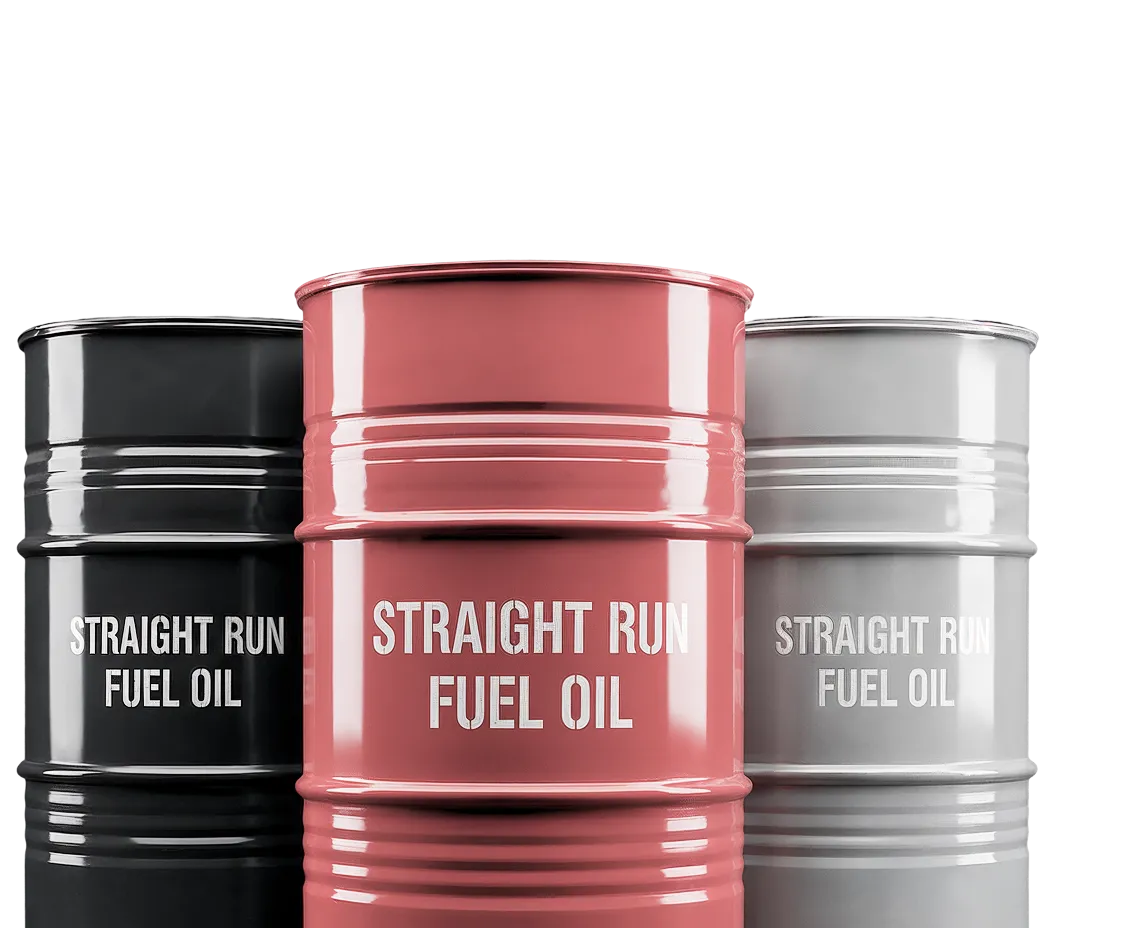
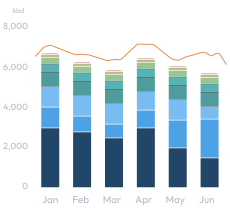
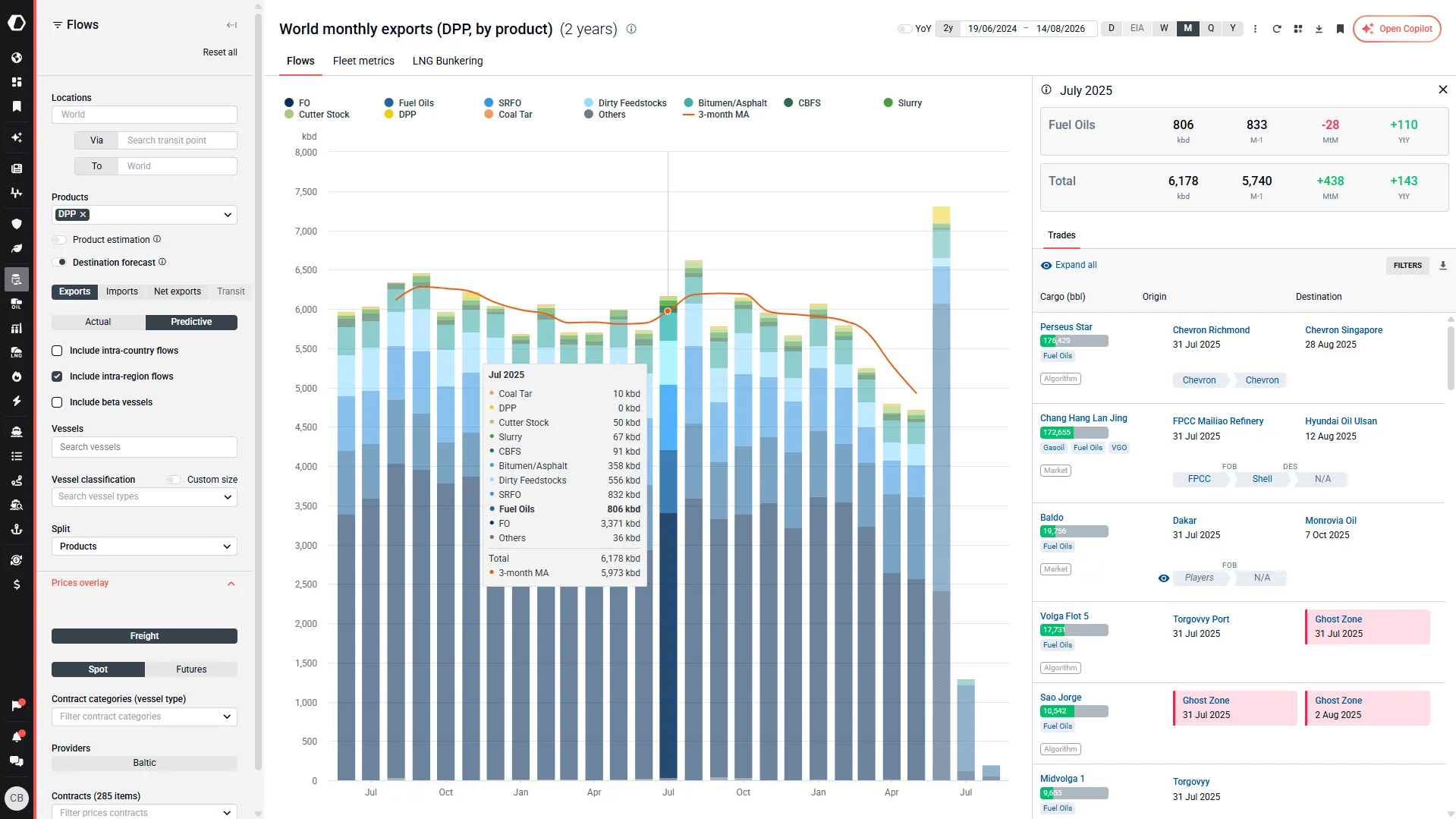
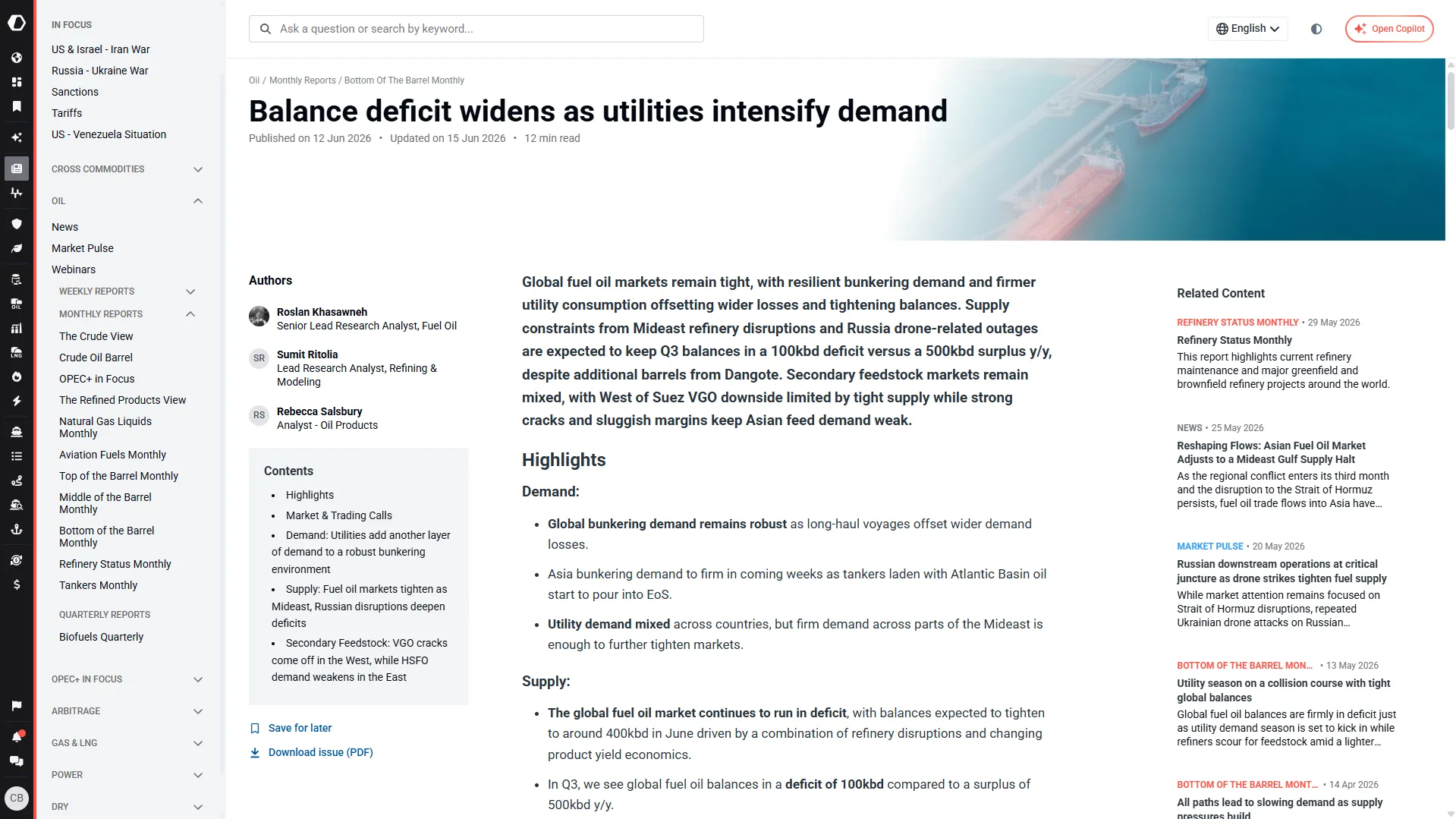
- Cargo and trade flow tracking across the full fuel oil spectrum — HSFO, LSFO, VLSFO, and straight run fuel oils (SRFO) — covering marine, power, and industrial markets
- Refinery feedstock and blending component coverage: VGO, heavy gasoil, coker gasoil (CGO), hydrocracker bottoms (HCB), slurry, carbon black feedstock (CBFS), and cutter stocks
- Bitumen and asphalt coverage across PEN, VG, PG, and paving grades — from AC and penetration grades to performance-graded and viscosity-graded specifications
- Residual and specialty product tracking including roofing flux, coal tar, and pitch — across infrastructure, construction, and industrial supply chains
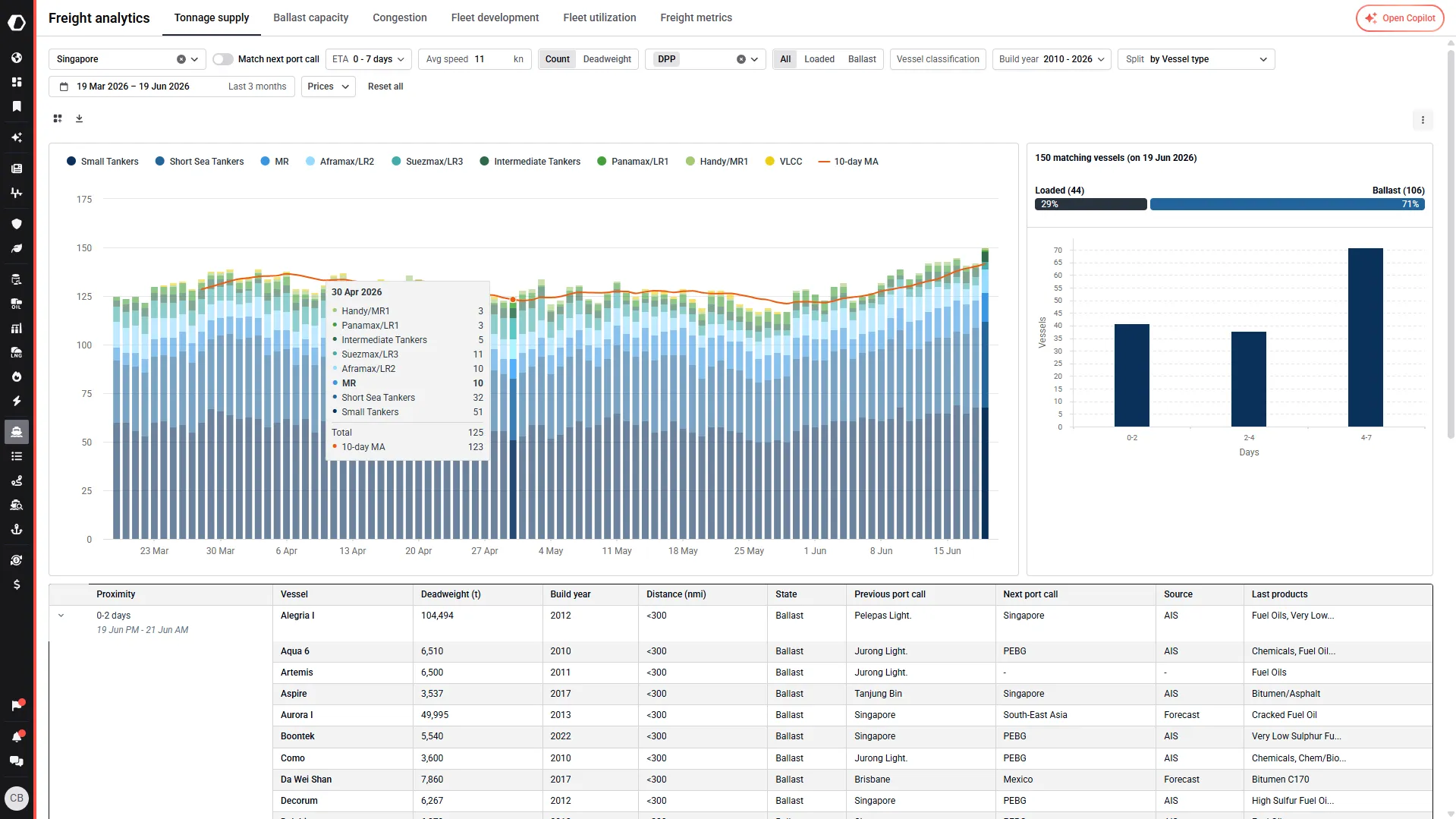
- Tanker fleet deployment analytics by geography, ownership, vessel status, and deadweight — tracking operating, idle, ballast, and laden vessels across key fuel oil and residual trade corridors
- Port congestion and terminal visibility at major fuel oil and bitumen hubs — vessel queues, waiting times, and operational constraints to support shipment planning and anticipate disruptions
- Ton-mile demand and vessel speed indicators by vessel type and cargo state — evaluating freight demand, fleet utilisation, and trade patterns across global fuel oil routes
- Regular research across HSFO, VLSFO, LSFO, straight run fuel oil, and heavy feedstocks — connecting pricing, refinery behavior, freight disruption, inventories, and trade flows to explain regional market shifts
- Fundamental analysis covering refinery run changes, export disruptions, sanctions, bunker demand, utility switching, and blending component availability — including VGO, vacuum residues, and Latin American and Russian heavy barrels
- Freight and geopolitical context — chokepoint disruptions, bunker costs, tanker hesitancy, and refinery outages assessed for impact on delivered supply and regional spreads
- Market commentary integrating supply balances, refinery margins, bunker demand, and arbitrage flows — from Asian VLSFO shortages and HSFO coking demand to European bunker trends and USGC heavy feedstock incentives
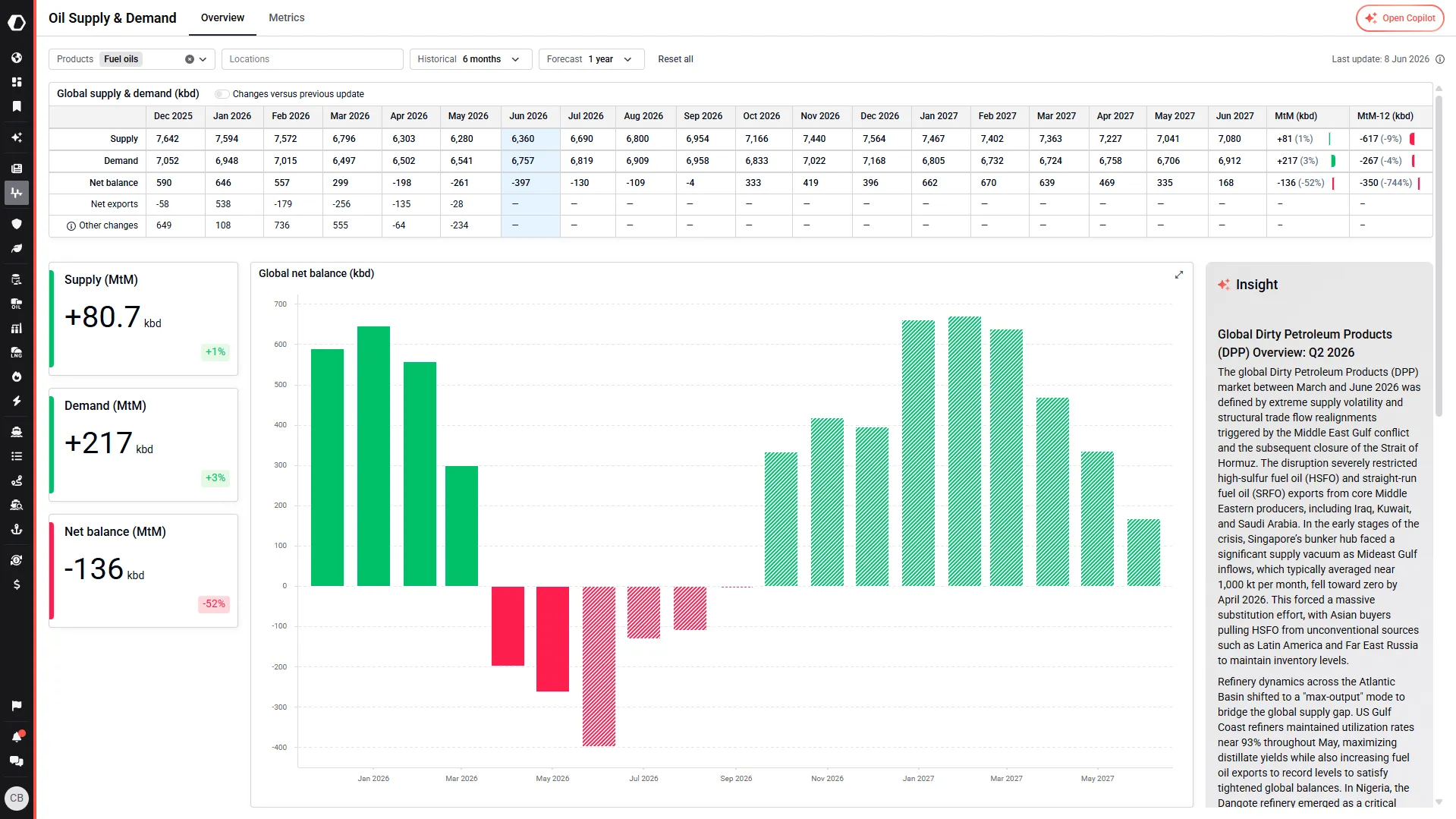
- Structured supply, demand, and balance data across heavy ends markets — tracking fuel oil availability across key hubs in Asia, Europe, and the US
- Monthly regional product balances and stock trends combined with long-term structural views on refining capacity and market outlook
- Refinery configuration and throughput analysis — assessing how changes at the bottom of the barrel affect regional fuel oil and residual availability
- Regional price forecasts integrated with supply-demand data — linking product balances, feedstock tightness, and refining trends to market direction for HSFO, LSFO, VLSFO, and residual
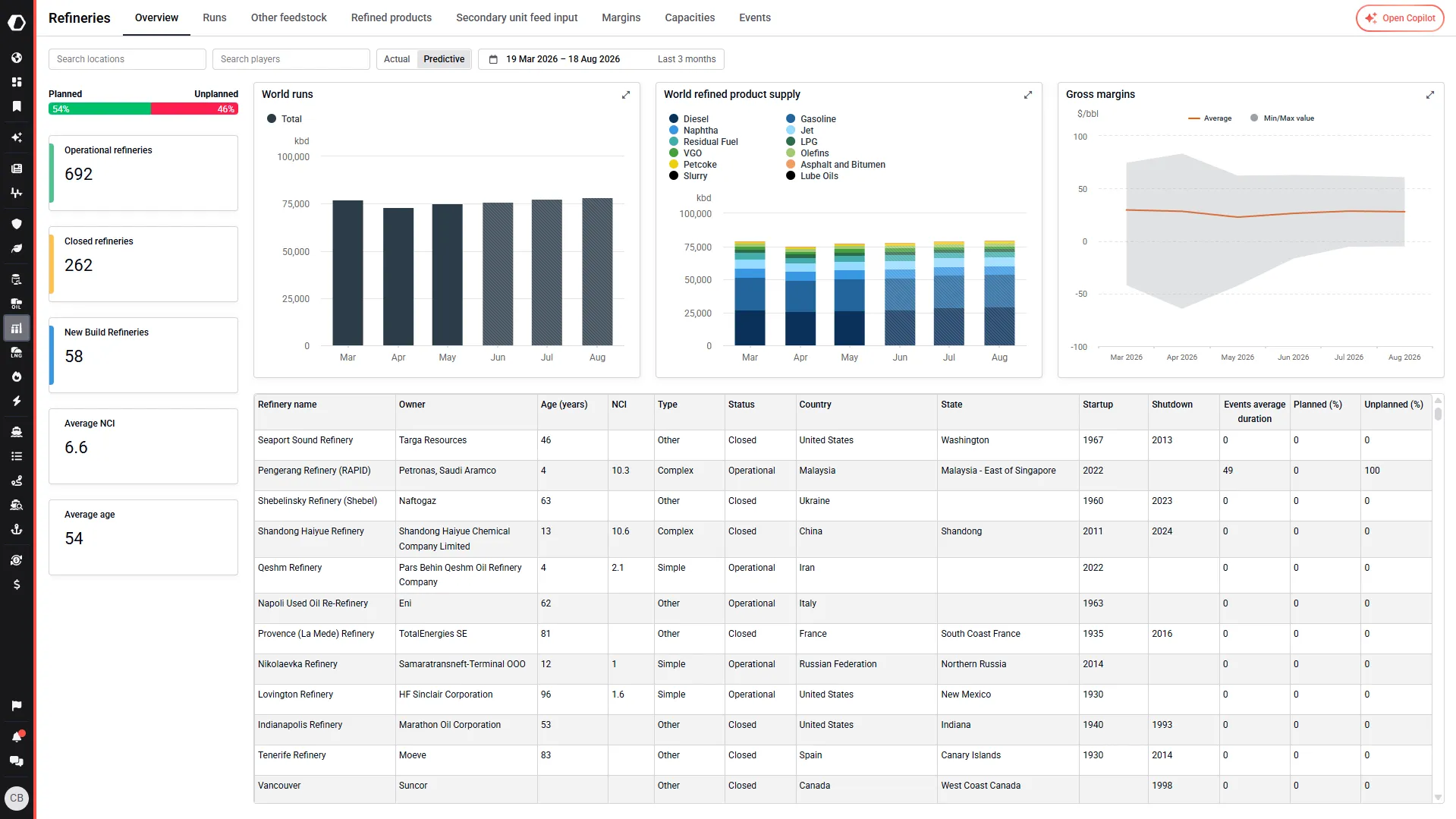
- Refinery-level visibility into crude and feedstock intake, runs, utilisation rates, and throughput trends — tracking how operational changes impact product output, margins, and supply balances
- Secondary unit feed inputs and upgrading capacity across cokers, hydrocrackers, and FCC units
- Refined product output tracking across gasoline, diesel, and fuel oil — linking feedstock inputs, refinery runs, and yields to downstream supply analysis
- Gross margin calculations per refinery — enabling direct comparison with proprietary margin models and supporting refining economics analysis

“Best part? Kpler dashboards. I set up my metrics once, and they update in real-time. I can access the latest insights instantly.”


.jpeg)
FAQ
Fuel oil and residual markets refer to the “bottom of the barrel” products produced during the refining process. These include high sulphur fuel oil (HSFO), low sulphur fuel oil (LSFO), very low sulphur fuel oil (VLSFO), and straight run fuel oil (SRFO), as well as related heavy products like bitumen and refinery feedstocks.
These markets are critical for marine fuels, power generation, industrial use and refining processes, and are heavily influenced by refinery configurations, blending economics and global trade flows.
Kpler provides highly granular cargo tracking across global fuel oil and residual markets. Users can monitor how products move between refining hubs, storage locations and demand centers.
Coverage includes:
- HSFO, LSFO and VLSFO cargo movements
- Straight run fuel oil (SRFO) flows
- Blending components and cutter stocks
- Regional export hubs such as Singapore, the US and the Middle East
This enables users to understand real-time supply dynamics, arbitrage flows and regional imbalances.
Kpler tracks the full spectrum of fuel oil and residual products, including:
Fuel oils:
- HSFO (High Sulphur Fuel Oil)
- LSFO (Low Sulphur Fuel Oil)
- VLSFO (Very Low Sulphur Fuel Oil)
- Straight Run Fuel Oil (SRFO)
Refinery feedstocks and intermediates:
- Vacuum Gasoil (VGO)
- Heavy Gasoil
- Coker Gasoil (CGO)
- Hydrocracker Bottoms (HCB)
- Slurry and Carbon Black Feedstock (CBFS)
- Cutter stocks
This level of detail helps users understand blending strategies, upgrading capacity and refining economics.
Yes. Kpler provides extensive coverage of bitumen and asphalt markets, including multiple grading systems such as:
- PEN (penetration grades)
- VG (viscosity grades)
- PG (performance grades)
- Paving grades
This allows users to track how residual products are used across construction, infrastructure and industrial supply chains.
Kpler’s Fuel Oil & Residuals Supply & Demand data provides a structured view of market balances across regions and timeframes.
Users can:
- Track monthly supply and demand balances
- Analyze regional and global market trends
- Monitor inventory levels and stock changes
- Evaluate long-term outlooks and price forecasts
This helps identify where markets are tightening, oversupplied or shifting due to trade and refining dynamics.
Kpler freight analytics connect cargo flows with vessel activity, giving users a detailed understanding of how fuel oil is transported globally.
Users can:
- Track 9,900+ vessels carrying fuel oil and residual products
- Analyze vessel movements by location, ownership, and status
- Monitor whether vessels are laden, ballast or idle
This helps assess shipping capacity, freight costs and trade route dynamics.
Yes. Kpler provides real-time visibility into port congestion and canal traffic, including:
- Vessel queues at key terminals
- Waiting times at ports and canals
- Operational bottlenecks affecting shipments
This helps traders and logistics teams anticipate delays, cost increases and disruptions to fuel oil supply chains.