

Lame duck or angry duck: Trump's foreign-policy gamble before January
The Democratic sweep has weakened Trump's political leverage but left him with a narrow window to pursue consequential foreign-policy decisions before the new Congress takes office in January. With the Iran war and rising energy prices fueling voter discontent, the administration faces mounting pressure to find an off-ramp in Iran, growing resistance to its approach toward Russia, and a potential opportunity to refocus its foreign-policy agenda on Cuba.
Lame Duck or Angry Duck: Trump's Foreign-Policy Gamble Before January
The Democratic sweep of both chambers of Congress in the November 2026 midterm elections marks a significant shift in Washington’s political landscape. The outcome reflects growing dissatisfaction with the Iran war and mounting cost-of-living pressures, exacerbated by rising energy prices and the inflationary effects of the administration’s tariff policies. Together, these factors have heightened voter concerns about the domestic economic consequences of US foreign and trade policy. Yet while the election delivered a clear political rebuke to the administration, it does not necessarily signal a more restrained foreign policy. As former New Jersey Governor Chris Christie warned in the Financial Times, Trump is “more likely to turn into an angry duck” than a conventional lame-duck president.
Iran may be the first test of that warning. In September, Trump predicted the war would end shortly after the midterms, arguing that Tehran was prolonging the conflict to influence the election. Now, Vice President Vance, a potential 2028 presidential contender, has declared that “the reason we lost is the war,” while Trump has been more measured, acknowledging that “Iran was a piece of it.”
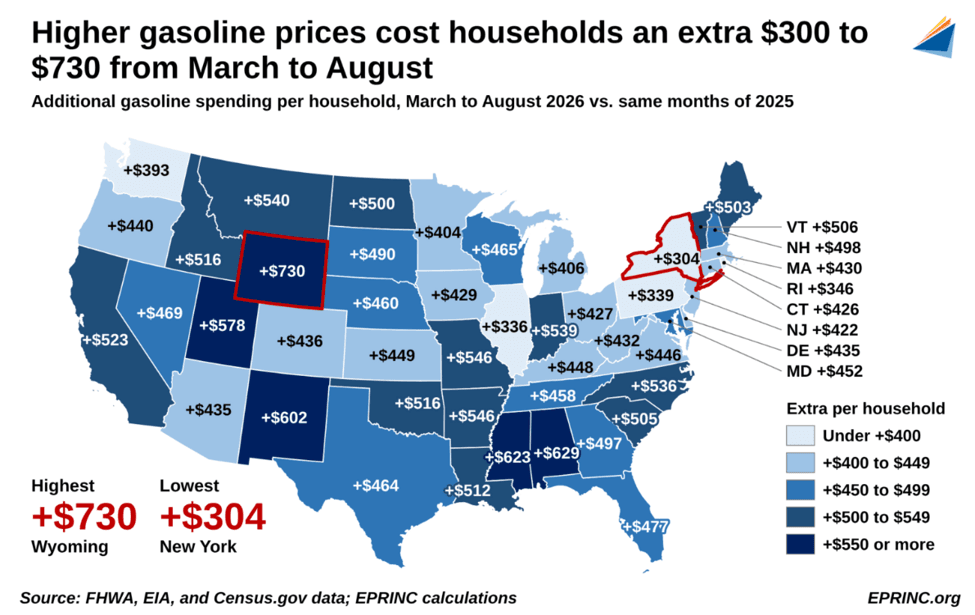
A settlement with Iran on Washington's terms alone appears increasingly difficult to secure, yet Republicans face mounting pressure to find an off-ramp ahead of 2028. The economic consequences are already significant. According to EPRINC's November 2026 analysis, US gasoline prices rose nearly 40% between February and August, adding an estimated $304–$730 to household gasoline expenditures over March–August compared with the same period in 2025, depending on the state. The burden has fallen disproportionately on lower-income households, intensifying affordability pressures. With the global economy already showing signs of weakness, further energy supply disruptions, particularly in refined products, would compound these pressures.
November 2026–January 2027: The Lame-Duck Opportunity
The next two months present an unusual combination of political weakness and executive freedom. Barack Obama used the latter part of his presidency to pursue the Iran nuclear agreement and normalize relations with Cuba. Trump, whose foreign policy has frequently sought to reverse Obama's legacy, has taken a markedly different approach to both countries.
Despite the Republican defeat, Trump retains substantial executive authority and the ability to shape the narrative around his next move. Congress has limited means to compel a change in military strategy before January, leaving the president a narrow window to pursue a foreign-policy achievement before facing greater congressional scrutiny and potential funding constraints.
Iran: The Clock Is Ticking
Trump faces mounting pressure to bring the war to an end, but Tehran has little incentive to make concessions simply to accommodate Washington's political timetable. Three possible paths remain, none without significant risks.
1. Diplomatic settlement: As outlined in my November 2 analysis, Iran's seven demands remain far removed from Washington's requirements, particularly over sanctions relief, nuclear concessions and the sequencing of a Hormuz reopening. A comprehensive agreement remains difficult to envisage.
2. Strike Pickaxe Mountain and exit: Trump could authorize a strike against the nuclear facility and declare victory. As with the US strikes on Iranian nuclear facilities in June 2025, Tehran could respond with a calibrated attack on an evacuated US base, allowing both sides to claim victory while providing a face-saving off-ramp. Washington could maintain formal oil sanctions while lifting the naval blockade, allowing Iranian exports to increase through existing trade channels without formally removing sanctions.. The risk is that Iran retaliates more forcefully, triggering renewed regional escalation.
3. Prolonged stalemate: Neither side compromises, leaving the blockade and Hormuz restrictions in place. This would sustain the economic and military costs of the conflict, with a Democratic Congress increasingly positioned to challenge additional funding from January.
My View: A limited strike followed by an exit offers Trump a politically more straightforward off-ramp than accepting Iran's demands or sustaining an expensive stalemate. It would allow him to claim victory without making significant concessions. But it is also a dangerous gamble, dependent on Tehran responding with restraint. With Iran potentially calculating that time is on its side and congressional constraints approaching, Trump's window to end the conflict is narrowing.
Russia: Trump's Opening to Putin Faces a Political Reckoning
Trump's efforts to broker a Russia–Ukraine peace deal face growing political resistance. His accommodation of Moscow has drawn bipartisan criticism, and the Democratic victory further limits his leverage to pressure Kyiv into accepting Russian terms. With Europe asserting a greater role in negotiations, Trump's diplomatic initiative risks losing momentum or being sidelined altogether.
Meanwhile, the war continues. Russia's latest attacks on Ukrainian energy infrastructure have caused widespread power outages, while Ukrainian strikes on Russian refineries, including Yaroslavl on November 3, continue to constrain Moscow's fuel production. Allegations of Russian hybrid operations across Europe have further complicated the diplomatic environment, reinforcing European concerns about Moscow's intentions.
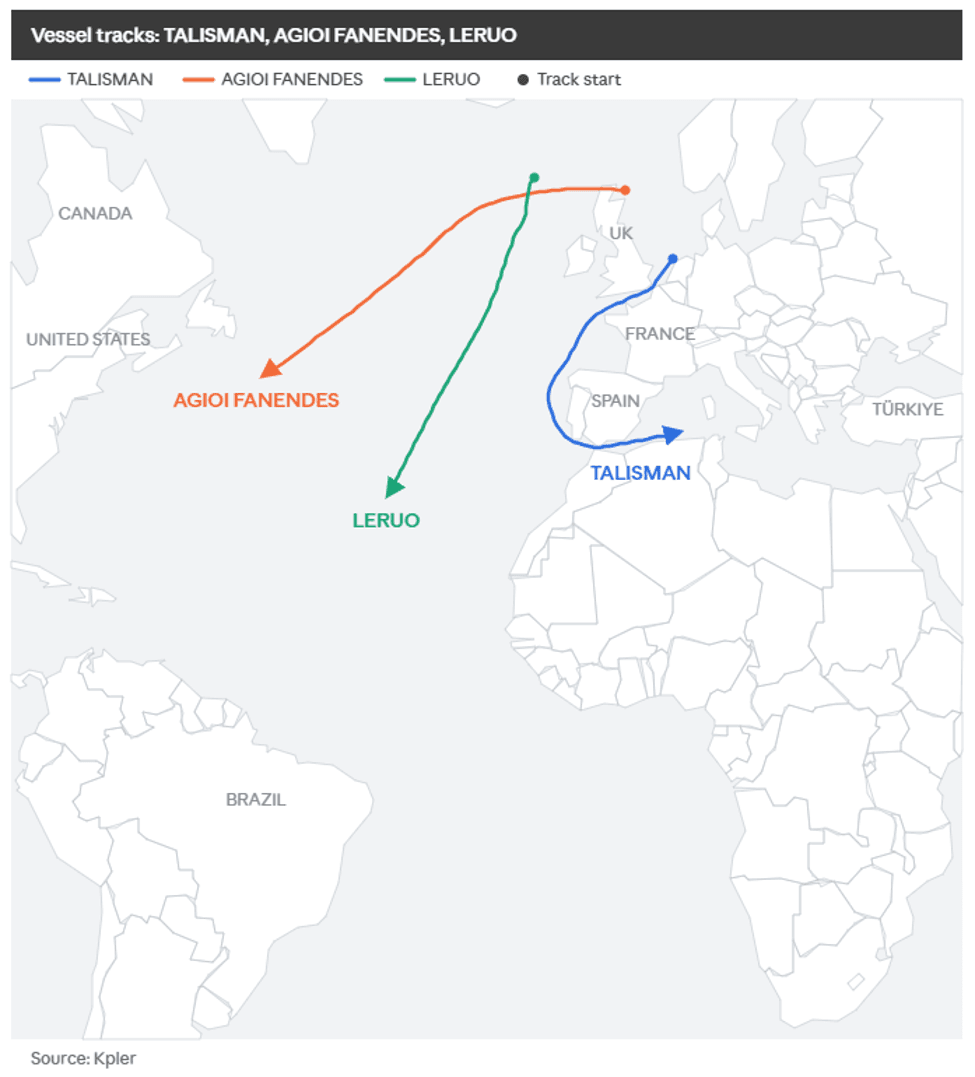
The energy dimension adds another layer of controversy. Just weeks after signing the Lindsey Graham sanctions legislation, Trump authorized Russian diesel imports to ease soaring US fuel prices, yet the promised barrels have largely failed to materialize. The Agioi Fanendes, carrying roughly 40,000 tonnes of Russian diesel, remains a potential US-bound shipment but could still divert. Meanwhile, US distillate inventories have fallen below 100 million barrels and global diesel volumes on water continue to decline. Russia's damaged refining capacity and high freight costs limit its ability to alleviate the global shortage, while the US remains a major diesel exporter.
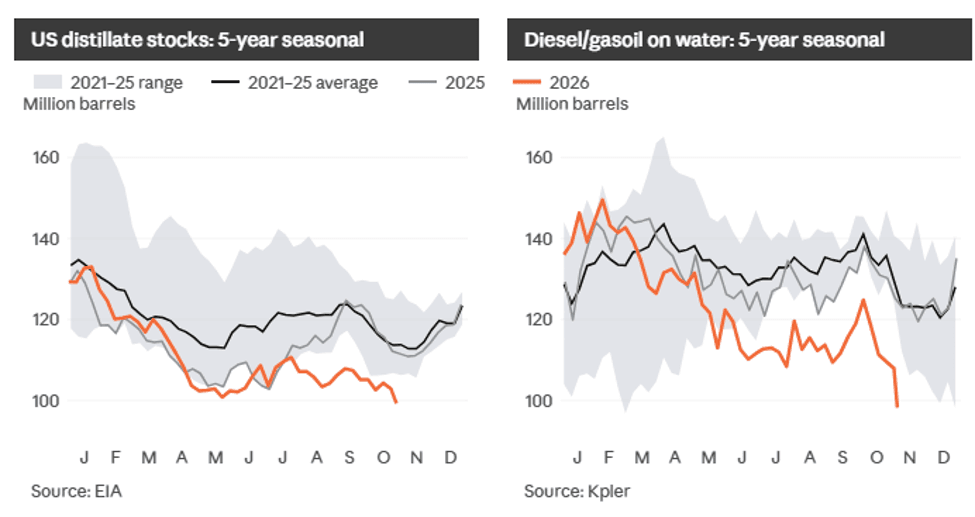
My View: The election has narrowed Trump's room to accommodate Moscow, but tougher energy sanctions may prove to be equally difficult to justify politically. They risk raising consumer prices while redirecting discounted Russian barrels toward China. With Democrats preparing to increase oversight and support for Ukraine, Trump's diplomatic options become increasingly constrained. His Russian diesel agreement illustrates the dilemma: a politically costly initiative that has yet to deliver meaningful price relief, while doing little to address the underlying global diesel shortage.
Trump’s Next Target: Cuba
Cuba may offer Trump an opportunity to get his foreign-policy agenda back on track. His 2025 National Security Strategy prioritizes the Western Hemisphere, yet the administration has devoted enormous resources to a war in Iran. Meanwhile, just 90 miles from Florida, Cuba is facing its worst economic crisis in decades.
Months of restrictions on oil deliveries have effectively severed Cuba's Venezuelan oil lifeline, deepening fuel shortages, blackouts and economic hardship. Unlike Iran, Cuba has no land borders, making a maritime blockade easier to enforce. Limited fuel imports through private businesses have provided some relief, but the government remains under enormous pressure.
The question is whether Trump attempts a Venezuela-style intervention or uses that pressure to negotiate political concessions. Cuba's entrenched security apparatus makes a rapid transition far from certain, while military intervention risks triggering instability, mass migration and a humanitarian crisis close to US shores.
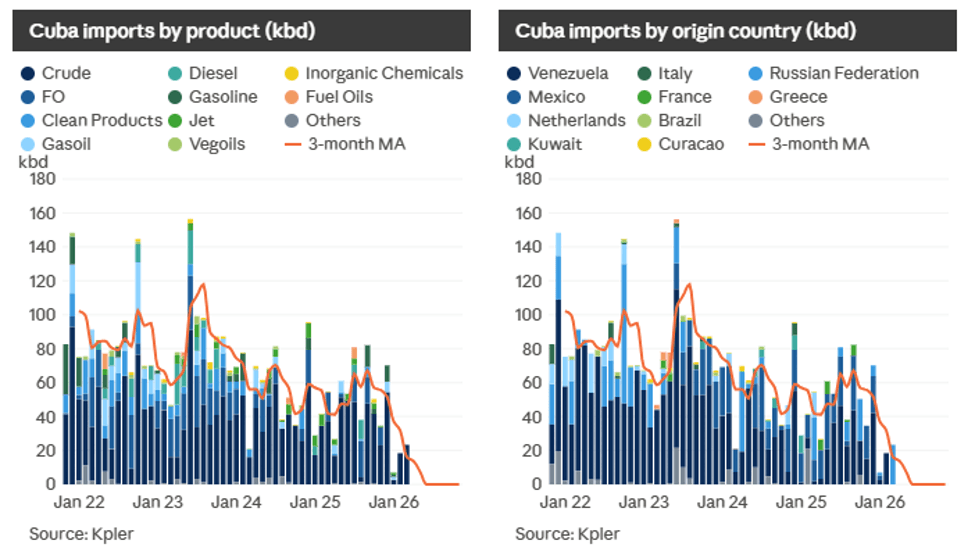
My View: Cuba may be Trump's next move as he seeks to return to his Western Hemisphere agenda. The blockade has increased Washington's leverage without producing political change, and Cuba's economic collapse should not be mistaken for the government's imminent collapse. But the administration has shown a willingness to pursue unconventional arrangements, and an outcome need not resemble either Obama's normalization or the intervention in Venezuela. A deal that expands private enterprise, restores some fuel supplies and secures limited political concessions while leaving the existing government in place could give both sides a way forward. Whether Havana would accept such terms remains uncertain, but this administration's willingness to enlist private industry in solving political problems suggests that any breakthrough may look very different from the diplomatic approaches pursued by Obama or previous administrations.
The January Constraint
Democratic control of Congress will not end Trump's foreign-policy authority, but it will introduce new political constraints. With voters focused on inflation and the cost of living, Democrats will face pressure to challenge costly military engagements while avoiding measures that further disrupt energy supplies.
Trump may be entering the lame-duck phase of his presidency, but a lame duck is one thing; an angry duck is another. As Chuck Rhoades observed in Billions, “The most dangerous man is the one who has nothing left to lose.” With two months before the new Congress takes office, Trump's political leverage may be diminished, but his capacity to make consequential foreign-policy decisions remains largely intact.

See why the most successful traders and shipping experts use Kpler