
Middle East conflict - gas market implications: a continuing assessment
The ceasing of LNG transit through the Strait of Hormuz has resulted in approximately 20% of global LNG supply coming from Qatar’s 77 mpta Ras Laffan and UAE’s 5.8 mtpa Das Island plants being shut-in, and the market is still absorbing the shock. Qatar’s Ras Laffan this week shutdown operations and is issuing force majeure notices to buyers. Gas prices in Europe and Asia have surged roughly 65% since the disruption began, reaching their highest levels since March 2023. This is not a sentiment-driven spike - it reflects a genuine physical supply shortfall that will take weeks to resolve. Our near-real-time flow and vessel-tracking data confirm the scale and persistence of the shortfall.
What has been taken offline?
Qatar, the world's second-largest LNG exporter, has declared force majeure following drone attacks on its facilities. UAE’s Das Island is being closely monitored and faces the risk of being shutdown due to tank topping.
Exports through the Strait of Hormuz have ceased entirely.
Key infrastructure affected
The combined effect is the removal of approximately 5.8 million tonnes of Middle Eastern LNG supply in March alone - equivalent to roughly 14% of the original global monthly forecast.
Current vessel situation
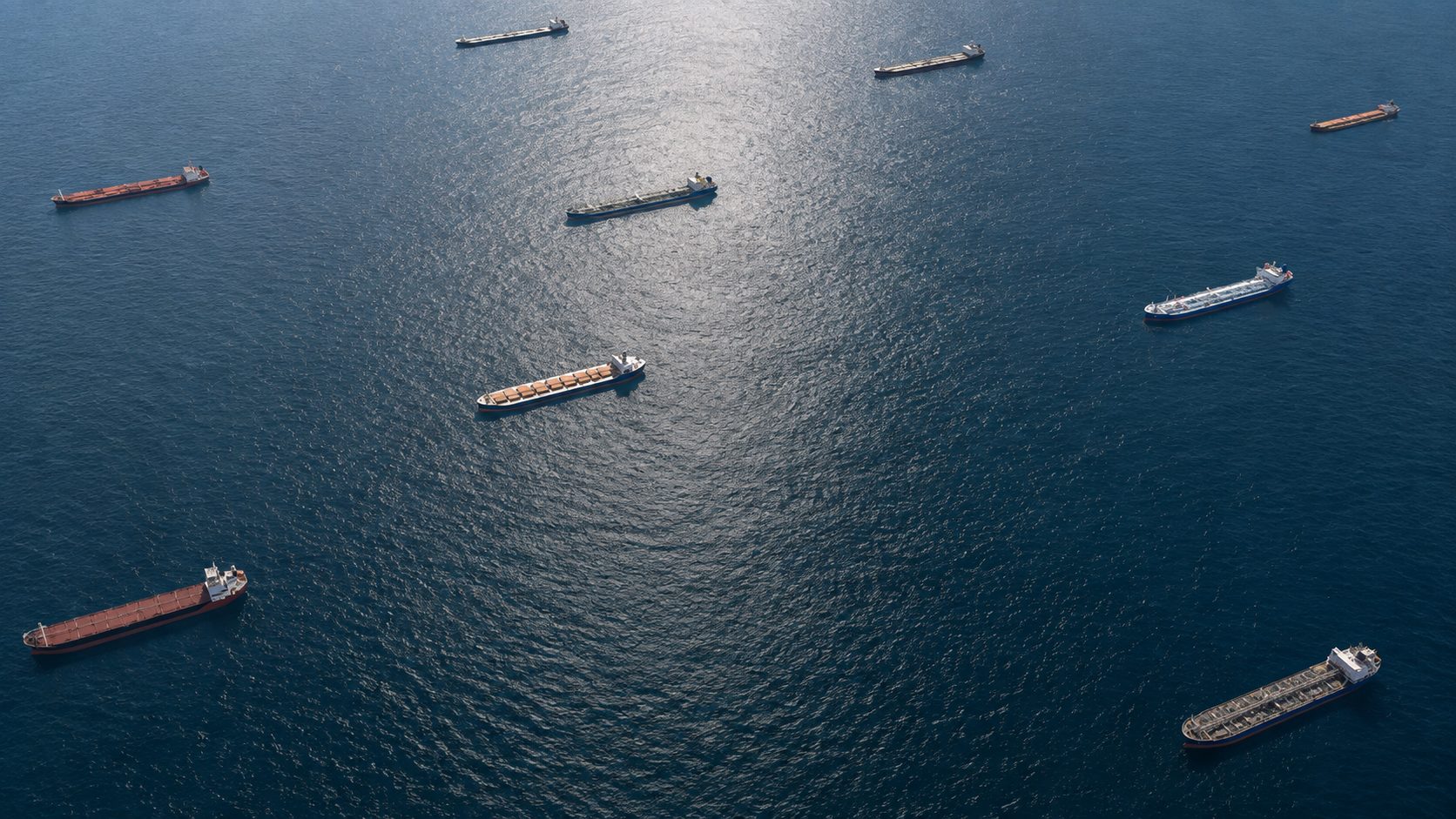
- Approximately 25 ballast vessels have formed a buildup southeast of the Gulf of Oman, waiting to access the region
- A smaller number of laden vessels from Qatar and the UAE remain positioned west of the strait, unable to reach end-user destinations in Asia.
Can global supply fill the gap?
The instinctive market question - can other LNG exporters ramp up to cover the loss? - has a clear answer: not at this scale, and not quickly.
- The United States and Australia already operate at high utilisation rates
- Nigeria, Algeria, and Trinidad face feed gas availability constraints, not liquefaction capacity limits
- Realistic supplementary supply from all alternative sources totals under 2 million tonnes, against a 5.8 million tonne monthly shortfall
Atlantic Basin cargoes are already diverting toward Asia, compressing volumes available to Europe and pushing Asian spot prices sharply higher.
Regional impact assessment
South Asia: the market's shock absorber
South Asian buyers bear the greatest immediate risk and will function as the primary demand adjustment mechanism for the global market.
- Pakistan sources approximately 99% of LNG imports from Qatar
- Bangladesh sources around 70% from Qatar
- India sources approximately 50% from the Middle East
Both Pakistan and Bangladesh operate under strict affordability constraints with limited domestic storage - estimated at one to two weeks of cover. The result is demand destruction, not aggressive spot purchasing. Expected outcomes include power sector load shedding in Pakistan, industrial gas supply cuts in Bangladesh, and selective demand reductions of 5-10% in India's industrial sector. At a sustained $15/MMBtu price environment, South Asian demand destruction of approximately 4 million tonnes is anticipated.
Southeast Asia: procurement delays, not immediate cuts
Southeast Asian buyers - including Singapore, Thailand, and Vietnam - sit between the immediate vulnerability of South Asia and the structural resilience of Northeast Asia. Both Singapore and Thailand benefit from flexible power systems that can switch between gas, coal, and oil. The expected response is procurement delay rather than physical demand destruction, with cumulative demand reductions of 2-4 million tonnes plausible at the $15-$20/MMBtu range.
Northeast Asia: insulated for now, exposed to price
Japan, South Korea, and China collectively account for more than half of global LNG imports, but their direct reliance on Qatari and UAE supply is comparatively limited.
Japan and South Korea held sufficient stocks at end-February to cover weeks of total supply loss. China's diversification across Russian and Central Asian pipeline gas, domestic shale production, and a broad supply portfolio provides meaningful structural flexibility. However, in absolute volume terms, a sustained $15/MMBtu price environment could reduce Chinese LNG demand by close to 10 million tonnes against a pre-crisis baseline of approximately 70 million tonnes for the year.
Europe: indirectly exposed, but acutely vulnerable
Europe imported just 9.2 million tonnes from Qatar last year - approximately 8% of total LNG imports - but this masks significant concentration. Italy holds a long-term supply agreement with Qatar approaching 5 million tonnes annually. LNG now accounts for approximately 50% of Europe's total gas imports, and European gas storage is currently at approximately 30% capacity - the lowest level since 2022.
The risk to Europe is not primarily the volumes it imports from Qatar. It is competition for replacement supply during a critical restocking window against a backdrop of already depleted storage. Qatari entities also hold significant regasification terminal capacity in the UK - including major positions at South Hook and the Isle of Grain - as well as capacity at Montoir in France.
Egypt, Jordan, and Turkey: collateral damage via pipeline
Israel has cut pipeline gas deliveries to Egypt and Jordan. Egypt has issued a tender for three replacement LNG cargoes in March (approximately 0.2 million tonnes) and is importing fuel oil from Russia as a substitute for gas in the power sector. Turkey imports approximately 8 billion cubic metres per year of gas from Iran via pipeline, with no confirmed supply disruptions reported to date.
Cargo diversions and trade flow shifts
Three confirmed LNG cargo diversions have shifted from European to Asian destinations - approximately 0.2 million tonnes of redirected supply. This is a rational commercial response to the widening arbitrage between the Atlantic and Pacific Basins. For Europe, it means direct competition for the same limited pool of replacement cargoes.
Implications for traders and decision-makers
LNG buyers and portfolio managers should set aside any assumption that spot cargoes can be readily procured at competitive prices. Competition from Northeast Asian buyers seeking supplementary supply will keep spot prices elevated, and diversification of term supply with proactive cargo scheduling is now an essential risk management priority.
European gas market participants face a storage refill season at risk. Low starting inventories, redirected Atlantic Basin cargoes, and competition for limited incremental supply create a scenario where Europe may enter the 2025/26 winter with materially lower storage than currently expected. Price risk for Q3 and Q4 is significantly elevated.
Commodity risk teams should model trade flow shifts under $15-$20/MMBtu price scenarios rather than assuming a rapid return to pre-crisis levels.
Timeline for resolution
The base case assumes a two-to-three week physical disruption, followed by gradual resumption of Qatari exports towards the end of March as safe passage through the Strait of Hormuz is restored. Even under this optimistic scenario, March exports will be severely curtailed, April will carry residual impact, and prices above $10/MMBtu will suppress Asian demand for months beyond the immediate disruption.
The restart of Ras Laffan will not be instantaneous. Plant cool-down, first LNG production, and return to full throughput require approximately two weeks from the point that safe passage is confirmed. If the conflict extends beyond two to three weeks, the assumptions underlying current market pricing will need fundamental revision.
Key takeaways
- The ceasing of LNG transit through the Strait of Hormuz and Qatar's Ras Laffan shutdown has removed approximately 5.8 million tonnes of LNG supply in March alone - roughly 14% of the original global monthly forecast
- Pakistan and South Asia broadly will absorb most of the near-term adjustment through demand destruction rather than spot market replacement
- Europe's core risk is competition for replacement Atlantic Basin supply during a critical low-storage restocking window
- Global alternative LNG supply is limited to under 2 million tonnes against a 5.8 million tonne monthly shortfall
- At sustained $15/MMBtu prices, annual demand destruction across Asia could reach 4-10 million tonnes depending on region
- The global gas market entered this crisis in a structurally tight position with limited margin for prolonged disruption
Frequently asked questions
What are the immediate effects of the Qatar LNG shutdown? The removal of approximately 5.8 million tonnes of LNG supply in March, a 65% increase in gas prices across Europe and Asia, and the trapping of laden vessels inside the Strait of Hormuz.
Which countries are most affected? Pakistan and Bangladesh face the most severe immediate impact due to their heavy reliance on Qatari LNG. But China and India import the most Qatari LNG on a volumetric basis.
Can other exporters make up for the lost supply? No. Realistic supplementary supply from all alternative sources totals under 2 million tonnes against a 5.8 million tonne monthly shortfall.
How long will the disruption last? The base case assumes two to three weeks of physical disruption. Even after safe passage is restored, Ras Laffan requires approximately two weeks to return to full operational throughput.
Market insights you can actually trust
Kpler delivers unbiased, expert-driven intelligence that helps you to track critical LNG market developments for your own analysis. Our precise forecasting empowers smarter trading and risk management decisions. In times of conflict and geopolitical uncertainty, our real-time data keeps you ahead of supply disruptions and price volatility.
Unbiased. Data-driven. Essential. Request access to Kpler today.

See why the most successful traders and shipping experts use Kpler