Selective tanker exits: AIS masking and blockade reversals in the Strait
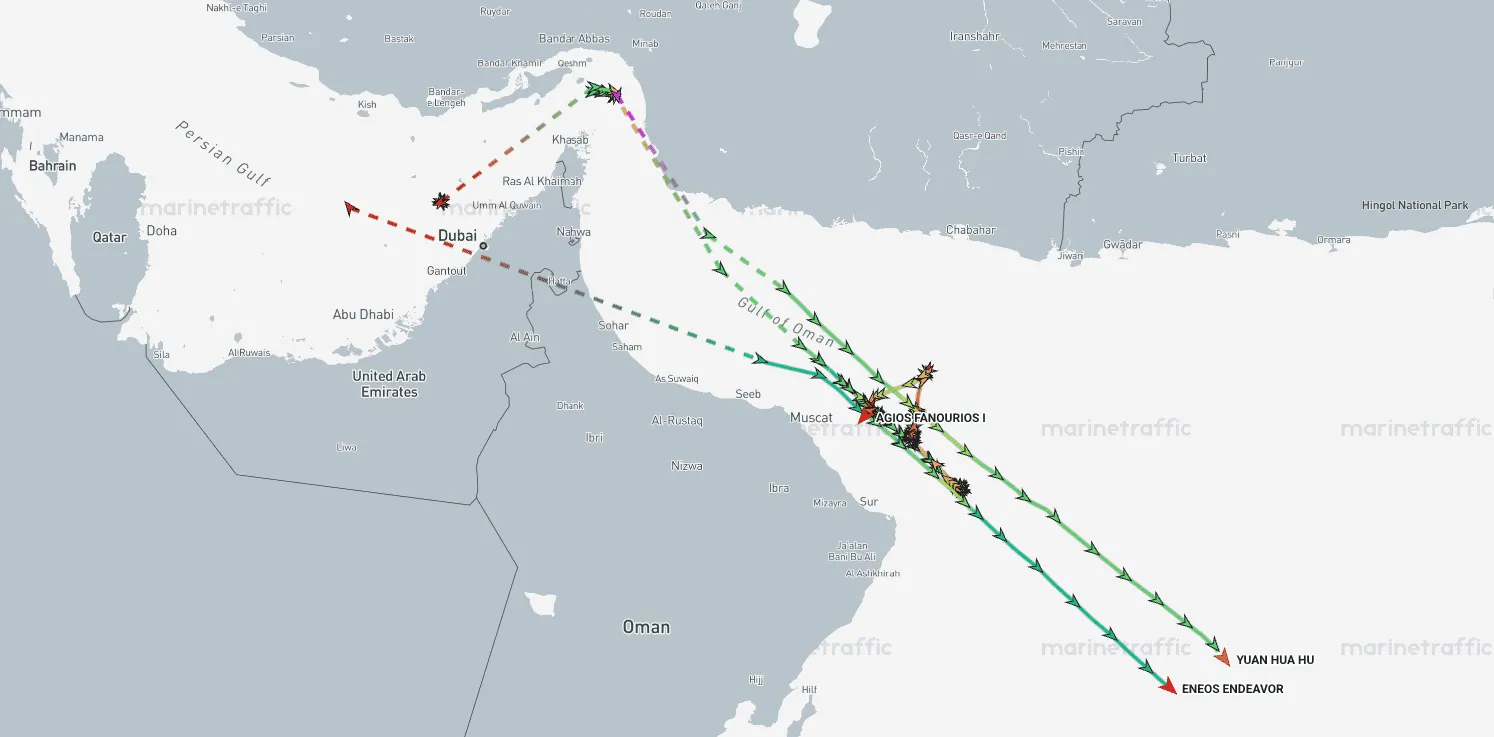
Tanker movements resume in the Strait of Hormuz amidst Iranian claims of "managed protocols." While the Eneos Endeavor and Yuan Hua Hu successfully cleared the Gulf using tactical AIS deactivation, other vessels like the Agios Fanourios I were forced into U-turns by the US blockade. The divergence in transit success highlights the volatile security landscape facing Asian refiners.
Iranian semi-official Fars News Agency reported on Thursday that the country allowed approximately 30 vessels to transit the Strait of Hormuz in accordance with "Iranian management protocols" a move following diplomatic requests from Beijing to facilitate shipping for strategic partners. While the full identity of all vessels has not been released, Kpler identified transit of 11 vessels, including 5 LPG tankers and 2 VLCC crude tankers. With possible case of vessels transiting without AIS signals, we may identify more vessels later.
Japanese Crude Carriers: Rare Transits
Japanese refiner Eneos has confirmed that the VLCC Eneos Endeavor successfully cleared the Strait on Thursday. This marks only the second Japanese crude carrier to transit the waterway since the conflict began in late February, following the Idemitsu Maru in April.
- Logistics & Cargo: The vessel is carrying approximately 1.2 million barrels of Kuwaiti crude and 700,000 barrels of Emirati (Das) crude, loaded in late February and stranded inside the Gulf for over two months.
- "Dark" Passage: Unlike the Idemitsu Maru, which broadcasted its position throughout its transit, the Eneos Endeavor deactivated its AIS transponder on 9 May near the Dubai Lightering zone. It reappeared off the coast of Muscat, Oman, on the evening of 13 May, providing no public record of its specific route through the Strait.
- Current Status: The vessel has reached the Arabian Sea, successfully clearing the US blockade line, and is currently signaling as Kiire as its destination.
Yuan Hua Hu Reaches the Arabian Sea
The Chinese VLCC Yuan Hua Hu also successfully exited the Mideast Gulf on Wednesday, 13 May. This transit coincided with a high-level summit in Beijing between US President Donald Trump and Chinese Leader Xi Jinping.
- Voyage Details: Loaded with Basrah Medium crude since early March, the vessel went dark on 9 May before reappearing near Iran’s Larak Island on 13 May. It broadcasted its position intermittently throughout its passage and has now reached the Arabian Sea.
- Destination: The vessel is currently signaling Zhoushan, China, as its destination.
Vietnamese Feedstock Crisis: The Agios Fanourios I U-Turn
In stark contrast to the successful exits of Japanese and Chinese vessels, the VLCC Agios Fanourios I was forced into a U-turn earlier this week.
- The Incident: The VLCC Agios Fanourios I loaded Basrah Medium on 17 April and approached the Strait in a similar manner to the Yuan Hua Hu on 10 May.
- The Reversal: While the vessel maintained its AIS signal throughout its passage through the Gulf of Oman, it performed a U-turn upon reaching the Arabian Sea.
- Current Status: The vessel remains idle off the coast of Muscat.
- Refinery Impact: The vessel is carrying 2 million barrels of Basrah crude destined for Vietnam’s Nghi Son Refinery, a joint venture involving Petrovietnam, Idemitsu, and Kuwait Petroleum International. According to Reuters, PV OIL has issued an urgent appeal to US authorities, warning that refinery inventories are "critically low" and that further delays risk a complete halt in throughput.
Eneos Endeavor, Yuan Hua Hu, Agios Fanourios I

See why the most successful traders and shipping experts use Kpler
.jpg)