[UPDATE] Running out of barrels: cumulative oil losses reach 430 mbbls
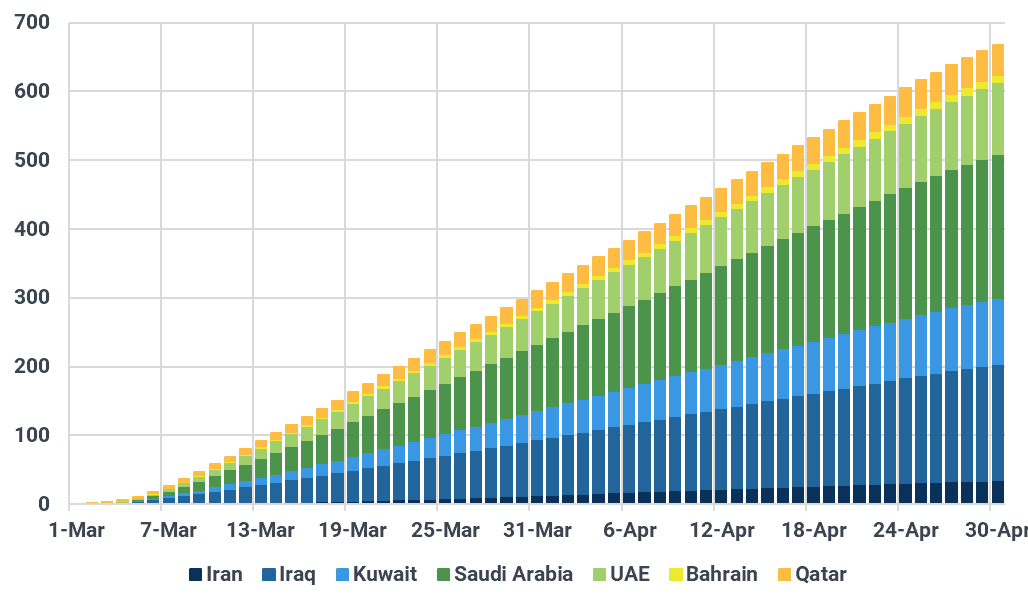
Cumulative crude and condensate supply losses in the Middle East have reached 430 mbbls, with a recent acceleration driven by Saudi Arabia, where crude supply has fallen to around 6 Mbd, underscoring the severity of ongoing disruptions in the region.
Cumulative Middle Eastern supply outages have reached 430 Mbbl as of 10 April, with disruptions continuing to build amid sustained regional pressure, while only three liquid tankers transited the Strait of Hormuz over the past two days—two carrying products and one transporting Iranian crude.
Cumulative Middle Eastern supply outages, Mbbls
Source: Kpler
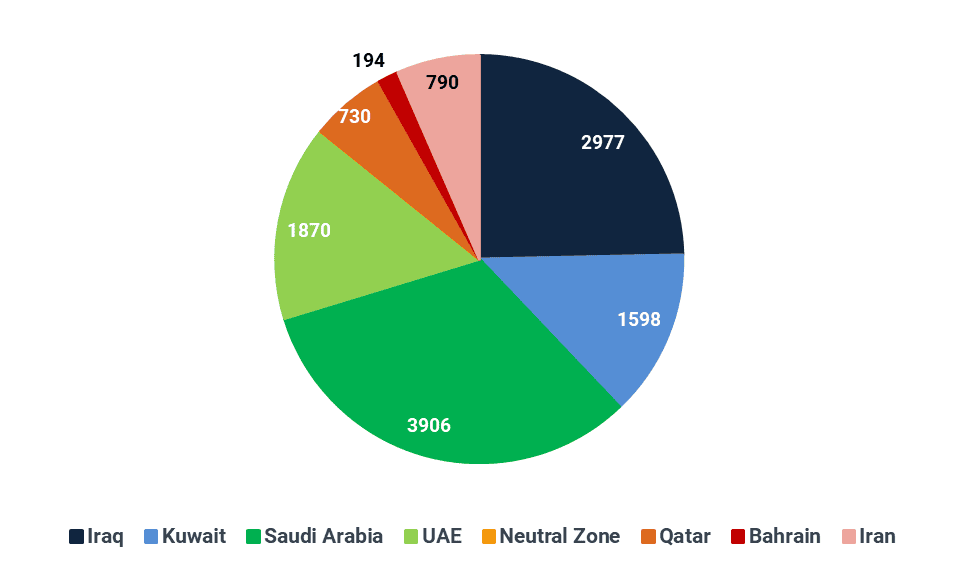
We estimate that Middle Eastern crude supply declined by an average of 9 Mbd in March compared to February levels, with a significant portion of the drop driven by Saudi Arabia, where crude output is currently hovering at only 6 Mbd, down from 10.1 Mbd in February.
Current crude and condensate supply outages by country, kbd
Source: Kpler
Notably, Iraqi crude supply has surpassed expectations, with the country's crude supply averaging around 1.55 Mbd in March. Support for Iraqi crude supply has been coming amid a ramp up domestic crude runs and crude burning, which have been hovering at elevated levels and have helped to offset disruptions partially. Despite this, Iraq’s crude production is estimated to be hovering at only 1.3 Mbd currently.
Revisions to Saudi Arabia's crude supply:
We have materially revised Saudi crude supply lower for March, with production averaging just 7 Mbd, down sharply from 10.1 Mbd in February. Current estimates indicate that Saudi output is now hovering around 6 Mbd, as ongoing attacks on oil infrastructure have further constrained the kingdom's ability to produce and export crude. The latest attacks have reportedly slashed the kingdom's crude production capacity by 600 kbd.
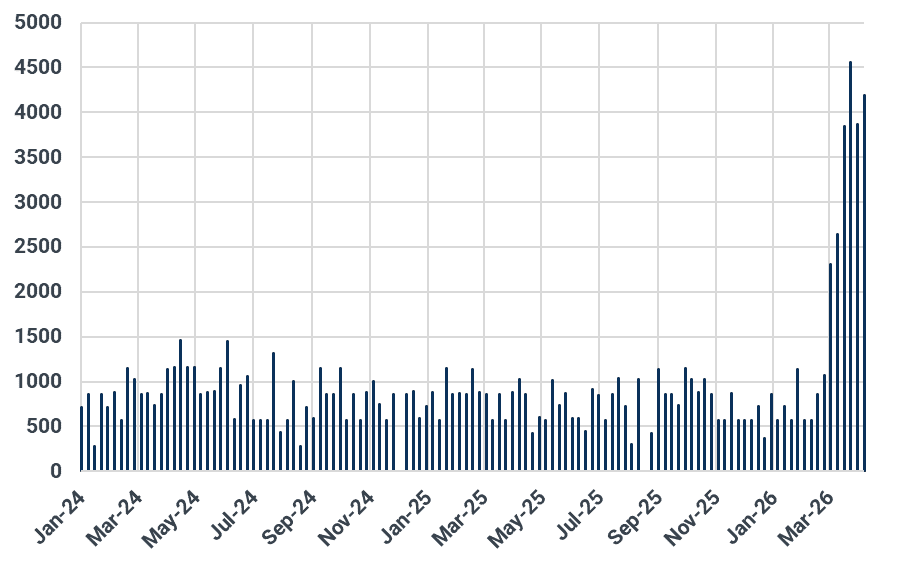
Fluctuating supply from Saudi Arabia have kept loadings from Yanbu volatile. The 10-day moving average, including intra-country flows, declined from peaks of around 4.7–4.8 Mbd in late March to approximately 4.1 Mbd at the beginning of April. While flows have begun to recover more recently—reaching 4.5 Mbd late this week—they remain below late-March levels.
Crude exports from Yanbu (excl. intra-country), kbd
Source: Kpler
That said, daily data shows several sharp spikes, with volumes exceeding 6 Mbd on four occasions so far in April, including two instances reaching 7 Mbd (1 April and 5 April). These elevated readings are not sustainable over a prolonged period, given our estimate that Yanbu’s maximum loading capacity is around 5–5.5 Mbd, suggesting the higher figures reflect timing effects across individual cargoes rather than true sustained capacity.
Market insights you can actually trust
Kpler delivers unbiased, expert-driven intelligence that helps you to track critical crude oil market developments for your own analysis. Our precise forecasting empowers smarter trading and risk management decisions. In times of conflict and geopolitical uncertainty, our real-time data keeps you ahead of supply disruptions and price volatility.
Unbiased. Data-driven. Essential. Request access to Kpler today.

See why the most successful traders and shipping experts use Kpler