Japan May–July heat and humidity lift LNG demand, inventories cap price upside
Hotter and more humid conditions in Japan are set to lift LNG demand through May–July, with Kpler Insight raising its forecast by 0.2 mt to 64.3 mt. However, healthy inventories and nuclear restarts are expected to limit incremental spot buying. As a result, Japan provides support to regional demand, but not enough to drive a sustained price rally, keeping Asian LNG prices broadly rangebound.
Market & Trading Calls:
- Japan LNG Demand: Slight increase, as forecast raised to 64.3 mt on stronger cooling demand and weaker solar output
- Asia LNG Prices: Stable near-term, as inventory levels and nuclear restarts cap near-term upside
Latest April forecasts from the Japan Meteorological Agency (JMA) maintain a 60% probability of above-average temperatures in May–June and July, alongside a 40% probability of above-normal rainfall in early summer. The combination of higher temperatures and increased humidity is expected to raise apparent temperatures to 19°C in May, 27°C in June, and 33°C in July, intensifying cooling demand. Cooling Degree Days (CDD) have been revised higher (May: 88, June: 211, July: 339), supporting stronger gas-fired power demand.
At the same time, above-normal rainfall is likely to reduce solar irradiance, with Kpler Insight estimating a ~2 TWh y/y decline in solar generation in May–June. This further increases reliance on thermal generation, supporting LNG consumption. Kpler Insight has raised Japan’s LNG demand forecast by 0.2 mt to 64.3 mt, driven by stronger cooling-related gas burn in May–July.
However, several factors will limit the impact on spot demand. The Kashiwazaki-Kariwa Unit 6 nuclear reactor has returned to commercial operation, partially offsetting incremental gas demand. Meanwhile, LNG inventories are projected to remain around 5.2 mt in May–June, easing to 4.7 mt in July, broadly in line with five-year averages. This suggests limited need for additional spot procurement in the near term, despite stronger underlying demand.
Overall, while weather conditions are supportive for LNG demand, inventory buffers and nuclear availability cap upside, preventing Japan from driving a sustained increase in Asian LNG prices. Upside risks remain if Hormuz-related supply disruptions persist or if temperatures exceed current forecasts.
Implied total LNG inventories in Japan (mt)
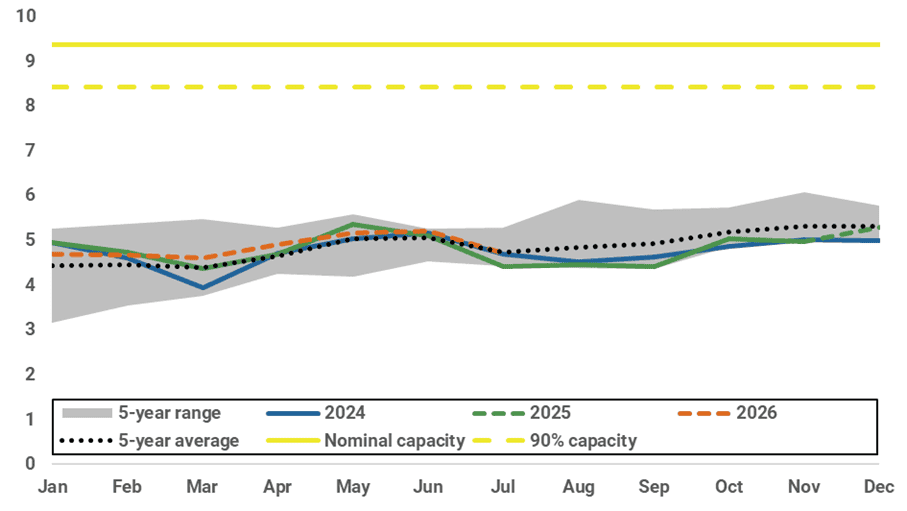
Source: METI, Kpler Insight
Population-weighted apparent temperatures in Japan (°C)
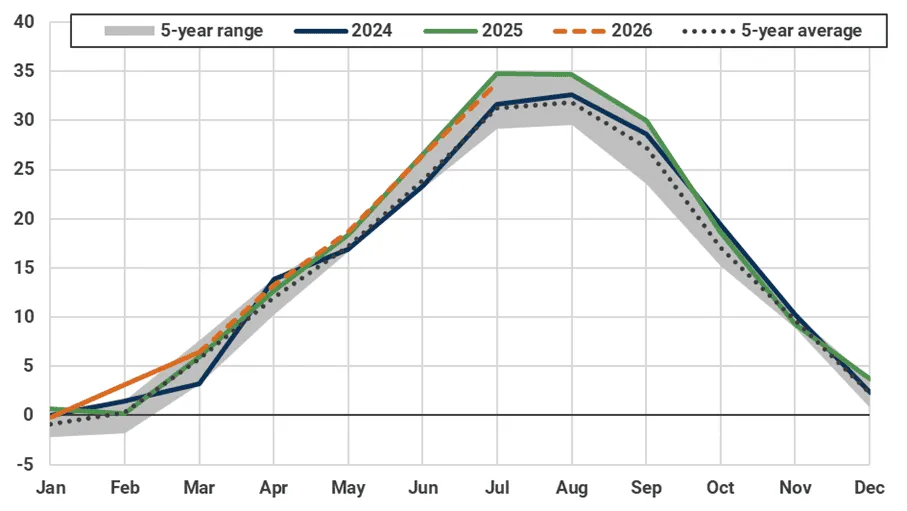
Source: Meteostat, Kpler Insight. Note: 1) Population-weighted average temperatures of selected major cities across Japan is shown for both historical and forecast. 2) Apparent temperature is how hot or cold it feels to the human body, based on air temperature and other factors such as humidity, wind, and sunlight.
Population-weighted apparent CDDs in Japan (degree-days)
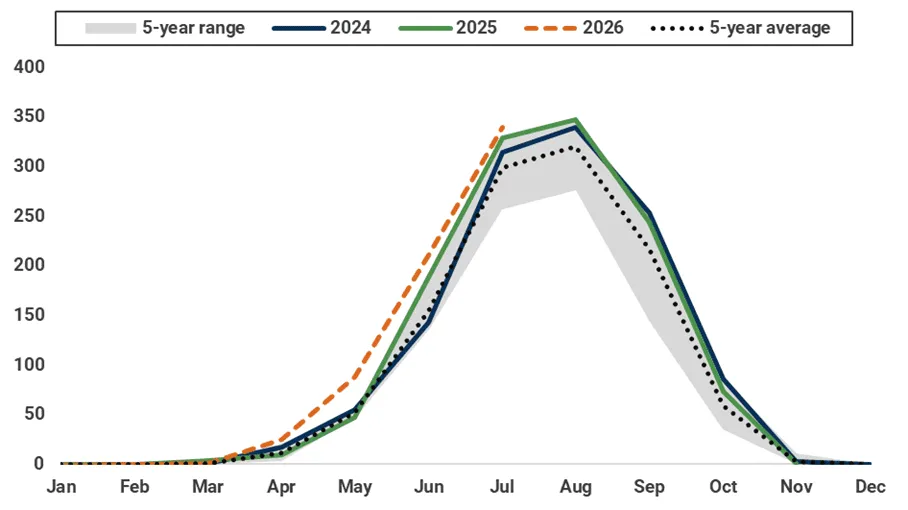
Source: Meteostat, Kpler Insight. Note: Population-weighted CDD of selected major cities across Japan is shown for both historical and forecast.
Population-weighted precipitations hours in Japan (hours)
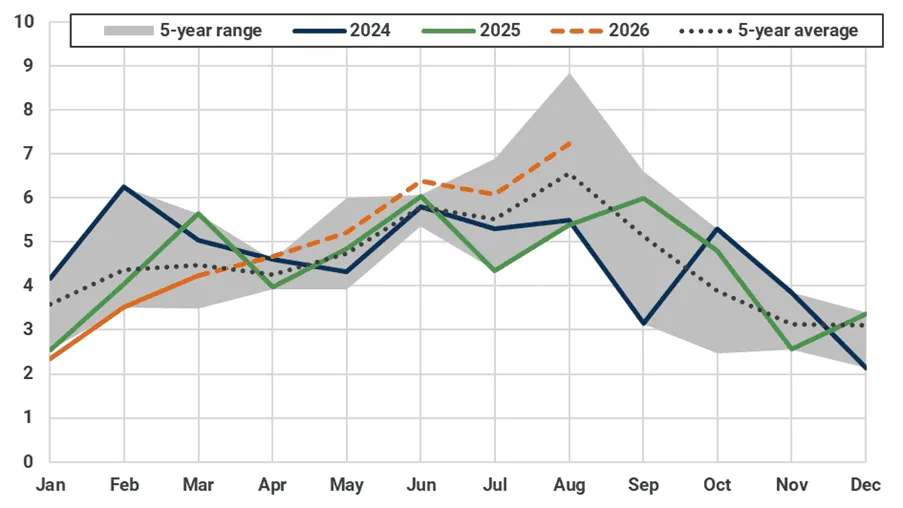
Source: Meteostat, Kpler Insight.
Year-on-year changes in power generation by fuel type in Japan (TWh)
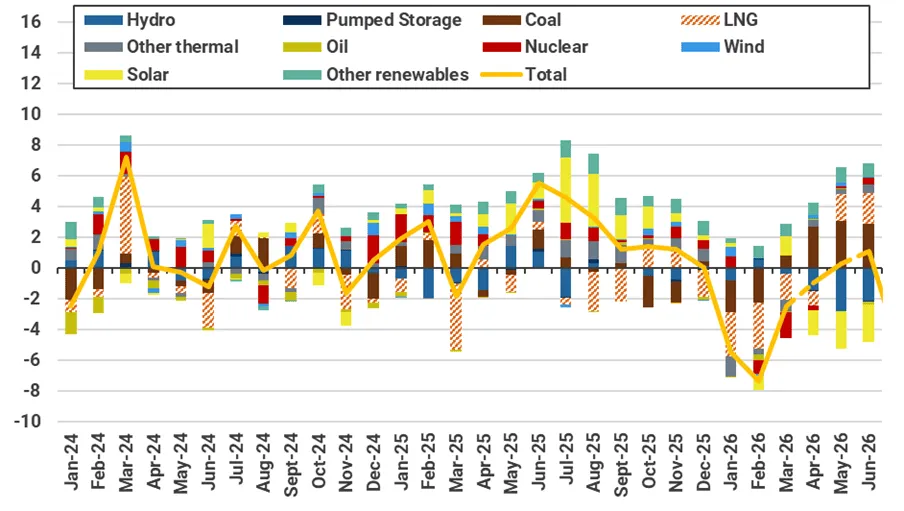
Source: Occto, METI, Kpler Insight. Note: Kpler Insight forecast starts from April 2026.

See why the most successful traders and shipping experts use Kpler