US copper cathode imports to slow in November as October beats breakbulk record
US breakbulk imports of copper cathode are on track to exceed 230kt in October, a monthly record, but Kpler expects deliveries to fall to 100kt in November now that the LME–COMEX arbitrage has closed. The pending Section 232 tariff verdict will decide whether the US draws in more copper, and what happens to the estimated 2 million tons of cathode already on US shores.
Record-breaking imports
October deliveries of copper cathode in breakbulk are on track to exceed 230kt as the month draws to a close. This comfortably surpasses the previous record of 198kt set in July and follows more than 140kt in each of August and September. Once containerised and overland trade is fully accounted for, Kpler estimates that the US will have imported over 800kt in the last 4 months, a figure on par with average annual imports prior to 2025.
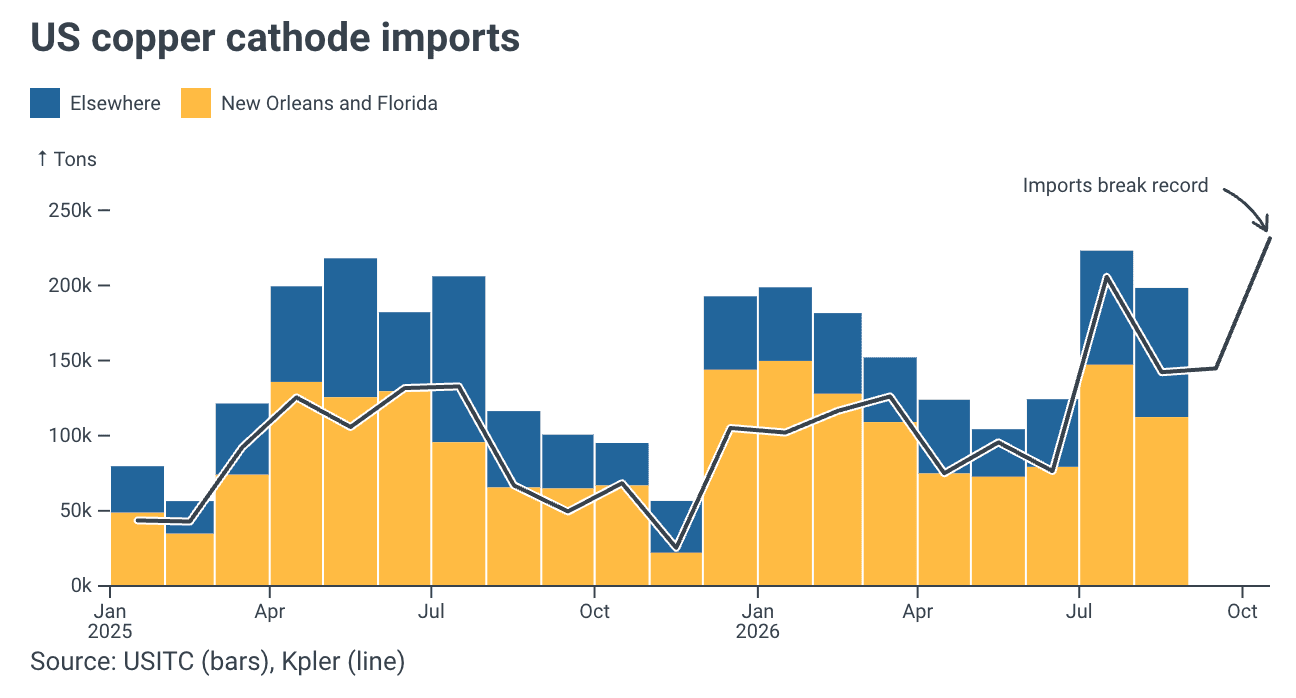
These outsized imports have been spurred by the arbitrage between LME and COMEX copper prices which averaged $500/t between May and early August, but has since narrowed to a close.
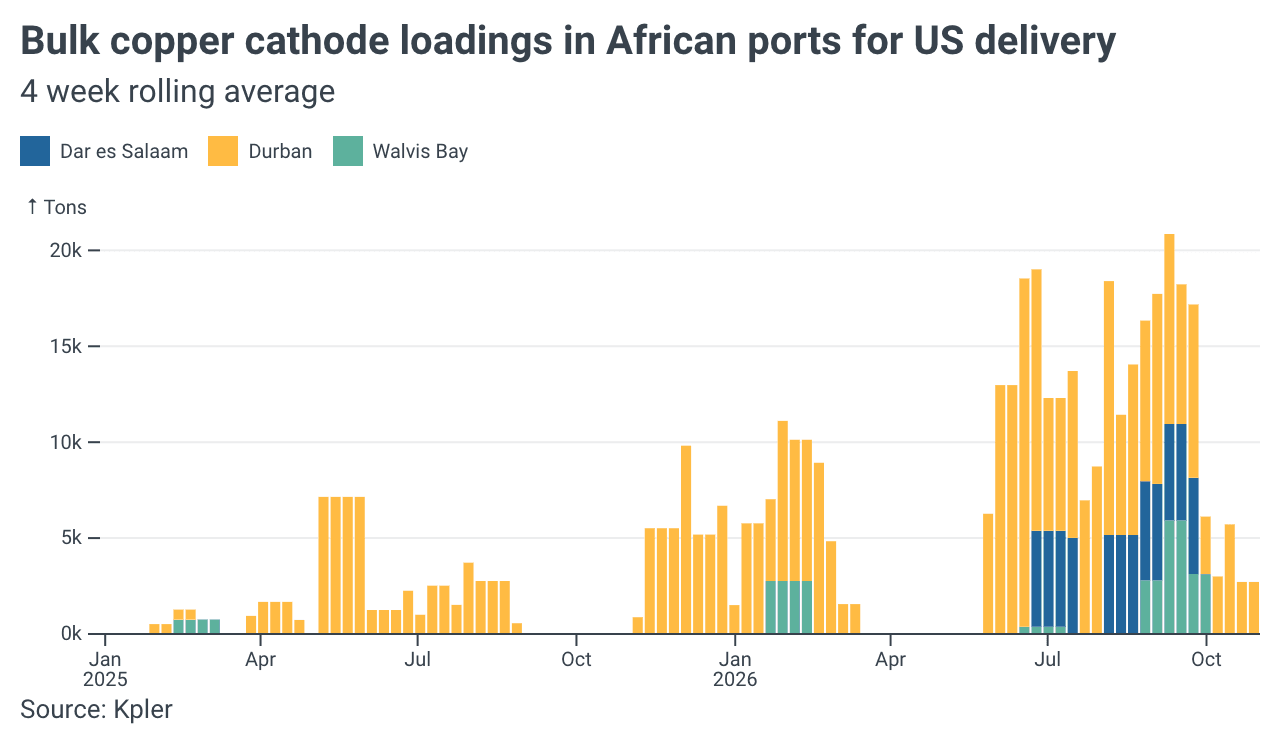
Chile has remained the primary source of breakbulk cathode deliveries in recent months, but the swing tons have come from the DRC and, to a lesser extent, Zambia, with African ports supplying 243kt since the start of July, compared to just 97kt in the first half of the year.
Loadings slow
The average voyage from Chile's port of Angamos to the US East Coast takes 3 weeks. From South Africa's Durban it's 5 and recent cargoes from Tanzania's Dar es Salaam have taken closer to 7.
As the arbitrage has narrowed so too have cathode loadings for US delivery. Kpler data shows that while tonnage continues to load in Durban, the larger shipments from Dar es Salaam and Walvis Bay that have underpinned imports in recent months have fallen to zero.
Accounting for tonnage currently on the water and that which is due to load, Kpler currently forecasts November breakbulk deliveries at 100kt. Markedly lower than recent months, but still in excess of the approximate 80kt the US requires to balance domestic supply and demand each month.
While units continue to flow, question marks linger over the verdict of the Section 232 investigation into a potential tariff on copper imports, which was launched by the White House in February 2025. If a tariff were confirmed with a long-dated implementation, the arbitrage could widen again, prompting a further push to land units in the US. However, the window would need to be several months long to enable another rush of copperbelt tonnage like that seen in recent months.
Potential relief for the Chinese market
The COMEX premium has allowed the US to pull marginal tonnage away from China, the world’s largest copper consumer. Chinese imports of Chilean cathode have fallen from 48kt per month in 2024 to around 15kt since the arbitrage first opened in 2025. This year supply from the DRC, which accounted for 41% of China’s cathode imports in 2025, has also been affected. Imports from the DRC fell 30% year on year in Q3 to 266kt. August was the low point at just 69kt, against an average of 110kt per month over the year prior. September recovered to 101kt, but that remains below trend.
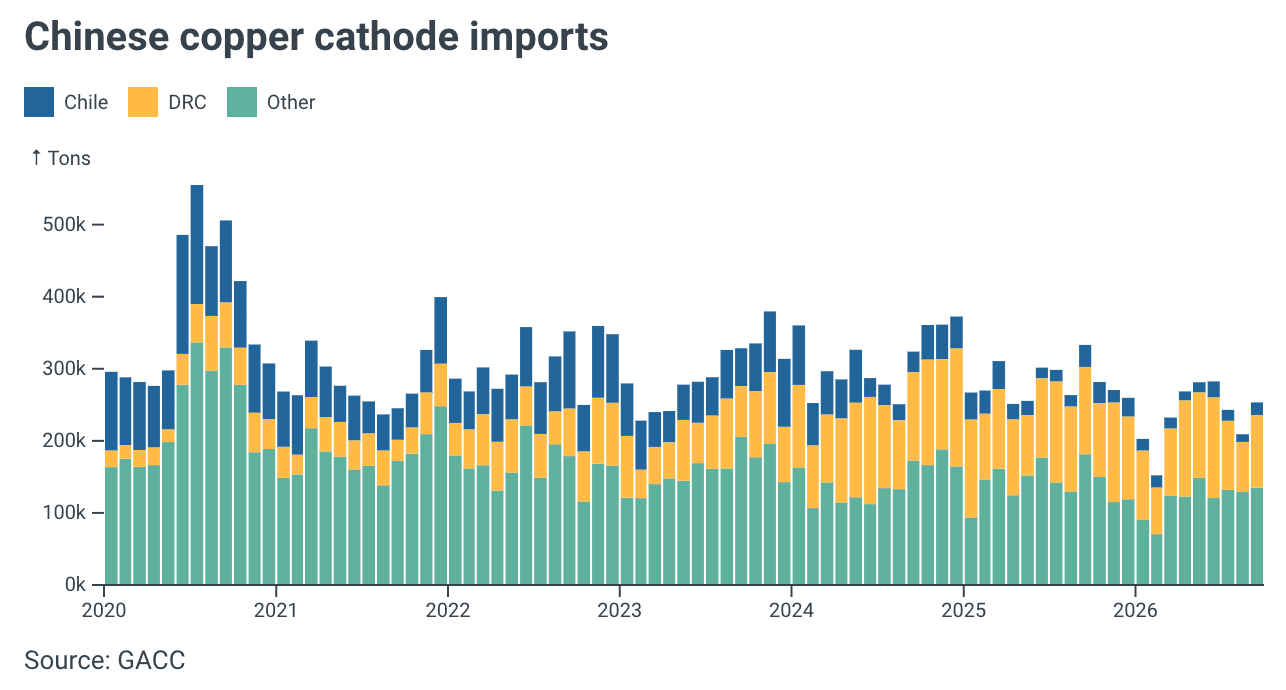
With seaborne imports of copper concentrate down 11% year-to-date and restrictions impacting the availability of scrap, the Chinese market is in short supply. This is reflected in the Yangshan premium which hit a record of $205 per ton this week. SHFE stocks stand at 54kt, down from 433kt in March and half the level of a year ago. Chinese cathode imports run hotter through the final months of the year. Q4 arrivals have averaged 326kt per month over the last five years, 40kt above the rest of the year, so any reprieve from competition for marginal tons will come as a relief to consumers in China.
US dominates inventories
Even as US imports slow, the country still holds the overwhelming majority of global stocks. Exchange registered stock outside of the US sits at 155kt, while stateside inventories exceed 897kt. Beyond these official records lie significant volumes of cathode that are off-exchange, much of which not-CME deliverable. Once the full weight of October deliveries is accounted for Kpler estimates total inventory on US shores to reach 2 million tons.
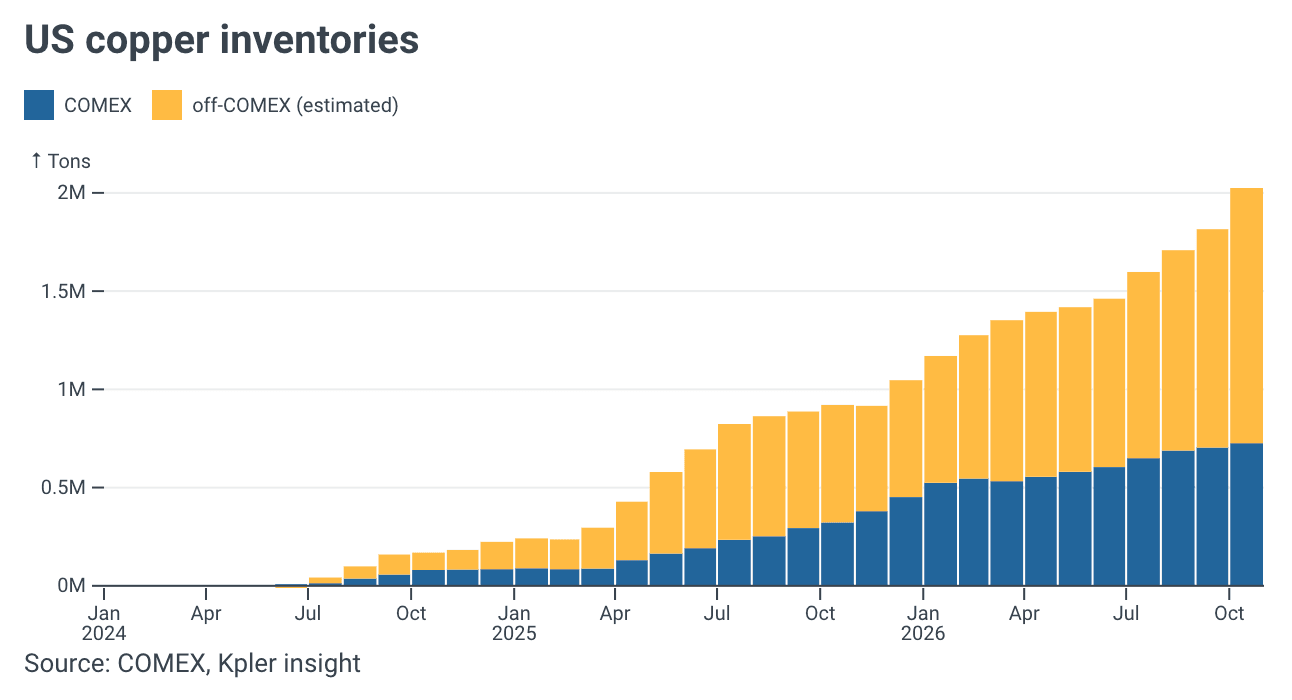
The outcome for these units hinges entirely on the tariff verdict. Under a scenario in which a tariff is introduced and stocks are effectively locked in, this volume would cover the US import requirement at current levels for approximately 2 years. Thereafter the US would need to turn once again to the international market to balance domestic supply with demand.
With a verdict of no-tariff, there would be nothing to isolate these stocks from the global market. An inversion of the LME / COMEX arbitrage would first draw cathodes into LME warehouses in the US, where they would join global visible stocks. However, re-exports would require prices overseas, including local premiums, to exceed the US price by enough to cover freight and financing.
Market Insights you can trust
Kpler delivers unbiased, expert-driven intelligence that helps you stay ahead of supply, demand, and market shifts.
Trade smarter. Request access to Kpler today.

See why the most successful traders and shipping experts use Kpler