

Black Sea escalation: CPC exports under threat as naval strikes widen
The Ukrainian drone attack campaign is expanding again, attempting to choke off all the outlets for Russian oil exports (and subsequently revenue). While refineries have been severely hampered, new attacks in the Black Sea could materially disrupt CPC exports, at a time of rapidly tightening seaborne availability.
Key takeaways
- Ukrainian drone strikes have aggressively expanded into the Black Sea, hitting 12 vessels on 17 July, including a direct strike outside the Caspian Pipeline Consortium (CPC) terminal.
- Mainstream shipowners loading Kazakh-origin CPC Blend crude will inevitably demand substantial freight premiums from charterers, driving up delivered costs across Europe.
- A prolonged attack campaign against non-sanctioned vessels threatens to halt mainstream tanker traffic to Novorossiysk entirely, creating severe supply disruption risks.
- Direction: Bullish on near term CPC and Urals differentials, due to heightened supply disruption risks.
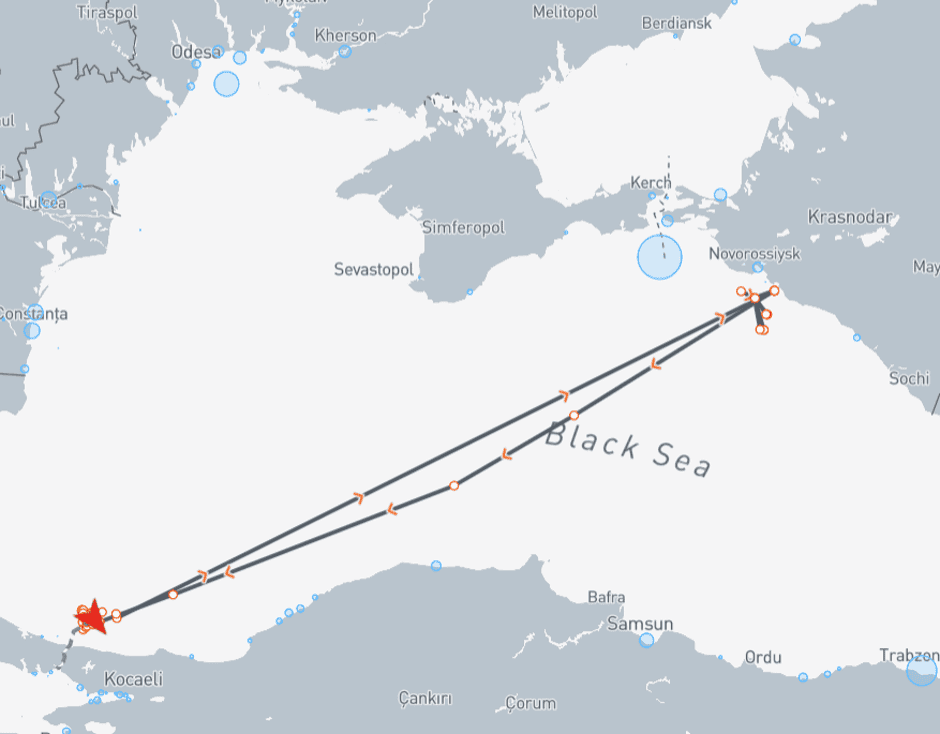
The geopolitical risk premium in the Black Sea is undergoing a severe structural repricing following a rapid expansion of Ukraine's naval drone campaign. Over the weekend, Ukrainian forces struck 12 vessels, marking a critical shift in both the location and the classification of targeted maritime assets. The most consequential incident for the crude oil market was the strike on the NORDIC ZENITH, a Suezmax hit twice while anchored outside the Caspian Pipeline Consortium (CPC) terminal near Novorossiysk. The vessel was scheduled to load a cargo of CPC Kazakhstan on Friday 17th July. This strike is part of a much broader and intensifying offensive against Russia's shadow fleet.
Route of NORDIC ZENITH (from 13 July-20 July, still ballast)
Source: Kpler
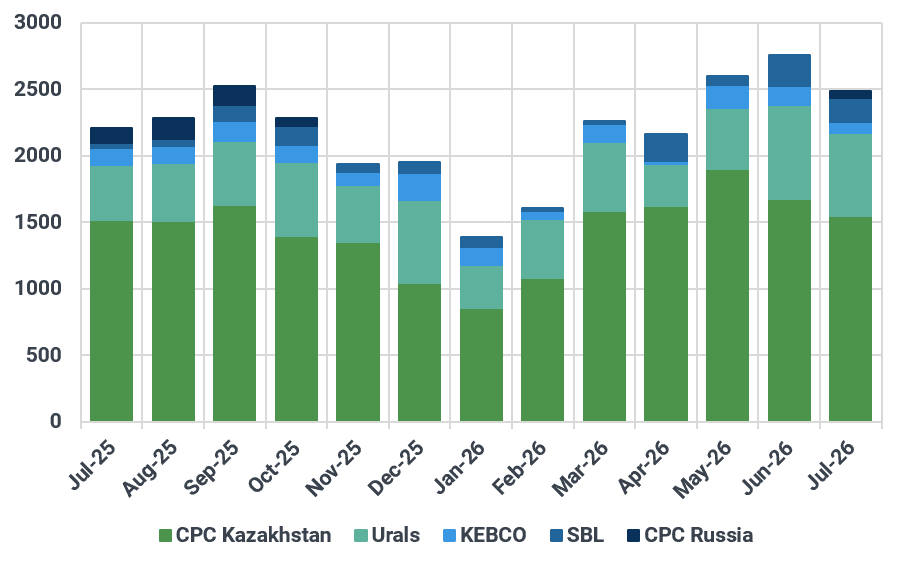
While mainstream shipowners are currently expected to continue servicing the CPC terminal despite the attacks, this continuity will come at a steep cost. Owners will undoubtedly force charterers to pay a significant premium, structurally inflating the freight economics for refiners reliant on CPC Blend. If Ukraine sustains regular attacks on non-sanctioned vessels operating within the CPC trade, the market faces the acute tail risk of owners backing away from Black Sea navigation. This would effectively strand millions of barrels of Kazakh and Russian crude, threatening forced upstream production shut-ins. Exports out of Novorossiysk roughly average around 2.5 Mbd, with CPC Kazakhstan’s share of that around 1.7 Mbd. Kazakh supply is forecast around 2.2 Mbd in July, highlighting how critical Black Sea exports are in preventing production shut-ins.
Adding to the regional supply chain fragility, Russian forces retaliated by striking fuel oil and lubricant discharge and storage facilities at Ukraine’s Black Sea ports as well.
Along with Ukraine’s campaign to hobble all the outlets for Russian crude oil simultaneously (refineries, ports, and previously pipelines), there is growing pressure from the US to ramp up sanctions on Russia.
Spearheaded by a coalition of over 60 Senators, new sweeping legislation marks an aggressive escalation in Washington's strategy to choke off the oil and gas revenues financing Moscow's war effort. The bill's core mechanism deploys primary and secondary energy-focused sanctions.
The legislation authorizes severe trade penalties, including up to 100% tariffs on all imports from countries that purchase the majority of their energy from Russia.
This aggressive secondary pressure is specifically restricted to the five largest global importers of Russian crude and gas, delivering a direct, explicit warning to major third-party buyers like China.
Should this legislation come into action, the addressable market for Urals will contract, driving the grade to deep, distressed discounts while triggering a sharp, structural premium for alternative Atlantic Basin and Middle Eastern sours into Asian markets.
Crude and condensate exports from Novorossiysk by grade, kbd
Source: Kpler

See why the most successful traders and shipping experts use Kpler






