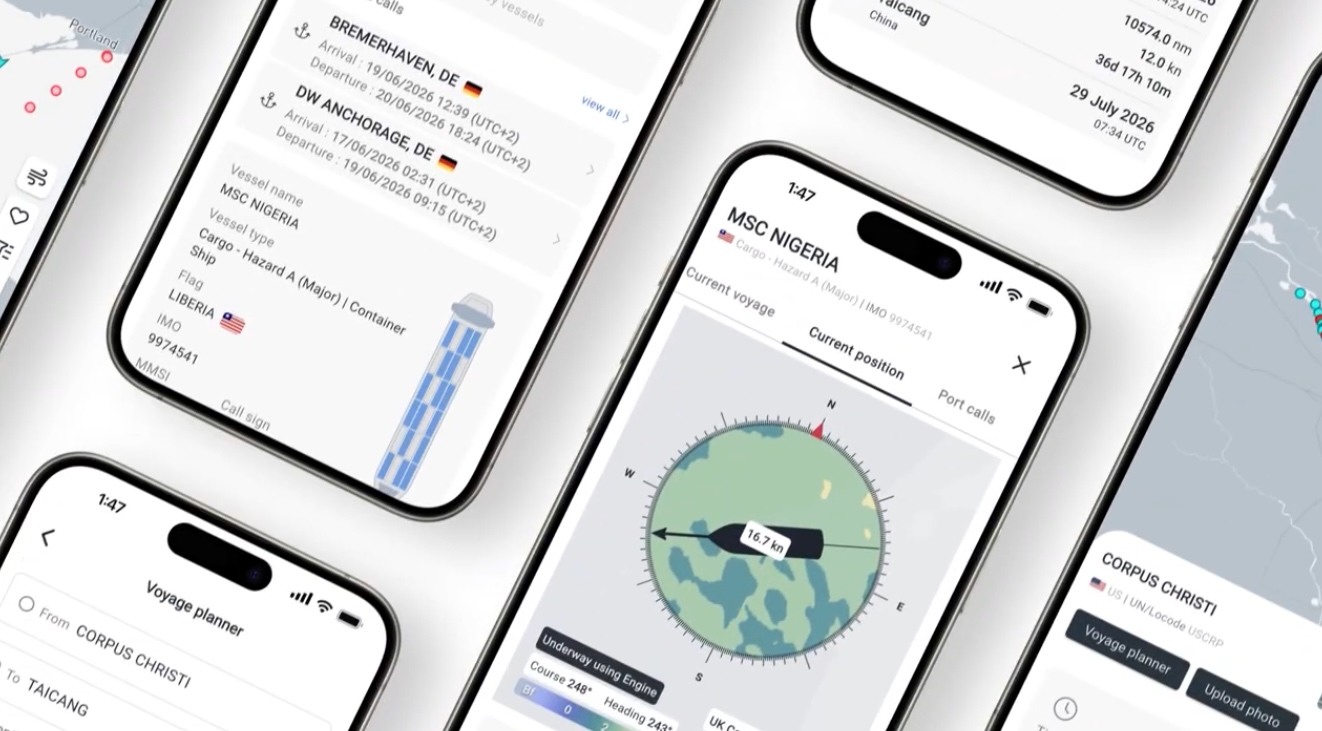

How to choose the right maritime data services for your business
Maritime data has become a core operational input for a wide range of industries — from commodity traders and port operators to insurers, governments, and logistics providers. But the market for maritime data services is complex, with significant variation in data quality, delivery methods, latency, and coverage. Choosing the wrong provider, or the wrong delivery mechanism, can mean gaps in vessel visibility, integration headaches, and data that simply does not fit your use case.
This guide answers the questions buyers most commonly ask when evaluating maritime data services.
What is maritime data, and what does it actually cover?
Maritime data is a broad term, but at its core it typically refers to information derived from the Automatic Identification System (AIS) — the transponder-based tracking standard that vessels use to broadcast their position, speed, draught, heading, and identity. AIS data is the foundation of nearly every vessel tracking and fleet monitoring application in use today.
Beyond raw AIS positions, maritime data services typically layer in:
- Vessel particulars — static information such as IMO number, vessel type, deadweight tonnage, flag state, and ownership
- Voyage data — port calls, estimated times of arrival, previous and next ports
- Route intelligence — calculated or predicted paths between two points, including canal transits and ETA
- Derived analytics — cargo estimates, emissions calculations, risk scores, and trade flow aggregations
Understanding which of these layers your operations actually require is the first step toward choosing the right service.
What are the main sources of AIS data?
AIS signals are received through three main collection methods: terrestrial receiver networks, satellite receivers, and roaming vessel relays. Each has different coverage characteristics:
- Terrestrial networks offer the lowest latency and the highest message density in coastal and port areas.
- Satellite AIS extends coverage to open ocean and remote regions where land-based antennas cannot reach.
- Roaming receivers, carried aboard vessels themselves, fill in gaps across high-traffic but antenna-sparse regions.
The best maritime data providers fuse all three source types into a single, deduplicated feed. At scale, this means processing upwards of one billion AIS messages per day, with a global vessel update frequency averaging around 20 seconds. For buyers, the practical implication is simple: a provider that relies on a single collection method will have coverage gaps that matter operationally, particularly for offshore, Arctic, or transoceanic tracking requirements.
When evaluating providers, ask specifically how many messages per day are processed, what the average update interval is across the global fleet, and how the data is cleaned before delivery.
What delivery methods are available for maritime AIS data?
This is one of the most consequential decisions in any maritime data procurement and is frequently misunderstood. The underlying data can be largely the same across providers; what differs is how it reaches you — and that has direct implications for your technical integration, latency requirements, and operational costs.
- REST APIs are the most common, allowing customers to submit a request to an endpoint, specifying vessels, vessel types, or geographic areas, and receive a structured response. Rate limits typically govern how frequently you can query. APIs are appropriate for teams that need to pull current or historical positions on demand, rather than receiving a continuous feed. They require relatively modest technical capability to integrate.
- GraphQL APIs offer greater flexibility, allowing clients to specify precisely which data fields they want returned. This is particularly useful for vessel particulars and ownership data, where different use cases require different subsets of information. The tradeoff is slightly more complexity in query construction.
- Streaming feeds — delivered over TCP — push data to you continuously as it is received, rather than waiting for you to request it. TCP streams deliver raw NMEA-format messages, which is the industry-standard encoding for AIS payloads. This format is familiar to maritime-native technical teams and integrates easily with legacy systems built around other AIS providers. The limitation is that TCP streams do not buffer: if your connection drops, messages during the outage are lost.
- Kafka topics address that limitation. Kafka-based AIS delivery decodes the messages and applies basic cleaning, removing the burden of NMEA processing from the client. Crucially, Kafka supports offset replay — if your system goes offline and reconnects, the stream resumes from where it stopped rather than from live position. For operations where data completeness is critical (sanctions monitoring, insurance underwriting, government surveillance), this resumability is significant.
How should I match the delivery method to my technical capabilities?
A practical framework:
The key principle is that the delivery method and underlying data are separate decisions. A provider should be able to offer the same AIS dataset through multiple delivery mechanisms, with pricing anchored to the data itself rather than the transport method.
What is the difference between real-time and historical AIS data — and when do I need both?
Real-time AIS data reflects the current position of a vessel, updated as frequently as the collection network and data pipeline allow. For applications like port operations, fleet management, collision avoidance systems, and live cargo tracking, real-time positions are the core requirement.
Historical AIS data provides the full positional record of a vessel over a defined past period. Use cases include voyage reconstruction for insurance claims, compliance investigations, environmental incident attribution, and market intelligence (trading patterns, port call frequency, anchorage behaviour).
The two datasets are structurally similar — in well-architected systems, they use the same response format and the same API key — but they serve different workflows. Buyers should consider whether their use case is primarily operational (real-time), analytical (historical), or both.
When evaluating a provider for historical use cases, ask specifically what years are covered, whether the data is queryable with date filters, and what the response format alignment is between historical and real-time endpoints.
How important is data latency for my use case?
Latency matters differently depending on what you are doing with the data. For example:
- For insurance underwriting, sanctions screening, and trade intelligence – a positional lag of a few minutes is typically acceptable. The analytical value lies in patterns and history, not milliseconds.
- For port operations, vessel traffic services, and collision risk applications – latency matters considerably more. Here, the difference between a one-second delay and a two-minute delay is operationally significant.
- For military and government maritime domain awareness – near-zero latency and full fidelity raw NMEA data are often requirements, both for the data quality assurance that comes with in-house processing and for interoperability with existing sensor fusion infrastructure.
When a provider quotes a latency figure, ask whether it refers to terrestrial, satellite, or blended data, and how that figure is calculated. Average latency across all global messages is a different number from latency for a specific high-priority vessel in a coastal region.
What should I ask about access controls and API provisioning?
The market is moving toward open-by-default global access, with usage monitored and commercial discussions driven by observed consumption rather than hard technical restrictions. Under this model, clients can query any vessel globally from day one, and account teams use API usage dashboards to identify where clients are extracting more value than originally contracted — creating a natural basis for expansion conversations.
For buyers, this is worth understanding before you sign. Open access simplifies onboarding, reduces disputes about what is or isn't within scope, and makes the product more useful in practice. Ask providers specifically how access is provisioned, how quickly credentials can be generated, and what monitoring is in place.
What should buyers watch for in maritime data contracts?
A few practical considerations that often surface late in procurement:
- Coverage guarantees: Global vessel count and message volume are headline figures, but what matters for your use case is coverage in specific regions or for specific vessel types. Ask for sample data or a trial period that covers your actual operational geography.
- Format stability: APIs change. Confirm the provider's versioning policy, how deprecations are communicated, and what the migration path looks like when endpoints are updated.
- Data provenance: For compliance and legal applications, you may need to document where the data came from. Confirm whether the provider can indicate the source type (terrestrial, satellite, roaming) for individual messages.
- Historical availability: If you anticipate needing to run retrospective analysis, confirm how far back data is available, in what format, and whether it is queryable through the same endpoints as real-time data.
- Support and SLAs: Streaming data products in particular require defined uptime commitments and clear escalation paths for feed interruptions.
Key questions to ask any maritime data provider
- What are your AIS data sources, and how are they fused?
- What is your average global vessel update frequency?
- What delivery methods are available, and is the underlying data the same across all of them?
- How is access provisioned, and how quickly can credentials be generated?
- How far back does your historical data extend, and is it queryable via API?
- What is your API architecture — modular endpoints or combined legacy feeds?
- Do you provide source-type attribution at the message level?
- What are your uptime SLAs for streaming products?
Maritime data procurement is ultimately about fit. The right provider is the one whose data coverage, delivery infrastructure, and commercial model align with how your organisation actually operates — not the one with the most features on a comparison sheet.

See why the most successful traders and shipping experts use Kpler

Find the right fit for your operations