Strait of Hormuz evacuation: Clearing stranded vessels could take nearly two weeks under best-case scenario
President Trump has promised an emergency evacuation, but the physical constraints of the Strait of Hormuz tell a different story. Based on a 40-vessel-per-day 'best case' scenario, Kpler intelligence reveals that clearing the current backlog of around 360 laden commodity cargo ships will be a race against logistical bottlenecks and the limits of an untested Omani route.
Following President Trump’s announcement to support commercial vessels trapped inside the Strait of Hormuz, one question remains unanswered: how quickly all these commercial vessels can be cleared out of the strait. While the U.S. Navy provides guidelines for what President Trump characterizes as an "emergency evacuation," Kpler’s analysis of historical data and the constraints of the largely untested Omani route suggests a daily exit cap of approximately 40 vessels. At this rate, fully clearing some 360 laden vessels currently stranded will be a multi-week operation.
Historical Context and Transit Limits
Kpler data since 2017 establishes a clear baseline for the physical capacity of the Strait of Hormuz. Between 1 January 2017 and 28 February 2026, the average laden vessel transit was 41.3 vessels per day.
The data point from 28 February 2026 is particularly illustrative: following news of the initial attack, 38 vessels left the Mideast Gulf zone. This number is close to the pre-war average, suggesting that even with a high sense of urgency, the daily exit number is unlikely to exceed this threshold.
- Daily Record High: 62 laden vessels (9 June 2025)
- Daily Record Low: 18 laden vessels (5 February 2021)
The Current Backlog and Passage Averages
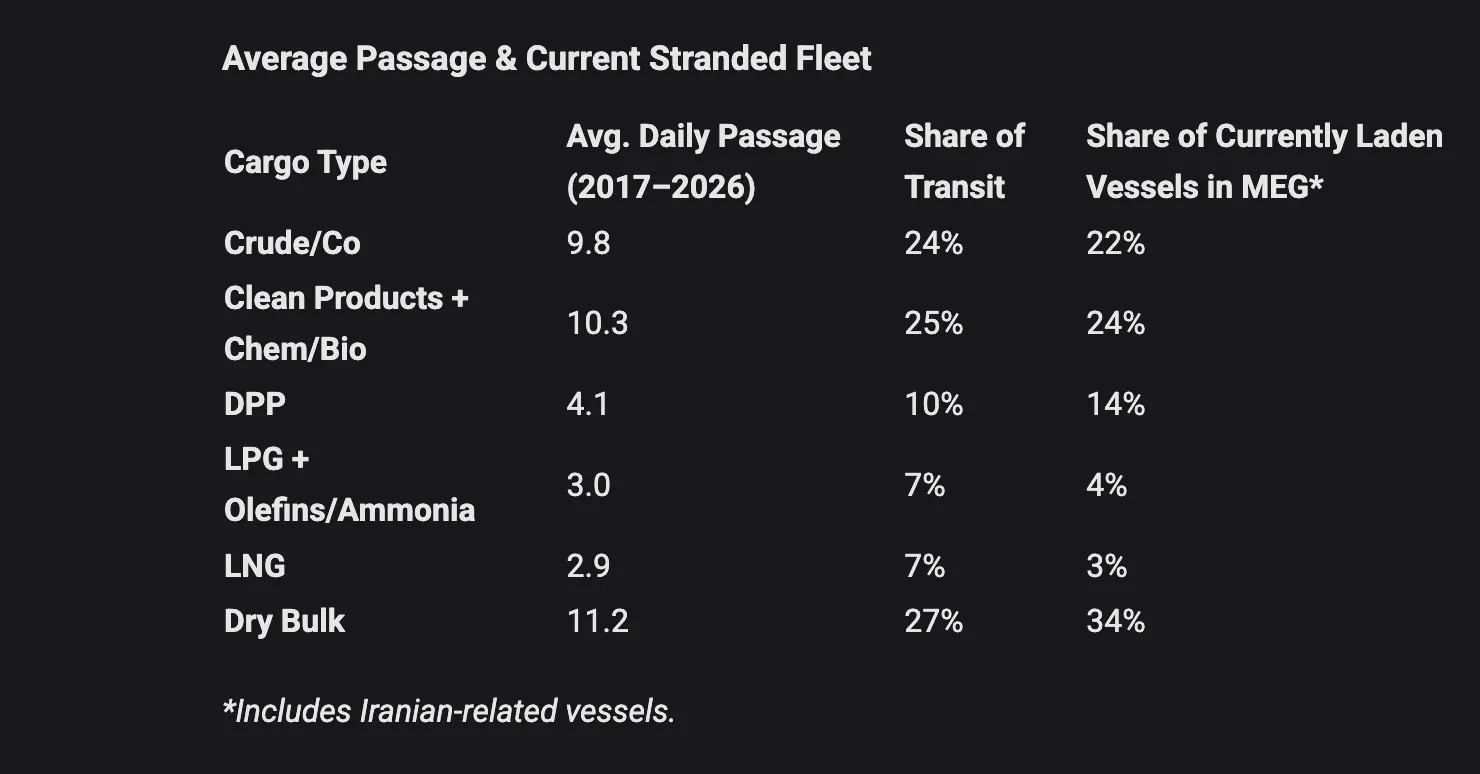
The evacuation is expected to be a one-way exit rather than a standard two-way flow. Based on Kpler's calculation of daily passage by cargo type and the current number of laden vessels inside the Mideast Gulf, the breakdown of the stranded fleet is as follows:
Logistical Constraints: The Omani "Safe" Passage
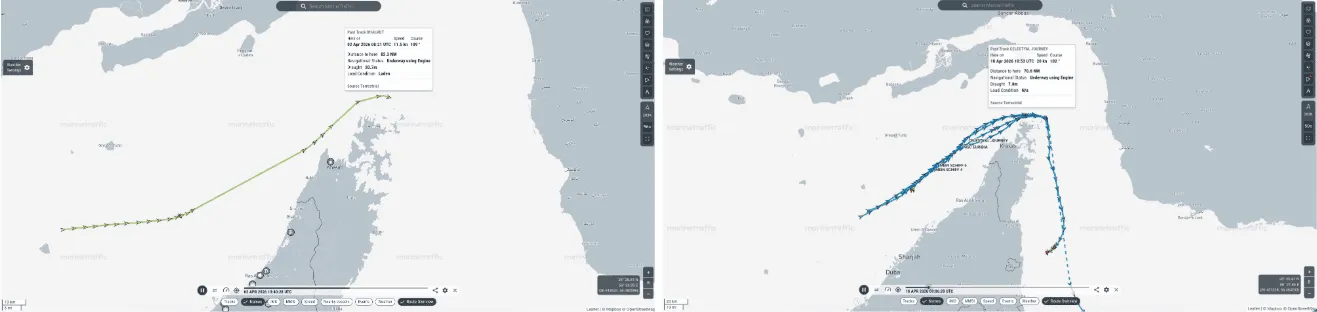
Although this is an emergency evacuation, logistics are constrained by the shift to the Omani route. While there is precedent for large vessels—including one VLCC on 2 April and four cruise ships on 18 April—passing the narrow Omani passage, the route remains largely untested and far from usual shipping lanes. Previously, transits through this route were primarily limited to small dhow ships. All five vessels sailed alongside Oman’s Musandam coast line with the speed of the VLCC reaching 11.5 kn while those cruise ships sailed around 20 kn when they reached the northern edge of the peninsula.
Hormuz transit by one VLCC and four Cruise Ships
Clearing Scenarios: Estimated Days to Exit
Based on scenarios of highest, average, and lowest daily passage, Kpler calculated the number of days required to clear the currently stranded laden vessels by cargo type:

Conclusion: The 40-Vessel "Best Case"
Given that daily laden vessel transit was 38 vessels when the attack began on 28 February, the daily transit is unlikely to exceed that number despite the U.S. Navy guidelines. Furthermore, although Kpler confirms the passage of large vessels (including VLCCs and cruise ships) through the narrow Omani route, it remains a largely untested lane far from the usual shipping channels. As a result, the 40-vessel-per-day scenario should be considered the best-case timeline for clearing the Mideast Gulf.

See why the most successful traders and shipping experts use Kpler