Maritime product updates: Smarter risk signals, stronger APIs, and a faster mobile experience
Executive summary
So far in 2026, we’ve delivered four major updates across the MarineTraffic, AIS, and Container Intelligence ecosystem: the Vessel Risk Indicator, an enhanced AIS Historical API endpoint, a redesigned MarineTraffic mobile app, and Container Intelligence API v1.3.0. Together, these releases strengthen risk visibility, improve large-scale data access, enhance mobile vessel tracking, and expand terminal-level intelligence.
These releases focus on three key themes:
- Risk & compliance intelligence: Clearer signals to evaluate vessel-related risk.
- Developer & data access enhancements: More scalable, flexible historical AIS data retrieval.
- Mobile experience & usability: A faster, clearer way to track vessels worldwide.
Each update is designed to reduce friction—whether you're assessing risk exposure, building data-driven workflows, or monitoring traffic in real time.
New features
1) Vessel Risk Indicator
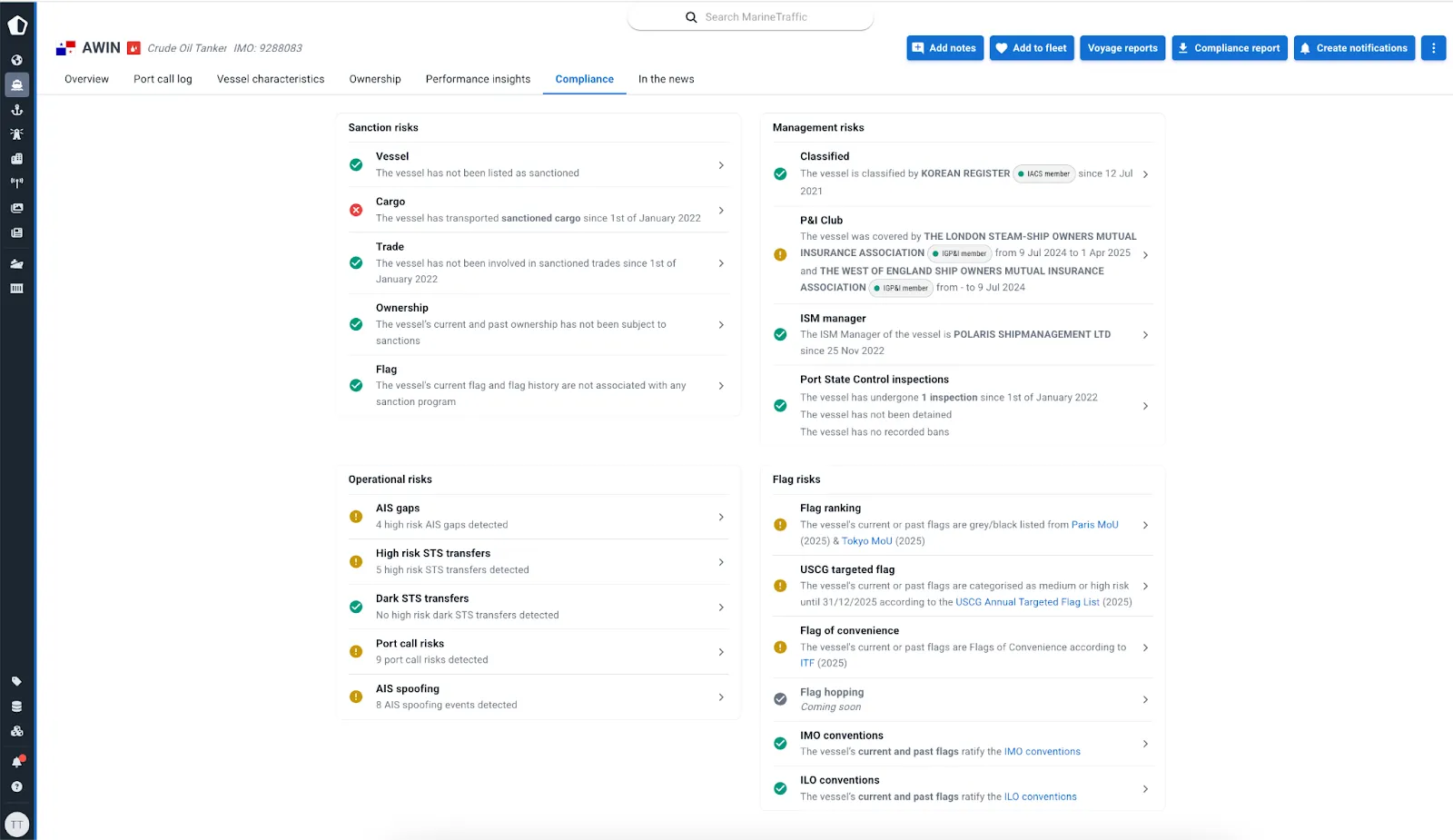
MarineTraffic now offers a Risk & Compliance service featuring a new Vessel Risk Indicator.
What it is
The Vessel Risk Indicator is a colour-coded system that helps users quickly identify potential safety, regulatory, and financial risks associated with specific vessels.
Why it matters
Assessing vessel risk often requires reviewing multiple data points across safety records, compliance signals, and financial exposure. The Vessel Risk Indicator simplifies this process by consolidating complex risk inputs into an intuitive visual signal.
This enables users to:
- Identify higher-risk vessels at a glance
- Prioritise due diligence efforts
- Strengthen compliance workflows
- Reduce exposure to operational and financial risk
Who it’s for
- Compliance teams
- Risk analysts
- Charterers and traders
- Maritime insurers
- Operations managers
Resources
Full methodology details are available in the support article.
2) AIS – Historical API Endpoint
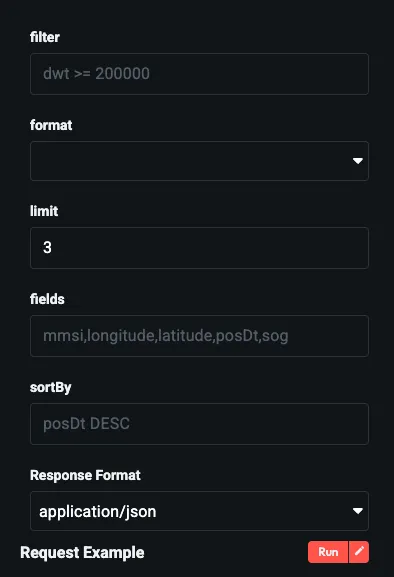
We’ve enhanced our AIS offering with a more powerful and flexible Historical API endpoint.
What it is
The AIS Historical API endpoint enables large-scale retrieval of historical AIS data with improved consistency alongside AIS-Latest.
Why it matters
For data teams and developers building analytics pipelines, historical AIS retrieval must be:
- Scalable
- Reliable
- Consistent across endpoints
This release makes large-scale historical AIS data retrieval:
- More powerful
- More flexible
- Easier to integrate
Comprehensive API documentation and tutorials—including sample queries—help accelerate implementation and reduce integration time.
Who it’s for
- Data engineers
- Quantitative analysts
- Platform integrators
- Maritime intelligence teams
Resources
- API specification
- AIS API tutorial (with sample queries)
3) New MarineTraffic Mobile App
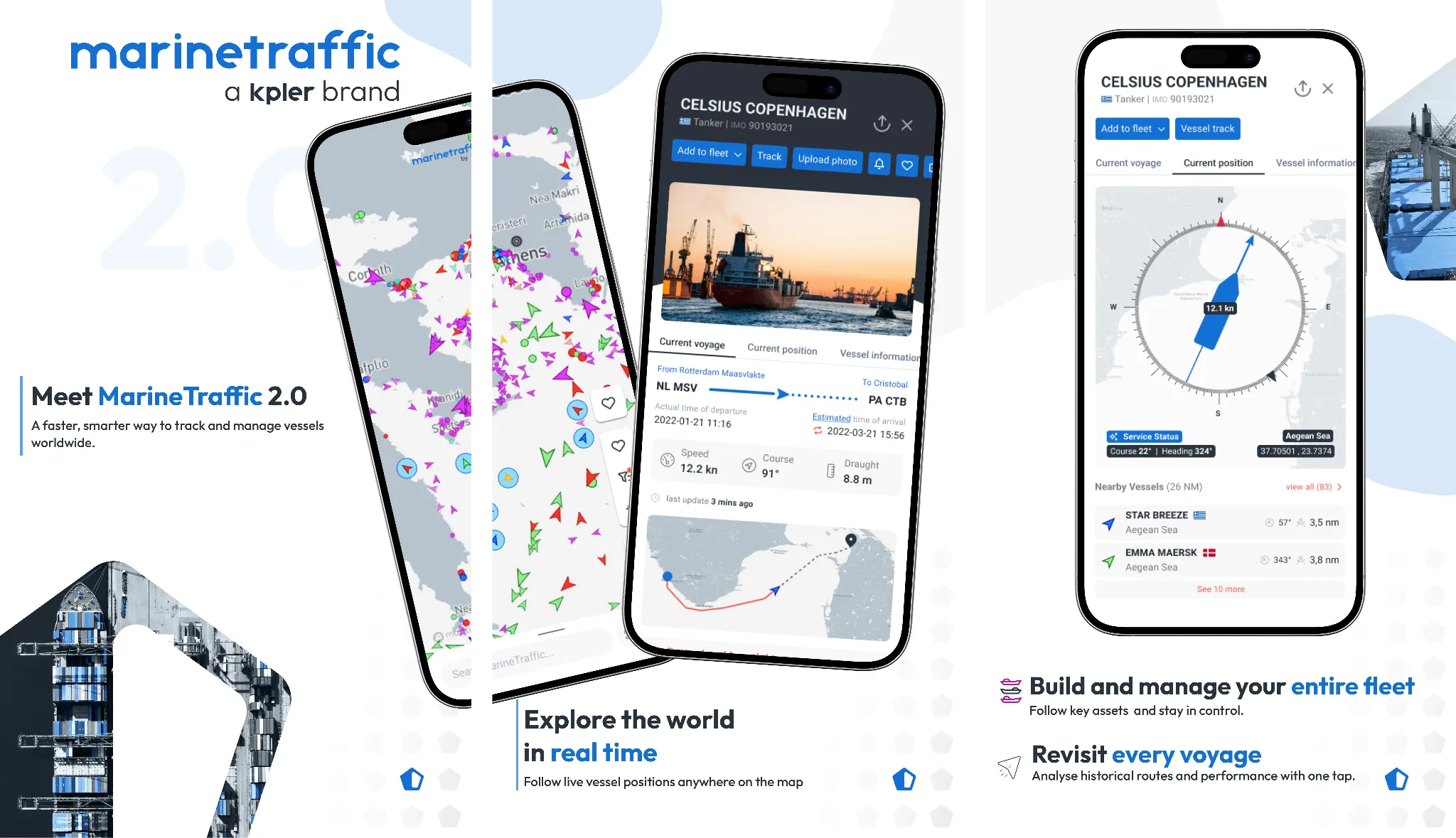
After years of user feedback, the MarineTraffic mobile app has been redesigned to deliver a faster and more dependable vessel tracking experience.
What’s new
The updated mobile app provides:
- Faster performance
- A clearer interface
- Improved reliability
- A more powerful vessel tracker for ships worldwide
Why it matters
Maritime professionals increasingly rely on mobile access for:
- Monitoring vessels in transit
- Tracking port activity
- Responding to operational changes in real time
The new app ensures users can access accurate marine traffic data wherever they are—without sacrificing speed or clarity.
Who it’s for
- Fleet operators
- Ship managers
- Maritime analysts
- Port professionals
- Enthusiasts and independent vessel trackers
Resources
See the support article, including FAQs.
4) Container Intelligence API v1.3.0
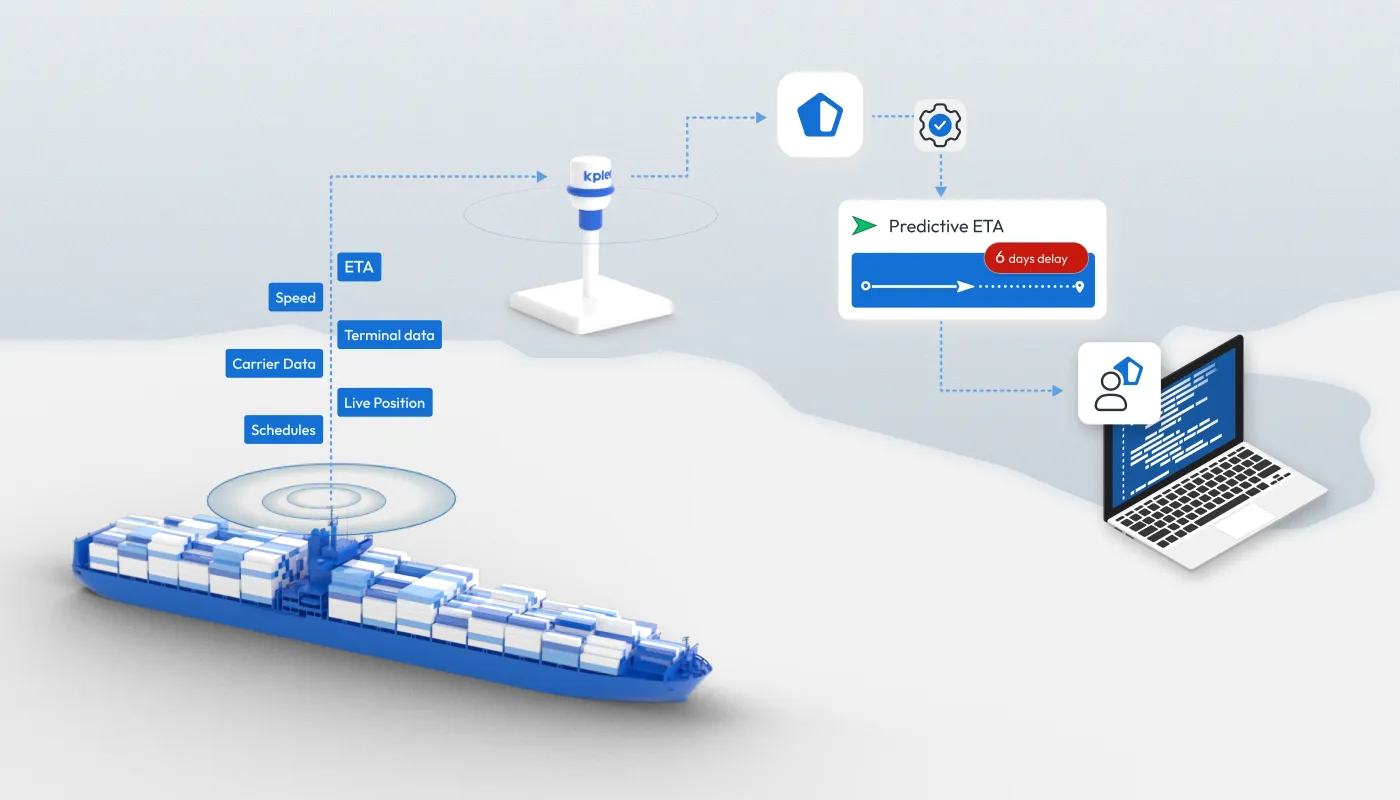
All Container Intelligence customers have now received the API v1.3.0 update, delivering stronger data precision, deeper terminal-level visibility, and improved scalability.
What’s new
The v1.3.0 release introduces:
- Smarter filtering capabilities, including:
- “Not equals” (ne) operator to exclude specific values
- Greater than (gt) and less than (lt) operators where supported
- Shipping Calls filtering by carrier (SCAC) and service code
- A new lastUpdatedAt filter to retrieve recently updated records only
- Enhanced terminal congestion metrics, including:
- Average vessel waiting time (hours)
- Average vessel stay time (hours)
- Number of vessels currently at berth
- A new vessel course attribute for improved movement and routing analysis
- Increased API rate limit to 500 requests per minute for higher throughput
- Updated documentation examples aligned with live API responses for easier implementation
Why it matters
Container Intelligence users increasingly require precision, scalability, and real-time operational visibility.
With v1.3.0, teams can:
- Pull exactly the data they need with more granular filtering
- Gain clearer, terminal-level insight into congestion and performance
- Improve routing and movement analysis with enhanced vessel attributes
- Scale integrations confidently with higher throughput limits
- Reduce implementation friction with documentation that matches live responses
This release reinforces that Container Intelligence is an actively evolving API—continuously improving predictive accuracy and operational intelligence.
Who it’s for
- Data engineers and platform integrators
- Supply chain and logistics analysts
- Terminal and port performance teams
- Operations and routing planners
- Commercial teams positioning terminal-level intelligence to prospects
Resources
What this means for Kpler users
These updates deliver measurable impact across risk, analytics, operations, and mobile workflows:
- Stronger compliance and counterparty awareness with simplified vessel risk visibility
- More precise and scalable data integrations through enhanced AIS and Container Intelligence APIs
- Deeper terminal-level intelligence with live congestion metrics and improved filtering
- Improved routing and monitoring accuracy with new vessel attributes
- Faster, more reliable mobile tracking for real-time operational decisions
Whether you're assessing vessel exposure, building analytics pipelines, optimising port performance, or monitoring fleets globally, these updates reduce friction and increase confidence across maritime and supply chain intelligence workflows.
Learn more & get started
Want a walkthrough of these updates in your workflow? Contact us or explore the documentation to get started today:
- Explore the Vessel Risk Indicator methodology
- Review AIS Historical API documentation and tutorial
- Discover the new MarineTraffic mobile app FAQs
- Read the Container Intelligence API Documentation
Frequently asked questions
What are the main product updates Kpler has released so far in 2026?
Key releases include the Vessel Risk Indicator, an enhanced AIS Historical API endpoint, a redesigned MarineTraffic mobile app, and Container Intelligence API v1.3.0.
Who should use the Vessel Risk Indicator?
Compliance teams, risk analysts, insurers, and maritime operators who need fast visibility into potential vessel-related safety, regulatory, or financial risks.
What does the AIS Historical API improve?
It enables more scalable and flexible large-scale retrieval of historical AIS data, with improved consistency alongside AIS-Latest.
What does Container Intelligence API v1.3.0 improve?
It introduces more granular filtering, new terminal congestion metrics, a vessel course attribute for improved routing analysis, and a higher rate limit of 500 requests per minute.
Who benefits most from these updates?
Compliance teams, maritime operators, data engineers, supply chain analysts, and commercial teams leveraging terminal-level and AIS intelligence.

See why the most successful traders and shipping experts use Kpler

Real-time maritime market intelligence